6 Results for "

thioester intermediate

" in MedChemExpress (MCE) Product Catalog:
Products (6)

6 Results for "thioester intermediate" in MCE Product Catalog:

Cat. No.: HY-134424
CAS No.: 108321-21-7
Purity:  94%
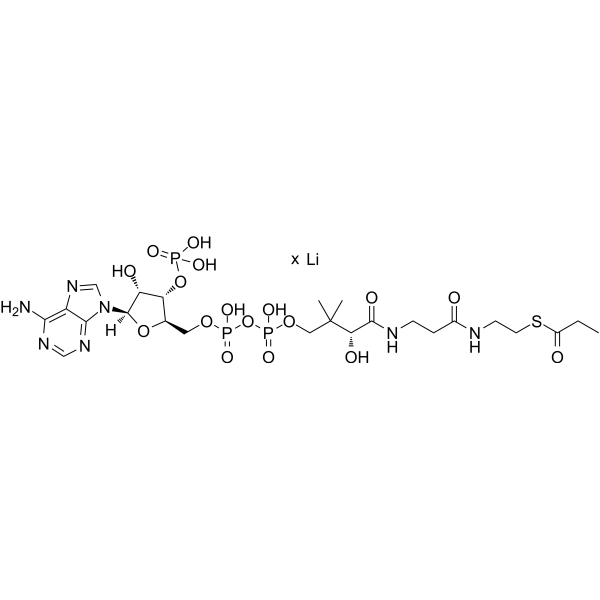
Propionyl coenzyme A lithium, a coenzyme A derivative of propionic acid, is an important metabolic intermediate formed by the thioester bond between coenzyme A and propionic acid. The breakdown and production of Propionyl coenzyme A lithim is important for the metabolism of organisms .
loading...
    loading...
Cat. No.: HY-E70437
CAS No.: 80146-85-6
Synonyms: Tissue-type transglutaminase; TG2; TGase 2
Research Areas:  

Others

Guinea pig liver transglutaminase (Tissue-type transglutaminase) is a calcium-dependent tissue-type transglutaminase and serves as the prototype of intracellular tissue transglutaminases purified from guinea pig liver. Guinea pig liver transglutaminase catalyzes acyl transfer reactions via a ping-pong mechanism, forming a transient thioester acyl-enzyme intermediate that mediates the hydrolysis of glutamine amides, displacement by primary amines, and the formation of isopeptide cross-links between peptide-bound glutamine and the amino groups of lysine or polyamines .
loading...
    loading...
Cat. No.: HY-W250129
CAS No.: 94695-48-4
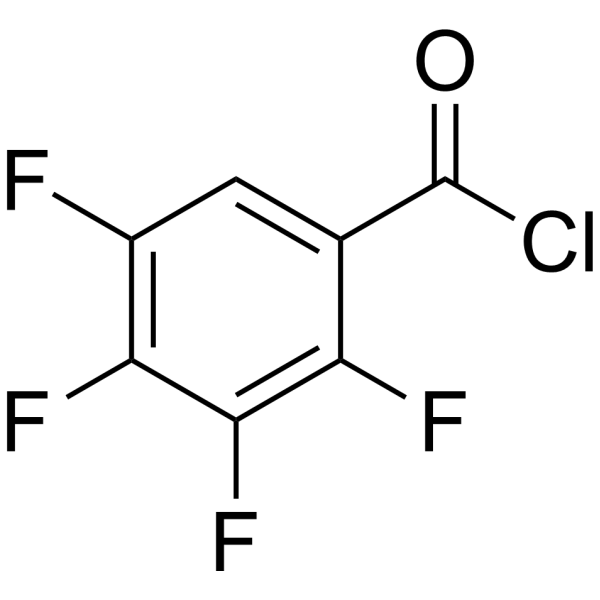
2,3,4,5-Tetrafluorobenzoyl chloride is a fluorinated organic compound that belongs to the class of benzoyl chlorides. It is a colorless liquid with a pungent smell and is mainly used as an intermediate in the synthesis of various pharmaceutical and pesticide compounds. 2,3,4,5-Tetrafluorobenzoyl chloride is an acylating agent that can react with a variety of nucleophiles, including amines, alcohols, and thiols, to form amides, esters, or thioesters, respectively. Its unique fluorine-containing structure can impart desired properties to target molecules, such as increased lipophilicity or increased stability against metabolic degradation. However, due to its high reactivity and potential health hazards, proper safety measures and handling procedures must be followed when using this compound.
loading...
    loading...
Cat. No.: HY-CE01302
CAS No.: 21804-29-5
Synonyms: D-β-Hydroxybutyryl-CoA
Research Areas:  

Others

D-3-Hydroxybutyryl-CoA (D-β-Hydroxybutyryl-CoA) is a thioester compound formed by the combination of coenzyme A and D-3-Hydroxybutyryl, and is a key intermediate metabolite in microbial butyrate metabolism and polymer synthesis pathways. D-3-Hydroxybutyryl-CoA plays a central role in intracellular carbon storage, lipid metabolism, and energy conversion processes. D-3-Hydroxybutyryl-CoA is mainly generated from Acetyl-CoA through catalysis by reductase, and can subsequently either be dehydrated by 3-Hydroxybutyryl-CoA dehydratase into Crotonyl-CoA to participate in further metabolism, or be directly polymerized by PHA synthase to form the macromolecular cellular energy storage material PHB. D-3-Hydroxybutyryl-CoA can be used in metabolic engineering of biodegradable plastics in synthetic biology and in research on the regulatory mechanisms of microbial carbon metabolism .
loading...
    loading...
Cat. No.: HY-185044
CAS No.: 84274-57-7
Target:  

Drug Intermediate

Research Areas:  

Others

Galloyl-coenzyme A thioester is a CoA-thioester of Gallic acid (HY-N05230) that can be found in plants as an intermediate in gallotannin biosynthesis.Galloyl-coenzyme A thioester possesses spectral properties that support photometric assay use in enzymatic studies .
loading...
    loading...
Cat. No.: HY-E71085
Research Areas:  

Others

(R)-2-Hydroxy-4-methylpentanoate CoA-transferase (EC 2.8.3.24) , characterized from the bacterium Peptoclostridium difficile, participates in an L-leucine fermentation pathway. The reaction proceeds via formation of a covalent anhydride intermediate between a conserved aspartate residue and the acyl group of the CoA thioester substrate.
loading...
    loading...

