1. Search Result
Search Result
Pathways Recommended: Neuronal Signaling
Results for "

traumatic neuronal injury

" in MedChemExpress (MCE) Product Catalog:

15

Inhibitors & Agonists

2

Peptides

5

Natural
Products

Cat. No. Product Name Target Research Areas Chemical Structure
  • HY-B0985
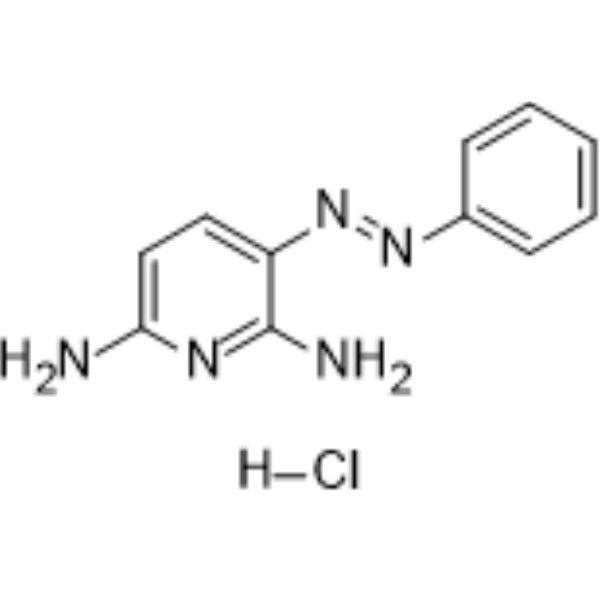
    Phenazopyridine hydrochloride
    2 Publications Verification

    TRP Channel Neurological Disease
    Phenazopyridine hydrochlorideis a competitive SARM1 inhibitor, with IC50 145 μM. Phenazopyridine hydrochlorideis a TRPM8 antagonist. Phenazopyridine hydrochloride has a local anesthetic/analgesic effect. Phenazopyridine hydrochlorideis used to relieve painful symptoms of conditions such as cystitis and urethritis. Phenazopyridine hydrochloridecan promote neuronal differentiation and can also be used in the study of traumatic brain injury, peripheral neuropathy and neurodegenerative diseases .
    Phenazopyridine hydrochloride
  • HY-59291

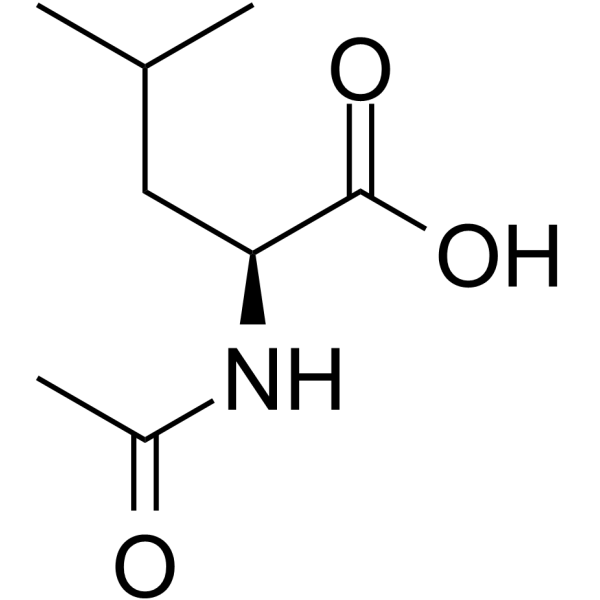
    N-Acetyl-L-leucine

    Amino Acid Derivatives Neurological Disease Metabolic Disease Inflammation/Immunology
    Levacetylleucine (N-acetyl-L-leucine), an orally bioavailable and brain-penetrant compound, is an acetylated derivative of amino acid Leucine. Levacetylleucine is the active form of N-acetyl-leucine (NAL). Levacetylleucine attenuates neuronal death and neuroinflammation in the cortical tissue of mice. Levacetylleucine also potentially improves ameliorates lysosomal and metabolic dysfunction. Levacetylleucine improves compensation of postural symptoms after unilateral chemical labyrinthectomy (UL) in rats. Levacetylleucine is promising for research of neurological manifestations of Niemann-Pick disease type C, traumatic brain injury and neurodegeneration prevention .
    Levacetylleucine
  • HY-100403
    Ro 67-7476
    Maximum Cited Publications
    23 Publications Verification

    mGluR Cancer
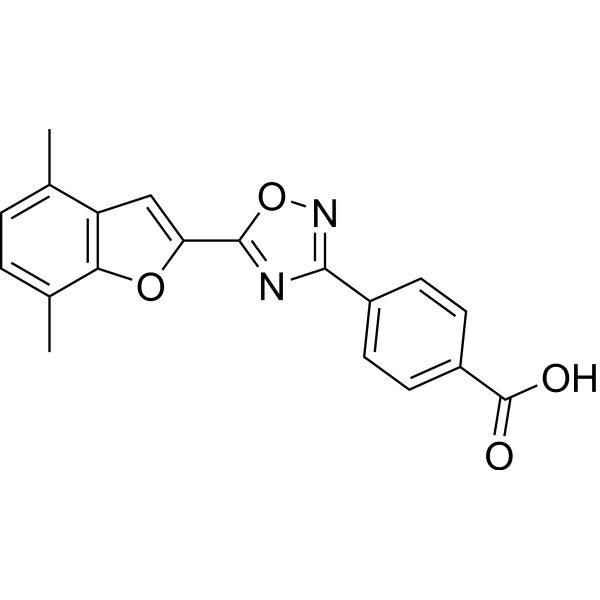
    Ro 67-7476 is a potent positive allosteric modulator of mGluR1 and potentiates glutamate-induced calcium release in HEK293 cells expressing rat mGluR1a with an EC50 of 60.1 nM . Ro 67-7476 is a potent P-ERK1/2 agonist and activates ERK1/2 phosphorylation in the absence of exogenously added glutamate (EC50=163.3 nM) .
    Ro 67-7476
  • HY-N12060

    Bcl-2 Family Caspase Apoptosis Autophagy Reactive Oxygen Species (ROS) Akt JNK ERK Cardiovascular Disease Neurological Disease
    Ginkgo biloba extract is a natural product that can be isolated from Ginkgo biloba leaves . Ginkgo biloba extract alleviates oxidative stress-induced neuronal apoptosis (Apoptosis) by stabilizing mitochondrial function, regulating Bcl-2 family proteins and inhibiting caspase activation. Ginkgo biloba extract alleviates testicular injury by upregulating SKP2 and inhibiting Beclin1-independent autophagy (Autophagy) . Ginkgo biloba extract alleviates various types of neuronal damage in animal models. Ginkgo biloba extract reduces behavioral sensitization in rats. Ginkgo biloba extract counteracts Aβ-induced neurotoxicity by blocking a series of Aβ-triggered events, including glucose uptake, ROS accumulation, AKT activation, mitochondrial dysfunction, JNK and ERK 1/2 pathways, and apoptosis, and also interferes with the formation of Aβ oligomers. Ginkgo biloba extract is applicable to research related to cerebral hypoperfusion, testicular injury, Alzheimer's disease, Parkinson's disease, multi-infarct dementia, stroke, traumatic brain injury and amyotrophic lateral sclerosis .
    Ginkgo biloba extract
  • HY-129724A

    ACTH-(11-13) acetate; Lys-Pro-Val acetate; H-Lys-Pro-Val-OH acetate

    Melanocortin Receptor NF-κB Bacterial Interleukin Related Apoptosis Infection Neurological Disease Metabolic Disease Inflammation/Immunology
    α-MSH (11-13) (ACTH-(11-13)) acetate is a C-terminal tripeptide of α-MSH that can cross the blood-brain barrier. α-MSH (11-13) acetate exhibits antipyretic, anti-inflammatory, and antibacterial activities. α-MSH (11-13) acetate also exerts neuroprotective effects after traumatic brain injury by inhibiting excessive activation of microglia and reducing neuronal apoptosis. α-MSH (11-13) acetate can be used in research related to traumatic brain injury, fever, and bacterial infections .
    α-MSH (11-13) acetate
  • HY-111573

    C286

    RAR/RXR Others Neurological Disease Inflammation/Immunology
    KCL-286 (C286) is an orally active and brain-penetrant retinoic acid receptor (RAR) β2 agonist (EC50 = 1.9 nM). KCL-286 targets RARβ2 with good selectivity over RAR α (EC50 = 26 nM) and RAR γ (EC50 = 11 nM). KCL-286 activates RARβ2 in the injured neurons. KCL-286 induces axonal regeneration of both spinal and sensory nerves through the inhibitory environment of the CNS, modulates neuroinflammation and extracellular matrix molecules. KCL-286 can modulate the expression of CSPGs by neuronal secretion of decorin which promotes myelination and aids axonal growth. KCL-286 can be studied in research for area such as spinal cord injury and traumatic nerve injury .
    KCL-286
  • HY-N4098

    Apoptosis Neurological Disease
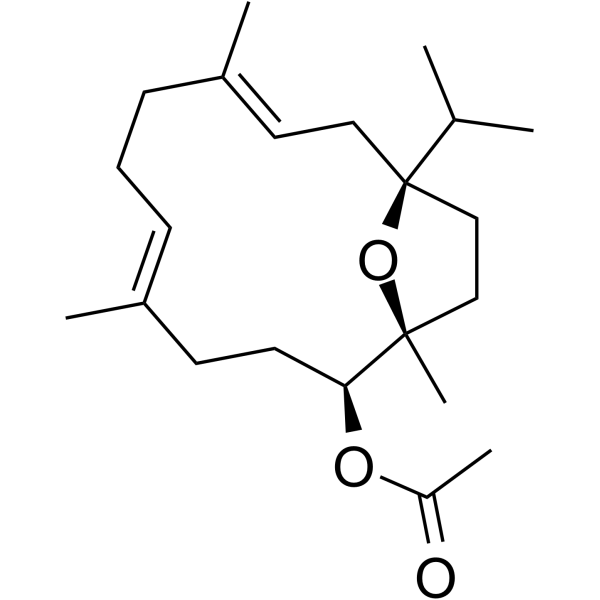
    Incensole acetate is a main constituent of Boswellia carterii resin, has neuroprotective effects against neuronal damage in traumatic and ischemic head injury. Incensole acetate reduces Aβ25–35-triggered apoptosis in hOBNSCs .
    Incensole Acetate
  • HY-B0985A
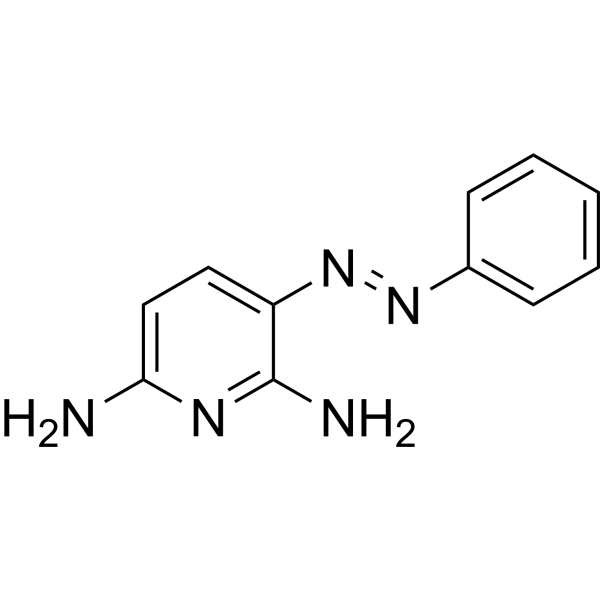
    Phenazopyridine
    2 Publications Verification

    TRP Channel Neurological Disease
    Phenazopyridine is a competitive SARM1 inhibitor, with IC50 145 μM. Phenazopyridine is a TRPM8 antagonist. Phenazopyridine has a local anesthetic/analgesic effect. Phenazopyridine is used to relieve painful symptoms of conditions such as cystitis and urethritis. Phenazopyridine can promote neuronal differentiation and can also be used in the study of traumatic brain injury, peripheral neuropathy and neurodegenerative diseases .
    Phenazopyridine
  • HY-129724

    ACTH-(11-13); Lys-Pro-Val; H-Lys-Pro-Val-OH

    Melanocortin Receptor Bacterial NF-κB Apoptosis Interleukin Related Infection Neurological Disease Metabolic Disease Inflammation/Immunology
    α-MSH (11-13) (ACTH-(11-13)) is a C-terminal tripeptide of α-MSH that can cross the blood-brain barrier. α-MSH (11-13) exhibits antipyretic, anti-inflammatory, and antibacterial activities. α-MSH (11-13) also exerts neuroprotective effects after traumatic brain injury by inhibiting excessive activation of microglia and reducing neuronal apoptosis. α-MSH (11-13) can be used in research related to traumatic brain injury, fever, and bacterial infections .
    α-MSH (11-13)
  • HY-179055

    PROTACs DAPK Neurological Disease
    PROTAC DAPK1 Degrader-1 (Compound CP1) is a DAPK1 PROTAC degrader with a DC50 of 119.6 nM. PROTAC DAPK1 Degrader-1 significantly increased the MDM2 protein level. PROTAC DAPK1 Degrader-1 significantly reduced the levels of cleaved caspase-3 and cleaved PARP in a cell apoptosis model induced by the neurotoxin ceramide, indicating that it effectively inhibits neuronal apoptosis by degrading DAPK1. PROTAC DAPK1 Degrader-1 can be used to study neurological diseases such as cerebral ischemia and traumatic brain injury (pink: DAPK1 ligand (HY-179071); blue: CRBN ligand (HY-10984); black: linker (HY-40171)) .
    PROTAC DAPK1 Degrader-1
  • HY-N14827

    SM-216289

    Drug Derivative Neurological Disease
    Xanthofulvin (SM-216289) is an inhibitor of semaphorin 3A. Xanthofulvin blocks its binding to receptors, inhibits growth cone collapse, and accelerates olfactory nerve regeneration in rats in vivo. Xanthofulvin can be used in studies related to traumatic neuronal injury .
    Xanthofulvin
  • HY-B0985R

    Reference Standards TRP Channel Neurological Disease
    Phenazopyridine (hydrochloride) (Standard) is the analytical standard of Phenazopyridine (hydrochloride). This product is intended for research and analytical applications. Phenazopyridine hydrochlorideis a competitive SARM1 inhibitor, with IC50 145 μM. Phenazopyridine hydrochlorideis a TRPM8 antagonist. Phenazopyridine hydrochloride has a local anesthetic/analgesic effect. Phenazopyridine hydrochlorideis used to relieve painful symptoms of conditions such as cystitis and urethritis. Phenazopyridine hydrochloridecan promote neuronal differentiation and can also be used in the study of traumatic brain injury, peripheral neuropathy and neurodegenerative diseases .
    Phenazopyridine hydrochloride (Standard)
  • HY-N4098R

    Reference Standards Apoptosis Neurological Disease
    Incensole Acetate (Standard) is the analytical standard of Incensole Acetate. This product is intended for research and analytical applications. Incensole acetate is a main constituent of Boswellia carterii resin, has neuroprotective effects against neuronal damage in traumatic and ischemic head injury. Incensole acetate reduces Aβ25–35-triggered apoptosis in hOBNSCs .
    Incensole Acetate (Standard)
  • HY-183944

    NO Synthase Reactive Oxygen Species (ROS) Cardiovascular Disease Neurological Disease
    BN80933 is a selective neuronal nitric oxide synthase (nNOS) inhibitor with a rat Ki of 0.92 μM. BN80933 inhibits lipid peroxidation, and blocks hypoxia-induced lactate dehydrogenase elevation and delayed 8-epiprostaglandin F2α elevation. BN80933 can be used for the research of stroke, and traumatic brain injury .
    BN80933
  • HY-100403R

    mGluR Reference Standards Cancer
    Ro 67-7476 (Standard) is the analytical standard of Ro 67-7476 (HY-100403). This product is intended for research and analytical applications. Ro 67-7476 is a potent positive allosteric modulator of mGluR1 and potentiates glutamate-induced calcium release in HEK293 cells expressing rat mGluR1a with an EC50 of 60.1 nM . Ro 67-7476 is a potent P-ERK1/2 agonist and activates ERK1/2 phosphorylation in the absence of exogenously added glutamate (EC50=163.3 nM) .
    Ro 67-7476 (Standard)

Inquiry Online

Your information is safe with us. * Required Fields.

Salutation


Country or Region *

Applicant Name *


Organization Name *

Department *


Email Address *


Product Name *

Cat. No.


Requested quantity *

Phone Number *


Remarks

Inquiry Online

Inquiry Information

Product Name:
Cat. No.:
Quantity:
MCE Japan Authorized Agent:

