1. Search Result
Search Result
Pathways Recommended: Membrane Transporter/Ion Channel
Results for "

voltage-gated sodium channel 1.8

" in MedChemExpress (MCE) Product Catalog:

32

Inhibitors & Agonists

1

Peptides

8

Natural
Products

Cat. No. Product Name Target Research Areas Chemical Structure
  • HY-N6691
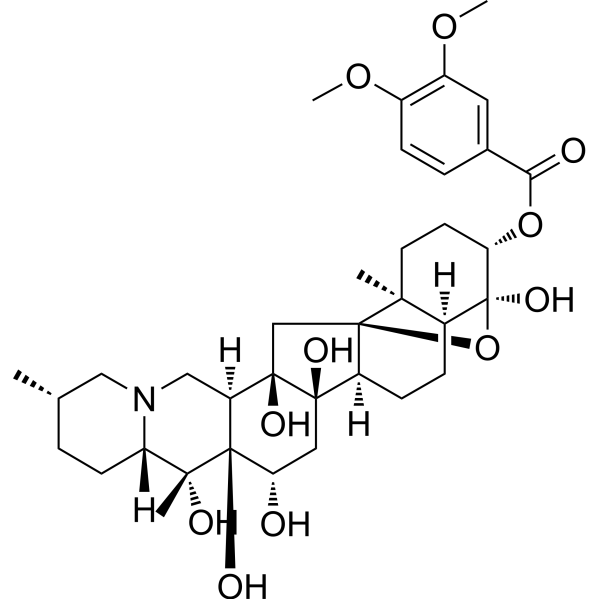
    Veratridine
    4 Publications Verification

    3-Veratroylveracevine

    Sodium Channel Neurological Disease
    Veratridine (3-Veratroylveracevine) is a plant neurotoxin, a voltage-gated sodium channels (VGSCs) agonist. Veratridine inhibits the peak current of Nav1.7, with an IC50 of 18.39 µM. Veratridine regulates sodium ion channels mainly by activating sodium ion channels, preventing channel inactivation and increasing sodium ion flow .
    Veratridine
  • HY-N1584
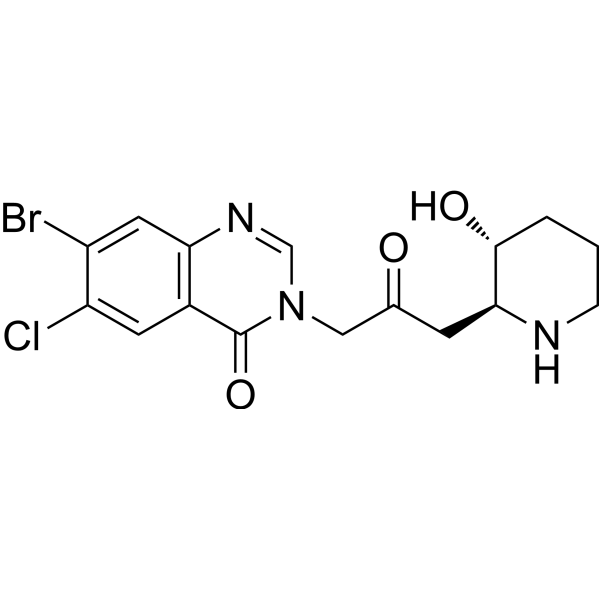
    Halofuginone
    Maximum Cited Publications
    20 Publications Verification

    RU-19110

    DNA/RNA Synthesis TGF-beta/Smad Parasite Sodium Channel Calcium Channel Infection Cardiovascular Disease Inflammation/Immunology Cancer
    Halofuginone (RU-19110), a Febrifugine derivative, is a competitive prolyl-tRNA synthetase inhibitor with a Ki of 18.3 nM . Halofuginone is a specific inhibitor of type-I collagen synthesis and attenuates osteoarthritis (OA) by inhibition of TGF-β activity . Halofuginone is also a potent pulmonary vasodilator by activating Kv channels and blocking voltage-gated, receptor-operated and store-operated Ca 2+ channels. Halofuginone has anti-malaria, anti-inflammatory, anti-cancer, anti-fibrosis effects .
    Halofuginone
  • HY-125079

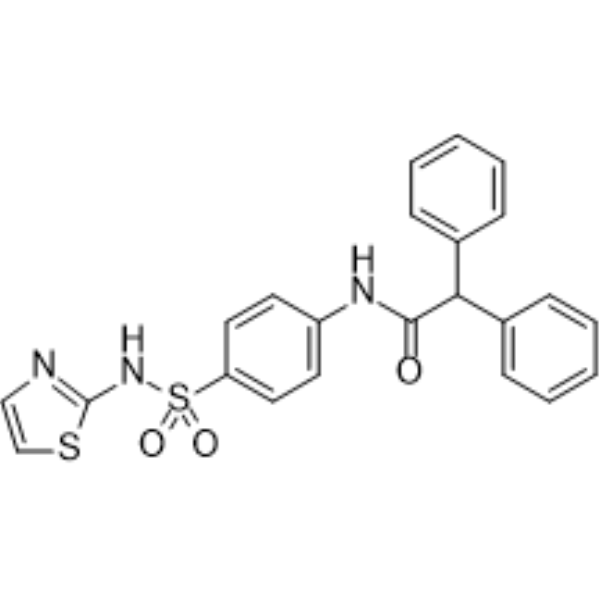
    ANP-230

    Sodium Channel Cardiovascular Disease Neurological Disease
    DSP-2230 is the orally active inhibitor for voltage-gated sodium channel that inhibits Nav1.7-, Nav1.8-, and Nav1.9-derived sodium currents with IC50s of 7.1 μM, 11.4 μM and 6.7 μM, respectively. DSP-2230 can be used to improve neuropathic pain .
    DSP-2230
  • HY-16787
    ICA-121431
    4 Publications Verification

    Sodium Channel Cardiovascular Disease
    ICA-121431 is a nanomolar potent and broad-spectrum voltage-gated sodium channel (Nav) blocker, shows equipotent selectivity for human Nav1.1 and Nav1.3 subtypes with IC50 values of 13 nM and 23 nM, respectively. ICA-121431 shows less potent inhibition of Nav1.2 (IC50=240 nM) and 1,000 fold selectivity against Nav1.4, Nav1.6, and the TTX-resistant human Nav1.5 and Nav1.8 channels (IC50s >10 μM).
    ICA-121431
  • HY-N1584A
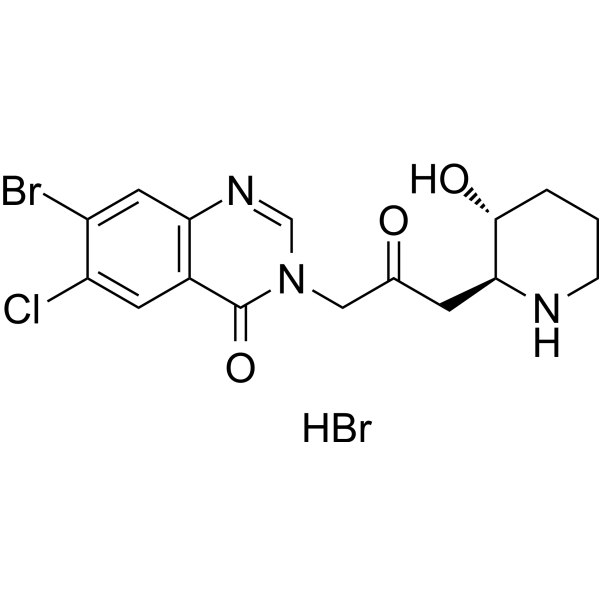
    Halofuginone hydrobromide
    Maximum Cited Publications
    20 Publications Verification

    RU-19110 hydrobromide

    DNA/RNA Synthesis TGF-beta/Smad Parasite Sodium Channel Calcium Channel Infection Cardiovascular Disease Inflammation/Immunology Cancer
    Halofuginone (RU-19110) hydrobromid, a Febrifugine derivative, is a competitive prolyl-tRNA synthetase inhibitor with a Ki of 18.3 nM . Halofuginone hydrobromid is a specific inhibitor of type-I collagen synthesis and attenuates osteoarthritis (OA) by inhibition of TGF-β activity . Halofuginone hydrobromid is also a potent pulmonary vasodilator by activating Kv channels and blocking voltage-gated, receptor-operated and store-operated Ca 2+ channels. Halofuginone hydrobromid has anti-malaria, anti-inflammatory, anti-cancer, anti-fibrosis effects .
    Halofuginone hydrobromide
  • HY-114301

    Sodium Channel Neurological Disease
    PF-06305591 is a potent and highly selective voltage gated sodium channel NaV1.8 blocker, with an IC50 of 15 nM. An excellent preclinical in vitro ADME and safety profile .
    PF-06305591
  • HY-B0516

    Hoe-045

    Sodium Channel NF-κB NOD-like Receptor (NLR) Neurological Disease Inflammation/Immunology
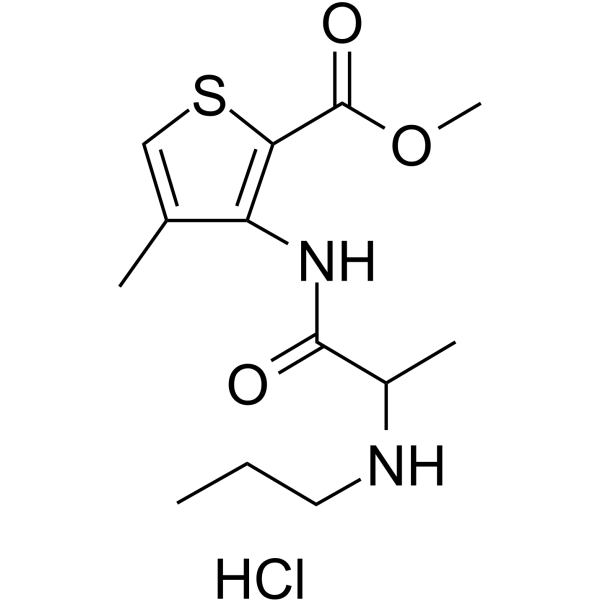
    Articaine (Hoe-045) hydrochloride is a selective inhibitor of voltage-gated sodium channels (such as rNav1.4, hNav1.7, and rNav1.8), with an IC50 of 15.8 μM for open-state Na + channels, and IC50 of 40.6 μM and 378 μM for inactivated and resting-state Na + channels, respectively. Articaine hydrochloride exerts local anesthetic activity by inhibiting Na + influx to block nerve impulse conduction, and can also inhibit NF-κB activation and NLRP3 inflammasome pathways, exhibiting anti-inflammatory function. Articaine hydrochloride can be used in the study of dental local anesthesia and inflammatory-related diseases (such as acute kidney injury) .
    Articaine hydrochloride
  • HY-143481

    Sodium Channel Neurological Disease Inflammation/Immunology
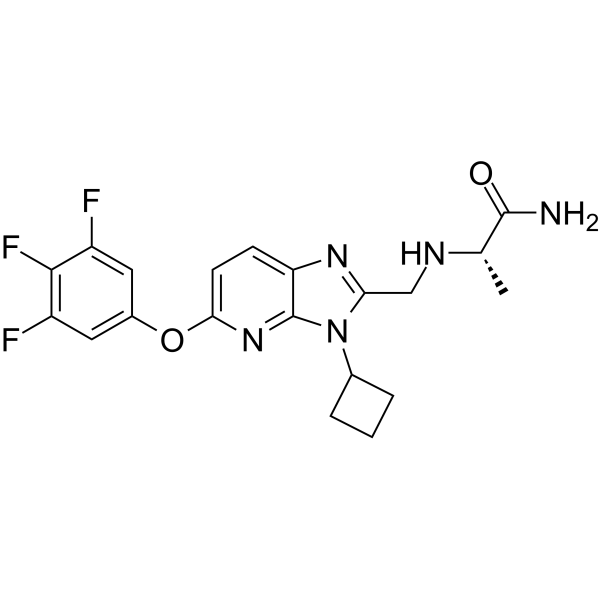
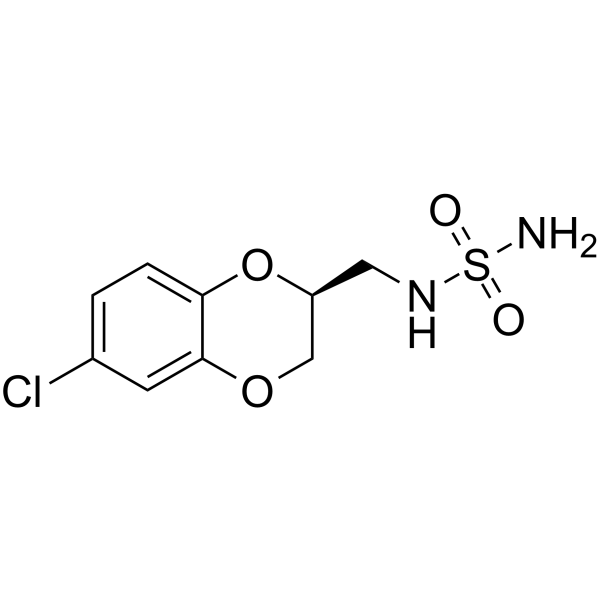
    Nav1.8-IN-2 (compound 35A) is a Nav1.8 voltage-gated sodium ion inhibitor with an IC50 of 0.4 nM (HEK 293 cells). Nav1.8-IN-2 inhibits the activity of Nav1.8 voltage-gated sodium ion channels, mediates sodium ion influx in excitable cells, and is associated with the initiation and conduction of action potentials. Nav1.8-IN-2 can be used for research related to pain, cough, itching, etc .
    Nav1.8-IN-2
  • HY-N1847

    Sodium Channel Neurological Disease
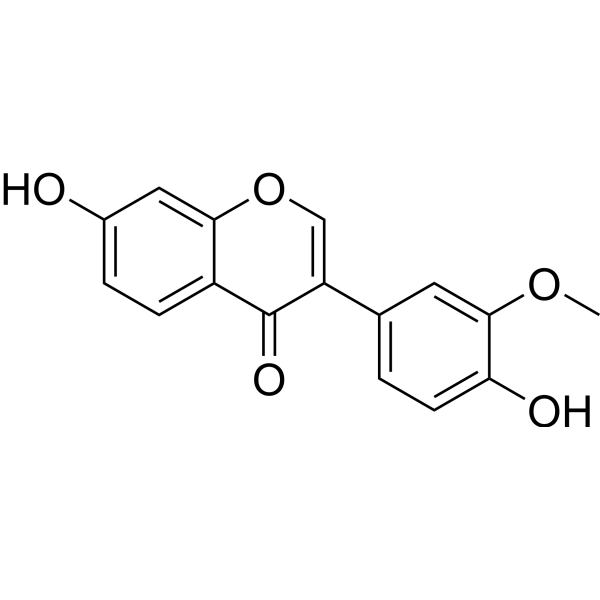
    3'-Methoxydaidzein is a isoflavone and a Sodium Channel inhibitor. 3'-Methoxydaidzein inhibits subtypes NaV1.7, NaV1.8 and NaV1.3 with IC50 of 181 nM, 397 nM, and 505 nM, respectively. 3'-Methoxydaidzein exerts analgesic activity by inhibiting voltage-gated sodium channels .
    3'-Methoxydaidzein
  • HY-157802

    Sodium Channel Neurological Disease
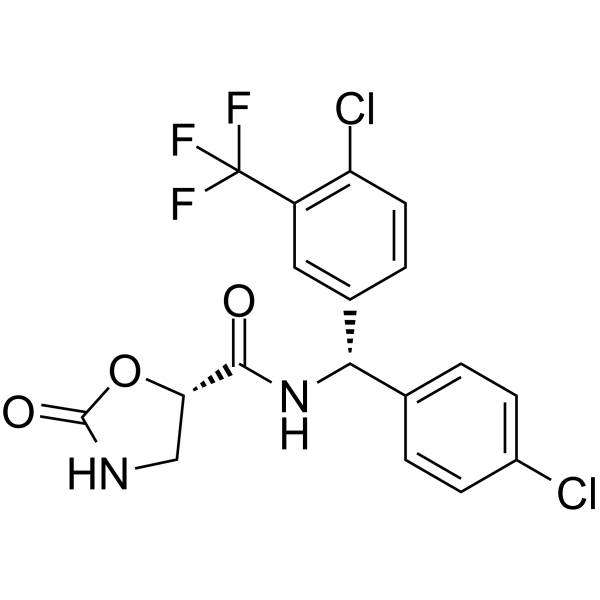
    LTGO-33 is a potent and selective voltage-gated sodium channel NaV1.8 inhibitor. LTGO-33 inhibits NaV1.8 in the nM potency range and exhibits over 600-fold selectivity against human NaV1.1-NaV1.7 and NaV1.9. LTGO-33 exhibits state-independent inhibition with similar potencies on channels in the closed and inactivated conformations. LTGO-33 inhibits native TTX-R NaV1.8 currents in non-human primate and human DRG neurons, where it reduces action potential firing. LTGO-33 can be used for pain disorders research .
    LTGO-33
  • HY-N1584C
    Halofuginone lactate
    Maximum Cited Publications
    20 Publications Verification

    RU-19110 lactate

    DNA/RNA Synthesis TGF-beta/Smad Parasite Sodium Channel Calcium Channel Infection Cardiovascular Disease Inflammation/Immunology Cancer
    Halofuginone lactate, a Febrifugine derivative, is a competitive prolyl-tRNA synthetase inhibitor with a Ki of 18.3 nM . Halofuginone lactate is a specific inhibitor of type-I collagen synthesis and attenuates osteoarthritis (OA) by inhibition of TGF-β activity . Halofuginone lactate is also a potent pulmonary vasodilator by activating Kv channels and blocking voltage-gated, receptor-operated and store-operated Ca 2+ channels. Halofuginone lactate has anti-malaria, anti-inflammatory, anti-cancer, anti-fibrosis effects .
    Halofuginone lactate
  • HY-108425

    Sodium Channel Neurological Disease
    AMG8379 is a potent, orally active and selective sulfonamide antagonist of the voltage-gated sodium channel NaV1.7, with IC50s of 8.5 and 18.6 nM for hNaV1.7 and mNaV1.7, respectively. AMG8379 potently and reversibly blocks endogenous Tetrodotoxin (TTX)-sensitive sodium channels in dorsal root ganglia (DRG) neurons with an IC50 of 3.1 nM .
    AMG8379
  • HY-N1584R

    RU-19110 (Standard)

    Reference Standards DNA/RNA Synthesis TGF-beta/Smad Parasite Sodium Channel Calcium Channel Infection Cardiovascular Disease Inflammation/Immunology Cancer
    Halofuginone (Standard) is the analytical standard of Halofuginone. This product is intended for research and analytical applications. Halofuginone (RU-19110), a Febrifugine derivative, is a competitive prolyl-tRNA synthetase inhibitor with a Ki of 18.3 nM . Halofuginone is a specific inhibitor of type-I collagen synthesis and attenuates osteoarthritis (OA) by inhibition of TGF-β activity . Halofuginone is also a potent pulmonary vasodilator by activating Kv channels and blocking voltage-gated, receptor-operated and store-operated Ca2+ channels. Halofuginone has anti-malaria, anti-inflammatory, anti-cancer, anti-fibrosis effects .
    Halofuginone (Standard)
  • HY-N1584AR

    RU-19110 hydrobromide (Standard)

    Reference Standards DNA/RNA Synthesis TGF-beta/Smad Parasite Sodium Channel Calcium Channel Infection Cardiovascular Disease Inflammation/Immunology Cancer
    Halofuginone (hydrobromide) (Standard) is the analytical standard of Halofuginone (hydrobromide). This product is intended for research and analytical applications. Halofuginone (RU-19110) hydrobromid, a Febrifugine derivative, is a competitive prolyl-tRNA synthetase inhibitor with a Ki of 18.3 nM . Halofuginone hydrobromid is a specific inhibitor of type-I collagen synthesis and attenuates osteoarthritis (OA) by inhibition of TGF-β activity . Halofuginone hydrobromid is also a potent pulmonary vasodilator by activating Kv channels and blocking voltage-gated, receptor-operated and store-operated Ca 2+ channels. Halofuginone hydrobromid has anti-malaria, anti-inflammatory, anti-cancer, anti-fibrosis effects .
    Halofuginone hydrobromide (Standard)
  • HY-157802A

    Sodium Channel Neurological Disease
    (S)-LTGO-33 is a small molecule inhibitor of voltage-gated sodium channel NaV1.8. (S)-LTGO-33 can be used in the study of pain disorders .
    (S)-LTGO-33
  • HY-114301A

    Sodium Channel Neurological Disease
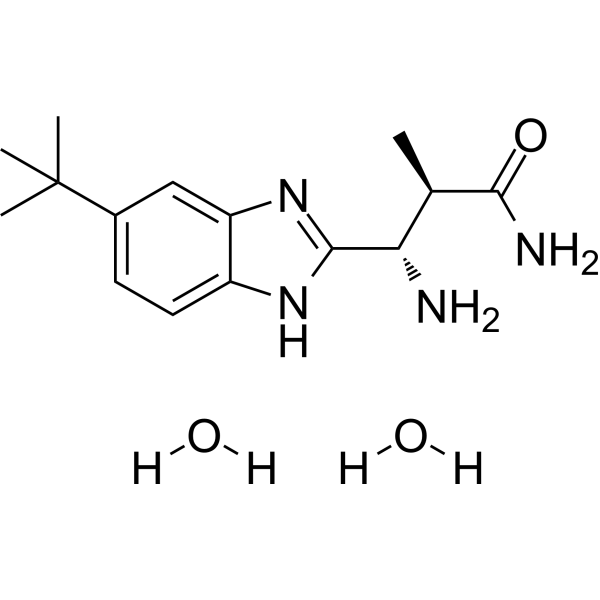
    PF-06305591 dihydrate is a potent and highly selective voltage gated sodium channel NaV1.8 blocker, with an IC50 of 15 nM. An excellent preclinical in vitro ADME and safety profile .
    PF-06305591 dihydrate
  • HY-N1584B
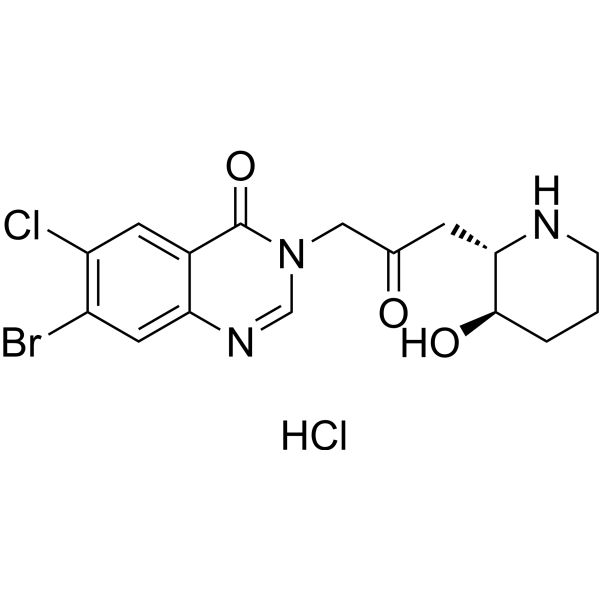
    Halofuginone hydrochloride
    15+ Cited Publications

    RU-19110 hydrochloride

    Calcium Channel DNA/RNA Synthesis Parasite Sodium Channel TGF-beta/Smad Infection Cardiovascular Disease Inflammation/Immunology Cancer
    Halofuginone (RU-19110) hydrobromid, a Febrifugine derivative, is a competitive prolyl-tRNA synthetase inhibitor with a Ki of 18.3 nM. Halofuginone hydrobromid is a specific inhibitor of type-I collagen synthesis and attenuates osteoarthritis (OA) by inhibition of TGF-β activity. Halofuginone hydrobromid is also a potent pulmonary vasodilator by activating Kv channels and blocking voltage-gated, receptor-operated and store-operated Ca 2+ channels. Halofuginone hydrobromid has anti-malaria, anti-inflammatory, anti-cancer, anti-fibrosis effects .
    Halofuginone hydrochloride
  • HY-174845

    Sodium Channel Neurological Disease
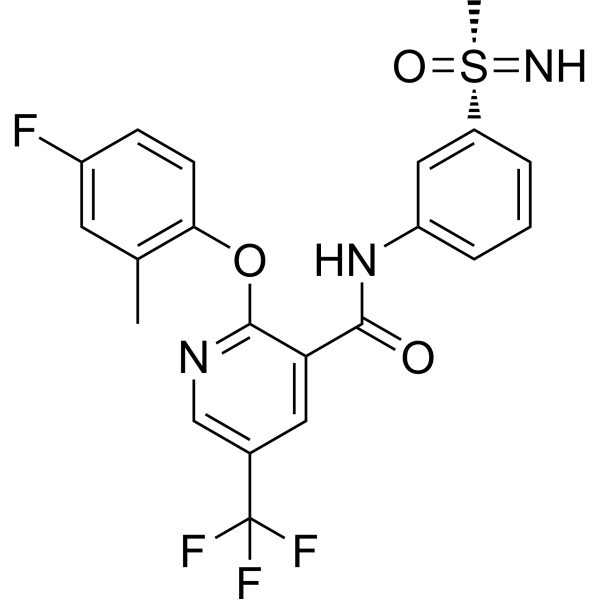
    Nav1.8-IN-20 (Compound I) is an orally active and potent voltage-gated sodium channel Nav1.8 inhibitor with an IC50 value of 14 nM. Nav1.8-IN-20 blocks the generation and conduction of action potentials in peripheral nociceptive neurons, exerting analgesic effects. Nav1.8-IN-20 is promising for research of various pain types such as acute pain, chronic pain, inflammatory pain, and neuropathic pain .
    Nav1.8-IN-20
  • HY-N6691R

    3-Veratroylveracevine (Standard)

    Reference Standards Sodium Channel Neurological Disease
    Veratridine (Standard) is the analytical standard of Veratridine. This product is intended for research and analytical applications. Veratridine (3-Veratroylveracevine) is a plant neurotoxin, a voltage-gated sodium channels (VGSCs) agonist. Veratridine inhibits the peak current of Nav1.7, with an IC50 of 18.39?μM. Veratridine regulates sodium ion channels mainly by activating sodium ion channels, preventing channel inactivation and increasing sodium ion flow .
    Veratridine (Standard)
  • HY-12596

    Calcium Channel Sodium Channel Potassium Channel Neurological Disease
    JNJ-26489112, a CNS-active agent, exhibits broad-spectrum anticonvulsant activity in rodents against audiogenic, electrically-induced, and chemically-induced seizures. JNJ-26489112 inhibits voltage-gated Na + channels and N-type Ca 2+ channels, and is effective as a K + channel opener. JNJ-26489112 has very weak inhibition of CA-II (IC50=35 μM) and CA-I (18 μM) .
    JNJ-26489112
  • HY-B0516A

    Hoe-045 free base

    Sodium Channel NF-κB NOD-like Receptor (NLR) Neurological Disease Inflammation/Immunology
    Articaine (Hoe-045) is a selective inhibitor of voltage-gated sodium channels (such as rNav1.4, hNav1.7, and rNav1.8), with an IC50 of 15.8 μM for open-state Na + channels, and IC50 of 40.6 μM and 378 μM for inactivated and resting-state Na + channels, respectively. Articaine exerts local anesthetic activity by inhibiting Na + influx to block nerve impulse conduction, and can also inhibit NF-κB activation and NLRP3 inflammasome pathways, exhibiting anti-inflammatory function. Articaine can be used in the study of dental local anesthesia and inflammatory-related diseases (such as acute kidney injury) .
    Articaine
  • HY-P5811

    CcoTx1; β-TRTX-cm1a

    Sodium Channel Neurological Disease
    Ceratotoxin-1 (CcoTx1), a peptide toxin, is an voltage-gated sodium channel subtypes inhibitor. Ceratotoxin-1 inhibits Nav1.1/β1, Nav1.2/β1, Nav1.4/β1, and Nav1.5/β1 with IC50 of 523 nM, 3 nM, 888 nM, and 323 nM, respectively. Ceratotoxin-1 also inhibits Nav1.8/β1 .
    Ceratotoxin-1
  • HY-162246

    Sodium Channel Cardiovascular Disease Neurological Disease
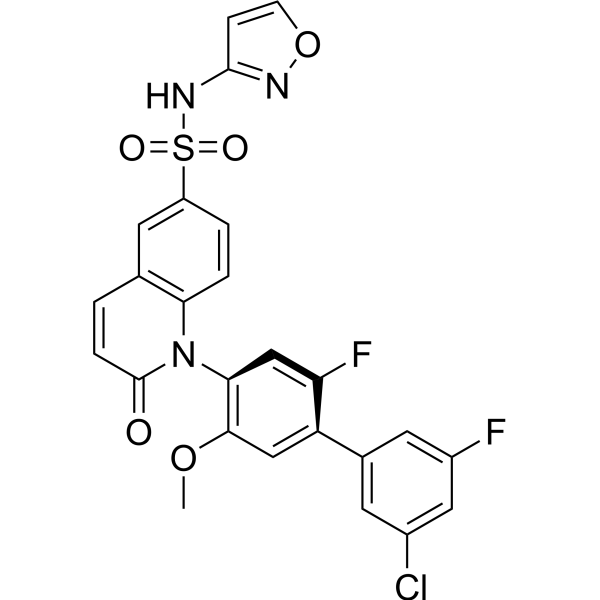
    Nav1.8-IN-5 (Example 1) is a voltage-gated sodium channel Nav1.8 inhibitor. Nav1.8-IN-5 can be used for Nav1.8-mediated diseases, such as pain and pain-related disorders, as well as cardiovascular diseases (such as atrial fibrillation) research .
    Nav1.8-IN-5
  • HY-163855

    Sodium Channel GABA Receptor Neurological Disease
    KGP-25 is an inhibitor of voltage-gated sodium channel 1.8 (Nav1.8), which can be used for analgesia by targeting Nav1.8 in the peripheral nervous system (PNS). KGP-25 can also target γ-aminobutyric acid subtype A receptor (GABAA) in the central nervous system (CNS) for general anesthesia .
    KGP-25
  • HY-183709

    Sodium Channel Neurological Disease
    Nav1.8-IN-24 is a voltage-gated sodium channel Nav1.8 inhibitor with pIC50 values of 7.4 (resting state) and 7.5 (inactivated state), and it exhibits high selectivity for NaV1.1-1.7 subtypes. Nav1.8-IN-24 possesses in vitro safety and drug interaction profiles. Nav1.8-IN-24 can be used for the research of acute pain and chronic neuropathic pain .
    Nav1.8-IN-24
  • HY-W105272R

    Reference Standards Endogenous Metabolite Metabolic Disease
    Halofuginone (Standard) is the analytical standard of Halofuginone. This product is intended for research and analytical applications. Halofuginone (RU-19110), a Febrifugine derivative, is a competitive prolyl-tRNA synthetase inhibitor with a Ki of 18.3 nM . Halofuginone is a specific inhibitor of type-I collagen synthesis and attenuates osteoarthritis (OA) by inhibition of TGF-β activity . Halofuginone is also a potent pulmonary vasodilator by activating Kv channels and blocking voltage-gated, receptor-operated and store-operated Ca2+ channels. Halofuginone has anti-malaria, anti-inflammatory, anti-cancer, anti-fibrosis effects .
    2′-Deoxyadenosine 5′-monophosphate disodium (Standard)
  • HY-N1584BR

    RU-19110 hydrochloride (Standard)

    Reference Standards Calcium Channel DNA/RNA Synthesis Parasite Sodium Channel TGF-beta/Smad Infection Cardiovascular Disease Inflammation/Immunology Cancer
    Halofuginone (hydrochloride) (Standard) is the analytical standard of Halofuginone (hydrochloride). This product is intended for research and analytical applications. Halofuginone (RU-19110) hydrobromid, a Febrifugine derivative, is a competitive prolyl-tRNA synthetase inhibitor with a Ki of 18.3 nM. Halofuginone hydrobromid is a specific inhibitor of type-I collagen synthesis and attenuates osteoarthritis (OA) by inhibition of TGF-β activity. Halofuginone hydrobromid is also a potent pulmonary vasodilator by activating Kv channels and blocking voltage-gated, receptor-operated and store-operated Ca2+ channels. Halofuginone hydrobromid has anti-malaria, anti-inflammatory, anti-cancer, anti-fibrosis effects [4] .
    Halofuginone hydrochloride (Standard)
  • HY-B0516R

    Hoe-045 (Standard)

    Reference Standards Sodium Channel NF-κB NOD-like Receptor (NLR) Neurological Disease
    Articaine (Hoe-045) hydrochloride (Standard) is the analytical standard of Articaine hydrochloride (HY-B0516). This product is intended for research and analytical applications. Articaine (Hoe-045) hydrochloride is a selective inhibitor of voltage-gated sodium channels (such as rNav1.4, hNav1.7, and rNav1.8), with an IC50 of 15.8 μM for open-state Na + channels, and IC50 of 40.6 μM and 378 μM for inactivated and resting-state Na + channels, respectively. Articaine hydrochloride exerts local anesthetic activity by inhibiting Na + influx to block nerve impulse conduction, and can also inhibit NF-κB activation and NLRP3 inflammasome pathways, exhibiting anti-inflammatory function. Articaine hydrochloride can be used in the study of dental local anesthesia and inflammatory-related diseases (such as acute kidney injury) .
    Articaine hydrochloride (Standard)
  • HY-B0516AR

    Hoe-045 free base (Standard)

    Reference Standards Sodium Channel NF-κB NOD-like Receptor (NLR) Inflammation/Immunology
    Articaine (Standard) is the analytical standard of Articaine (HY-B0516A). This product is intended for research and analytical applications. Articaine (Hoe-045) hydrochloride is a selective inhibitor of voltage-gated sodium channels (such as rNav1.4, hNav1.7, and rNav1.8), with an IC50 of 15.8 μM for open-state Na + channels, and IC50 of 40.6 μM and 378 μM for inactivated and resting-state Na + channels, respectively. Articaine hydrochloride exerts local anesthetic activity by inhibiting Na + influx to block nerve impulse conduction, and can also inhibit NF-κB activation and NLRP3 inflammasome pathways, exhibiting anti-inflammatory function. Articaine hydrochloride can be used in the study of dental local anesthesia and inflammatory-related diseases (such as acute kidney injury) .
    Articaine (Standard)
  • HY-183646

    Sodium Channel Neurological Disease
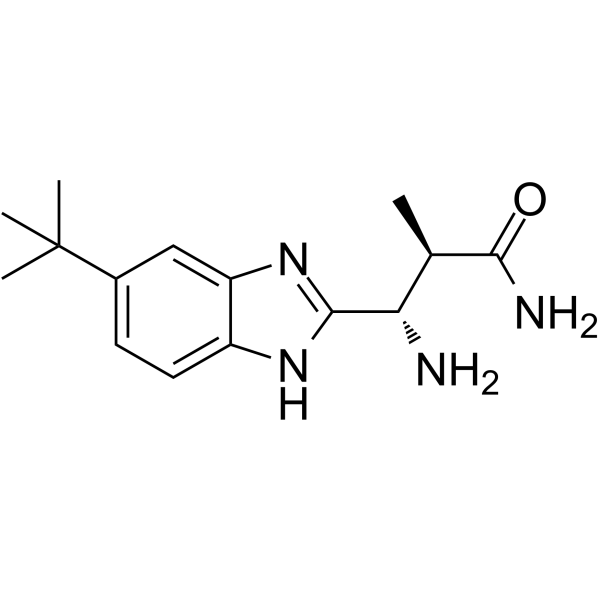
    Nav1.8-IN-23 is a Nav1.8 voltage-gated sodium channel inhibitor with a pIC50 of 6.1. Nav1.8-IN-23 can be used for the research of pain-related diseases .
    Nav1.8-IN-23
  • HY-182195

    Drug Derivative Sodium Channel Neurological Disease
    Suzetrigine N-oxide (the third compound in P57) is a derivative of Suzetrigine (HY-148800). Suzetrigine N-oxide is an inhibitor of voltage-gated sodium channels (Nav1.8) and can be used for research on the treatment of pain, especially neuropathic pain .
    Suzetrigine N-oxide
  • HY-183566

    Sodium Channel Neurological Disease
    MK-5661 is an orally potent NaV1.8 voltage-gated sodium channel inhibitor with an EC50 of 4.3 nM. MK-5661 selectively inhibits peripheral nociceptive signaling mediators. MK-5661 reduces capsaicin-induced spontaneous nociceptive behaviors in humanized rats and attenuates capsaicin-induced skin flushing responses in rhesus monkeys. MK-5661 is applicable for pain-related research .
    MK-5661

Inquiry Online

Your information is safe with us. * Required Fields.

Salutation


Country or Region *

Applicant Name *


Organization Name *

Department *


Email Address *


Product Name *

Cat. No.


Requested quantity *

Phone Number *


Remarks

Inquiry Online

Inquiry Information

Product Name:
Cat. No.:
Quantity:
MCE Japan Authorized Agent:

