1. Search Result
Search Result
Results for "

workers

" in MedChemExpress (MCE) Product Catalog:

15

Inhibitors & Agonists

1

Peptides

6

Natural
Products

1

Isotope-Labeled Compounds

Cat. No. Product Name Target Research Areas Chemical Structure
  • HY-B1839

    Environmental Pollutants JNK Fungal p38 MAPK Bcl-2 Family Caspase Autophagy Apoptosis Infection
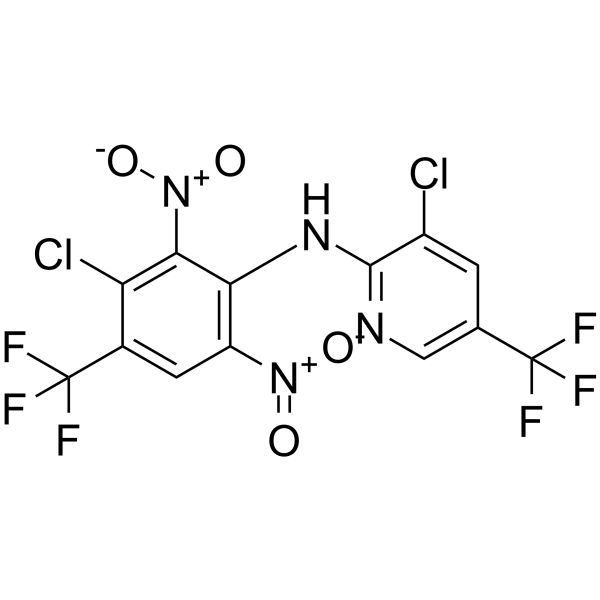
    Fluazinam is an orally active dinitroaniline fungicide. Fluazinam induces phosphorylation of JNK, activates p38 pathway, decreases Bcl-2, activates caspase-3, decreases complex I activity, increases Autophagy and Apoptosis. Fluazinam has strong antifungal activity against F. fujikuroi and B. maydis. Fluazinam has a negative impact on Brachydanio rerio and worker bees .
    Fluazinam
  • HY-W089845
    Heneicosane
    1 Publications Verification

    Environmental Pollutants Fungal Sex Pheromone Infection Endocrinology
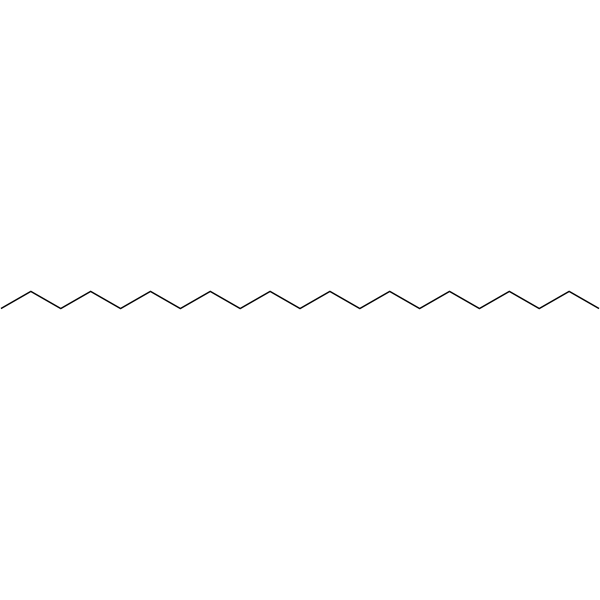
    Heneicosane is a royal-specific pheromone of insects (such as subterranean termites) and is an identification signal for queens and kings in termites. Heneicosane mediates royal recognition and the maintenance of social division of labor by being sensed by worker ants and triggering vibrations and antennal behaviors. Heneicosane can exert anti-inflammatory, analgesic and antipyretic activities by inhibiting the release of inflammatory mediators (such as prostaglandins and cytokines). At the same time, Heneicosane can also inhibit the mycelial growth of aflatoxin-producing fungi and inhibit the production of aflatoxin. Heneicosane can be used in insect chemical ecology research to analyze the regulatory mechanism of termite social behavior, and is also a potential target for new anti-inflammatory drugs .
    Heneicosane
  • HY-119902

    Insecticide Infection
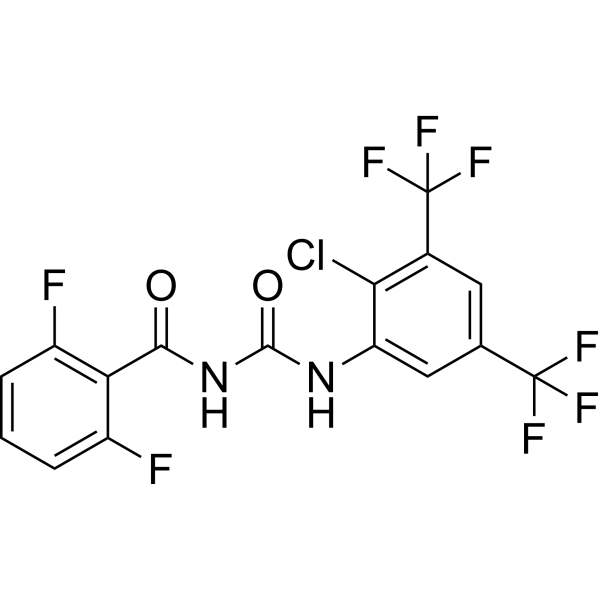
    Bistrifluron is a benzoylphenylurea compound and orally active insecticide with activity against termites. At a concentration of 5,000 ppm, Bistrifluron acts as a bait toxicant against workers of the Formosan subterranean termite (Coptotermes formosanus), and also inhibits the grooming behavior of termites and impairs their motor ability prematurely .
    Bistrifluron
  • HY-B1839R

    Reference Standards Fungal JNK p38 MAPK Bcl-2 Family Caspase Autophagy Apoptosis Infection
    Fluazinam (Standard) is the analytical standard of Fluazinam (HY-B1839). This product is intended for research and analytical applications. Fluazinam is a broad spectrum pyridinamine fungal inhibitor. Fluazinam is an orally active dinitroaniline fungicide. Fluazinam induces phosphorylation of JNK, activates p38 pathway, decreases Bcl-2, activates caspase-3, decreases complex I activity, increases Autophagy and Apoptosis. Fluazinam has strong antifungal activity against F. fujikuroi and B. maydis. Fluazinam has a negative impact on Brachydanio rerio and worker bees .
    Fluazinam (Standard)
  • HY-P3035

    G Protein-coupled Receptor Kinase (GRK) Neurological Disease
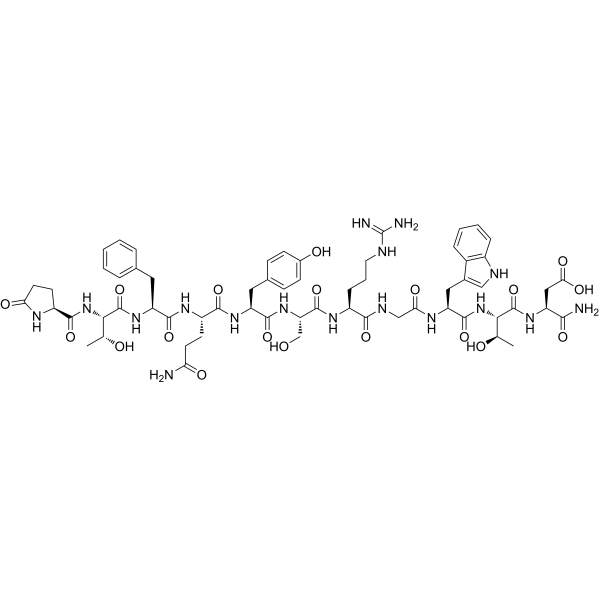
    Corazonin is a highly conserved neuropeptide hormone of wide-spread occurrence in insects, serves a central regulator of caste identity and behavior in social insects. Corazonin is also preferentially expressed in workers and/or foragers from other social insect species .
    Corazonin
  • HY-N12919

    Others Endocrinology
    (E)-3-Dodecenol is a termite trail pheromone that can be isolated from the whole body and thymus extracts of termite workers. (E)-3-Dodecenol induces orientational and recruitment behavior effects, but its induction effect is weaker than (Z)-Dodecenol or natural thymus extracts .
    (E)-3-Dodecenol
  • HY-119902R

    Insecticide Reference Standards Infection
    Bistrifluron (Standard) is the analytical standard of Bistrifluron. This product is intended for research and analytical applications. Bistrifluron is a benzoylphenylurea compound and orally active insecticide with activity against termites. At a concentration of 5,000 ppm, Bistrifluron acts as a bait toxicant against workers of the Formosan subterranean termite (Coptotermes formosanus), and also inhibits the grooming behavior of termites and impairs their motor ability prematurely .
    Bistrifluron (Standard)
  • HY-W089845S

    Isotope-Labeled Compounds Sex Pheromone Fungal Infection Endocrinology
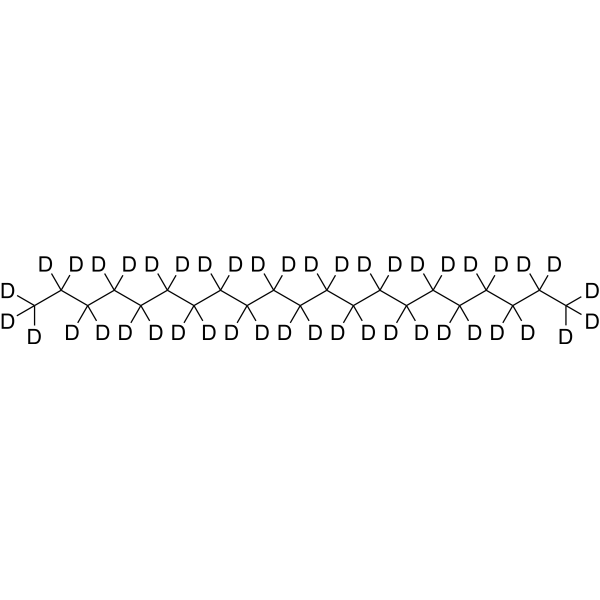
    Heneicosane-d44 is the deuterium labeled Heneicosane (HY-W089845). Heneicosane is a royal-specific pheromone of insects (such as subterranean termites) and is an identification signal for queens and kings in termites. Heneicosane mediates royal recognition and the maintenance of social division of labor by being sensed by worker ants and triggering vibrations and antennal behaviors. Heneicosane can exert anti-inflammatory, analgesic and antipyretic activities by inhibiting the release of inflammatory mediators (such as prostaglandins and cytokines). At the same time, Heneicosane can also inhibit the mycelial growth of aflatoxin-producing fungi and inhibit the production of aflatoxin. Heneicosane can be used in insect chemical ecology research to analyze the regulatory mechanism of termite social behavior, and is also a potential target for new anti-inflammatory drugs .
    Heneicosane-d44
  • HY-W089845R

    Reference Standards Sex Pheromone Fungal Infection Endocrinology
    Heneicosane (Standard) is the analytical standard of Heneicosane (HY-W089845). This product is intended for research and analytical applications. Heneicosane is a royal-specific pheromone of insects (such as subterranean termites) and is an identification signal for queens and kings in termites. Heneicosane mediates royal recognition and the maintenance of social division of labor by being sensed by worker ants and triggering vibrations and antennal behaviors. Heneicosane can exert anti-inflammatory, analgesic and antipyretic activities by inhibiting the release of inflammatory mediators (such as prostaglandins and cytokines). At the same time, Heneicosane can also inhibit the mycelial growth of aflatoxin-producing fungi and inhibit the production of aflatoxin. Heneicosane can be used in insect chemical ecology research to analyze the regulatory mechanism of termite social behavior, and is also a potential target for new anti-inflammatory drugs .
    Heneicosane (Standard)
  • HY-135450

    Insecticide Cholinesterase (ChE) Infection Neurological Disease
    Dimefluthrin is an insecticide. Dimefluthrin exhibits contact toxicity against large red imported fire ant workers. Dimefluthrin undergoes horizontal transfer among red imported fire ant workers, causing secondary mortality in recipient workers. Dimefluthrin is a neurodevelopmental toxicant, which can reduces acetylcholinesterase activity, impairing neurotransmitter .
    Dimefluthrin
  • HY-W010415

    Environmental Pollutants Insecticide Infection
    Prenyl acetate is an insecticide. At low concentrations, prenyl acetate exhibits an attractant effect on worker ants of the red imported fire ant, and it elicits strong antennal electroantennogram (EAG) responses in all castes of the red imported fire ant. Prenyl acetate shows low toxicity to mammals. It can be used in research related to the control of the red imported fire ant (Solenopsis invicta) .
    Prenyl acetate
  • HY-N17907

    Others Infection
    1-(4-Hydroxy-3-methoxyphenyl)dec-5-en-3-one is an aryldecanone termite antifeedant compound found in the seeds of Aframomum melegueta. 1-(4-Hydroxy-3-methoxyphenyl)dec-5-en-3-one acts as a feeding deterrent against Reticulitermes speratus workers in a choice filter paper disk bioassay .
    1-(4-Hydroxy-3-methoxyphenyl)dec-5-en-3-one
  • HY-167273

    Drug Derivative Others
    4-Methyldecane is a branched saturated hydrocarbon found in the Dufour gland of Formica lemani workers .
    4-Methyldecane
  • HY-W674655

    Environmental Pollutants Others
    Heptyl butyrate is a pheromone and is an attractant for many wasp species. Heptyl butyrate elicits hovering and landing behavior in Vespula germanica wasps. Heptyl butyrate enhances attraction when applied to protein baits, increasing Vespula germanica wasps’ likelihood of landing on baits.Heptyl butyrate can be used for the research of invasive Vespula germanica wasp population management .
    Heptyl butyrate
  • HY-183705

    Fungal Mitochondrial Metabolism ATP Synthase Infection
    Antimicrobial agent-50 (Compound C2) is an anti-oomycete and Fungicidal agent. Antimicrobial agent-50 inhibits the activity of Mitochondrial respiratory chain complex III with an IC50 of 6.05 mg/L. Antimicrobial agent-50 inhibits ATP synthesis. Antimicrobial agent-50 exhibits protective activity against Phytophthora capsici in vivo. Antimicrobial agent-50 potently inhibits mycelial growth of Gaeumannomyces graminis, Rhizoctonia solani and Phytophthora capsici, with EC50 values of 2.97 mg/L, 1.86 mg/L and 0.74 mg/L, respectively .
    Antimicrobial agent-50

Inquiry Online

Your information is safe with us. * Required Fields.

Salutation


Country or Region *

Applicant Name *


Organization Name *

Department *


Email Address *


Product Name *

Cat. No.


Requested quantity *

Phone Number *


Remarks

Inquiry Online

Inquiry Information

Product Name:
Cat. No.:
Quantity:
MCE Japan Authorized Agent:

