



DOPE (GMP)

Based on 1 Customer Validation
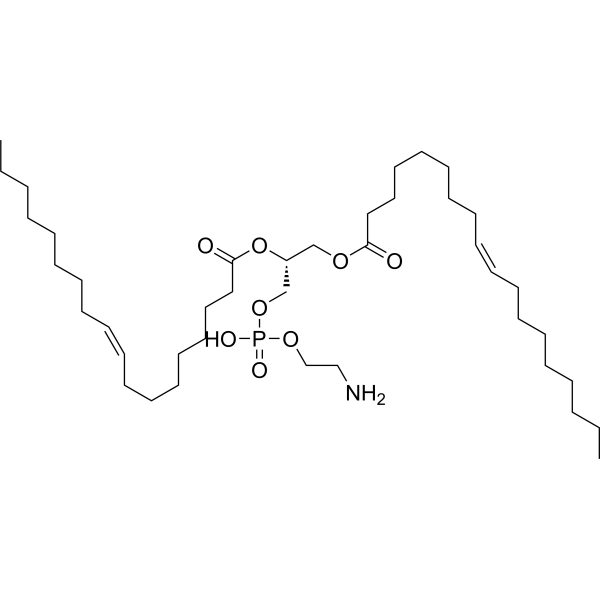
DOPE GMP is DOPE (HY-112005) produced by using GMP guidelines. GMP small molecules works appropriately as an auxiliary reagent for cell therapy manufacture. DOPE (Dioleoylphosphatidylethanolamine; 1,2-Dioleoyl-sn-glycero-3-phosphoethanolamine) is an orally active inhibitor of ferroptosis with anti-inflammatory and intestinal barrier maintenance activities. DOPE regulates the expression of ACSL4, SLC7A11 and GPX4 to restore the redox system balance, thereby reducing the levels of lipid peroxides, iron ions and intestinal inflammatory factors (IL-1β and IL-6). DOPE promotes the migration and proliferation of intestinal epithelial cells and increases the level of tight junction proteins; it also destabilizes endosomal membranes, mediates the conjugation of RVG peptides with mesenchymal stem cell-derived exosomes to enhance brain targeting. DOPE can be applied to research related to neonatal necrotizing enterocolitis and Alzheimer's disease.
For research use only. We do not sell to patients.
- CAS No.: 4004-05-1
- Formula: C41H78NO8P
- Molecular Weight:744.03
-
Storage:
Please store the product under the recommended conditions in the Certificate of Analysis.


To place orders, for customer services and technical support, please contact: MedChemExpress USA
Tel: 609-228-6898 E-mail: [email protected] [email protected]


-
 Biological Activity
-
Chemical Information
- Protocols
- Purity & Documentation
- References
-
 Help & FAQs


-
HY-112005
DOPEFerroptosis Inhibitor -
HY-113424A
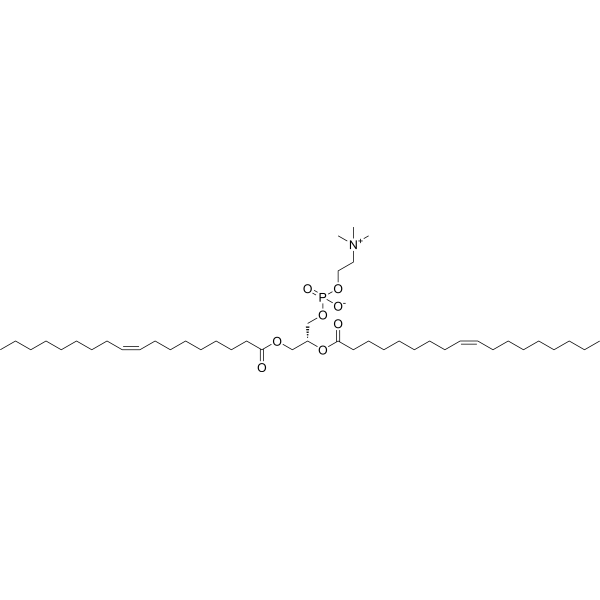
1,2-Dioleoyl-sn-glycero-3-phosphocholinePhospholipid -

HY-W040193
DSPCLiposome Compound -
HY-130463
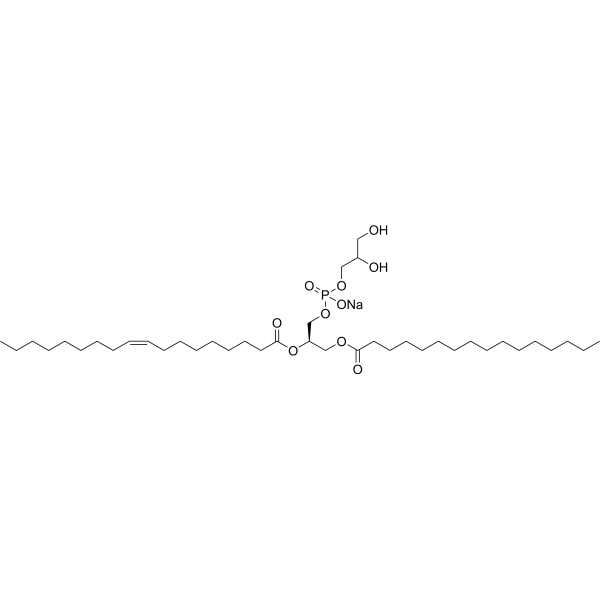
POPG sodiumPhospholipid -
HY-112530
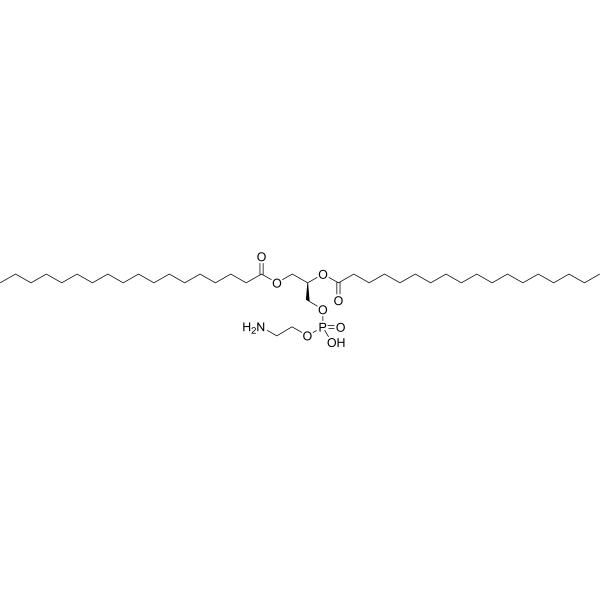
1,2-Distearoyl-sn-glycero-3-phosphorylethanolaminePhosphoethanolamine (PE) Lipid -
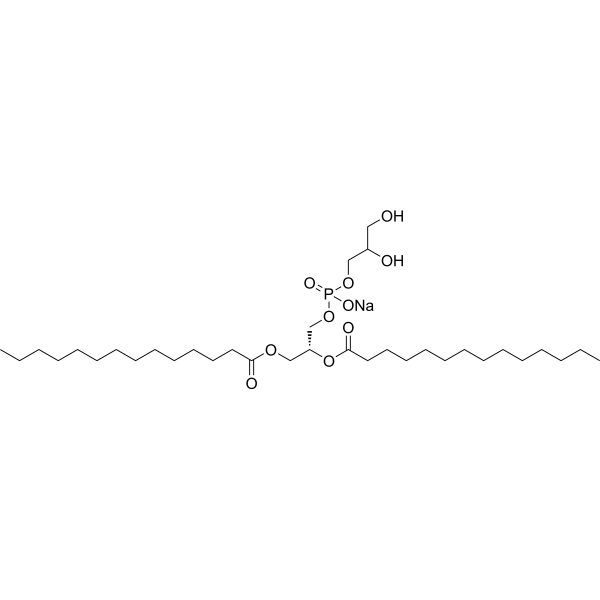
HY-22274
DMPG sodiumBiochemical Assay Reagent -
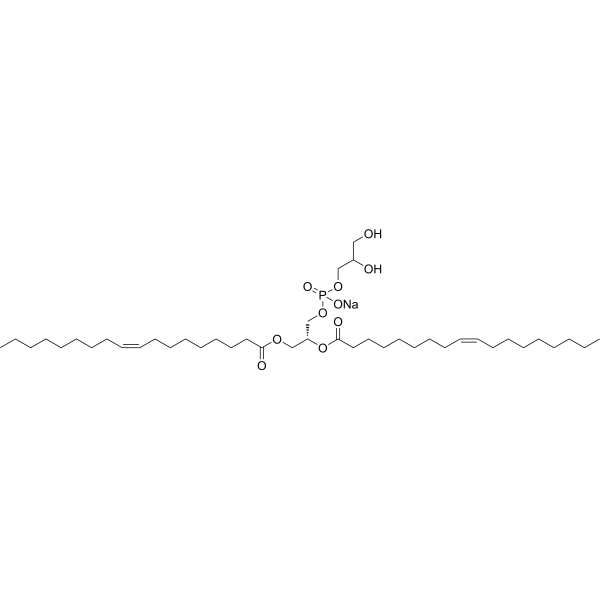
HY-141571
DOPG sodiumBiochemical Assay Reagent -

HY-112005GL
DOPE (GMP Like)Liposome -
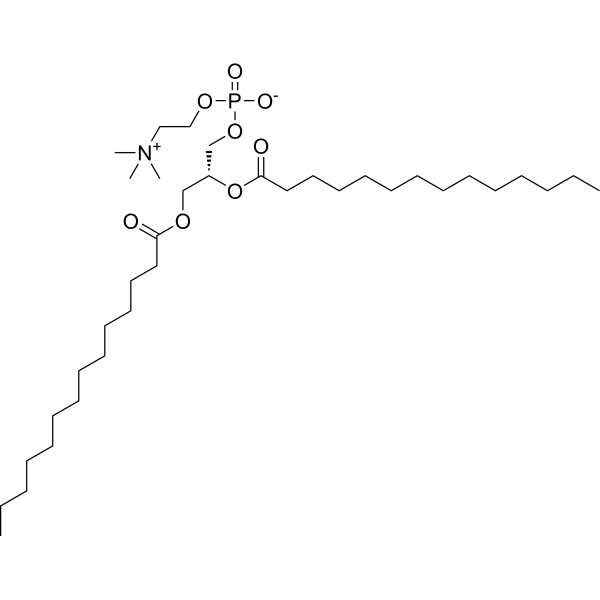
HY-109541
Colfosceril miristatePhospholipid Compound -
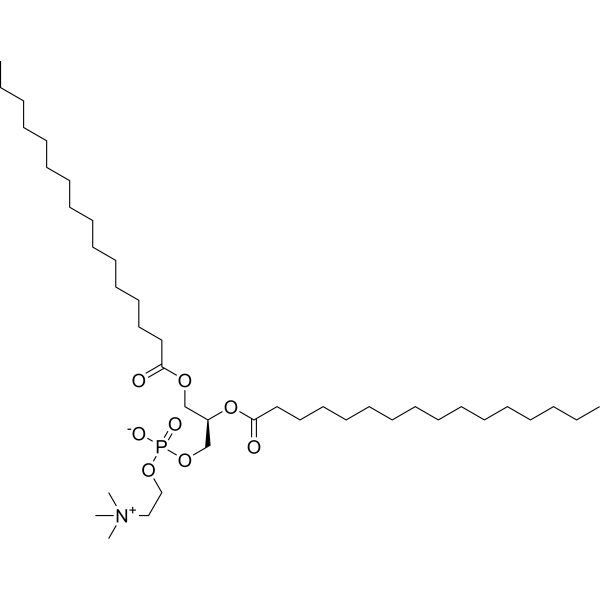
HY-109506
DPPCEndogenous Metabolite -
HY-130462
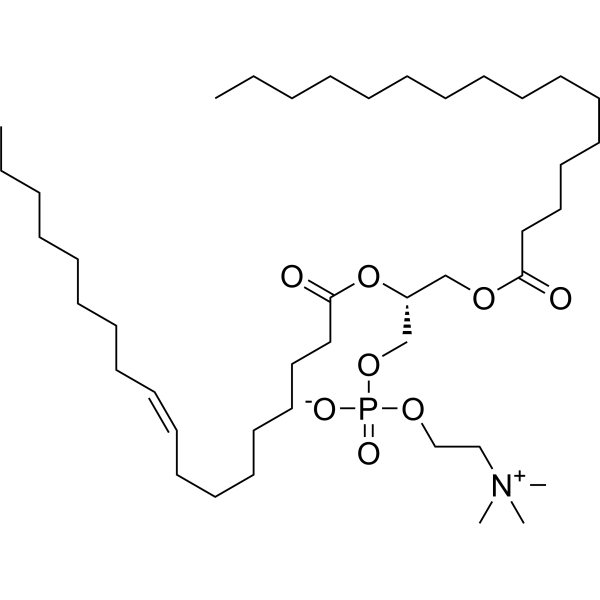
1-Palmitoyl-2-oleoyl-sn-glycero-3-PCSaturated Monobasic Alcohol -
HY-141613
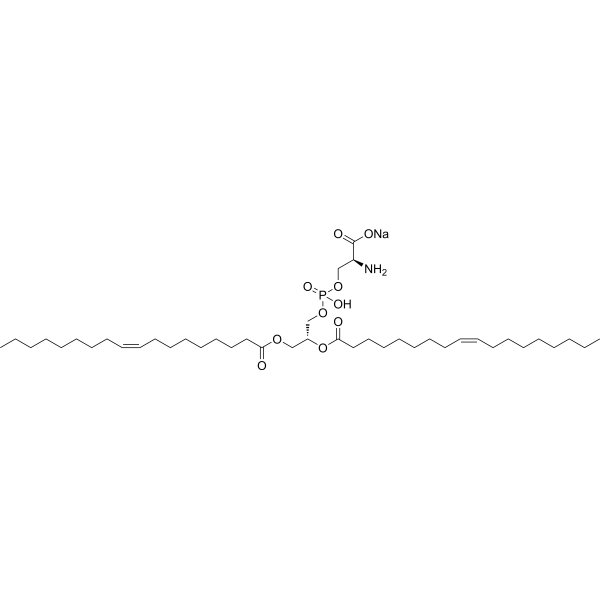
1,2-Dioleoyl-sn-glycero-3-phospho-L-serine sodiumPhosphoserine/Phosphatidylserine Ubstitute


Biological Activity
Description
IC50 & Target
|
GPX4 |
ACSL4 |
In Vitro
FITC-labeled DOPE GMP (2 h) is internalized by IEC-6 rat intestinal epithelial cells within 2 hours, and fluorescence is detectable in both the cytoplasm and nucleus[1].
DOPE GMP (5 μg/mL; 1 h) restores the migratory capacity of IEC-6 rat intestinal epithelial cells inhibited by LPS[1].
DOPE GMP (5 μg/mL; 1 h) restores the migration and proliferation capacities, as well as the expression of tight junction proteins (ZO-1, occludin), in RSL3-induced ferroptotic rat intestinal epithelial cells IEC-6[1].
DOPE GMP enhances the uptake efficiency of mesenchymal stem cells for AMSC-MP, improves the cell adhesion ability to scaffolds, upregulates the expression of osteogenesis-related gene RUNX2, and enhances in vitro osteogenic differentiation capacity. Moreover, this formulation exhibits excellent biocompatibility and does not exert adverse effects on cell viability[2].
MedChemExpress (MCE) has not independently confirmed the accuracy of these methods. They are for reference only.
-
Cell Line:LPS-stimulated rat intestinal epithelial IEC-6 cells
-
Concentration:5 µg/mL
-
Incubation Time:1 h (pre-incubation); 6 h (scratch monitoring)
-
Result:Restored LPS-inhibited IEC-6 cell migration capacity to near control levels, as measured by relative migration index.
In Vivo
MedChemExpress (MCE) has not independently confirmed the accuracy of these methods. They are for reference only.
-
Animal Model:Sprague-Dawley (SD) Rat (neonatal, within 24 hours after birth, experimentally induced NEC)[1]
-
Dosage:1 mg kg-1
-
Administration:p.o.; 3 times daily; 4 days
-
Result:Reduced neonatal rat mortality compared to the NEC-only group.
Significantly decreased the NEC pathological injury score of the terminal ileum.
Reduced relative mRNA expression of IL-1β and IL-6 in terminal ileum tissue.
Increased relative mRNA expression of tight junction proteins ZO-1 and occludin in terminal ileum tissue.
Improved intestinal epithelial proliferative ability compared to the NEC-only group.
Upregulated relative mRNA expression of the anti-ferroptosis factor GPX4 in terminal ileum tissue.
Reduced malondialdehyde (MDA) concentrations in terminal ileum tissue.


Chemical Information
-
CAS No. 4004-05-1
-
Appearance Oil
-
Molecular Weight 744.03
-
Formula C41H78NO8P
-
Color White to off-white
-
SMILES
O=P(OC[C@H](OC(CCCCCCC/C=C\CCCCCCCC)=O)COC(CCCCCCC/C=C\CCCCCCCC)=O)(OCCN)O
-
Synonyms
Dioleoylphosphatidylethanolamine (GMP); 1,2-Dioleoyl-sn-glycero-3-phosphoethanolamine (GMP)
-
Shipping
Room temperature in continental US; may vary elsewhere.
-
Storage
Please store the product under the recommended conditions in the Certificate of Analysis.


Purity & Documentation
References
[1]. Chen Y, et al. Human breast milk-derived phospholipid DOPE ameliorates intestinal injury associated with NEC by inhibiting ferroptosis. Food Funct. 2024;15(21):10811-10822. Published 2024 Oct 28. [Content Brief]
[4]. Cui GH, et al. RVG-modified exosomes derived from mesenchymal stem cells rescue memory deficits by regulating inflammatory responses in a mouse model of Alzheimer's disease. Immun Ageing. 2019;16:10. Published 2019 May 13. [Content Brief]

Calculators
Concentration (start) × Volume (start) = Concentration (final) × Volume (final)


DOPE (GMP) Related Classifications
HY-112005G Related Classifications
 Powered by Bioz
Keywords
- DOPE (GMP)
- 4004-05-1
- Dioleoylphosphatidylethanolamine (GMP)
- 1,2-Dioleoyl-sn-glycero-3-phosphoethanolamine (GMP)
- Ferroptosis
- Glutathione Peroxidase
- ACSL Family
- Amino acid Transporter
- SLC7A11
- ACSL4
- Alzheimer’s disease
- neonatal SD rats
- tight junction proteins
- IEC-6 rat intestinal epithelial cells
- intestinal epithelial cells
- neonatal necrotizing enterocolitis
- GPX4
- ferroptosis
- Inhibitor
- inhibitor
- inhibit