



SORT-PGRN interaction inhibitor 2
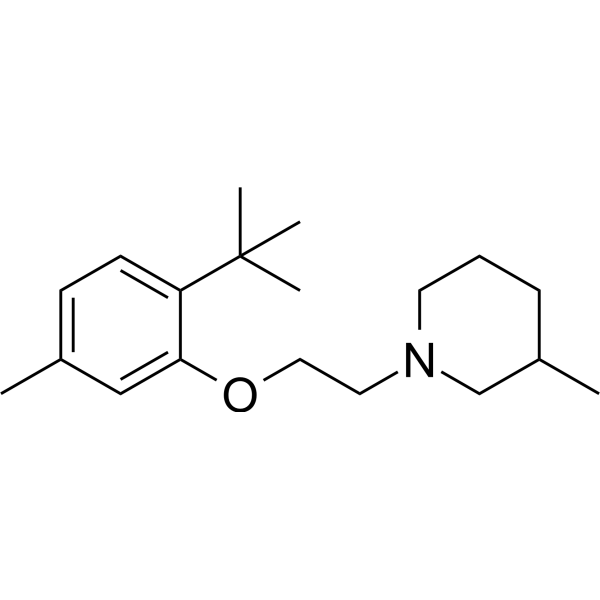
SORT-PGRN interaction inhibitor 2 is a SORT-PGRN inhibitor that can decreases SORT1 protein expression and increases extracellular PGRN secretion in mammalian cell lines. SORT-PGRN interaction inhibitor 2 can be used for neurological disease research.
For research use only. We do not sell to patients.
- CAS No.: 1008233-79-1
- Formula: C19H31NO
- Molecular Weight:289.46
-
Storage:
Please store the product under the recommended conditions in the Certificate of Analysis.

To place orders, for customer services and technical support, please contact: MedChemExpress USA
Tel: 609-228-6898 E-mail: [email protected] [email protected]


-
 Biological Activity
-
Chemical Information
- Protocols
- Purity & Documentation
- References
-
 Help & FAQs




Biological Activity
Description
In Vitro
SORT-PGRN interaction inhibitor 2 (Compound MPEP) (0-20 μM; 24 hours) decreases SORT1 expression and increases extracellular PGRN secretion in mammalian cell lines[1].
MedChemExpress (MCE) has not independently confirmed the accuracy of these methods. They are for reference only. Further protocols information, click here.
-
Cell Line:M17 cells, lymphoblastoid cell lines (LCLs) and iPSCs neurons, LCLs from two FTD-GRN families( UBC17 and UBC15)
-
Concentration:0, 5, 10, 20 μM
-
Incubation Time:24 h
-
Result:Preferentially increased extracellular PGRN levels by suppressing or reducing intracellular SORT1 levels without affecting sortilin-related family members SORLA and SORCS1.
Made exPGRN levels in the heterozygous mutation carrier (GRN+/2-LCL) restored to a level comparable with the homozygous non-carrier (GRN+/+-LCL) in p.R418X mutation in family UBC17.
Made exPGRN levels in the UBC15 family restored to 80% of that of noncarrier GRN+/+-LCL levels.


Chemical Information
-
CAS No. 1008233-79-1
-
Molecular Weight 289.46
-
Formula C19H31NO
-
SMILES
CC1CN(CCOC2=CC(C)=CC=C2C(C)(C)C)CCC1
-
Shipping
Room temperature in continental US; may vary elsewhere.
-
Storage
Please store the product under the recommended conditions in the Certificate of Analysis.

Protocols
-
RNA extraction experimental
By lysing cells, releasing RNA, and removing impurities such as proteins and DNA, high-purity RNA products are finally obtained. The commonly used traditional method is the guanidine isothiocyanate/phenol/chloroform method (Trizol), which is suitable for a variety of animal materials including animal tissues, microorganisms, cultured cells, etc., and most plant materials.
-
Western Blot
Western blotting (WB) is a commonly used experimental method in molecular biology, biochemistry, and immunogenetics for identifying and quantifying target proteins. It combines gel electrophoresis with immunoassay, enabling researchers to analyze protein expression, post-translational modifications, and molecular weight.
-
Research Protocol for Neurological Diseases
PINK1/Parkin-mediated mitophagy pathway is a mitochondrial quality-control signaling axis in which mitochondrial depolarization stabilizes PINK1 on damaged mitochondria, activates Parkin recruitment and E3 ubiquitin ligase activity, promotes ubiquitination of outer mitochondrial membrane proteins, recruits selective autophagy adaptors, and drives lysosomal degradation of damaged mitochondria. In neurological disease research, this pathway is experimentally important because neurons, especially dopaminergic neurons, are highly dependent on mitochondrial integrity, and defective mitochondrial turnover can lead to mitochondrial dysfunction, oxidative stress, impaired neuronal survival, α-synuclein accumulation, and neuroinflammatory damage-associated signals. The genetic disease link is strongest in Parkinson’s disease because mutations in PRKN/parkin cause autosomal recessive juvenile parkinsonism, mutations in PINK1 cause hereditary early-onset Parkinson’s disease, and Drosophila studie
-
Protocol For Protein Expression And Purification
Recombinant protein expression in Escherichia coli followed by purification of a His-tagged soluble protein by immobilized metal affinity chromatography (IMAC), with optional MBP fusion and TEV tag removal when the construct includes these elements. The biological readout is production of the encoded target protein, detected as an inducible band at the expected molecular mass by SDS-PAGE and quantified by total protein assay or chromatographic absorbance; the purification readout is enrichment of the target protein in elution fractions after selective binding of polyhistidine residues to immobilized Ni2+/metal-chelate resin and elution by imidazole-containing buffer. Expression is driven by an inducible bacterial expression system, commonly T7/lac-based, in which IPTG or lactose/auto-induction activates transcription and translation of the cloned gene; lower induction temperature, lower inducer concentration, induction timing, and solubility-enhancing fusion tags can influence the frac


Purity & Documentation
References

Calculators
Concentration (start) × Volume (start) = Concentration (final) × Volume (final)


SORT-PGRN interaction inhibitor 2 Related Classifications
HY-153687 Related Classifications
 Powered by Bioz