



TPCK-treated Trypsin
Based on 1 publication(s) in Google Scholar
TPCK-treated Trypsin is a trypsin whose activity is inhibited by tosyl phenylalanyl chloromethyl ketone. TPCK-treated Trypsin reduces autolysis and nonspecific proteolysis during experiments, exhibits stability in storage and handling. TPCK-treated trypsin can be used in proteomics research. TPCK-treated Trypsin renders the virus hemagglutinin active, which allows multicycle replication of the virus. TPCK-treated Trypsin can be used for the study of influenza virus.
For research use only. We do not sell to patients.
- CAS No.: 9002-07-7
-
Storage:
Please store the product under the recommended conditions in the Certificate of Analysis.


To place orders, for customer services and technical support, please contact: MedChemExpress USA
Tel: 609-228-6898 E-mail: [email protected] [email protected]


-
 Biological Activity
-
Chemical Information
-
Solvent & Solubility
- Protocols
- Purity & Documentation
- References
-
 Help & FAQs


-
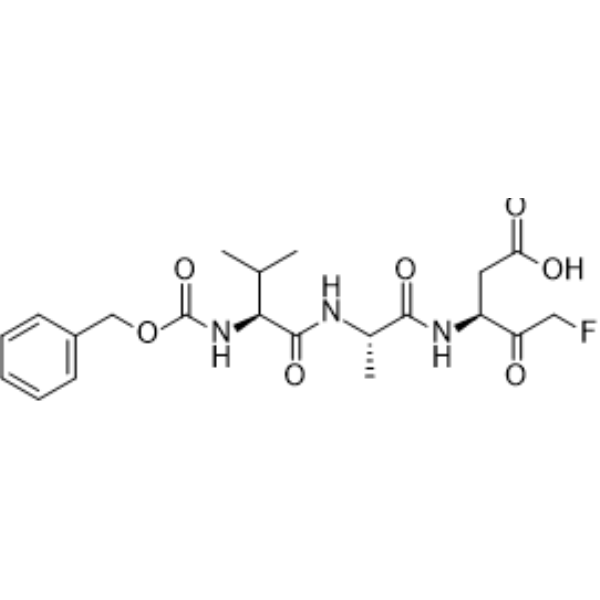
HY-16658B
Z-VAD-FMKPan-Caspase Inhibitor -

HY-129047
TrypsinSerine Protease -
HY-126388
Trypsin Inhibitor, soybeanTrypsin Inhibitor -
HY-129047A
Trypsin (MS grade)Serine Protease -
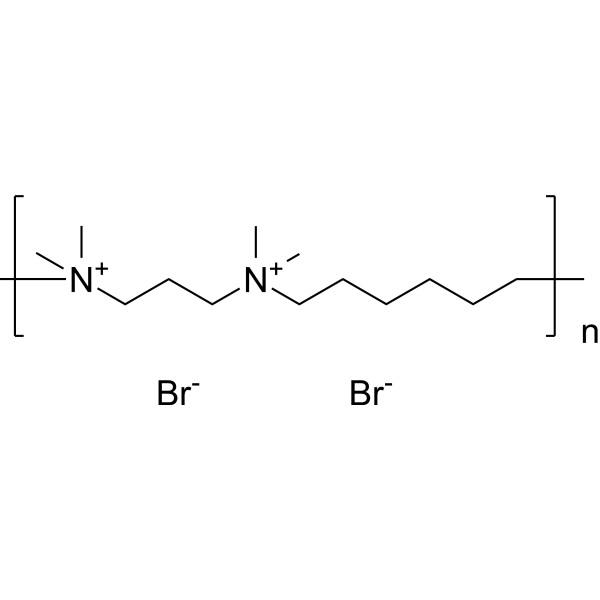
HY-112735
Hexadimethrine bromideCationic Polyelectrolyte -
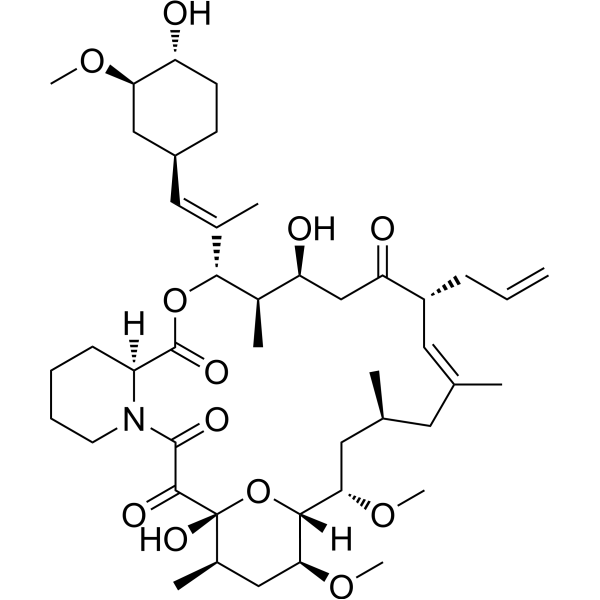
HY-13756
TacrolimusCalcineurin Inhibitor -

HY-P1156
Insulin(cattle)Recombinant Cattle Insulin -
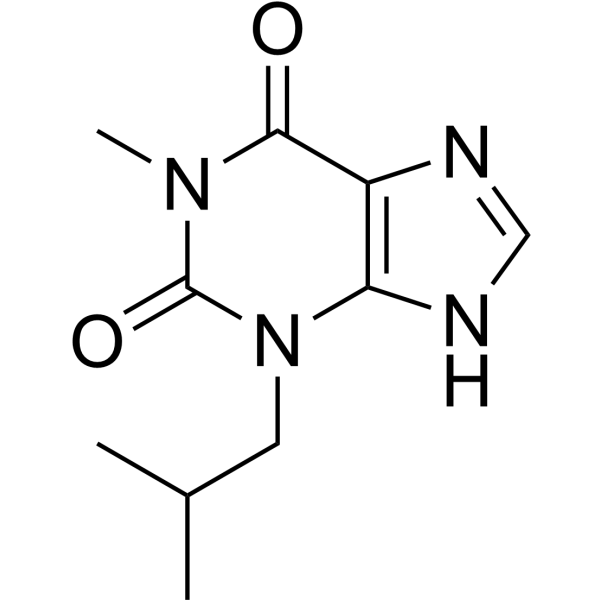
HY-12318
IBMXPDE Inhibitor -
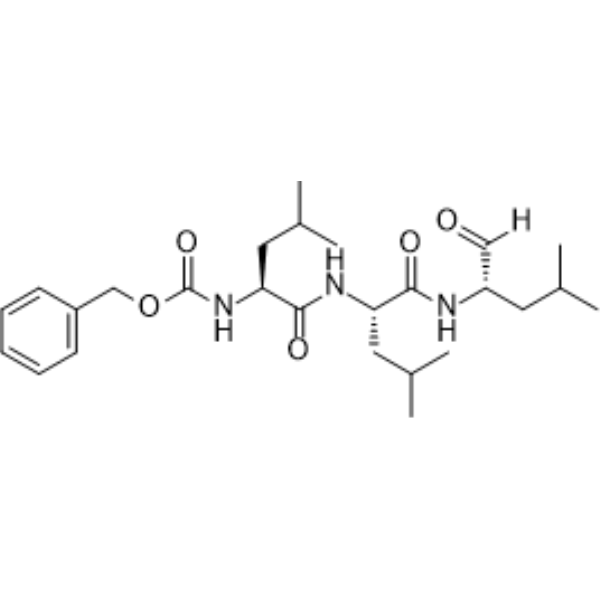
HY-13259
MG-132Proteasome Inhibitor -
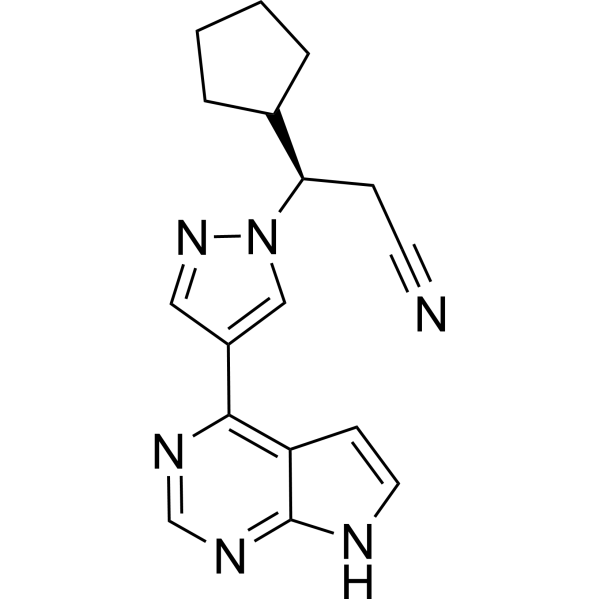
HY-50856
RuxolitinibJAK1/2 Inhibitor -
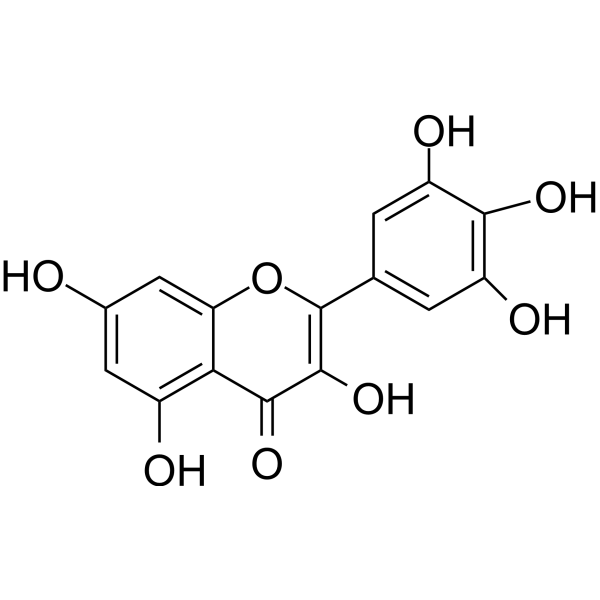
HY-15097
MyricetinAutophagy Inducer -
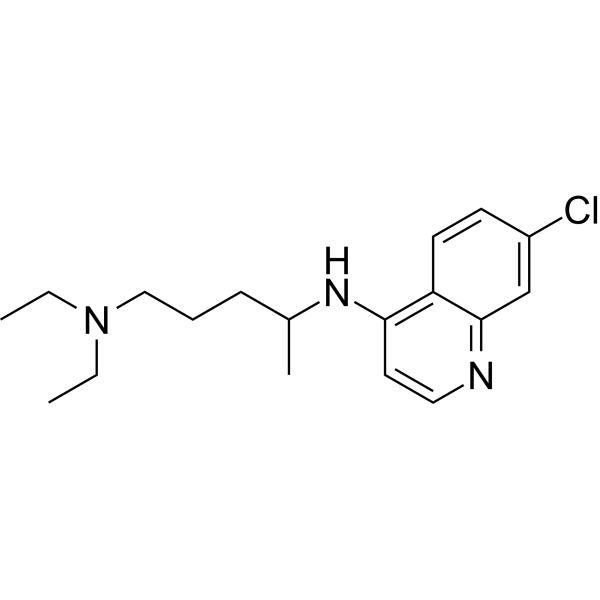
HY-17589A
ChloroquineAntimalarial Agent
Publications Citing Use of MedChemExpress (MCE) TPCK-treated Trypsin
More

Biological Activity
Description
In Vitro
Product Information This product is derived from bovine pancreas. After chromatographic purification, it is treated with L-(tosylamido-2-phenyl) ethyl chloromethyl ketone (TPCK) to inhibit the activity of proteases. The theoretical molecular weight is 23.3 kDa, and the optimal pH is 7.5-8.5. It can be used for protein analysis, such as protein mass spectrometry, sequencing, and peptide mapping analysis. Instructions (for reference only) This product can be directly used for protein enzymatic cleavage. The recommended enzymatic cleavage ratio is 1:50-1:100 (w/w); Enzymatic cleavage overnight at 37°C.
MedChemExpress (MCE) has not independently confirmed the accuracy of these methods. They are for reference only. Further protocols information, click here.
EC Number
3.4.21.4
Specific Activity
≥180 U/mg protein
Unit Definition
One Unit hydrolyzes one micromole of TAME per minute at 25°C, pH 8.2, in the presence of 0.01M calcium. (One TAME unit = 19.2 USP/NF units = 57.5 BAEE units.)


Chemical Information
-
CAS No. 9002-07-7
-
Appearance Solid
-
Color White to off-white
-
SMILES
[TPCK-treated Trypsin]
-
Shipping
Room temperature in continental US; may vary elsewhere.
-
Storage
Please store the product under the recommended conditions in the Certificate of Analysis.


Publications (1)
-
Journal Impact Factor
-
Most Recent
-
Nat Commun
Dipeptidylpeptidase 4 inhibition attenuates gestational pathologies via immune homeostasis restoration in the pulmonary-uterine axis. [Abstract]2026 Feb 17;17(1):2851. PMID: 41702893


Solvent & Solubility
In Vitro:
H2O : 100 mg/mL (Need ultrasonic)

Protocols
-
Research Protocol for Omics Data Analysis Pipelines
Omics data analysis pipelines convert raw high-throughput measurements from genomics, transcriptomics, epigenomics, proteomics, metabolomics, or single-cell assays into quality-controlled, statistically tested, biologically interpretable results. A reproducible omics pipeline requires predefined experimental metadata, raw-data quality control, modality-specific preprocessing, normalization, statistical modeling, multiple-testing correction, biological annotation, and independent validation. RNA-seq pipelines commonly include read QC, alignment or pseudoalignment, quantification, normalization, and differential-expression testing, while single-cell pipelines additionally require cell-level QC, normalization, dimensionality reduction, clustering, cell annotation, and sample-aware differential testing. Multi-omics integration can connect molecular layers such as transcriptome, proteome, metabolome, and epigenome, but unresolved problems include batch effects, missing values, unequal featu


Purity & Documentation
-
Data Sheet (268 KB)
-
SDS (251 KB)
- English - EN (251 KB)
- Français - FR (251 KB)
- Deutsch - DE (251 KB)
- Norwegian - NO (251 KB)
- Español - ES (251 KB)
- Swedish - SV (251 KB)
- Italian - IT (251 KB)
- Korean - KR (251 KB)
- Portuguese - PT (251 KB)
-
Handling Instructions (2659 KB)
References
[1]. Shuford CM, et al., Cheaper, faster, simpler trypsin digestion for high-throughput targeted protein quantification. J Mass Spectrom Adv Clin Lab. 2023 Nov 23;30:74-82. [Content Brief]
[2]. Cuevas F, et al. An In Vitro Microneutralization Assay for Influenza Virus Serology. Curr Protoc. 2022 Jul;2(7):e465. [Content Brief]

Calculators
Concentration (start) × Volume (start) = Concentration (final) × Volume (final)


TPCK-treated Trypsin Related Classifications
HY-129047C Related Classifications
 Powered by Bioz