



Trisodium phosphate (dodecahydrate), 98%
Trisodium phosphate dodecahydrate, 98% is an Antibacterial agent. Trisodium phosphate dodecahydrate, 98% reduces the counts of Escherichia coli O157:H7 and Salmonella typhimurium attached to the surfaces of beef fat and fascia. Trisodium phosphate dodecahydrate, 98% modulates the growth parameters of Listeria monocytogenes in vitro: low concentrations shorten the lag phase and increase the maximum growth rate, while high concentrations prolong the lag phase and decrease the maximum growth rate. Trisodium phosphate dodecahydrate, 98% is used in poultry processing.
For research use only. We do not sell to patients.
- CAS No.: 10101-89-0
- Formula: Na3PO4.12H2O
- Molecular Weight:380.12
-
Storage:
Please store the product under the recommended conditions in the Certificate of Analysis.


To place orders, for customer services and technical support, please contact: MedChemExpress USA
Tel: 609-228-6898 E-mail: [email protected] [email protected]


-
 Biological Activity
-
Chemical Information
- Protocols
- Purity & Documentation
- References
-
 Help & FAQs


-
HY-Y0308E
Sodium phosphate dibasic, for cell cultureBuffer -
HY-Y0308
Disodium phosphatePharmaceutical Excipient -
HY-Y0308H
Sodium phosphate dibasic, for molecular biologyInorganic salt -
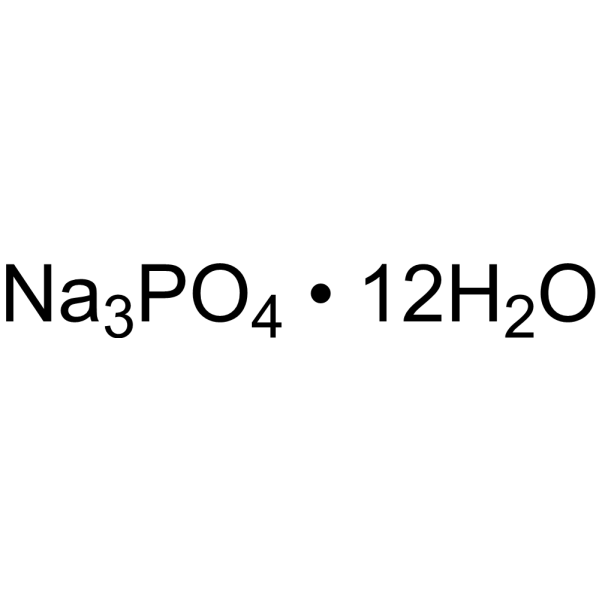
HY-W088066
Trisodium phosphate (dodecahydrate)Antibacterial Agent -

HY-Y0344D
Sodium chloride, for cell cultureBiochemical Assay Reagent -
HY-Y1325H
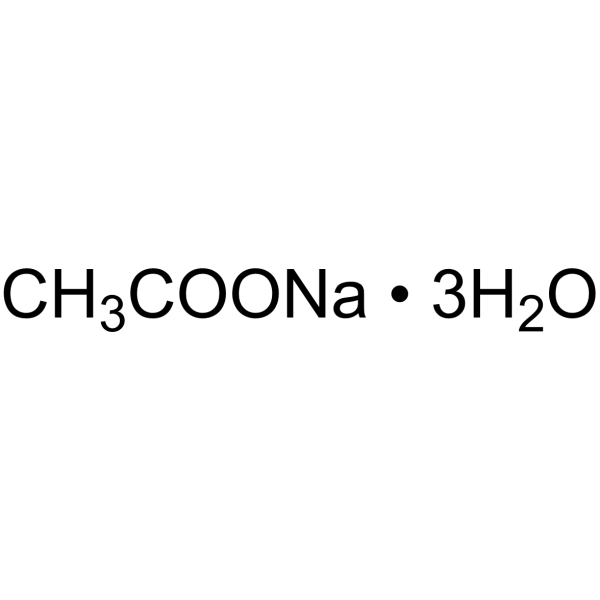
Sodium acetate trihydrate, meets analytical specification of Ph. Eur. BP USP FCC E262, ≤0.00002% AlInorganic salt -

HY-Y1325I
Sodium acetate trihydrate, 99.5%Inorganic salt -
HY-ER013C
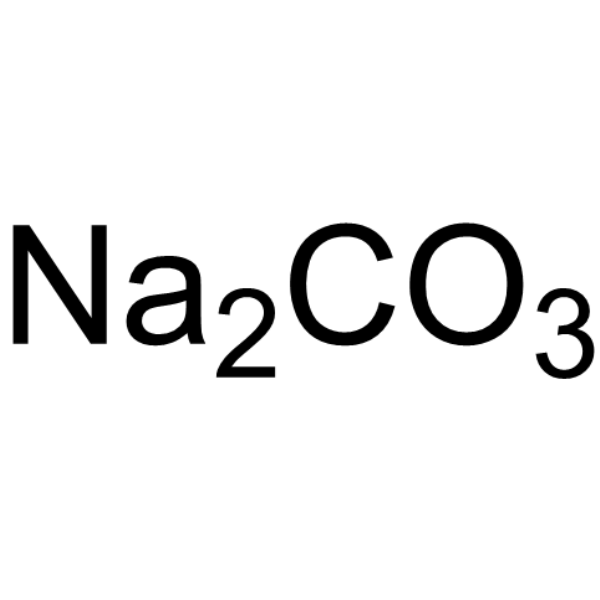
Sodium carbonate anhydrous, 99.8%Biochemical Reagent -

HY-Y0344I
Sodium chloride, meets analytical specification of Ph. Eur. BP USP, ≤0.00002% AlBiochemical Reagent -

HY-Y0344J
Sodium chloride, for molecular biologyInorganic Salt -
HY-W019883
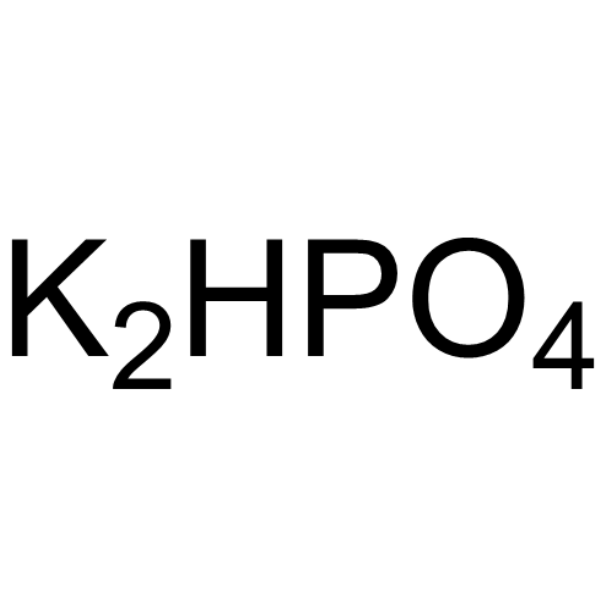
Dipotassium hydrogen phosphatePharmaceutical Excipient -
HY-W019981B
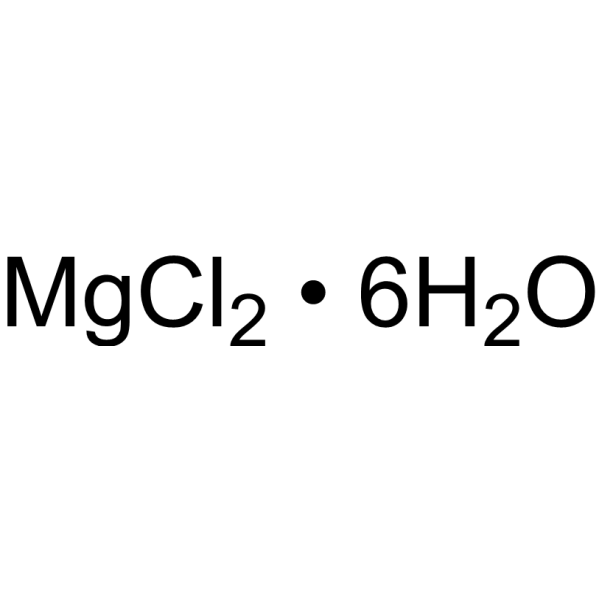
Magnesium chloride hexahydrate, for molecular biologySource of Magnesium Ion


Biological Activity
Description
In Vitro
Trisodium phosphate (10% (10°C); 15 s) dodecahydrate reduces attached Escherichia coli O157:H7 by up to 1.35 logs and Salmonella typhimurium by up to 0.91 logs on beef fat surfaces, and reduces E. coli O157:H7 by 0.92 logs and S. typhimurium by 0.51 logs on beef fascia surfaces, with greater efficacy against E. coli O157:H7 and on fat surfaces[1].
Trisodium phosphate (0.5-1.5% (w/v); 48 h) dodecahydrate modulates the growth kinetics of Listeria monocytogenes strains ATCC 19116, 64d, and M2-5b in a concentration-dependent manner, with 0.5% TSP reducing lag phase and increasing maximum growth rate, 1% TSP maintaining high maximum growth rate with slightly extended lag phase, and 1.5% TSP significantly increasing lag phase and reducing maximum growth rate[2].
MedChemExpress (MCE) has not independently confirmed the accuracy of these methods. They are for reference only. Further protocols information, click here.


Chemical Information
-
CAS No. 10101-89-0
-
Molecular Weight 380.12
-
Formula Na3PO4.12H2O
-
SMILES
[Na3PO4 ?12H2O]
-
Shipping
Room temperature in continental US; may vary elsewhere.
-
Storage
Please store the product under the recommended conditions in the Certificate of Analysis.

Protocols
-
Research Protocol for Infectious Diseases
Infectious-disease experiments test how pathogens interact with host barriers, innate immune receptors, inflammatory signaling, pathogen replication, and tissue injury; pattern-recognition receptors such as TLRs, RIG-I-like receptors, NOD-like receptors, and inflammasomes detect microbial molecules and activate NF-κB, interferon, and cytokine responses. The central hypothesis is that infection severity reflects the balance between pathogen burden and host response: protective inflammation restricts pathogen growth, whereas excessive or mislocalized inflammation contributes to tissue damage and disease phenotype. Unresolved questions include which host pathways are protective versus pathogenic, why some infection models fail to translate to human disease, and which combined readouts best predict clinically relevant infection outcomes.


Purity & Documentation
References

Calculators
Concentration (start) × Volume (start) = Concentration (final) × Volume (final)


Trisodium phosphate (dodecahydrate), 98% Related Classifications
HY-W088066A Related Classifications
 Powered by Bioz