



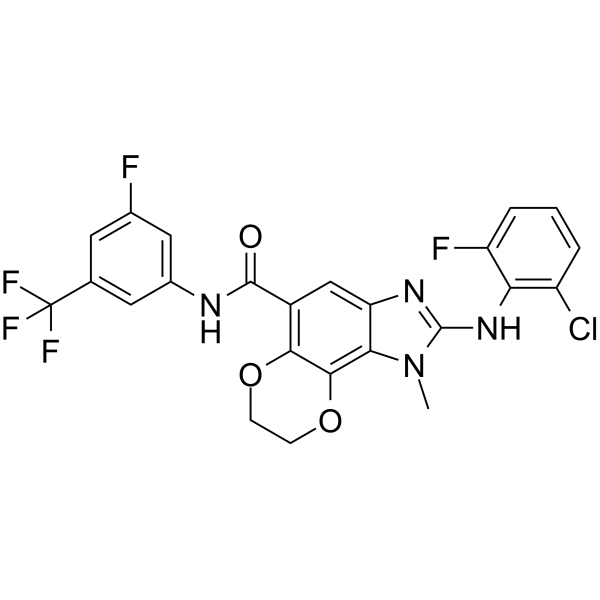
mPGES1-IN-3
mPGES1-IN-3 is a selective, orally active mPGES-1 inhibitor with an IC50 of 8.0 nM for h-mPGES-1 and an IC50 of 10.79 nM for guinea pig mPGES1. mPGES1-IN-3 blocks the conversion of PGH2 (HY-136500) to PGE2 (HY-101952). mPGES1-IN-3 exhibits dose-dependent inhibition of LPS-induced thermal hyperalgesia. mPGES1-IN-3 can be used for research on rheumatoid arthritis.
For research use only. We do not sell to patients.
- CAS No.: 1469976-70-2
- Formula: C24H16ClF5N4O3
- Molecular Weight:538.85
-
Storage:
Please store the product under the recommended conditions in the Certificate of Analysis.

To place orders, for customer services and technical support, please contact: MedChemExpress USA
Tel: 609-228-6898 E-mail: [email protected] [email protected]


-
 Biological Activity
-
Chemical Information
- Protocols
- Purity & Documentation
- References
-
 Help & FAQs


-
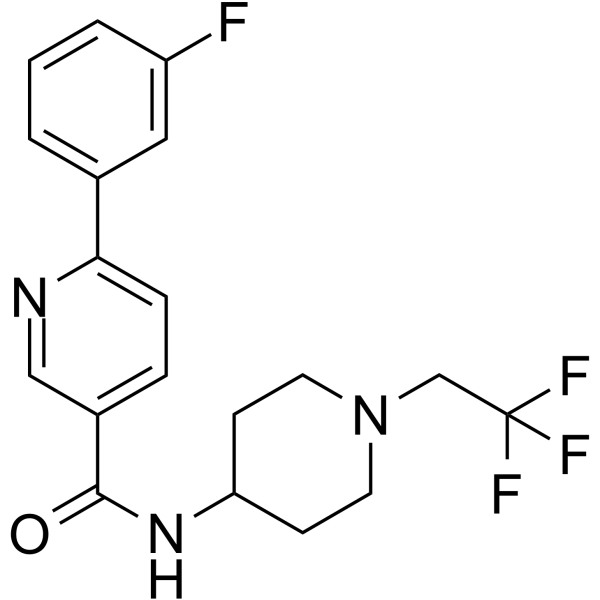
HY-10439
HPGDS inhibitor 1HPGDS Inhibitor -
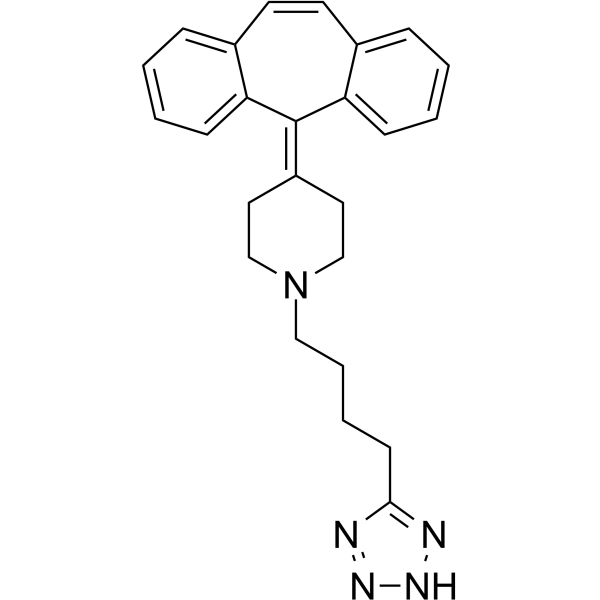
HY-13988
AT-56L-PGDS Inhibitor -
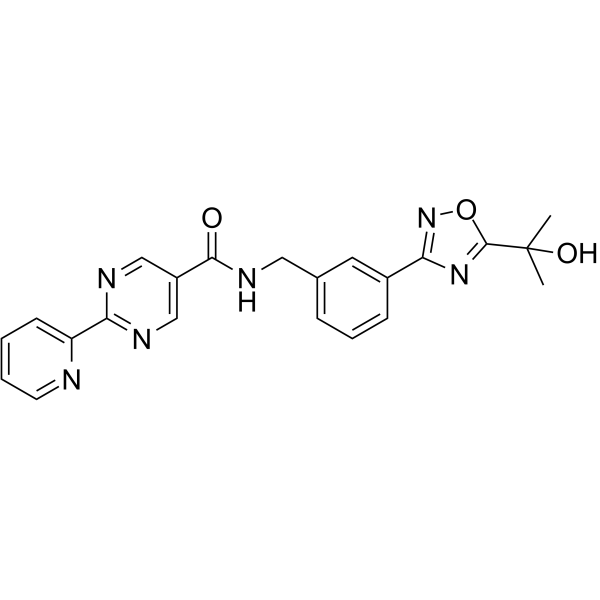
HY-12791
hPGDS-IN-1hPGDS Inhibitor -
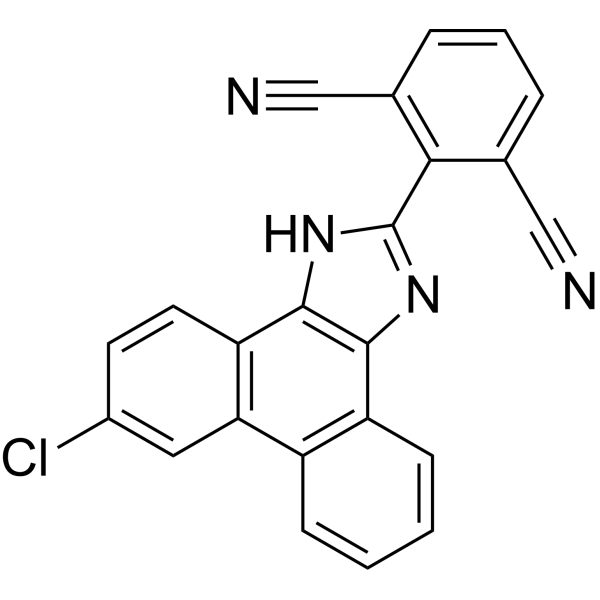
HY-13283
MF63MF63 Inhibitor -
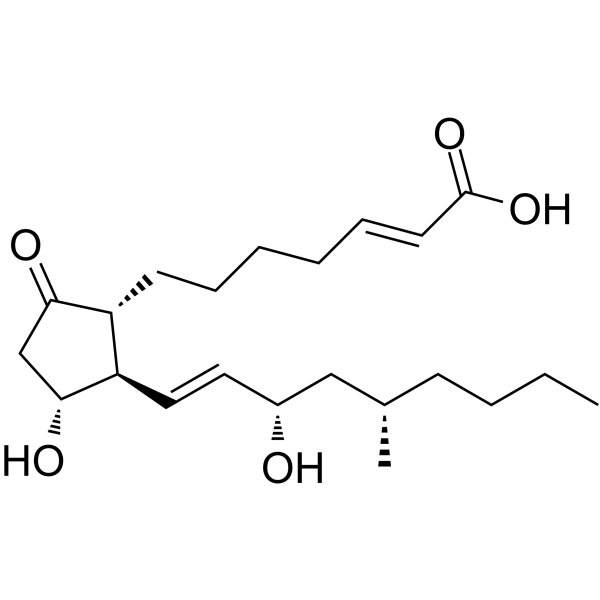
HY-B0683
LimaprostVasodilator Agent -

HY-10439R
HPGDS inhibitor 1 (Standard)Reference Standard -
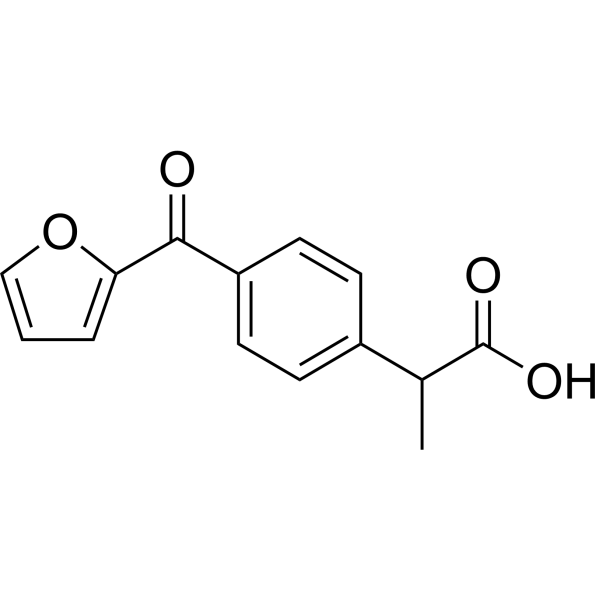
HY-106907
FurprofenAnti-Inflammatory Drug -

HY-13988R
AT-56 (Standard)L-PGDS Inhibitor -
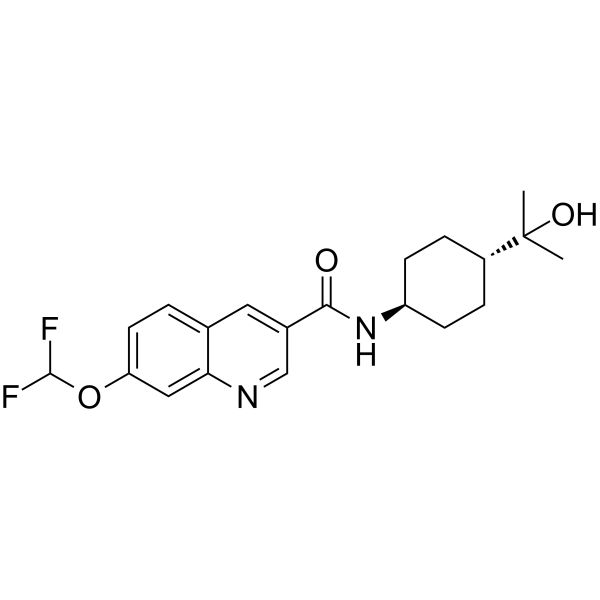
HY-126134
HPGDS inhibitor 2 -
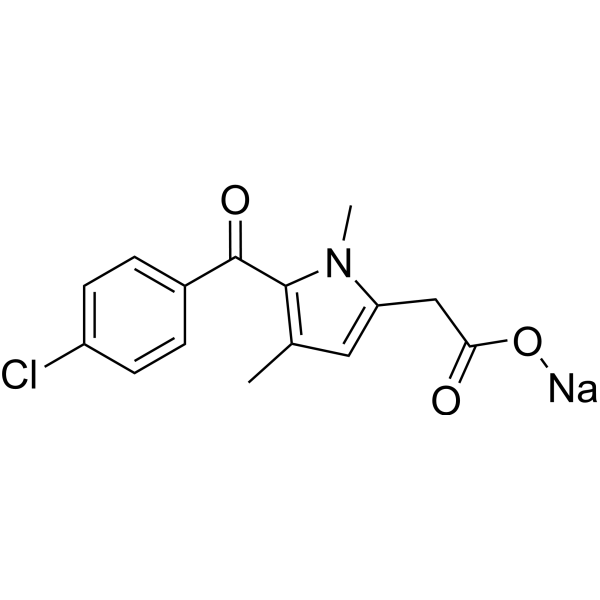
HY-B0890
Zomepirac sodium saltProstaglandin Synthetase Inhibitor -
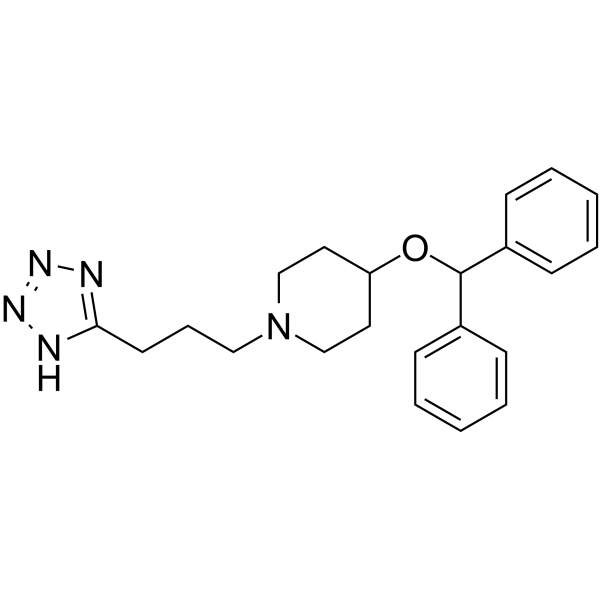
HY-108259
HQL-79Prostaglandin D Synthase Inhibitor -
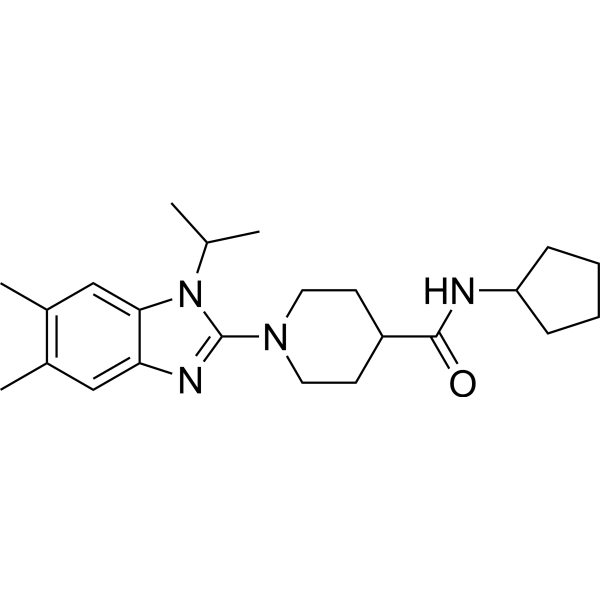
HY-118282
mPGES1-IN-7mPGES-1 Inhibitor


Biological Activity
Description
IC50 & Target
IC50: 8 nM (mPGES-1)[1]
Cellular Effect
|
Cell Line

|
Type | Value | Description | References |
|---|---|---|---|---|
| A549 | IC50 |
16.24 nM
|
Inhibition of PGE2 production in human A549 cells in the presence of 2% FBS.
Inhibition of PGE2 production in human A549 cells in the presence of 2% FBS.
|
27865703 |
In Vitro
mPGES1-IN-3 (Compound 17d) (10 μM; 60 min) exhibits favorable in vitro ADME properties, including good HWB potency, high metabolic stability across species, minimal CYP inhibition, and high plasma protein binding[1].
mPGES1-IN-3 (10 μM) exhibits much higher selectivity for mPGES-1 over other prostaglandin synthases and COX enzymes, and has a favorable hERG and off-target safety profile[1].
mPGES1-IN-3 is a potent inhibitor of guinea pig mPGES-1 and h-mPGES-1, but shows no inhibitory effect on rat or mouse mPGES-1[1].
MedChemExpress (MCE) has not independently confirmed the accuracy of these methods. They are for reference only. Further protocols information, click here.
Parmacokinetics
| Species | Dose | Route | T1/2 | CL | Vz | Cmax | AUC | Tmax | Bioavailability |
|---|---|---|---|---|---|---|---|---|---|
| Rat[1] | 1 mg/kg | i.v. | 6.2 h | 18.0 mL/min/kg | 10.24 L/kg | / | / | / | / |
| Rat[1] | 10 mg/kg | p.o. | / | / | / | 29.0 ng/mL | 149 ng·h/mL | 4 h | 1.5 % |
| Rat[1] | 10 mg/kg | p.o. | / | / | / | 163 ng/mL | 2259 ng·h/mL | 4 h | 23 % |
| Rat[1] | 30 mg/kg | p.o. | / | / | / | 598 ng/mL | 8403 ng·h/mL | 8 h | 29 % |
| Rat[1] | 100 mg/kg | p.o. | / | / | / | 2035 ng/mL | 23,114 ng·h/mL | 2 h | 24 % |
In Vivo
MedChemExpress (MCE) has not independently confirmed the accuracy of these methods. They are for reference only.
-
Animal Model:Guinea pig hyperalgesia pain model[1]
-
Dosage:10, 30, 60,100 mg/kg
-
Administration:p.o.
-
Result:Significantly inhibited
hyperalgesic response in a dose-dependent manner with maxi-
mum inhibition of 73% at 100 mg/kg.
Inhibited <50% of hyperalgesic response in comparison with Diclofenac (10 and 30 mg/kg)


Chemical Information
-
CAS No. 1469976-70-2
-
Molecular Weight 538.85
-
Formula C24H16ClF5N4O3
-
SMILES
O=C(NC1=CC(F)=CC(C(F)(F)F)=C1)C2=C(OCCO3)C3=C(N(C)C(NC4=C(Cl)C=CC=C4F)=N5)C5=C2
-
Shipping
Room temperature in continental US; may vary elsewhere.
-
Storage
Please store the product under the recommended conditions in the Certificate of Analysis.

Protocols
-
Collagen-Induced Arthritis
Collagen-induced arthritis (CIA) is an autoimmune murine model of rheumatoid arthritis in which immunization with type II collagen (CII) emulsified in an adjuvant induces a T cell- and autoantibody-driven inflammatory arthritis characterized by synovial hyperplasia, immune cell infiltration, and joint destruction. The model typically relies on genetically susceptible mouse strains (e. g. , DBA/1) and reproduces key features of human rheumatoid arthritis, including anti-collagen immune responses and progressive joint inflammation. Disease onset generally occurs within ~3-4 weeks after immunization, depending on antigen/adjuvant combinations and protocol variation. The immunopathology is driven by adaptive immune activation against CII, leading to systemic and local joint inflammation mediated by pro-inflammatory cytokines and effector immune cells, making CIA a standard preclinical platform for evaluating immunomodulatory and anti-arthritic interventions.


Purity & Documentation
References

Calculators
Concentration (start) × Volume (start) = Concentration (final) × Volume (final)


mPGES1-IN-3 Related Classifications
HY-100864 Related Classifications
 Powered by Bioz