



YM-244769

Based on 1 Customer Validation
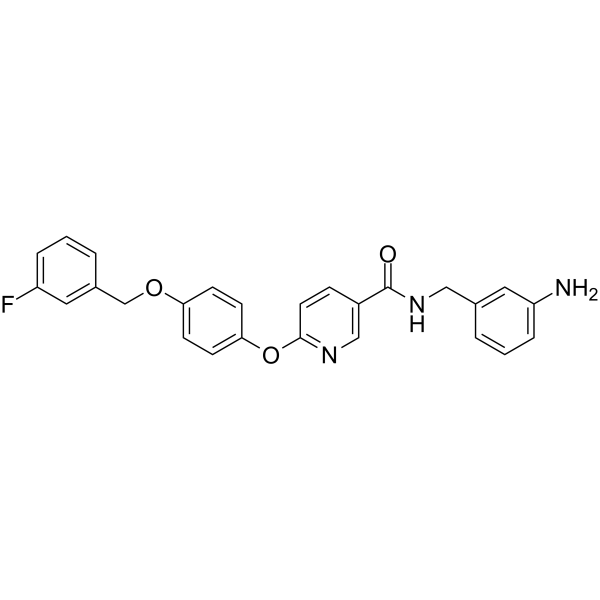
YM-244769 is a potent, selective and orally active Na+/Ca2+ exchanger (NCX) inhibitor. YM-244769 preferentially inhibits NCX3 and suppresses the unidirectional outward NCX current (Ca2+ entry mode), with IC50s of 18 nM and 50 nM, respectively. YM-244769 efficiently protects against hypoxia/reoxygenation-induced SH-SY5Y neuronal cell damage. YM-244769 can also increase urine volume and urinary excretion of electrolytes in mice.
For research use only. We do not sell to patients.
- Purity : 99.22%
- CAS No.: 838819-70-8
- Formula: C26H22FN3O3
- Molecular Weight:443.47
-
Storage:
4°C, sealed storage, away from moisture
* In solvent : -80°C, 6 months; -20°C, 1 month (sealed storage, away from moisture)

To place orders, for customer services and technical support, please contact: MedChemExpress USA
Tel: 609-228-6898 E-mail: [email protected] [email protected]


-
 Biological Activity
-
Chemical Information
-
Solvent & Solubility
- Protocols
- Purity & Documentation
- References
-
 Help & FAQs


-
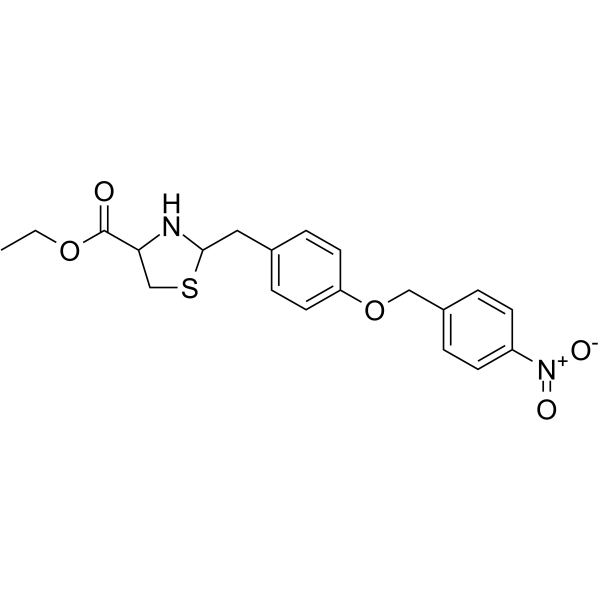
HY-107658
SN 6Na+/Ca2+ Exchanger Inhibitor -

HY-15515R
SEA0400 (Standard)Na+/Ca2+ Exchanger Inhibitor -
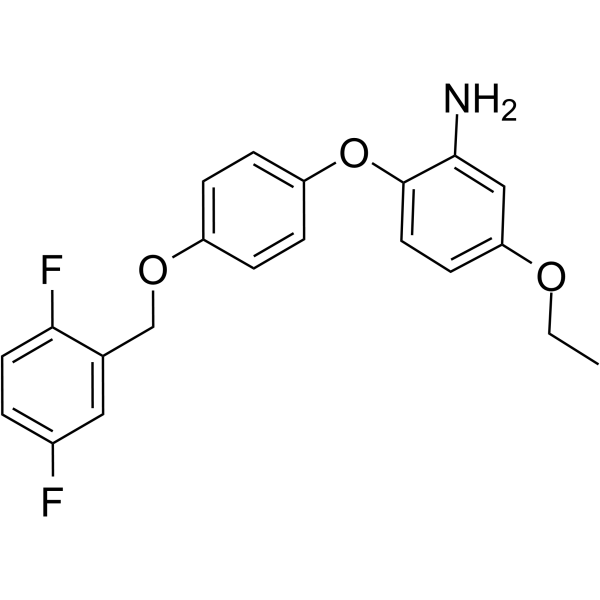
HY-15515
SEA0400Na+/Ca2+ Exchanger Inhibitor -
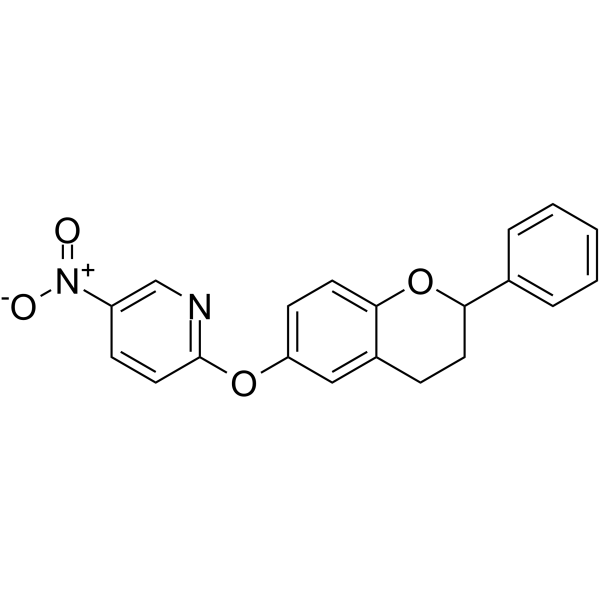
HY-128678
ORM-10103Na+/Ca2+ Exchanger Inhibitor -
HY-123785
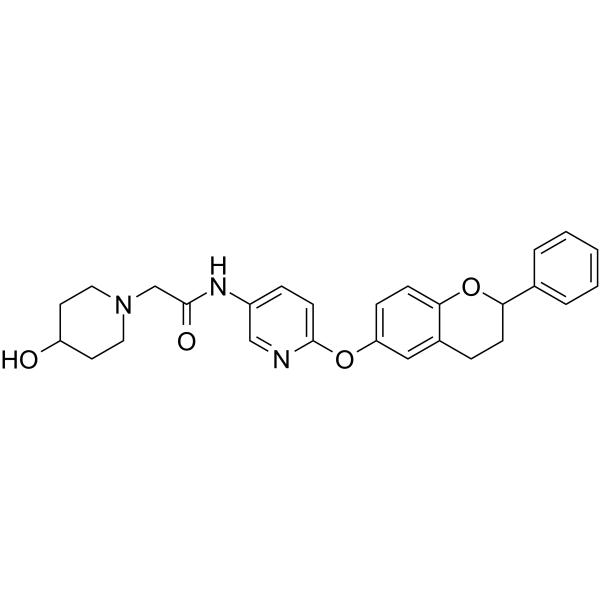
ORM-10962NCX Inhibitor -
HY-136182
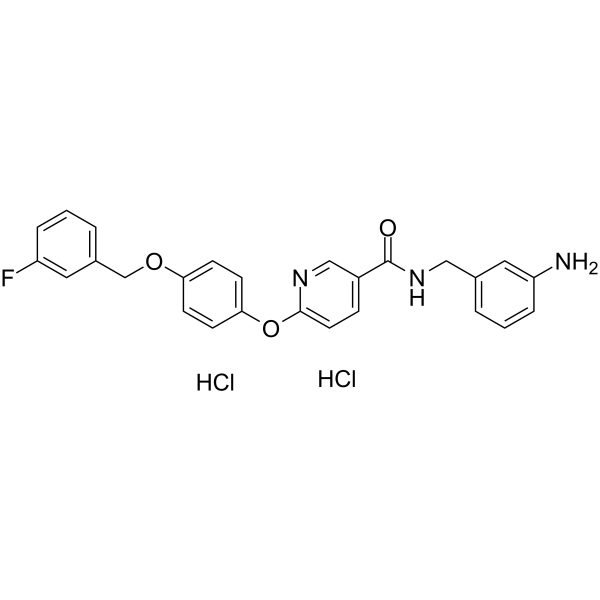
YM-244769 dihydrochlorideNCX Inhibitor -

HY-107658R
SN 6 (Standard)Reference Standard


Biological Activity
Description
IC50 & Target
IC50: 18 nM (NCX3), 68 nM (NCX1), 96 nM (NCX2)[1]
In Vitro
YM-244769 (0.003-1 μM) inhibits dose dependently the initial rates of 45Ca2+ uptake into NCX1, NCX2, and NCX3 transfectants with IC50 values of 68 ± 2.9, 96 ± 3.5, and 18 ± 1.0 nM, respectively[1].
YM-244769 (0.3 or 1 μM) efficiently protects against the hypoxia/reoxygenation-induced lactate dehydrogenase (LDH) release in SH-SY5Y cells and in LLC-PK1 cells (1 μM)[1].
YM-244769 possesses reverse mode-selectivity[1].
YM-244769 (1 and 10 μM) inhibits NCX current (INCX) in a concentration- and [Na+]i-dependent manner, the IC50 against the unidirectional outward INCX (Ca2+ entry mode) is 0.05 μM. The IC50 values against the bidirectional outward and inward INCX are similar and approximately 100 nM with a Hill coefficient of about 1[3].
YM-244769 is trypsin-insensitive[3].
MedChemExpress (MCE) has not independently confirmed the accuracy of these methods. They are for reference only. Further protocols information, click here.
-
Cell Line:SH-SY5Y cells treated with NCX1 or NCX3 antisense
-
Concentration:0.3 and 1 μM
-
Incubation Time:
-
Result:Hypoxia/reoxygenation-induced LDH release was significantly attenuated: reduction in cell damage was greater in cells treated with NCX3 antisense (by 61%) than in cells treated with NCX1 antisense (by 35%). 0.3 or 1 μM efficiently suppressed the hypoxia/reoxygenation-induced cell damage in SH-SY5Y cells treated with NCX1 antisense more than in those treated with NCX3 antisense.
In Vivo
MedChemExpress (MCE) has not independently confirmed the accuracy of these methods. They are for reference only.
-
Animal Model:Wild-type C57BL/6J mice and NCX-KO mice[2]
-
Dosage:0.1, 0.3 and 1 mg/kg
-
Administration:Oral administration, once
-
Result:Caused a dose-dependent increase (up to approximately 200%) in urine volume and urinary excretion of electrolytes (Na+, K+ and Cl-). Natriuretic actions were equivalently observed in NCX1-KO and WT, but disappeared in NCX2-KO and double KO.


Chemical Information
-
CAS No. 838819-70-8
-
Appearance Solid
-
Molecular Weight 443.47
-
Formula C26H22FN3O3
-
Color Off-white to light yellow
-
SMILES
O=C(C1=CN=C(C=C1)OC2=CC=C(C=C2)OCC3=CC(F)=CC=C3)NCC4=CC(N)=CC=C4
-
Shipping
Room temperature in continental US; may vary elsewhere.
-
Storage
4°C, sealed storage, away from moisture
* In solvent : -80°C, 6 months; -20°C, 1 month (sealed storage, away from moisture)


Solvent & Solubility
In Vitro:
DMSO : 120 mg/mL (270.59 mM; Need ultrasonic; Hygroscopic DMSO has a significant impact on the solubility of product, please use newly opened DMSO)
Please refer to the solubility information to select the appropriate solvent. Once prepared, please aliquot and store the solution to prevent product inactivation from repeated freeze-thaw cycles.
Storage method and period of stock solution: -80°C, 6 months; -20°C, 1 month (sealed storage, away from moisture). When stored at -80°C, please use it within 6 months. When stored at -20°C, please use it within 1 month.
Please refer to the solubility information to select the appropriate solvent. Once prepared, please aliquot and store the solution to prevent product inactivation from repeated freeze-thaw cycles.
Storage method and period of stock solution: -80°C, 6 months; -20°C, 1 month (sealed storage, away from moisture). When stored at -80°C, please use it within 6 months. When stored at -20°C, please use it within 1 month.
Concentration (start) × Volume (start) = Concentration (final) × Volume (final)
In Vivo:
Select the appropriate dissolution method based on your experimental animal and administration route.
- For the following dissolution methods, please ensure to first prepare a clear stock solution using an In Vitro approach and then sequentially add co-solvents:
- To ensure reliable experimental results, the clarified stock solution can be appropriately stored based on storage conditions. As for the working solution for In Vivo experiments, it is recommended to prepare freshly and use it on the same day.
- The percentages shown for the solvents indicate their volumetric ratio in the final prepared solution. If precipitation or phase separation occurs during preparation, heat and/or sonication can be used to aid dissolution.
In Vivo Dissolution Calculator
Please enter the basic information of animal experiments:
-
-
-
-
Recommended: Prepare an additional quantity of animals to account for potential losses during experiments.
Please enter your animal formula composition:
-
%DMSO +
Recommended: Keep the proportion of DMSO in working solution below 2% if your animal is weak.
-
%+
-
+%Tween-80 + +
-
%Saline +
The co-solvents required include: DMSO, . All of co-solvents are available by MedChemExpress (MCE). , Tween 80. All of co-solvents are available by MedChemExpress (MCE).
Working solution concentration: 0.22 mg/mL
Method for preparing stock solution: mg drug dissolved in μL DMSO. Stock solution concentration: mg/mL. * In solvent : -80°C, 6 months; -20°C, 1 month (sealed storage, away from moisture)
1. Take μL DMSO stock solution;
2. Add μL .
μL , mix evenly;
3. Then add μL Tween 80, mix evenly;
4. Then add μL
Please ensure that the stock solution in the first step is dissolved to a clear state, and add co-solvents in sequence. You can use ultrasonic heating (ultrasonic cleaner, recommended frequency 20-40 kHz), vortexing, etc. to assist dissolution.

Protocols
-
Ca2+ Staining Technique
Ca2+ staining is an experimental technique that utilizes specific fluorescent probes (such as Fluo-4 AM, Fura-2, etc.) to qualitatively or quantitatively detect dynamic changes in intracellular Ca2+ concentrations; this is achieved by monitoring the changes in fluorescent signals generated when these probes bind to free intracellular calcium ions. The underlying principle relies primarily on the presence of chelating groups within the probe's molecular structure that possess high affinity for calcium ions.


Purity & Documentation
-
Data Sheet (272 KB)
-
SDS (393 KB)
- English - EN (393 KB)
- Français - FR (393 KB)
- Deutsch - DE (393 KB)
- Norwegian - NO (393 KB)
- Español - ES (393 KB)
- Swedish - SV (393 KB)
- Italian - IT (393 KB)
- Korean - KR (393 KB)
- Portuguese - PT (393 KB)
-
Handling Instructions (2659 KB)
References
[1]. Iwamoto T, Kita S. YM-244769, a novel Na+/Ca2+ exchange inhibitor that preferentially inhibits NCX3, efficiently protects against hypoxia/reoxygenation-induced SH-SY5Y neuronal cell damage. Mol Pharmacol. 2006 Dec;70(6):2075-83. [Content Brief]
[2]. Gotoh Y, et al. Genetic knockout and pharmacologic inhibition of NCX2 cause natriuresis and hypercalciuria. Biochem Biophys Res Commun. 2015 Jan 9;456(2):670-5. [Content Brief]
[3]. Yamashita K, et al. Inhibitory effect of YM-244769, a novel Na+/Ca2+ exchanger inhibitor on Na+/Ca2+ exchange current in guinea pig cardiac ventricular myocytes. Naunyn Schmiedebergs Arch Pharmacol. 2016 Nov;389(11):1205-1214. [Content Brief]


Complete Stock Solution Preparation Table
Please refer to the solubility information to select the appropriate solvent. Once prepared, please aliquot and store the solution to prevent product inactivation from repeated freeze-thaw cycles.
Storage method and period of stock solution: -80°C, 6 months; -20°C, 1 month (sealed storage, away from moisture). When stored at -80°C, please use it within 6 months. When stored at -20°C, please use it within 1 month.
| Optional Solvent | Concentration Solvent Mass | 1 mg | 5 mg | 10 mg | 25 mg |
|---|---|---|---|---|---|
| DMSO | 1 mM | 2.2549 mL | 11.2747 mL | 22.5494 mL | 56.3736 mL |
| 5 mM | 0.4510 mL | 2.2549 mL | 4.5099 mL | 11.2747 mL | |
| 10 mM | 0.2255 mL | 1.1275 mL | 2.2549 mL | 5.6374 mL | |
| 15 mM | 0.1503 mL | 0.7516 mL | 1.5033 mL | 3.7582 mL | |
| 20 mM | 0.1127 mL | 0.5637 mL | 1.1275 mL | 2.8187 mL | |
| 25 mM | 0.0902 mL | 0.4510 mL | 0.9020 mL | 2.2549 mL | |
| 30 mM | 0.0752 mL | 0.3758 mL | 0.7516 mL | 1.8791 mL | |
| 40 mM | 0.0564 mL | 0.2819 mL | 0.5637 mL | 1.4093 mL | |
| 50 mM | 0.0451 mL | 0.2255 mL | 0.4510 mL | 1.1275 mL | |
| 60 mM | 0.0376 mL | 0.1879 mL | 0.3758 mL | 0.9396 mL | |
| 80 mM | 0.0282 mL | 0.1409 mL | 0.2819 mL | 0.7047 mL | |
| 100 mM | 0.0225 mL | 0.1127 mL | 0.2255 mL | 0.5637 mL |


YM-244769 Related Classifications
HY-136182A Related Classifications
 Powered by Bioz