



γ-Terpinene

Based on 1 Customer Validation
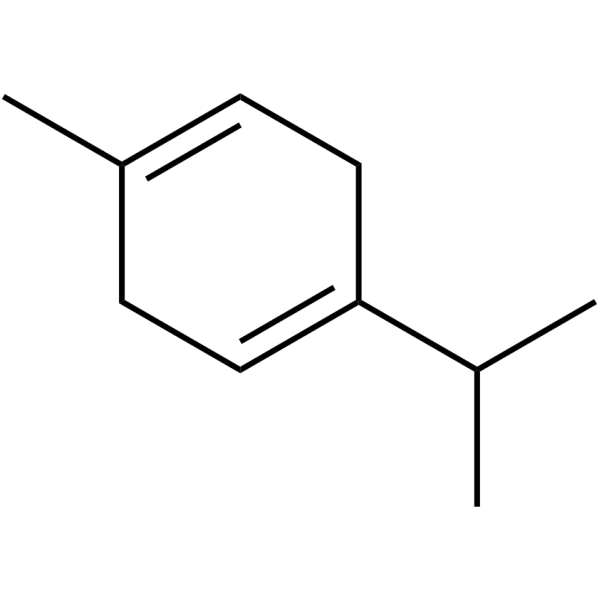
γ-Terpinene, a monoterpene, is an orally active antioxidant compound which can scavenge radicals directly. γ-Terpinene has potent antinociception activity. γ-Terpinene exhibits antimicrobial efficacy against various bacteria and fungi.
For research use only. We do not sell to patients.
- Purity : 98.99%
- CAS No.: 99-85-4
- Formula: C10H16
- Molecular Weight:136.23
-
Storage:Pure form -20°C, 3 years , 4°C, 2 years ; In solvent -80°C, 6 months , -20°C, 1 month

To place orders, for customer services and technical support, please contact: MedChemExpress USA
Tel: 609-228-6898 E-mail: [email protected] [email protected]


-
 Biological Activity
-
Chemical Information
-
Solvent & Solubility
- Protocols
- Purity & Documentation
- References
-
 Help & FAQs


-
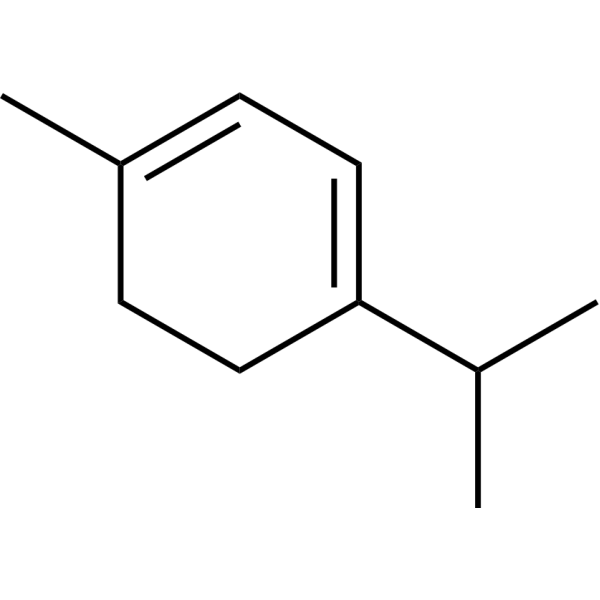
HY-W020182
α-TerpineneAntifungal Agent -

HY-W020183R
γ-Terpinene (Standard)Antioxidant Compound -
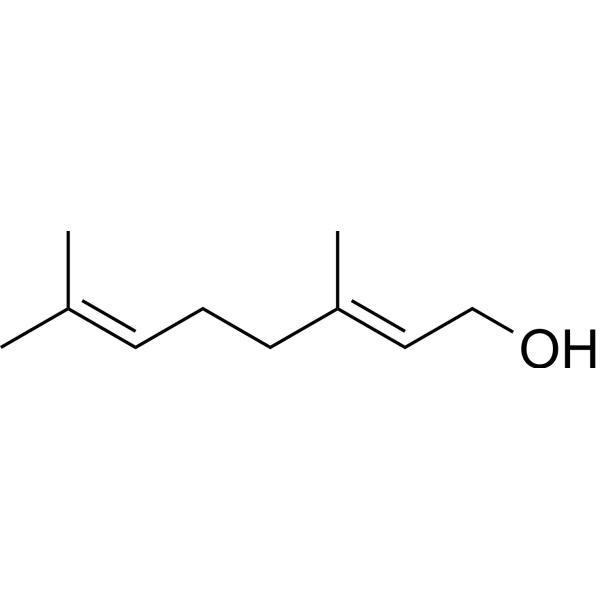
HY-N6952
GeraniolAntibacterial Agent -
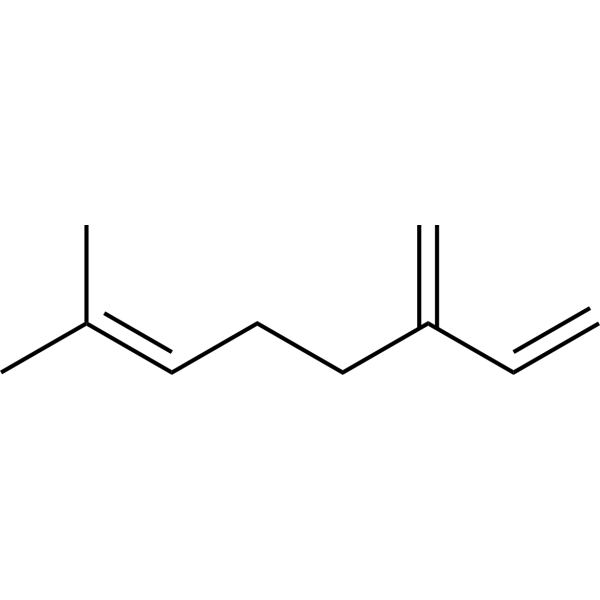
HY-N0803
Myrcene,75% (stabilized with BHT)NF-κB Inhibitor -
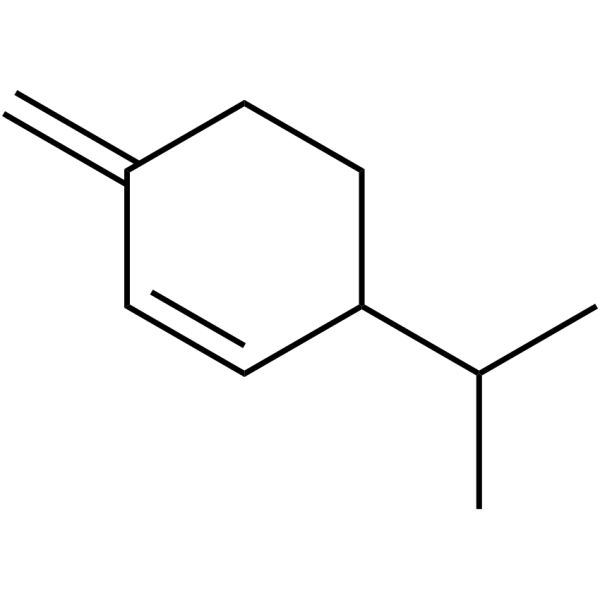
HY-N8573
β-PhellandreneNatural Product -
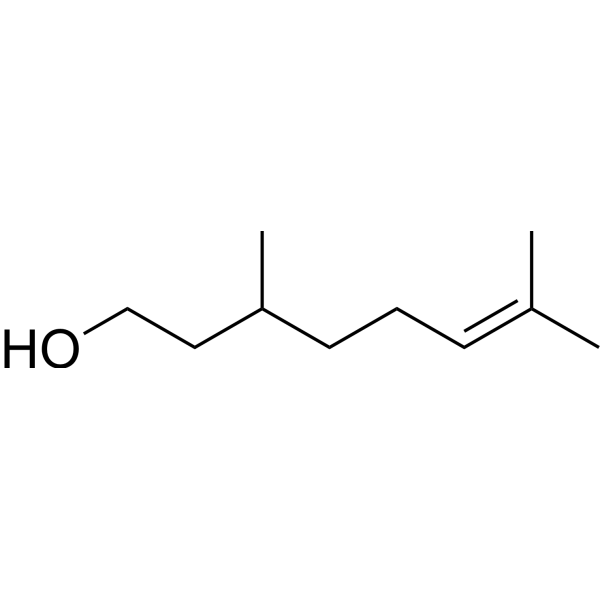
HY-W010201
CitronellolApoptosis Inducer -
HY-K1006
Penicillin-Streptomycin (100×), Sterile -
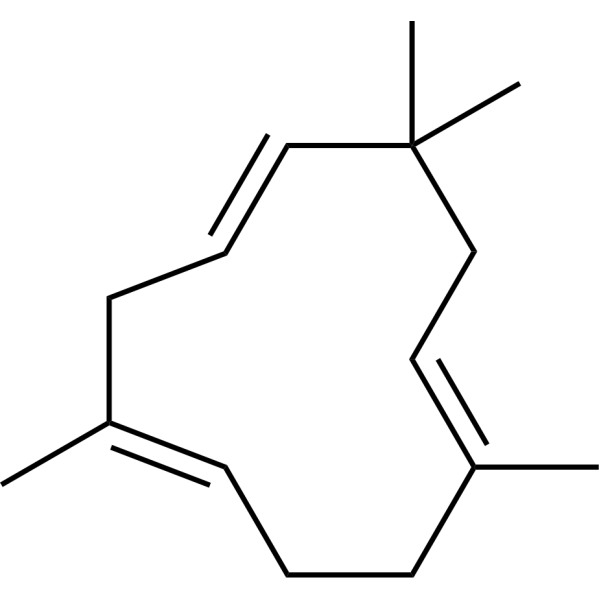
HY-N6968
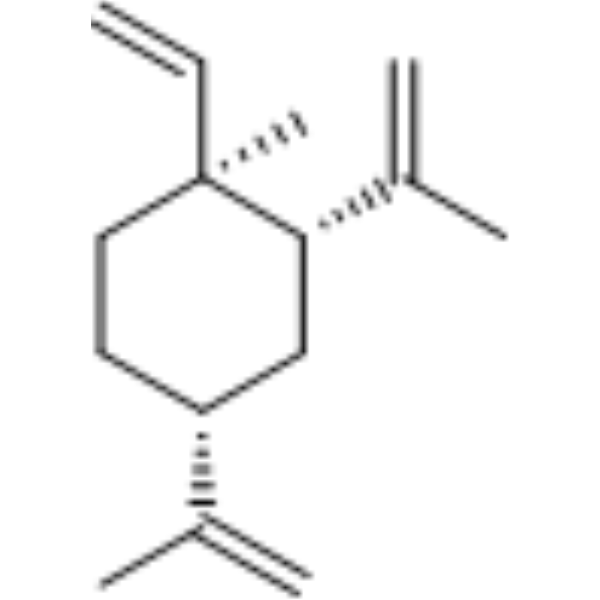
α-HumuleneCOX Inhibitor -
HY-107324
β-ElemeneApoptosis Activator -
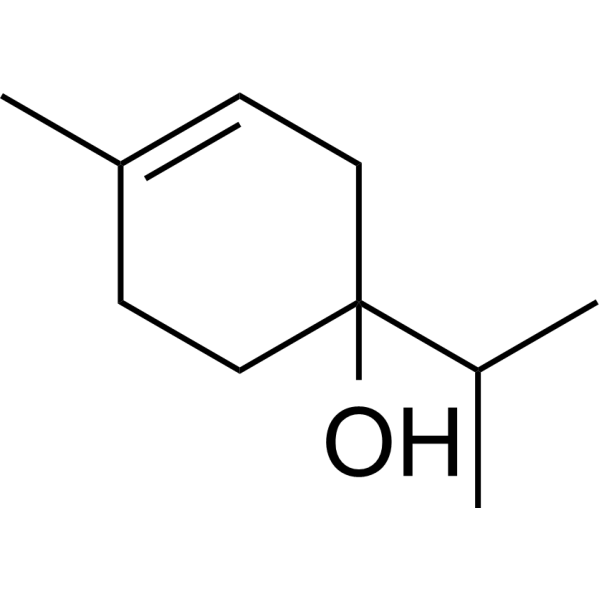
HY-W017316
Terpinen-4-olBactericidal Agent -
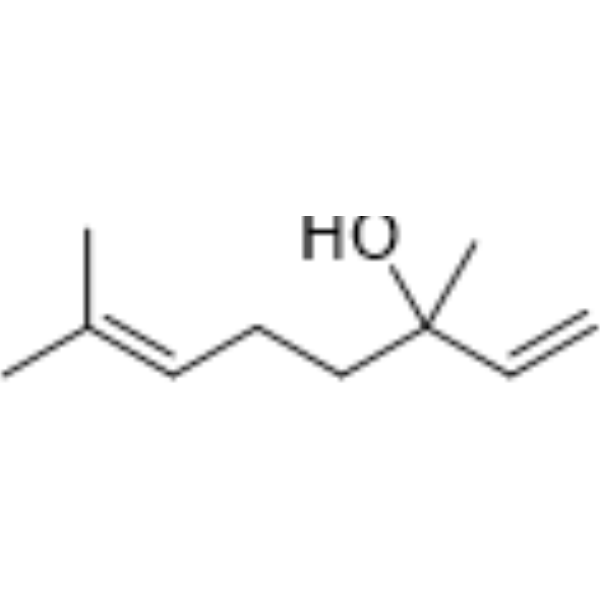
HY-N0368
Linalool,98% (stabilized with MEHQ)Antibiotic -
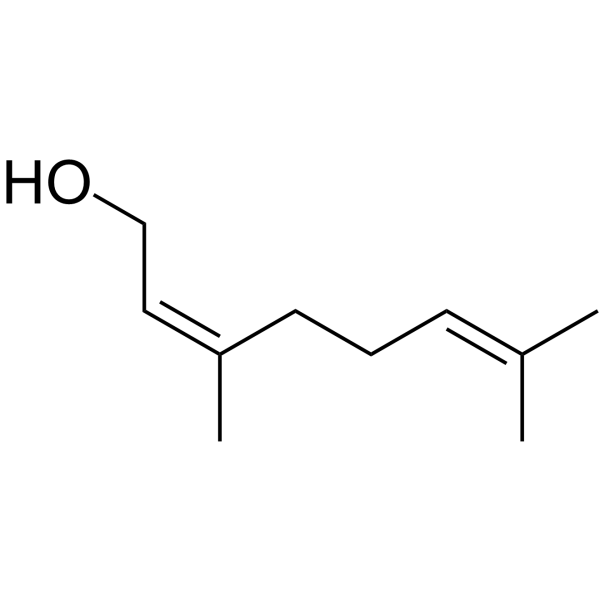
HY-N7063
NerolROS Activator


Biological Activity
Description
In Vivo
γ-Terpinene given either systemically (p.o.; 1.56, 3.125, and 6.25 mg/kg) or centrally (i.t or i.c.v; 10 and 20 μg/site) causes significant inhibition of glutamate-induced nociception in mice[1].
MedChemExpress (MCE) has not independently confirmed the accuracy of these methods. They are for reference only.


Chemical Information
-
CAS No. 99-85-4
-
Appearance Liquid (Density: 0.85 g/cm3)
-
Molecular Weight 136.23
-
Formula C10H16
-
Color Colorless to light yellow
-
SMILES
CC(C1=CCC(C)=CC1)C
-
Structure Classification
-
Initial Source
-
Shipping
Room temperature in continental US; may vary elsewhere.
-
Storage
Pure form -20°C 3 years 4°C 2 years In solvent -80°C 6 months -20°C 1 month


Solvent & Solubility
In Vitro:
DMSO : 200 mg/mL (1468.11 mM; Need ultrasonic; Hygroscopic DMSO has a significant impact on the solubility of product, please use newly opened DMSO)
Please refer to the solubility information to select the appropriate solvent. Once prepared, please aliquot and store the solution to prevent product inactivation from repeated freeze-thaw cycles.
Storage method and period of stock solution: -80°C, 6 months; -20°C, 1 month. When stored at -80°C, please use it within 6 months. When stored at -20°C, please use it within 1 month.
Please refer to the solubility information to select the appropriate solvent. Once prepared, please aliquot and store the solution to prevent product inactivation from repeated freeze-thaw cycles.
Storage method and period of stock solution: -80°C, 6 months; -20°C, 1 month. When stored at -80°C, please use it within 6 months. When stored at -20°C, please use it within 1 month.
Concentration (start) × Volume (start) = Concentration (final) × Volume (final)
In Vivo:
Select the appropriate dissolution method based on your experimental animal and administration route.
- For the following dissolution methods, please ensure to first prepare a clear stock solution using an In Vitro approach and then sequentially add co-solvents:
- To ensure reliable experimental results, the clarified stock solution can be appropriately stored based on storage conditions. As for the working solution for In Vivo experiments, it is recommended to prepare freshly and use it on the same day.
- The percentages shown for the solvents indicate their volumetric ratio in the final prepared solution. If precipitation or phase separation occurs during preparation, heat and/or sonication can be used to aid dissolution.
Add each solvent one by one: 10% DMSO 40% PEG300 5% Tween-80 45% Saline
Solubility: 5 mg/mL (36.70 mM); Suspended solution; Need ultrasonic
This protocol yields a suspended solution of 5 mg/mL. Suspended solution can be used for oral and intraperitoneal injection.
Taking 1 mL working solution as an example, add 100 μL DMSO stock solution (50.0 mg/mL) to 400 μL PEG300, and mix evenly; then add 50 μL Tween-80 and mix evenly; then add 450 μL Saline to adjust the volume to 1 mL.
Preparation of Saline: Dissolve 0.9 g sodium chloride in ddH₂O and dilute to 100 mL to obtain a clear Saline solution.
Add each solvent one by one: 10% DMSO 90% (20% SBE-β-CD in Saline)
Solubility: ≥ 5 mg/mL (36.70 mM); Clear solution
This protocol yields a clear solution of ≥ 5 mg/mL (saturation unknown).
Taking 1 mL working solution as an example, add 100 μL DMSO stock solution (50.0 mg/mL) to 900 μL 20% SBE-β-CD in Saline, and mix evenly.
Preparation of 20% SBE-β-CD in Saline (4°C, storage for one week): 2 g SBE-β-CD powder is dissolved in 10 mL Saline, completely dissolve until clear.
In Vivo Dissolution Calculator
Please enter the basic information of animal experiments:
-
-
-
-
Recommended: Prepare an additional quantity of animals to account for potential losses during experiments.
Please enter your animal formula composition:
-
%DMSO +
Recommended: Keep the proportion of DMSO in working solution below 2% if your animal is weak.
-
%+
-
+%Tween-80 + +
-
%Saline +
The co-solvents required include: DMSO, . All of co-solvents are available by MedChemExpress (MCE). , Tween 80. All of co-solvents are available by MedChemExpress (MCE).
Working solution concentration: 0.22 mg/mL
Method for preparing stock solution: mg drug dissolved in μL DMSO. Stock solution concentration: mg/mL.
1. Take μL DMSO stock solution;
2. Add μL .
μL , mix evenly;
3. Then add μL Tween 80, mix evenly;
4. Then add μL
Please ensure that the stock solution in the first step is dissolved to a clear state, and add co-solvents in sequence. You can use ultrasonic heating (ultrasonic cleaner, recommended frequency 20-40 kHz), vortexing, etc. to assist dissolution.

Protocols
-
Research Protocol for Infectious Diseases
Infectious-disease experiments test how pathogens interact with host barriers, innate immune receptors, inflammatory signaling, pathogen replication, and tissue injury; pattern-recognition receptors such as TLRs, RIG-I-like receptors, NOD-like receptors, and inflammasomes detect microbial molecules and activate NF-κB, interferon, and cytokine responses. The central hypothesis is that infection severity reflects the balance between pathogen burden and host response: protective inflammation restricts pathogen growth, whereas excessive or mislocalized inflammation contributes to tissue damage and disease phenotype. Unresolved questions include which host pathways are protective versus pathogenic, why some infection models fail to translate to human disease, and which combined readouts best predict clinically relevant infection outcomes.
-
Formalin-Induced Paw Inflammation/Nociceptive Inflammation
The formalin-induced paw inflammation/nociceptive test is a chemical persistent pain model in rodents in which subcutaneous injection of formalin into the hind paw produces spontaneous nocifensive behaviors such as flinching and licking. The response is classically biphasic, consisting of an early acute phase (Phase I) reflecting direct activation of peripheral nociceptors (particularly C-fiber afferents), followed by a later prolonged phase (Phase II) associated with central sensitization in the spinal dorsal horn driven by sustained afferent input and inflammatory signaling. This model is widely used to evaluate analgesic and anti-inflammatory interventions because it captures both peripheral nociception and central sensitization processes within a single assay system.


Purity & Documentation
-
Data Sheet (272 KB)
-
SDS (774 KB)
- English - EN (774 KB)
- Français - FR (774 KB)
- Deutsch - DE (774 KB)
- Norwegian - NO (774 KB)
- Español - ES (774 KB)
- Swedish - SV (774 KB)
- Italian - IT (774 KB)
- Korean - KR (774 KB)
- Portuguese - PT (774 KB)
-
Handling Instructions (2659 KB)
References
[1]. Flávia Franceli de Brito Passos, et al. Involvement of Cholinergic and Opioid System in γ-Terpinene-Mediated Antinociception. Evid Based Complement Alternat Med. 2015;2015:829414. [Content Brief]
[2]. Guo-Xiang Li, et al. Unusual antioxidant behavior of alpha- and gamma-terpinene in protecting methyl linoleate, DNA, and erythrocyte. J Agric Food Chem. 2009 May 13;57(9):3943-8. [Content Brief]


Complete Stock Solution Preparation Table
Please refer to the solubility information to select the appropriate solvent. Once prepared, please aliquot and store the solution to prevent product inactivation from repeated freeze-thaw cycles.
Storage method and period of stock solution: -80°C, 6 months; -20°C, 1 month. When stored at -80°C, please use it within 6 months. When stored at -20°C, please use it within 1 month.
| Optional Solvent | Concentration Solvent Mass | 1 mg | 5 mg | 10 mg | 25 mg |
|---|---|---|---|---|---|
| DMSO | 1 mM | 7.3405 mL | 36.7026 mL | 73.4053 mL | 183.5132 mL |
| 5 mM | 1.4681 mL | 7.3405 mL | 14.6811 mL | 36.7026 mL | |
| 10 mM | 0.7341 mL | 3.6703 mL | 7.3405 mL | 18.3513 mL | |
| 15 mM | 0.4894 mL | 2.4468 mL | 4.8937 mL | 12.2342 mL | |
| 20 mM | 0.3670 mL | 1.8351 mL | 3.6703 mL | 9.1757 mL | |
| 25 mM | 0.2936 mL | 1.4681 mL | 2.9362 mL | 7.3405 mL | |
| 30 mM | 0.2447 mL | 1.2234 mL | 2.4468 mL | 6.1171 mL | |
| 40 mM | 0.1835 mL | 0.9176 mL | 1.8351 mL | 4.5878 mL | |
| 50 mM | 0.1468 mL | 0.7341 mL | 1.4681 mL | 3.6703 mL | |
| 60 mM | 0.1223 mL | 0.6117 mL | 1.2234 mL | 3.0586 mL | |
| 80 mM | 0.0918 mL | 0.4588 mL | 0.9176 mL | 2.2939 mL | |
| 100 mM | 0.0734 mL | 0.3670 mL | 0.7341 mL | 1.8351 mL |


γ-Terpinene Related Classifications
HY-W020183 Related Classifications
 Powered by Bioz