



4-MU-α-GlcNS sodium

Based on 1 Customer Validation
4-MU-α-GlcNS sodium is a fluorogenic substrate for heparan sulfate sulfamidase, with apparent Km values of 4 mM and 8 mM for fibroblast and leukocyte enzymes, respectively. 4-MU-α-GlcNS sodium undergoes enzymatic desulfation to generate an intermediate, which requires a second incubation with yeast α-glucosidase to hydrolyze and release 4-methylumbelliferone, detected by fluorescence at Ex/Em = 365/450 nm. 4-MU-α-GlcNS sodium is suitable for fibroblast homogenates, leukocytes, and dried leukocyte filter paper samples, and can be used for the detection and study of enzyme activity in mucopolysaccharidosis type IIIA.
For research use only. We do not sell to patients.
- Purity : 99.82%
- CAS No.: 460085-45-4
- Formula: C16H18NNaO10S
- Molecular Weight:439.37
-
Storage:
4°C, sealed storage, away from moisture and light
* In solvent : -80°C, 6 months; -20°C, 1 month (sealed storage, away from moisture and light)

To place orders, for customer services and technical support, please contact: MedChemExpress USA
Tel: 609-228-6898 E-mail: [email protected] [email protected]


-
 Biological Activity
-
Chemical Information
-
Solvent & Solubility
- Purity & Documentation
- References
-
 Help & FAQs


-

HY-137873
4-Methylumbelliferyl-α-D-GlucopyranosideFluorescent Substrate -
HY-D1633A
4-Methylumbelliferyl-β-D-galactopyranoside 6-sulfate sodiumFluorescent Dye -
HY-123633
4-Methylumbelliferyl β-D-Glucopyranosideβ-glucosidase fluorogenic substrate -
HY-W127708
4-Methylumbelliferyl α-L-iduronideBiochemical Assay Reagent -
HY-113224
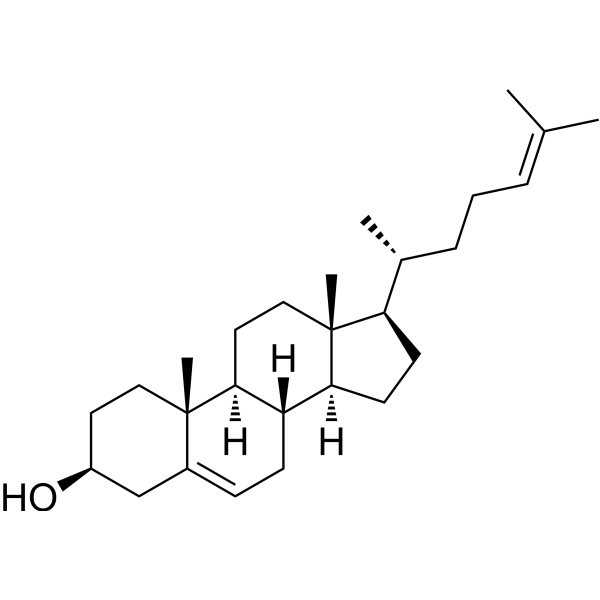
DesmosterolEndogenous Metabolite -
HY-136865
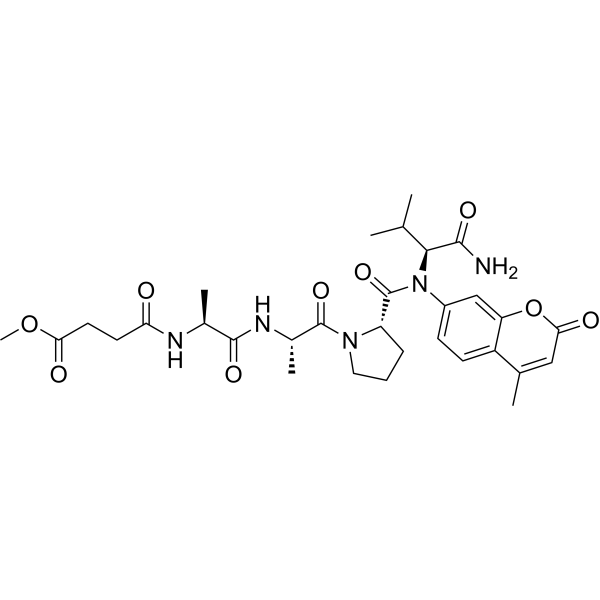
MeOSuc-AAPV-AMCElastase Fluorogenic Substrate -
HY-W011183
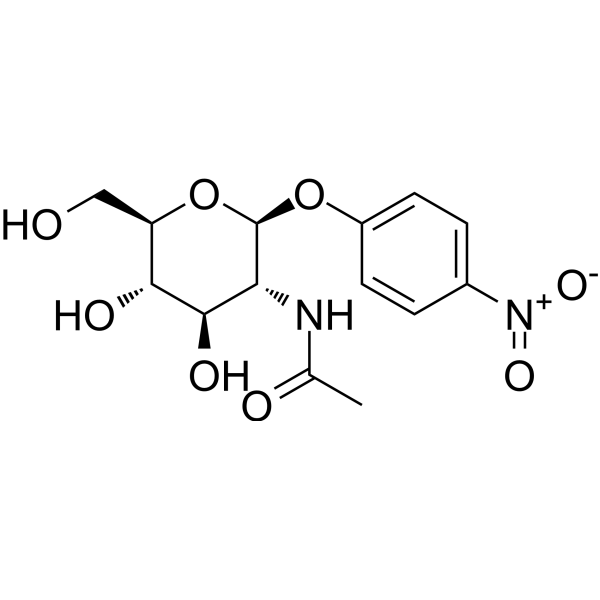
4-Nitrophenyl-N-acetyl-β-D-glucosaminideNAGase Substrate -

HY-113224R
Desmosterol (Standard)Endogenous Metabolite -
HY-137276
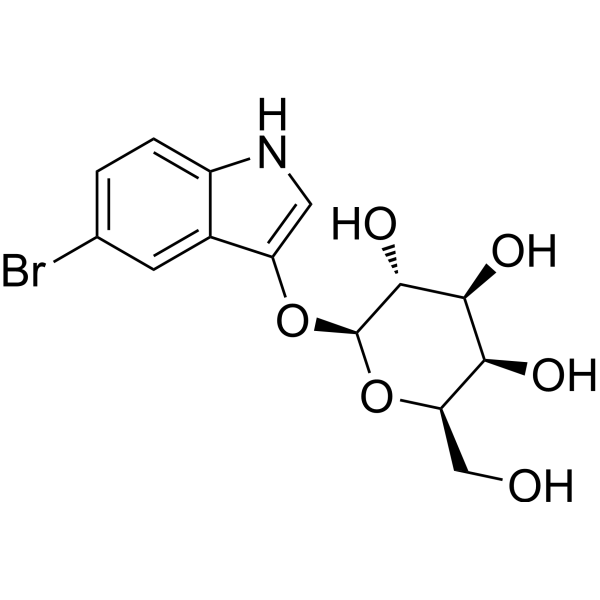
5-Bromo-3-indolyl β-D-galactopyranosideβ-galactosidase Substrate -
HY-137403
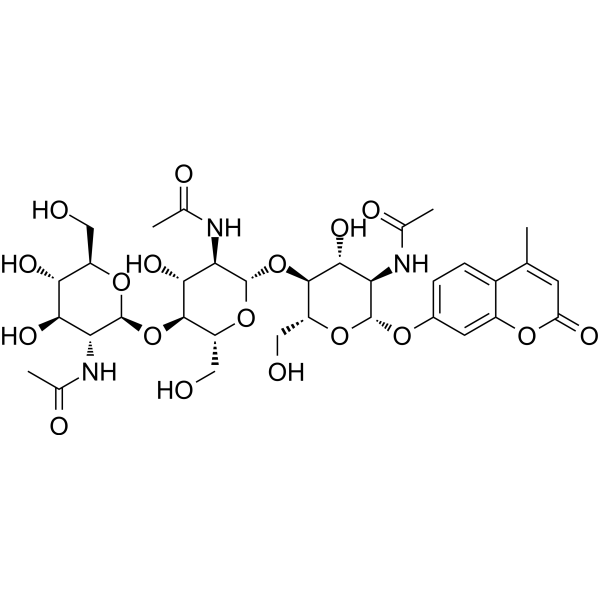
4-Methylumbelliferyl β-D-N,N′,N′′-triacetylchitotriosideBiochemical Assay Reagent -
HY-137845
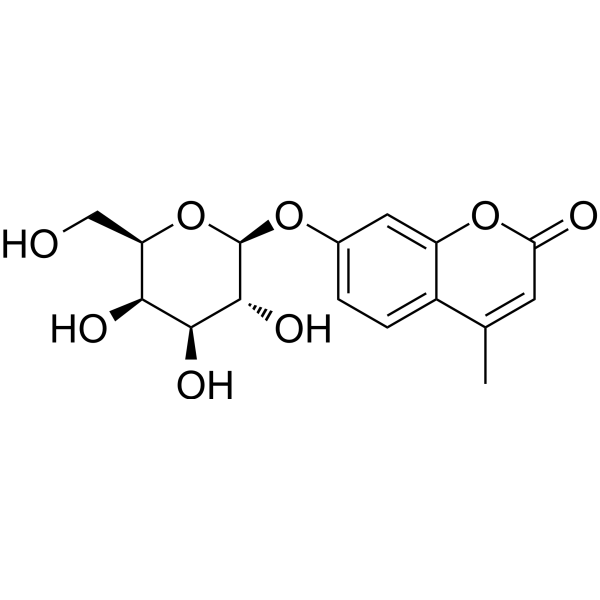
4-Methylumbelliferyl β-D-galactopyranosideβ-galactosidase Fluorescent Substrate -
HY-114522
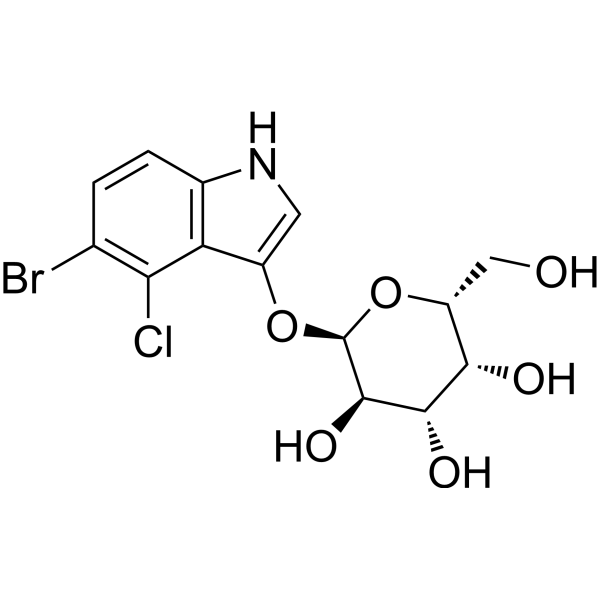
X-alpha-Galβ-galactopyranoside Substrate


Biological Activity
Description
In Vitro
Guidelines (The following is our recommended protocol. This protocol is for reference only and should be modified according to your specific needs).
1. Stock Solution Preparation
1.1 Solvent: For most dyes, organic solvents such as anhydrous DMSO are typically used for dissolution.
1.2 Recommended concentration: 5-10 mM.
2. Working Solution Preparation
2.1 Diluent: Michaelis sodium barbital acetate buffer, pH 6.5; prior to resin treatment, the deacetylation reaction mixture can be diluted with aqueous methanol (10%).
2.3 Note: Adjust the working solution concentration as needed; prepare fresh before use.
3. Staining Procedure
3.1 For cultured skin fibroblasts, lymphocytes, and total leukocytes[1]:
3.1.1 Adherent cells: Seven days after the last subculture, harvest fibroblasts with trypsin and store at −80°C until use.
3.1.2 Suspension cells: Isolate total leukocytes from heparinized blood and prepare lymphocytes using LymphoSep; freeze leukocytes before use.
3.1.3 Incubation conditions: Prepare homogenates by sonicating cell material in a water bath; set up a standard heparan sulfamidase reaction mixture containing 10 μl homogenate (10 μg protein for fibroblasts, 15 μg protein for lymphocytes, or 60 μg protein for leukocytes) and 20 μl MU-α-GlcNS, then incubate fibroblasts at 37°C for 17 h, and lymphocytes and leukocytes at 47°C for 17 h; for the leukocyte assay, 0.225 mg/mL Pefabloc is included in the reaction mixture.
3.1.4 Washing step: After the first incubation, add 6 μl of twofold concentrated McIlvain phosphate/citrate buffer, pH 6.7, containing 0.02% sodium azide and 10 μl (0.1 U) yeast α-glucosidase aqueous solution, followed by a second incubation at 37°C for 24 h.
3.2 For dried leukocyte filter paper (DLFP) samples[2]:
3.2.1 Sample preparation: Dilute the leukocyte pellet in 500 μL distilled water; mix and sonicate the solution, then apply a 20 μL aliquot onto a 13.3 mm diameter filter paper disc; dry the samples in a fume hood for 4 h and store with desiccant in a plastic bag at room temperature for one week, after which store at 4°C until analysis.
3.2.2 Incubation conditions: For all assays, dilute 3×6.0-mm diameter DLFP sample discs in 150 μL distilled water and incubate at 37°C for 1 h; at the end of incubation, centrifuge the samples at 3000 rpm for 10 min at room temperature.
3.2.3 Washing step: Take 50 μL of supernatant for protein determination, and use the remaining supernatant together with the filter paper for the enzyme assay; after incubation, centrifuge the samples at 3000 rpm for 10 min at room temperature.
4. Controls
4.1 Include fibroblasts from patients with Sanfilippo A, B, C, and D types or multiple sulfatase deficiency, as well as normal control material, run under standard assay conditions.
4.2 Correct blank readings and compare with 4-methylumbelliferone calibrators.
5. Detection and Analysis
5.1 Instrument type: Use a fluorometer or spectrofluorometer for fluorescence detection.
5.2 Excitation/emission wavelengths: excitation 365 nm; emission 450 nm.
5.3 Result analysis: After adding 200 μl 0.5 M Na2CO3/NaHCO3, pH 10.7, read the fluorescence of released MU; in normal fibroblasts, sulfamidase activity ranges from 42-152 nmol/17 h per mg protein, in normal leukocytes from 1.8-6.8 nmol/17 h per mg protein, and in normal lymphocytes from 11-20 nmol/17 h per mg protein, whereas in MPS IIIA patients, residual activity is 0.0-2.2 nmol/17 h per mg protein in fibroblasts, 0.0-0.4 nmol/17 h per mg protein in leukocytes, and 0.3 nmol/17 h per mg protein in lymphocytes.
5.3.1 The assay is performed in 96-well titration plates with cell homogenates, and the released fluorescent dye is measured in the reaction mixture.
5.3.2 Enzymatic cleavage of the sulfamide substrate releases free 4-methylumbelliferone, resulting in an increase in fluorescence intensity proportional to sulfamidase activity; the released 4-methylumbelliferone exhibits blue fluorescence under UV irradiation.
5.3.3 Enzyme activity is calculated as nanomoles of substrate hydrolyzed per hour per mg protein; clear discrimination between MPS IIIA or GM1 gangliosidosis patients and healthy controls is observed; when DLFP samples are stored at 4°C or 20°C, enzyme activity remains measurable for at least six weeks after preparation, whereas samples stored at room temperature for up to one week show no significant decrease in enzyme activity.
MedChemExpress (MCE) has not independently confirmed the accuracy of these methods. They are for reference only. .


Chemical Information
-
CAS No. 460085-45-4
-
Appearance Solid
-
Molecular Weight 439.37
-
Formula C16H18NNaO10S
-
Color White to off-white
-
SMILES
O=S(N[C@H]([C@H]([C@@H]([C@H](O1)CO)O)O)[C@H]1OC2=CC=C(C(C)=CC(O3)=O)C3=C2)(O[Na])=O
-
Shipping
Room temperature in continental US; may vary elsewhere.
-
Storage
4°C, sealed storage, away from moisture and light
* In solvent : -80°C, 6 months; -20°C, 1 month (sealed storage, away from moisture and light)


Solvent & Solubility
In Vitro:
DMSO : 4.39 mg/mL (9.99 mM; Need ultrasonic and warming; Hygroscopic DMSO has a significant impact on the solubility of product, please use newly opened DMSO)
Please refer to the solubility information to select the appropriate solvent. Once prepared, please aliquot and store the solution to prevent product inactivation from repeated freeze-thaw cycles.
Storage method and period of stock solution: -80°C, 6 months; -20°C, 1 month (sealed storage, away from moisture and light). When stored at -80°C, please use it within 6 months. When stored at -20°C, please use it within 1 month.
Please refer to the solubility information to select the appropriate solvent. Once prepared, please aliquot and store the solution to prevent product inactivation from repeated freeze-thaw cycles.
Storage method and period of stock solution: -80°C, 6 months; -20°C, 1 month (sealed storage, away from moisture and light). When stored at -80°C, please use it within 6 months. When stored at -20°C, please use it within 1 month.
Concentration (start) × Volume (start) = Concentration (final) × Volume (final)


Purity & Documentation
-
Data Sheet (292 KB)
-
SDS (252 KB)
- English - EN (252 KB)
- Français - FR (252 KB)
- Deutsch - DE (252 KB)
- Norwegian - NO (252 KB)
- Español - ES (252 KB)
- Swedish - SV (252 KB)
- Italian - IT (252 KB)
- Korean - KR (252 KB)
- Portuguese - PT (252 KB)
-
Handling Instructions (2659 KB)
References


Complete Stock Solution Preparation Table
Please refer to the solubility information to select the appropriate solvent. Once prepared, please aliquot and store the solution to prevent product inactivation from repeated freeze-thaw cycles.
Storage method and period of stock solution: -80°C, 6 months; -20°C, 1 month (sealed storage, away from moisture and light). When stored at -80°C, please use it within 6 months. When stored at -20°C, please use it within 1 month.
| Optional Solvent | Concentration Solvent Mass | 1 mg | 5 mg | 10 mg | 25 mg |
|---|---|---|---|---|---|
| DMSO | 1 mM | 2.2760 mL | 11.3799 mL | 22.7599 mL | 56.8997 mL |
| 5 mM | 0.4552 mL | 2.2760 mL | 4.5520 mL | 11.3799 mL |


4-MU-α-GlcNS sodium Related Classifications
HY-D1632 Related Classifications
 Powered by Bioz