



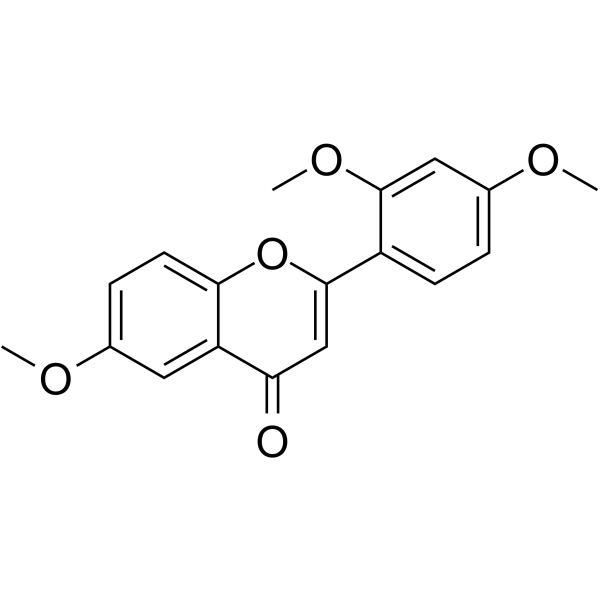
6,2',4'-Trimethoxyflavone
Based on 1 publication(s) in Google Scholar
6,2',4'-Trimethoxyflavone is a potent aryl hydrocarbon receptor (AHR) antagonist. 6,2',4'-Trimethoxyflavone represses AHR-mediated gene induction.
For research use only. We do not sell to patients.
- Purity : 98.02%
- CAS No.: 720675-74-1
- Formula: C18H16O5
- Molecular Weight:312.32
-
Storage:Powder -20°C, 3 years , 4°C, 2 years ; In solvent -80°C, 6 months , -20°C, 1 month

To place orders, for customer services and technical support, please contact: MedChemExpress USA
Tel: 609-228-6898 E-mail: [email protected] [email protected]


-
 Biological Activity
-
Chemical Information
-
Solvent & Solubility
- Purity & Documentation
- References
-
 Help & FAQs


-
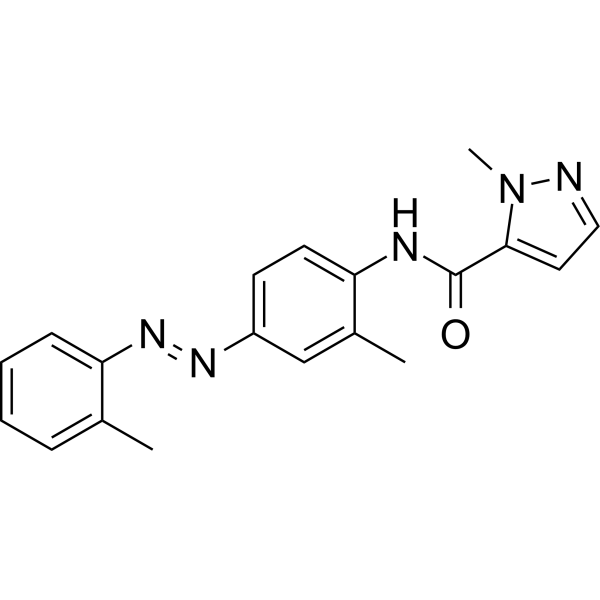
HY-12684
CH-223191AhR Antagonist -
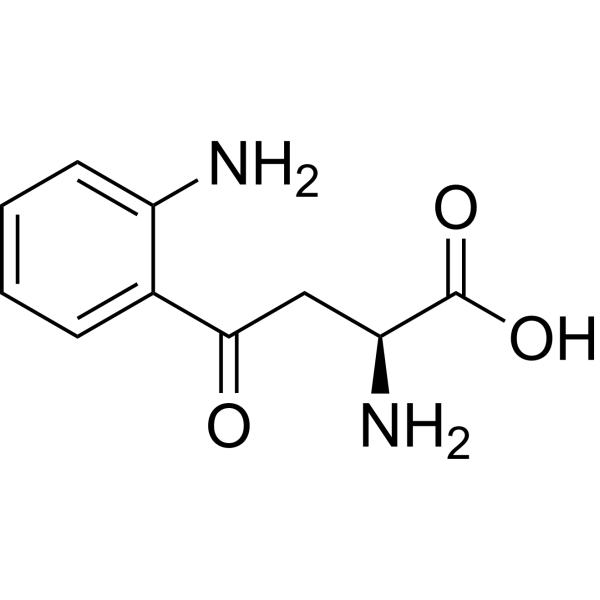
HY-104026
L-KynurenineAryl Hydrocarbon Receptor Agonist -
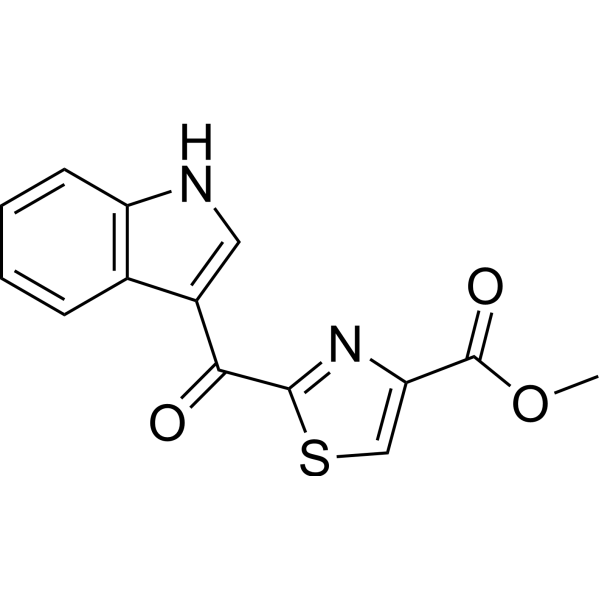
HY-19317
ITEAryl Hydrocarbon Receptor Agonist -
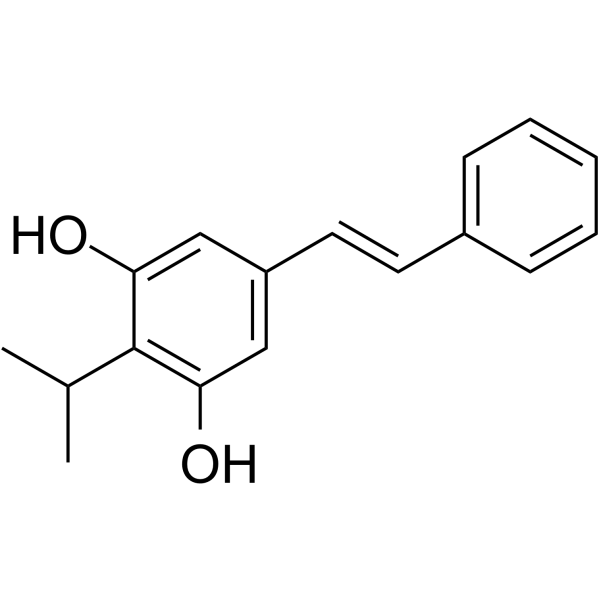
HY-109044
TapinarofAhR Agonist -
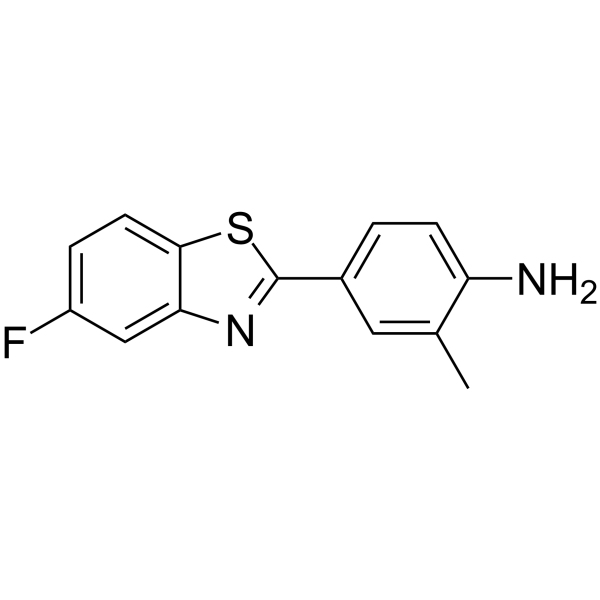
HY-124421
5F-203AhR Agonist -
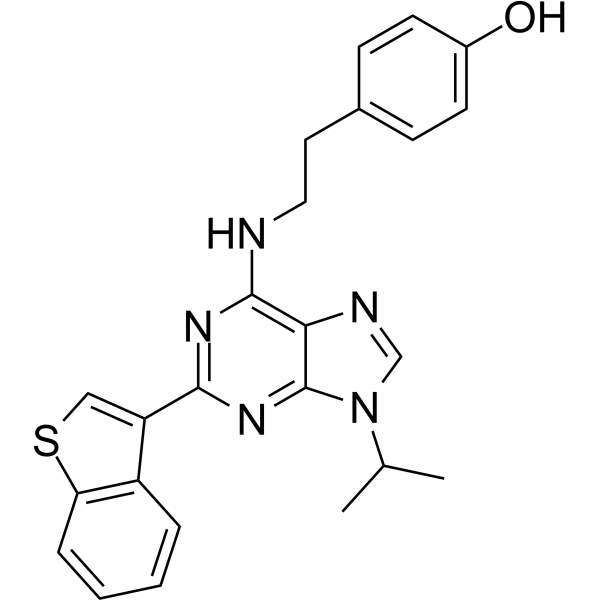
HY-15001
Stemregenin 1AhR Antagonist -
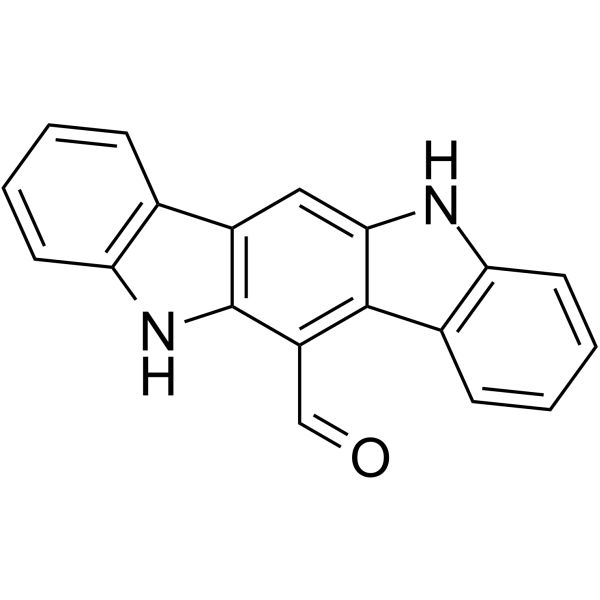
HY-12451
FICZAhR Agonist -
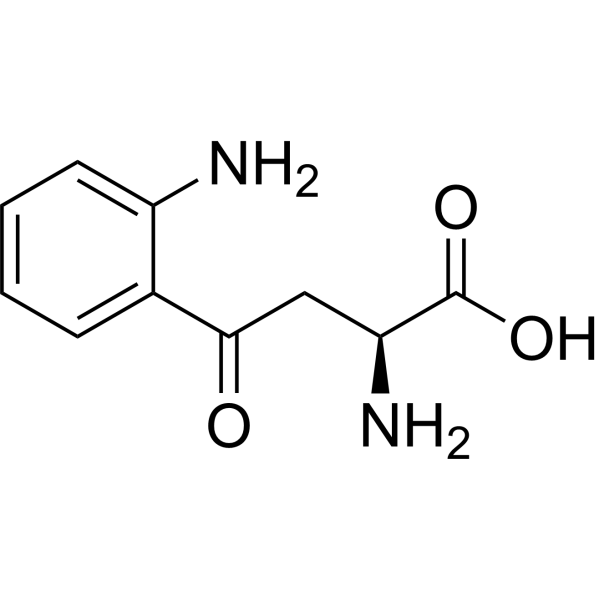
HY-104026R
L-Kynurenine (Standard)Aryl Hydrocarbon Receptor Agonist -
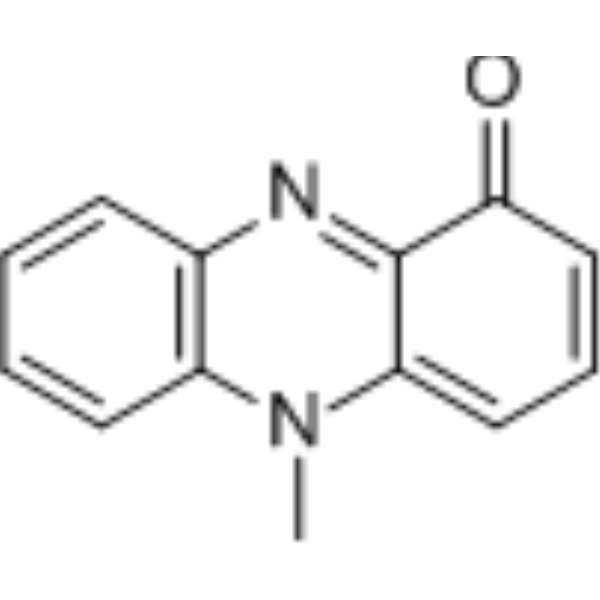
HY-111278
PyocyaninSecondary Metabolite -

HY-15001G
Stemregenin 1 (GMP)AhR Antagonist -
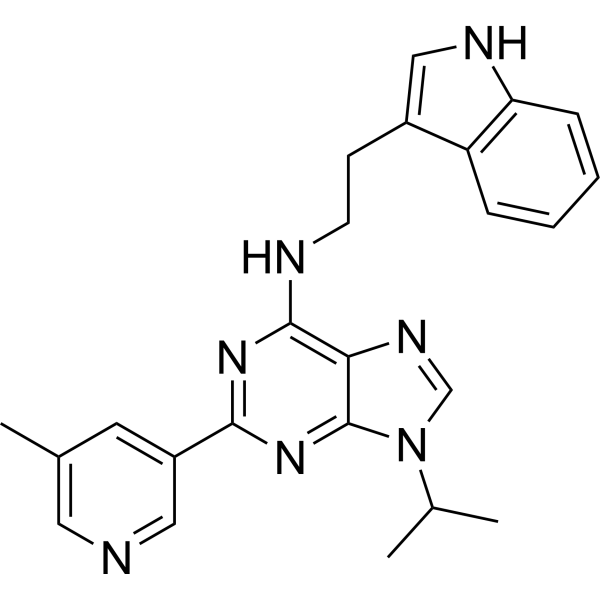
HY-102023
GNF351AHR Antagonist -
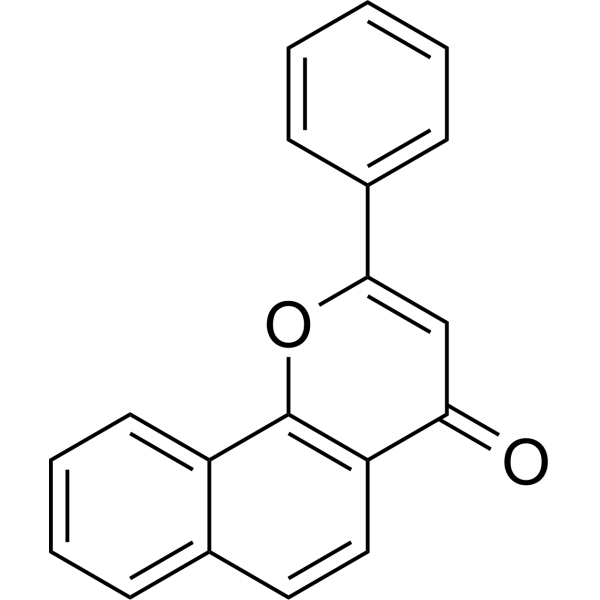
HY-125833
Alpha-NaphthoflavoneAromatase Inhibitor
Publications Citing Use of MedChemExpress (MCE) 6,2',4'-Trimethoxyflavone
More

Biological Activity
Description
In Vitro
6,2',4'-trimethoxyflavone (TMF) as an AHR ligand that possesses the characteristics of an antagonist having the capacity to compete with agonists, such as 2,3,7,8-tetrachlorodibenzo-p-dioxin and benzo[a]pyrene, thus effectively inhibiting AHR-mediated transactivation of a heterologous reporter and endogenous targets, e.g., CYP1A1, independent of cell lineage or species. Furthermore, TMF displays superior action by virtue of having no partial agonist activity, in contrast to other documented antagonists, e.g., alpha-napthoflavone, which are partial weak agonists. TMF also exhibits no species or promoter dependence with regard to AHR antagonism[1].
6,2',4'-Trimethoxyflavone (0-100 μM; 72 hours) shows an inhibitory activity of TNF- production in THP-1 cells, with IC50 of 2.38 μM. 6,2',4'-Trimethoxyflavone shows an inhibitory activity of TNF-α production in B16-F10 cells with IC50 of 1.32 μM[2].
MedChemExpress (MCE) has not independently confirmed the accuracy of these methods. They are for reference only. .
-
Cell Line:THP-1 cells, B16-F10 cells
-
Concentration:0-100 μM
-
Incubation Time:72 hours
-
Result:Showed inhibitory activity of TNF-⍺ production in THP-1 cells and B16-F10 cells.
In Vivo
MedChemExpress (MCE) has not independently confirmed the accuracy of these methods. They are for reference only.
-
Animal Model:Male C57BL/6 wild-type (WT) mice, AHRcKO mice[3]
-
Dosage:5 mg/kg/day
-
Administration:I.p.
-
Result:Both TMF-treated and AHRcKO mice attenuated acute cerebral infarction and functional impairments.


Chemical Information
-
CAS No. 720675-74-1
-
Appearance Solid
-
Molecular Weight 312.32
-
Formula C18H16O5
-
Color Yellow to orange
-
SMILES
O=C1C=C(C2=CC=C(OC)C=C2OC)OC3=CC=C(OC)C=C13
-
Shipping
Room temperature in continental US; may vary elsewhere.
-
Storage
Powder -20°C 3 years 4°C 2 years In solvent -80°C 6 months -20°C 1 month


Publications (1)
-
Journal Impact Factor
-
Most Recent
-
Cell Death Dis
Ferroptosis mediated by the IDO1/Kyn/AhR pathway triggers acute thymic involution in sepsis. [Abstract]2025 Jul 25;16(1):562. PMID: 40715082


Solvent & Solubility
In Vitro:
DMSO : 5 mg/mL (16.01 mM; Need ultrasonic; Hygroscopic DMSO has a significant impact on the solubility of product, please use newly opened DMSO)
Please refer to the solubility information to select the appropriate solvent. Once prepared, please aliquot and store the solution to prevent product inactivation from repeated freeze-thaw cycles.
Storage method and period of stock solution: -80°C, 6 months; -20°C, 1 month. When stored at -80°C, please use it within 6 months. When stored at -20°C, please use it within 1 month.
Please refer to the solubility information to select the appropriate solvent. Once prepared, please aliquot and store the solution to prevent product inactivation from repeated freeze-thaw cycles.
Storage method and period of stock solution: -80°C, 6 months; -20°C, 1 month. When stored at -80°C, please use it within 6 months. When stored at -20°C, please use it within 1 month.
Concentration (start) × Volume (start) = Concentration (final) × Volume (final)
In Vivo:
Select the appropriate dissolution method based on your experimental animal and administration route.
- For the following dissolution methods, please ensure to first prepare a clear stock solution using an In Vitro approach and then sequentially add co-solvents:
- To ensure reliable experimental results, the clarified stock solution can be appropriately stored based on storage conditions. As for the working solution for In Vivo experiments, it is recommended to prepare freshly and use it on the same day.
- The percentages shown for the solvents indicate their volumetric ratio in the final prepared solution. If precipitation or phase separation occurs during preparation, heat and/or sonication can be used to aid dissolution.
Add each solvent one by one: 10% DMSO 40% PEG300 5% Tween-80 45% Saline
Solubility: ≥ 0.5 mg/mL (1.60 mM); Clear solution
This protocol yields a clear solution of ≥ 0.5 mg/mL (saturation unknown).
Taking 1 mL working solution as an example, add 100 μL DMSO stock solution (5.0 mg/mL) to 400 μL PEG300, and mix evenly; then add 50 μL Tween-80 and mix evenly; then add 450 μL Saline to adjust the volume to 1 mL.
Preparation of Saline: Dissolve 0.9 g sodium chloride in ddH₂O and dilute to 100 mL to obtain a clear Saline solution.
Add each solvent one by one: 10% DMSO 90% (20% SBE-β-CD in Saline)
Solubility: ≥ 0.5 mg/mL (1.60 mM); Clear solution
This protocol yields a clear solution of ≥ 0.5 mg/mL (saturation unknown).
Taking 1 mL working solution as an example, add 100 μL DMSO stock solution (5.0 mg/mL) to 900 μL 20% SBE-β-CD in Saline, and mix evenly.
Preparation of 20% SBE-β-CD in Saline (4°C, storage for one week): 2 g SBE-β-CD powder is dissolved in 10 mL Saline, completely dissolve until clear.
In Vivo Dissolution Calculator
Please enter the basic information of animal experiments:
-
-
-
-
Recommended: Prepare an additional quantity of animals to account for potential losses during experiments.
Please enter your animal formula composition:
-
%DMSO +
Recommended: Keep the proportion of DMSO in working solution below 2% if your animal is weak.
-
%+
-
+%Tween-80 + +
-
%Saline +
The co-solvents required include: DMSO, . All of co-solvents are available by MedChemExpress (MCE). , Tween 80. All of co-solvents are available by MedChemExpress (MCE).
Working solution concentration: 0.22 mg/mL
Method for preparing stock solution: mg drug dissolved in μL DMSO. Stock solution concentration: mg/mL.
1. Take μL DMSO stock solution;
2. Add μL .
μL , mix evenly;
3. Then add μL Tween 80, mix evenly;
4. Then add μL
Please ensure that the stock solution in the first step is dissolved to a clear state, and add co-solvents in sequence. You can use ultrasonic heating (ultrasonic cleaner, recommended frequency 20-40 kHz), vortexing, etc. to assist dissolution.


Purity & Documentation
-
Data Sheet (275 KB)
-
SDS (252 KB)
- English - EN (252 KB)
- Français - FR (252 KB)
- Deutsch - DE (252 KB)
- Norwegian - NO (252 KB)
- Español - ES (252 KB)
- Swedish - SV (252 KB)
- Italian - IT (252 KB)
- Korean - KR (252 KB)
- Portuguese - PT (252 KB)
-
Handling Instructions (2659 KB)
References
[1]. Murray IA, et al. Antagonism of aryl hydrocarbon receptor signaling by 6,2',4'-trimethoxyflavone [published correction appears in J Pharmacol Exp Ther. 2018 Nov;367(2):291]. J Pharmacol Exp Ther. 2010;332(1):135-144. [Content Brief]
[2]. Apaza T L, et al. Flavonoids of Tripodanthus acutifolius inhibit TNF-α production in LPS-activated THP-1 and B16-F10 cells. J Ethnopharmacol. 2019;242:112036. [Content Brief]
[3]. Chen WC, et al. Aryl hydrocarbon receptor modulates stroke-induced astrogliosis and neurogenesis in the adult mouse brain. J Neuroinflammation. 2019;16(1):187. Published 2019 Oct 12. [Content Brief]


Complete Stock Solution Preparation Table
Please refer to the solubility information to select the appropriate solvent. Once prepared, please aliquot and store the solution to prevent product inactivation from repeated freeze-thaw cycles.
Storage method and period of stock solution: -80°C, 6 months; -20°C, 1 month. When stored at -80°C, please use it within 6 months. When stored at -20°C, please use it within 1 month.
| Optional Solvent | Concentration Solvent Mass | 1 mg | 5 mg | 10 mg | 25 mg |
|---|---|---|---|---|---|
| DMSO | 1 mM | 3.2018 mL | 16.0092 mL | 32.0184 mL | 80.0461 mL |
| 5 mM | 0.6404 mL | 3.2018 mL | 6.4037 mL | 16.0092 mL | |
| 10 mM | 0.3202 mL | 1.6009 mL | 3.2018 mL | 8.0046 mL | |
| 15 mM | 0.2135 mL | 1.0673 mL | 2.1346 mL | 5.3364 mL |


6,2',4'-Trimethoxyflavone Related Classifications
HY-103220 Related Classifications
 Powered by Bioz