



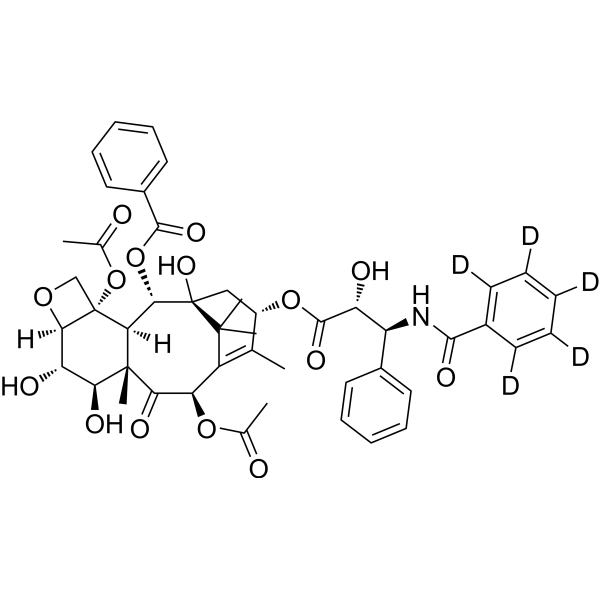
6α-Hydroxy paclitaxel-d5

Based on 1 Customer Validation
6α-Hydroxy paclitaxel-d5 is the deuterium labeled 6α-Hydroxy paclitaxel. 6α-Hydroxy paclitaxel is one of the main metabolites of Paclitaxel (PTX) (HY-B0015), and it is generated by the liver cytochrome P450 enzyme CYP2C8. 6α-Hydroxy paclitaxel has bone marrow toxicity, but it can enhance the cytotoxicity of PTX against leukemia cells without causing cell toxicity. 6α-Hydroxy paclitaxel can be used in leukemia research.
For research use only. We do not sell to patients.
- Purity : 99.31%
- CAS No.: 1315376-90-9
- Formula: C47H46D5NO15
- Molecular Weight:874.94
-
Storage:Powder -20°C, 3 years , 4°C, 2 years ; In solvent -80°C, 6 months , -20°C, 1 month

To place orders, for customer services and technical support, please contact: MedChemExpress USA
Tel: 609-228-6898 E-mail: [email protected] [email protected]


-
 Biological Activity
-
Chemical Information
- Protocols
- Purity & Documentation
- References
-
 Help & FAQs


-
HY-N0091S5
Hypoxanthine-d4Stable Isotope -
HY-19696
TauroursodeoxycholateEndoplasmic Reticulum Stress Inhibitor -
HY-W016498S
Paraxanthine-d6Stable Isotope -
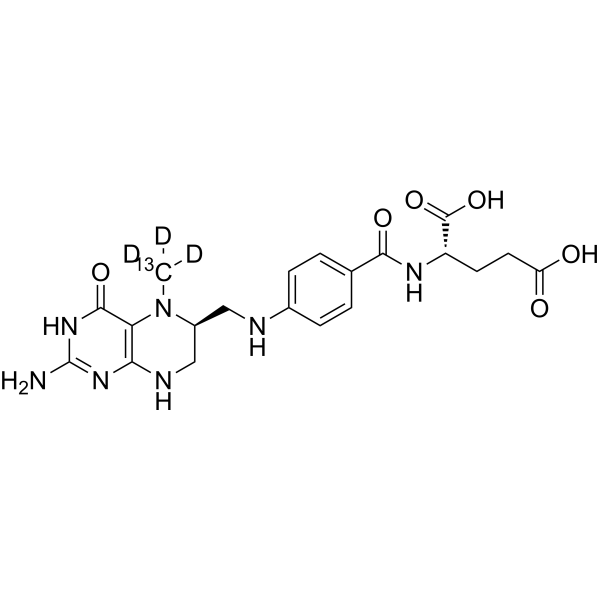
HY-14781S1
Levomefolic acid-13C,d3Stable Isotope -

HY-19696R
Tauroursodeoxycholate (Standard)Endoplasmic Reticulum Stress Inhibitor -

HY-118133
4'-Hydroxy flurbiprofenFlurbiprofen Metabolite -
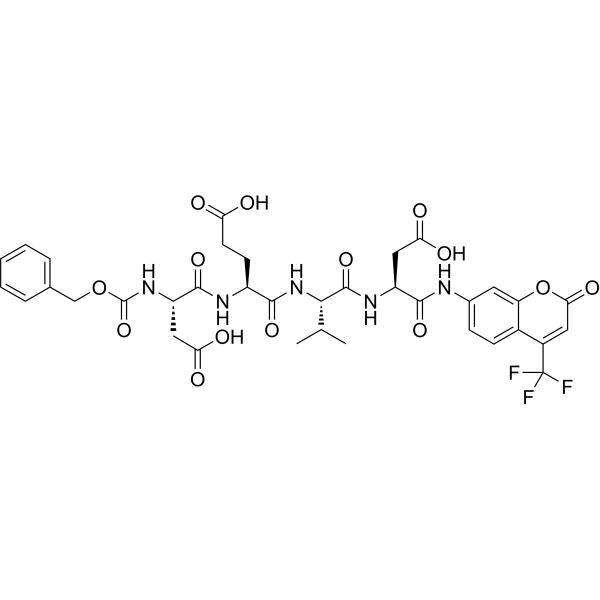
HY-P1986
Z-DEVD-AFCFuorogenic Caspace-3 Substrate -
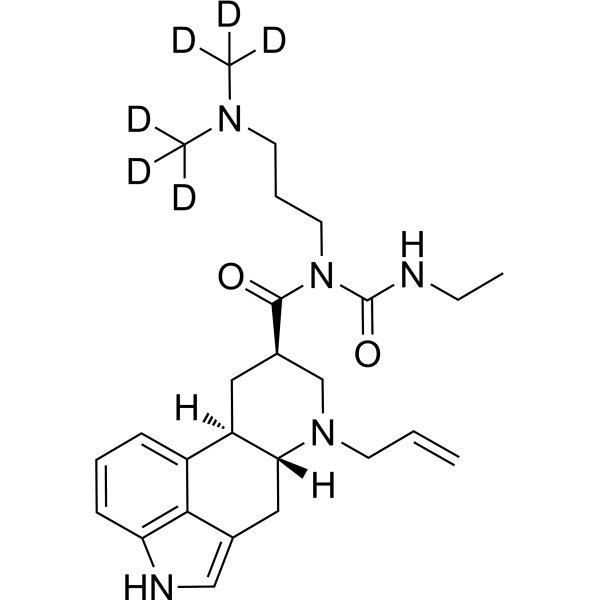
HY-15296S1
Cabergoline-d6Stable Isotope -
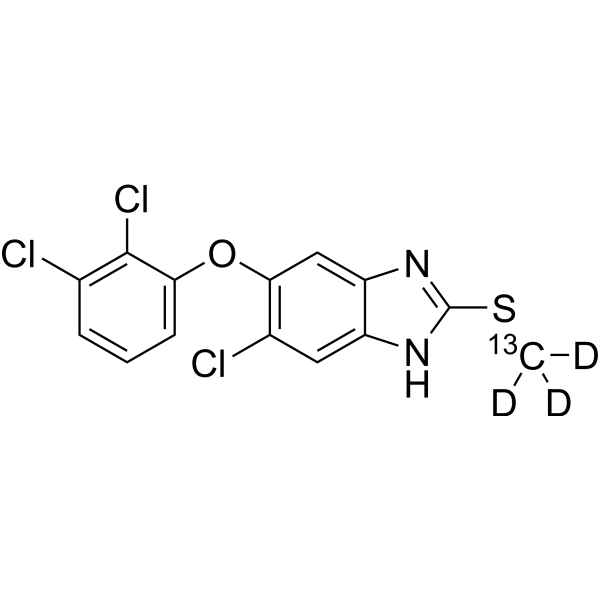
HY-B0621S1
Triclabendazole-13C,d3Stable Isotope -
HY-A0166S
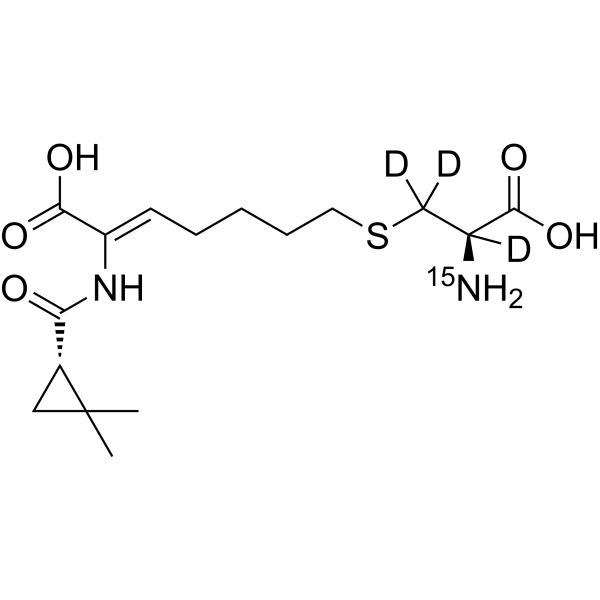
Cilastatin-15N,d3Stable Isotope -
HY-N6719S
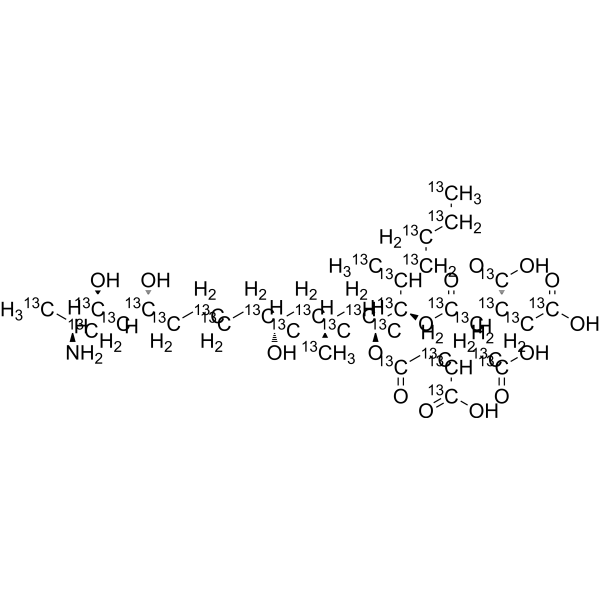
Fumonisin B1-13C34Sphingosine N-acyltransferase Inhibitor -

HY-152021S
C18 Ceramide-1-phosphate (d18:1/18:0)-d3


Biological Activity
Description
In Vitro
Stable heavy isotopes of hydrogen, carbon, and other elements have been incorporated into drug molecules, largely as tracers for quantitation during the drug development process. Deuteration has gained attention because of its potential to affect the pharmacokinetic and metabolic profiles of drugs[1].
MedChemExpress (MCE) has not independently confirmed the accuracy of these methods. They are for reference only. Further protocols information, click here.
Application
1. This compound can be used as a tracer
2. This compound can be used as an internal standard for quantitative analysis by NMR, GC-MS, or LC-MS.


Chemical Information
-
CAS No. 1315376-90-9
-
Unlabeled CAS 153212-75-0
-
Appearance Solid
-
Molecular Weight 874.94
-
Formula C47H46D5NO15
-
Color White to off-white
-
SMILES
O(C(C)=O)[C@]12[C@]3([C@H](OC(=O)C4=CC=CC=C4)[C@@]5(O)C(C)(C)C([C@@H](OC(C)=O)C(=O)[C@]3(C)[C@@H](O)[C@H](O)[C@]1(OC2)[H])=C(C)[C@@H](OC([C@@H]([C@@H](NC(=O)C6=C(C(=C(C(=C6[2H])[2H])[2H])[2H])[2H])C7=CC=CC=C7)O)=O)C5)[H]
-
Shipping
Room temperature in continental US; may vary elsewhere.
-
Storage
Powder -20°C 3 years 4°C 2 years In solvent -80°C 6 months -20°C 1 month

Protocols
-
Cell Cytotoxicity Assay
Cytotoxicity assays are usually based on the assessment of cell membrane damage, which can also be indirectly detected by measuring cell viability. Detection methods include MTT assay, CKK-8 assay, LDH assay and ATP assay, etc.
-
Mammalian live/dead viability and cytotoxicity staining
Live/dead viability and cytotoxicity staining assays are based on the simultaneous detection of intracellular esterase activity in metabolically active (viable) cells and membrane integrity loss in non-viable cells. In commonly used dual-staining approaches, membrane-permeant fluorogenic substrates are converted by intracellular esterases into fluorescent products in live cells, while impermeant DNA-binding dyes selectively enter cells with compromised plasma membranes and label nucleic acids in dead or dying cells, enabling discrimination between viable and non-viable populations by fluorescence microscopy or flow cytometry.
-
Cell Viability Determination by MTT Colorimetric Assay
The following protocol uses the MTT colorimetric assay as a classic literature-established method for assessing cell viability/metabolic activity in cultured mammalian cells. MTT[3-(4,5-dimethylthiazol-2-yl)-2,5-diphenyltetrazolium bromide] is reduced by metabolically active cells to a colored formazan product; the amount of formazan is quantified spectrophotometrically and provides an indirect measure of metabolically active viable cells. Importantly, MTT reduction reflects cellular oxidoreductase/metabolic activity rather than an absolute direct count of living cells, so changes in cellular metabolism can alter the signal independently of cell number.


Purity & Documentation
-
Data Sheet (276 KB)
-
SDS (580 KB)
- English - EN (580 KB)
- Français - FR (580 KB)
- Deutsch - DE (580 KB)
- Norwegian - NO (580 KB)
- Español - ES (580 KB)
- Swedish - SV (580 KB)
- Italian - IT (580 KB)
- Korean - KR (580 KB)
- Portuguese - PT (580 KB)
-
Handling Instructions (2659 KB)
References

Calculators
Concentration (start) × Volume (start) = Concentration (final) × Volume (final)


6α-Hydroxy paclitaxel-d5 Related Classifications
HY-125348S Related Classifications
 Powered by Bioz