



Cresyl Violet acetate
Based on 3 publication(s) in Google Scholar
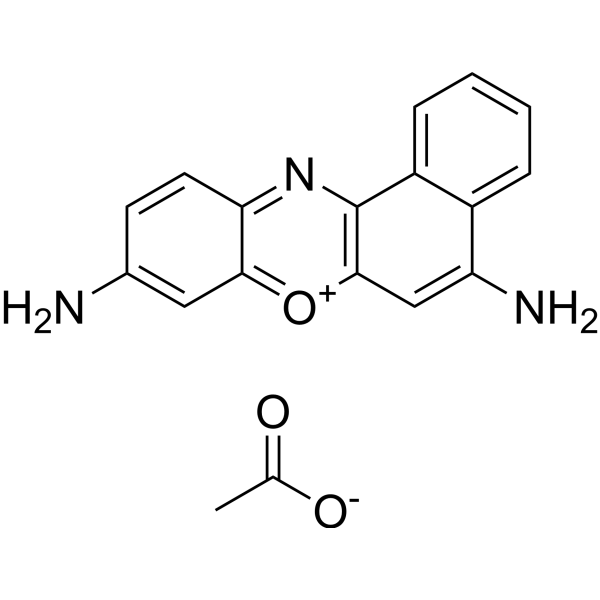
Cresyl Violet acetate is a dye, which can be used to stain neurons.
Nos produits utilisent uniquement pour la recherche. Nous ne vendons pas aux patients.
- CAS No.: 10510-54-0
- Formule: C18H15N3O3
- Masse moléculaire:321.33
-
Stockage:
4°C, sealed storage, away from moisture and light
* In solvent : -80°C, 6 months; -20°C, 1 month (sealed storage, away from moisture and light)

To place orders, for customer services and technical support, please contact: MedChemExpress USA
Tel: 609-228-6898 E-mail: [email protected] [email protected]


-
 Activité biologique
-
Chemical Information
-
Solvant et solubilité
- Pureté et documentation
- Références
-
 Help & FAQs


-
HY-100218A
RSL3GPX4 Inhibitor -
HY-19610
α-AmanitinADC Toxin/RNA Pol II Inhibitor -
HY-D1056
Lipopolysaccharides, from E. coli O55:B5Endotoxin -

HY-101888R
Cresyl Violet acetate (Standard)Reference Standard -
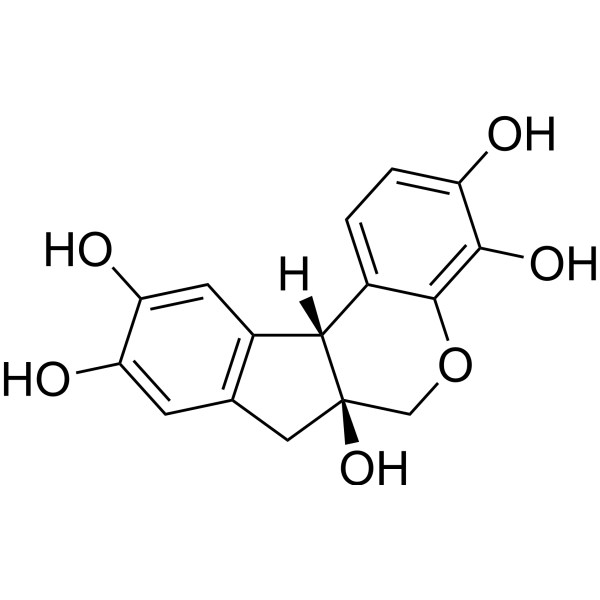
HY-N0116
HematoxylinHistologic Stain -
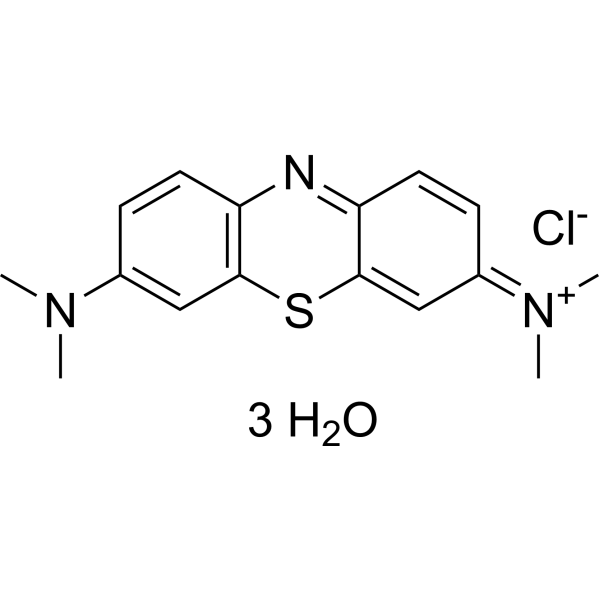
HY-B1359
Methylene blue trihydrateParasite Inhibitor -
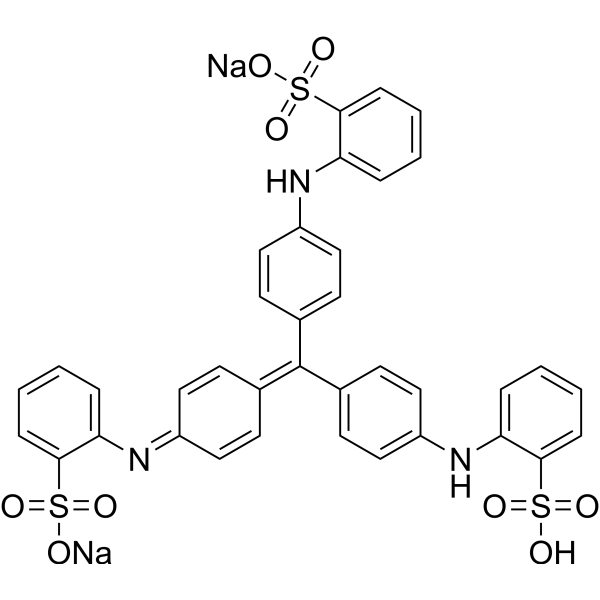
HY-D0003
Methyl BlueAntiseptic Dye -
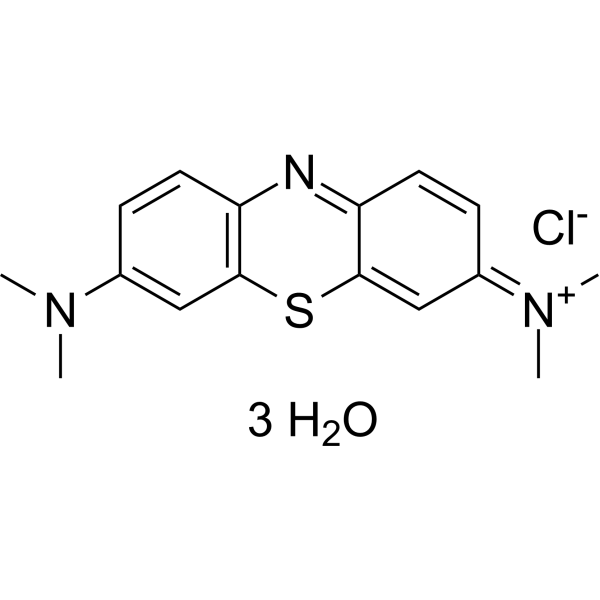
HY-B1359A
Methylene blue indicatorBiochemical Assay Reagent -

HY-122266
OrceinElastic Fiber Dye -
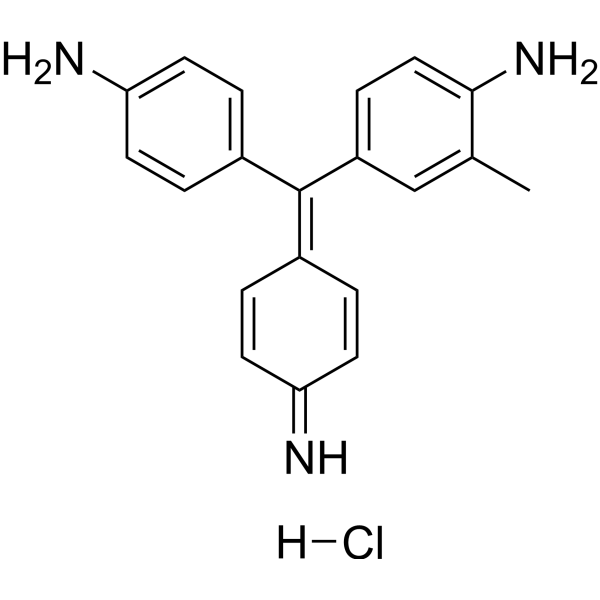
HY-B1539A
Fuchsine base monohydrochlorideMagenta Dye -
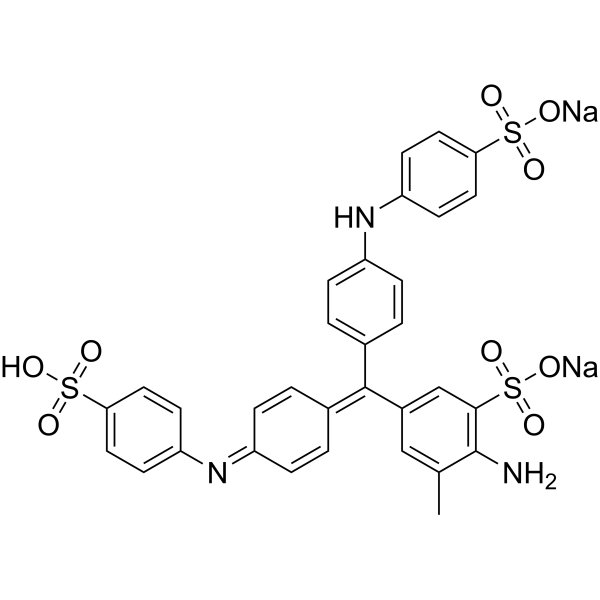
HY-W133919
Aniline Blue sodiumBiochemical Assay Reagent -
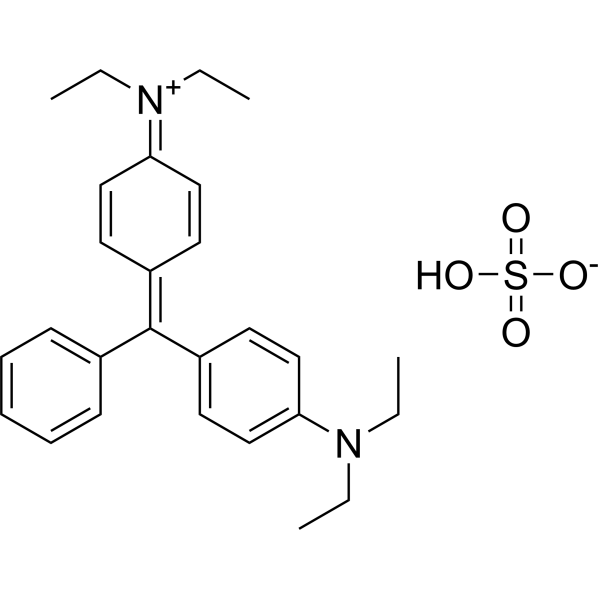
HY-D0008
Brilliant greenCationic Dye
Publications Citing Use of MedChemExpress (MCE) Cresyl Violet acetate
More

Activité biologique
Description
In Vitro
The estimated total number of SG neurons is 27,485±3251 and 26,705±1823 in the PV and Cresyl Violet acetate stained sections, respectively. There is no significant difference between them (p=0.552). Therefore, Cresyl Violet acetate staining is simpler and more cost effective when estimates neuronal number. Although PV stains spiral ganglion neurons (SGNs) with a greater intensity and provides a functional status, its tedious protocol limits its use for quantification. Total RC volume is estimated using probe and it is found that an average RC volume of 2.162±0.35 mm3 and 1.82±0.33 mm3 in Cresyl Violet acetate staining and PV immunostaining sections, respectively. Volume of neurons is estimated using nucleator probe and it is 3487.63±951 μm3 and 3740.1±784 μm3 in Cresyl Violet acetate staining and PV immunostaining sections, respectively. Similarly, volume of neuronal nucleus is also estimated using nucleator probe and it is found to be 131.68±50 μm3 and 126.51±33 μm3 in Cresyl Violet acetate staining and PV immunostaining sections, respectively[1].
MedChemExpress (MCE) has not independently confirmed the accuracy of these methods. They are for reference only.
Essai clinique
| NCT Number | Sponsor | Condition | Start Date |
Phase

|
|---|---|---|---|---|
| NCT01329991 | Plexxikon| | 2011-05 | PHASE1 |


Chemical Information
-
CAS No. 10510-54-0
-
Appearance Solid
-
Masse moléculaire 321.33
-
Formule C18H15N3O3
-
Color Brown to black
-
SMILES
NC1=CC2=[O+]C3=C(C4=CC=CC=C4C(N)=C3)N=C2C=C1.CC([O-])=O
-
Livraison
Room temperature in continental US; may vary elsewhere.
-
Stockage
4°C, sealed storage, away from moisture and light
* In solvent : -80°C, 6 months; -20°C, 1 month (sealed storage, away from moisture and light)


Publications (3)
-
Journal Impact Factor
-
Most Recent
-
Immunity
Disruption of the Na+/K+-ATPase-purinergic P2X7 receptor complex in microglia promotes stress-induced anxiety. [Abstract]2024 Mar 12;57(3):495-512.e11. PMID: 38395698 -
Neuron
Noninvasive tactile stimulation engaging a thalamic-amygdala circuit ameliorates mood dysfunction in mouse models of depression-like behavior. [Abstract]2026 Apr 1:S0896-6273(26)00176-5. PMID: 41928509 -
Cerebellum
NR1 Splicing Variant NR1a in Cerebellar Granule Neurons Constitutes a Better Motor Learning in the Mouse. [Abstract]2024 Jun;23(3):1112-1120. PMID: 37880519


Solvant et solubilité
In Vitro:
DMSO : 1 mg/mL (3.11 mM; Need ultrasonic; Hygroscopic DMSO has a significant impact on the solubility of product, please use newly opened DMSO)
H2O : < 0.1 mg/mL (insoluble)
Please refer to the solubility information to select the appropriate solvent. Once prepared, please aliquot and store the solution to prevent product inactivation from repeated freeze-thaw cycles.
Storage method and period of stock solution: -80°C, 6 months; -20°C, 1 month (sealed storage, away from moisture and light). When stored at -80°C, please use it within 6 months. When stored at -20°C, please use it within 1 month.
Please refer to the solubility information to select the appropriate solvent. Once prepared, please aliquot and store the solution to prevent product inactivation from repeated freeze-thaw cycles.
Storage method and period of stock solution: -80°C, 6 months; -20°C, 1 month (sealed storage, away from moisture and light). When stored at -80°C, please use it within 6 months. When stored at -20°C, please use it within 1 month.
Concentration (start) × Volume (start) = Concentration (final) × Volume (final)


Pureté et documentation
-
Fiche technique (276 KB)
-
SDS (393 KB)
- English - EN (393 KB)
- Français - FR (393 KB)
- Deutsch - DE (393 KB)
- Norwegian - NO (393 KB)
- Español - ES (393 KB)
- Swedish - SV (393 KB)
- Italian - IT (393 KB)
- Korean - KR (393 KB)
- Portuguese - PT (393 KB)
-
Instruction de manipulation (2659 KB)
Références


Complete Stock Solution Preparation Table
Please refer to the solubility information to select the appropriate solvent. Once prepared, please aliquot and store the solution to prevent product inactivation from repeated freeze-thaw cycles.
Storage method and period of stock solution: -80°C, 6 months; -20°C, 1 month (sealed storage, away from moisture and light). When stored at -80°C, please use it within 6 months. When stored at -20°C, please use it within 1 month.
| Optional Solvent | Concentration Solvent Mass | 1 mg | 5 mg | 10 mg | 25 mg |
|---|---|---|---|---|---|
| DMSO | 1 mM | 3.1121 mL | 15.5603 mL | 31.1207 mL | 77.8016 mL |


Cresyl Violet acetate Related Classifications
HY-101888 Related Classifications
 Powered by Bioz