



HOE 32020

Based on 1 Customer Validation
HOE 32020 is a marker dye in Hoechst series. Hoechst is A live nuclear marker dye. Hoechst binds to the grooves in the DNA double strand, which tends to be A/ T-rich DNA strand. Although it binds to all nucleic acids, the A/ T-rich double strand DNA significantly enhances fluorescence intensity Therefore,Hoechst dye can be used for living cell labeling. The fluorescence intensity of Hoechst dye increases with the increase of pH of solution.
Nos produits utilisent uniquement pour la recherche. Nous ne vendons pas aux patients.
- Pureté : 98.07%
- CAS No.: 23554-99-6
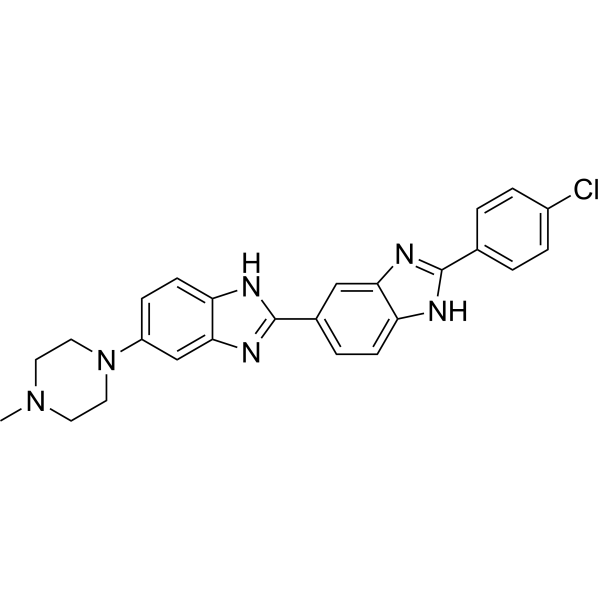
- Formule: C25H23ClN6
- Masse moléculaire:442.94
-
Stockage:
4°C, protect from light
* In solvent : -80°C, 6 months; -20°C, 1 month (protect from light)

To place orders, for customer services and technical support, please contact: MedChemExpress USA
Tel: 609-228-6898 E-mail: [email protected] [email protected]


-
 Activité biologique
-
Chemical Information
-
Solvant et solubilité
- Protocole
- Pureté et documentation
- Références
-
 Help & FAQs


-
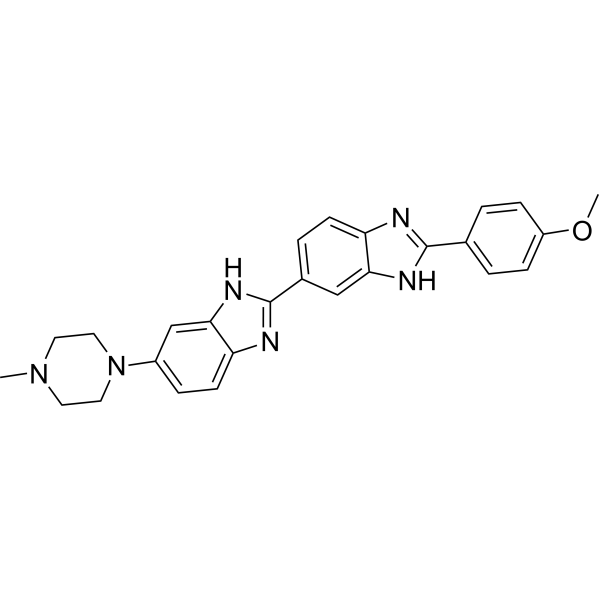
HY-15562
HOE 32021DNA Dye -
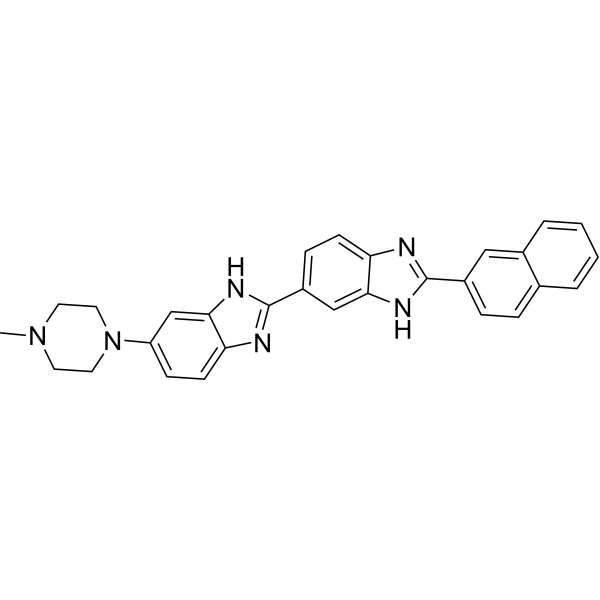
HY-15628
Hoechst 33258 analog 5DNA Dye -
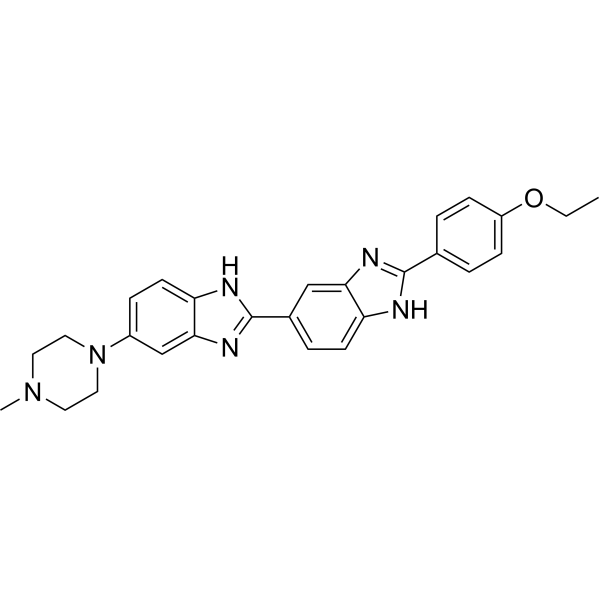
HY-15559
Hoechst 33342DNA Fluorescent Stain -
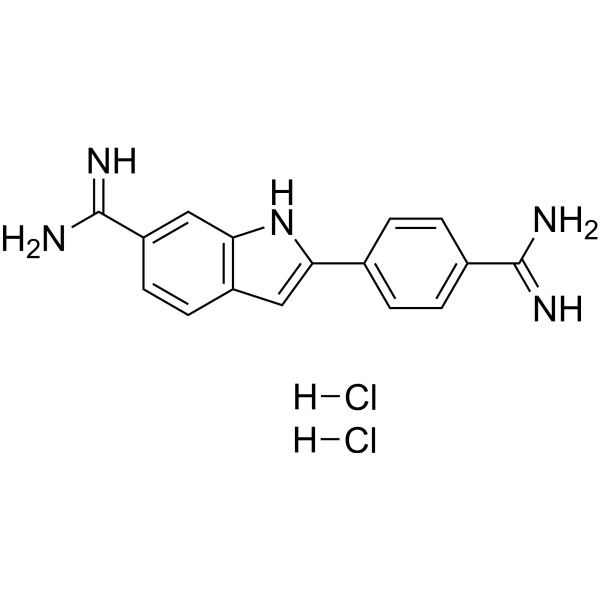
HY-D0814
DAPI dihydrochlorideFluorescent DNA Stain -
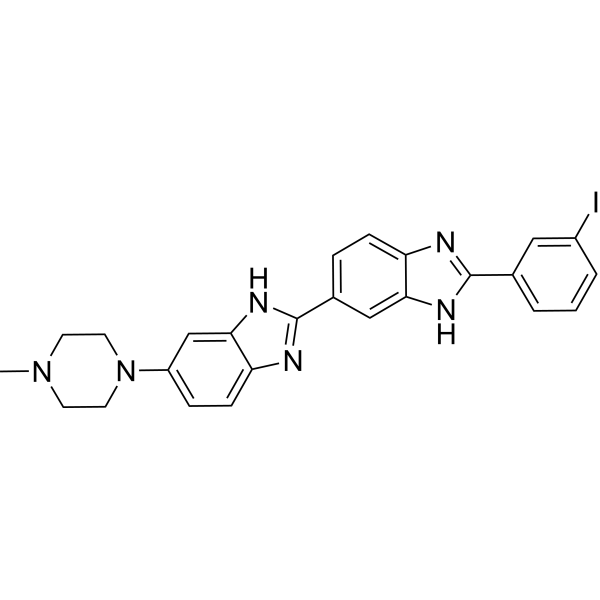
HY-15622
meta-iodoHoechst 33258DNA Dye -
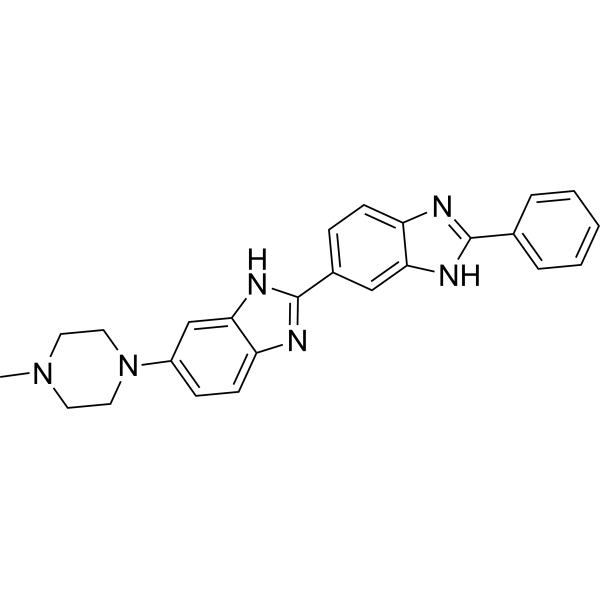
HY-15563
HOE 33187DNA Dye -
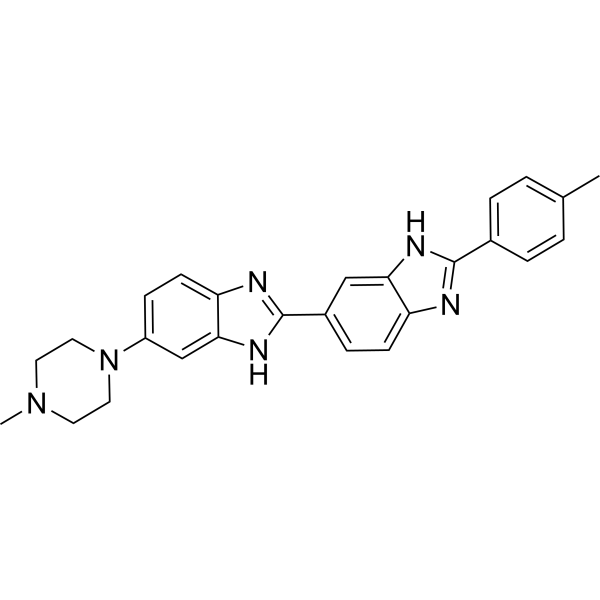
HY-15625
Hoechst 33258 analog 3DNA Dye -
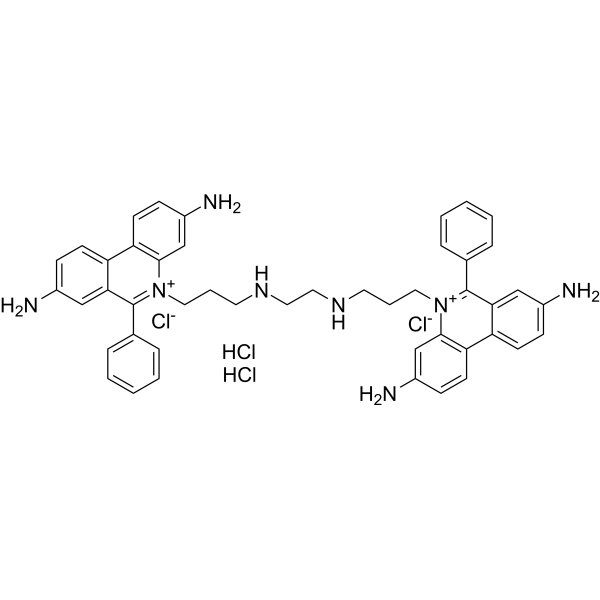
HY-D0093
Ethidium homodimerDNA Fluorochrome -
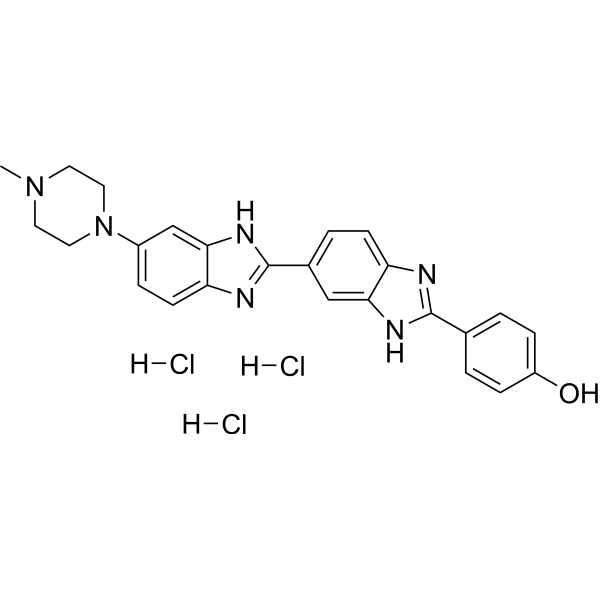
HY-15558A
Hoechst 33258 trihydrochlorideDNA Staining -
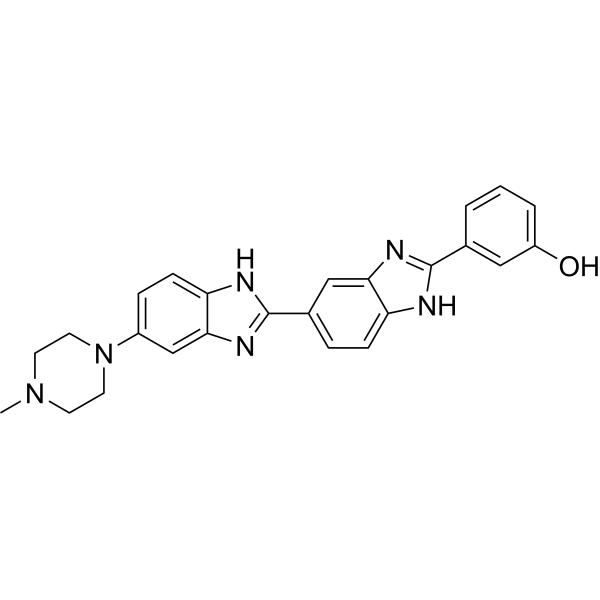
HY-15561
HOE-S 785026Blue Fluorescent Dyes -
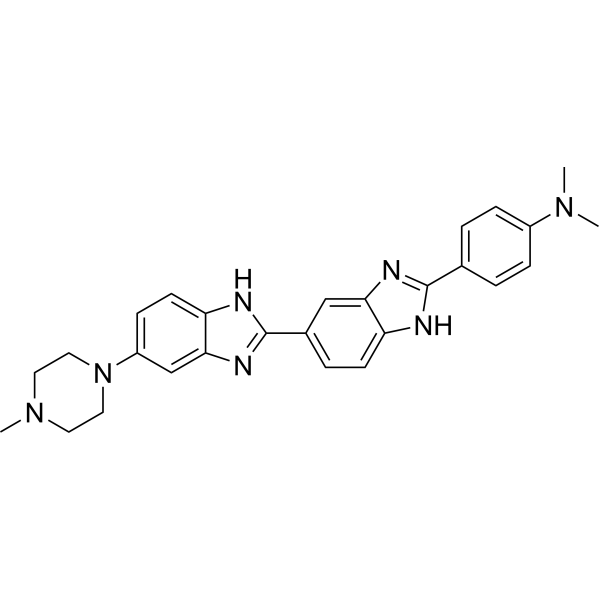
HY-15560
Hoechst 34580Amyloid-β Inhibitor -

HY-DY1081
DAPI dihydrochloride (solution)Fluorescent DNA Stain


Activité biologique
Description
In Vitro
Guide (The following is our recommended experimental protocol. This protocol serves only as a reference guide. Specific operations should be adjusted according to your actual needs.)
1. Preparation of Hoechst working solution
1.1 Preparation of storage solution
Prepare a 1 mg/mL Hoechst storage solution using DMSO.
1.2 Preparation of working solution
Dilute the stored solution with pre-heated serum-free cell culture medium or PBS to achieve a final concentration of 10 μg/mL Hoechst working solution.
Note: Please adjust the concentration of Hoechst working solution according to the actual situation, and prepare it as needed.
2. Cell Staining (Suspension Cells)
2.1 Centrifuge to collect the cells, then add PBS for two washes, each for 5 minutes. The cell density is 1×10⁶/mL
2.2 Add 1 mL of Hoechst working solution and incubate at room temperature for 3-10 minutes.
2.3 400 grams. Centrifuge for 3-4 minutes. Discard the supernatant.
2.4 Add PBS to wash the cells twice, for 5 minutes each time.
2.5 After resuspending the cells in 1 mL of serum-free medium or PBS, observe them using a fluorescence microscope or a flow cytometer.
3. Cytological staining (adherent cells)
3.1 Place the adherent cells on a sterile cover slip.
3.2 Remove the cover glass from the culture medium and aspirate away the excess medium.
3.3 Add 100 μL of the dye working solution and gently shake to ensure complete coverage of the cells. Incubate for 3 to 10 minutes.
3.4 Remove the dye working solution and wash with the culture medium 2-3 times, for 5 minutes each time. Observe using a fluorescence microscope or flow cytometer.
Notes:
1. Please adjust the concentration of Hoechst working solution according to the actual situation.
2. This product is exclusively for professional scientific research purposes only. It shall not be used for clinical diagnosis or treatment, nor for food or medicine purposes.
3. For your safety and health, please wear a laboratory coat and put on disposable gloves when operating.
MedChemExpress (MCE) has not independently confirmed the accuracy of these methods. They are for reference only.
Emission (Em)
451
Excitation (Ex)
356


Chemical Information
-
CAS No. 23554-99-6
-
Appearance Solid
-
Masse moléculaire 442.94
-
Formule C25H23ClN6
-
Color Light green to green
-
SMILES
CN1CCN(C2=CC=C3C(N=C(C4=CC=C5C(N=C(C6=CC=C(Cl)C=C6)N5)=C4)N3)=C2)CC1
-
Livraison
Room temperature in continental US; may vary elsewhere.
-
Stockage
4°C, protect from light
* In solvent : -80°C, 6 months; -20°C, 1 month (protect from light)


Solvant et solubilité
In Vitro:
DMSO : ≥ 69 mg/mL (155.78 mM; Hygroscopic DMSO has a significant impact on the solubility of product, please use newly opened DMSO)
* "≥" means soluble, but saturation unknown.
Please refer to the solubility information to select the appropriate solvent. Once prepared, please aliquot and store the solution to prevent product inactivation from repeated freeze-thaw cycles.
Storage method and period of stock solution: -80°C, 6 months; -20°C, 1 month (protect from light). When stored at -80°C, please use it within 6 months. When stored at -20°C, please use it within 1 month.
Please refer to the solubility information to select the appropriate solvent. Once prepared, please aliquot and store the solution to prevent product inactivation from repeated freeze-thaw cycles.
Storage method and period of stock solution: -80°C, 6 months; -20°C, 1 month (protect from light). When stored at -80°C, please use it within 6 months. When stored at -20°C, please use it within 1 month.
Concentration (start) × Volume (start) = Concentration (final) × Volume (final)


Pureté et documentation
-
Fiche technique (273 KB)
-
SDS (393 KB)
- English - EN (393 KB)
- Français - FR (393 KB)
- Deutsch - DE (393 KB)
- Norwegian - NO (393 KB)
- Español - ES (393 KB)
- Swedish - SV (393 KB)
- Italian - IT (393 KB)
- Korean - KR (393 KB)
- Portuguese - PT (393 KB)
-
Instruction de manipulation (2659 KB)
Références
[1]. Latt SA, Stetten G, Juergens LA, Recent developments in the detection of deoxyribonucleic acid synthesis by 33258 Hoechst fluorescence. The journal of histochemistry and cytochemistry : official journal of the Histochemistry Society 23 (7): 493-505. [Content Brief]
[2]. a b c "Hoechst Stains". Invitrogren (Molecular Probes).
[3]. Portugal J, Waring MJ. Assignment of DNA binding sites for 4',6-diamidine-2-phenylindole and bisbenzimide (Hoechst 33258). A comparative footprinting study. Biochimica et Biophysica Acta 949 (2): 158-68. [Content Brief]


Complete Stock Solution Preparation Table
Please refer to the solubility information to select the appropriate solvent. Once prepared, please aliquot and store the solution to prevent product inactivation from repeated freeze-thaw cycles.
Storage method and period of stock solution: -80°C, 6 months; -20°C, 1 month (protect from light). When stored at -80°C, please use it within 6 months. When stored at -20°C, please use it within 1 month.
| Optional Solvent | Concentration Solvent Mass | 1 mg | 5 mg | 10 mg | 25 mg |
|---|---|---|---|---|---|
| DMSO | 1 mM | 2.2576 mL | 11.2882 mL | 22.5764 mL | 56.4411 mL |
| 5 mM | 0.4515 mL | 2.2576 mL | 4.5153 mL | 11.2882 mL | |
| 10 mM | 0.2258 mL | 1.1288 mL | 2.2576 mL | 5.6441 mL | |
| 15 mM | 0.1505 mL | 0.7525 mL | 1.5051 mL | 3.7627 mL | |
| 20 mM | 0.1129 mL | 0.5644 mL | 1.1288 mL | 2.8221 mL | |
| 25 mM | 0.0903 mL | 0.4515 mL | 0.9031 mL | 2.2576 mL | |
| 30 mM | 0.0753 mL | 0.3763 mL | 0.7525 mL | 1.8814 mL | |
| 40 mM | 0.0564 mL | 0.2822 mL | 0.5644 mL | 1.4110 mL | |
| 50 mM | 0.0452 mL | 0.2258 mL | 0.4515 mL | 1.1288 mL | |
| 60 mM | 0.0376 mL | 0.1881 mL | 0.3763 mL | 0.9407 mL | |
| 80 mM | 0.0282 mL | 0.1411 mL | 0.2822 mL | 0.7055 mL | |
| 100 mM | 0.0226 mL | 0.1129 mL | 0.2258 mL | 0.5644 mL |


HOE 32020 Related Classifications
HY-15629 Related Classifications
 Powered by Bioz