



Hexadecanedioic acid
Based on 1 publication(s) in Google Scholar
Hexadecanedioic acid (Thapsic acid) is an orally active metabolite produced by B. uniformis. Hexadecanedioic acid inhibits IRE1α-XBP1s-mediated flipogenesis and ferroptosis. Hexadecanedioic acid downregulates XBP1 and Hrd1 expression, activates the Nrf2/SLC7A11/GPX4 pathway. Hexadecanedioic acid can be used for the research of metabolic-associated fatty liver disease.
商品は「研究用試薬」です。人や動物の医療用・臨床診断用・食品用の製品ではありません。
研究用途以外に使用した場合、当社は一切の責任を負いかねます。
- 純度 : 98.0%
- CAS 番号: 505-54-4
- 分子式: C16H30O4
- 分子量:286.41
-
保管条件:
Store at room temperature 3 years.
In solvent -80°C, 2 years , -20°C, 1 year

To place orders, for customer services and technical support, please contact: MedChemExpress USA
Tel: 609-228-6898 E-mail: [email protected] [email protected]


-
 生物活性
生物活性
-
化学情報
-
溶剤 & 溶解度
- プロトコル
- 純度とドキュメンテーション
- 参考文献
-
 Help & FAQs


-
HY-N0728
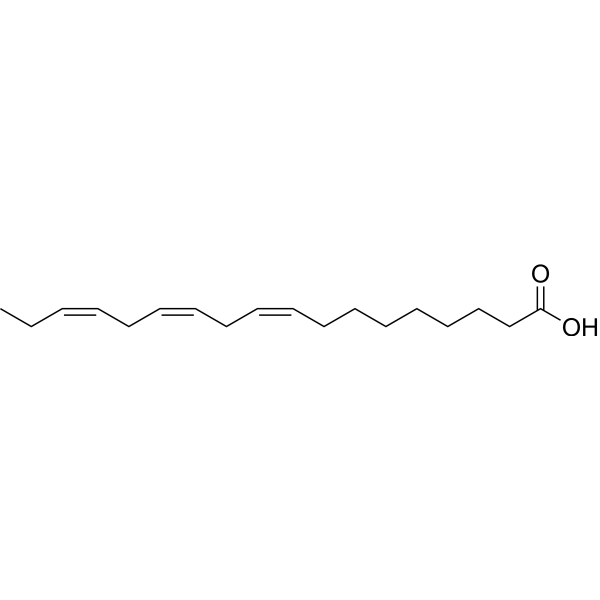
α-Linolenic acidEssential Fatty Acid -
HY-N0830
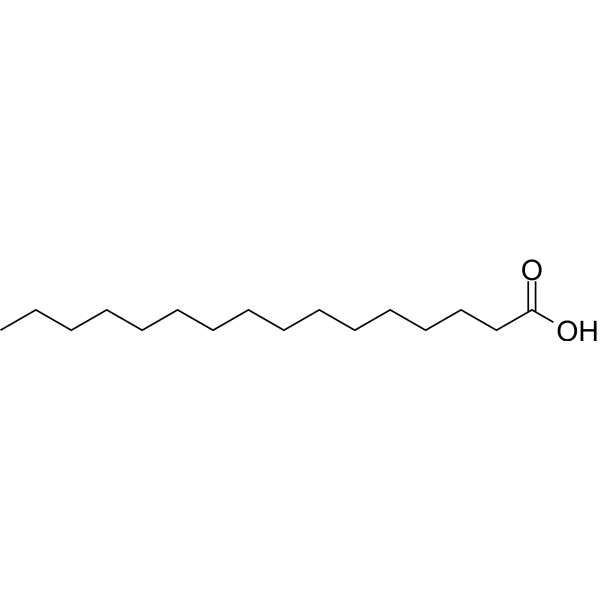
Palmitic acidEndogenous Metabolite -
HY-W012241
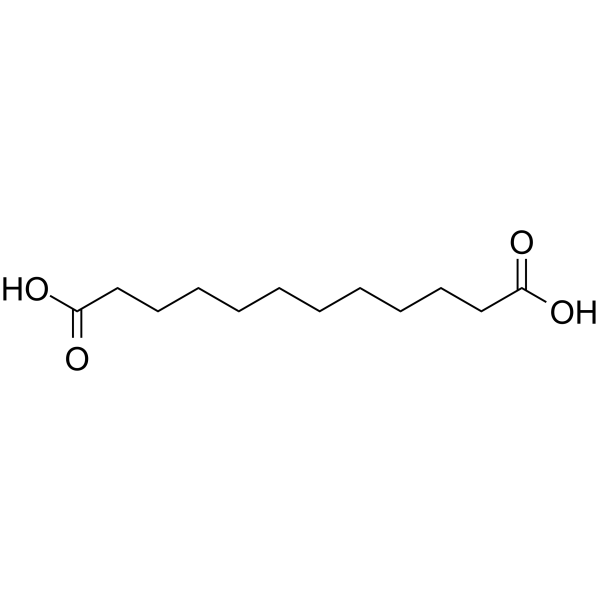
Dodecanedioic acidEnergy Substrate -
HY-W014787
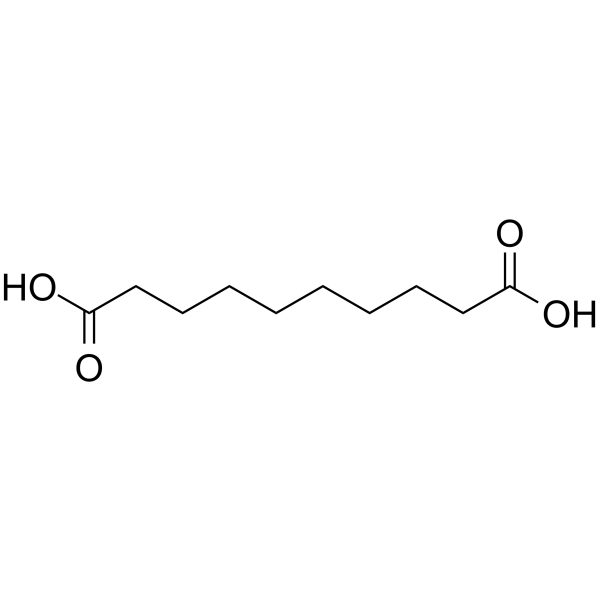
Decanedioic acidStraight-chain Dicarboxylic Acid -
HY-W004283
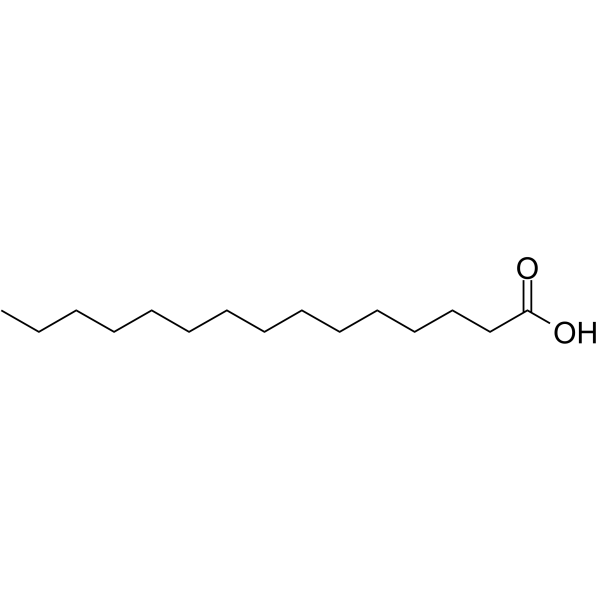
Pentadecanoic acidSTAT3 Inhibitor -
HY-N7057
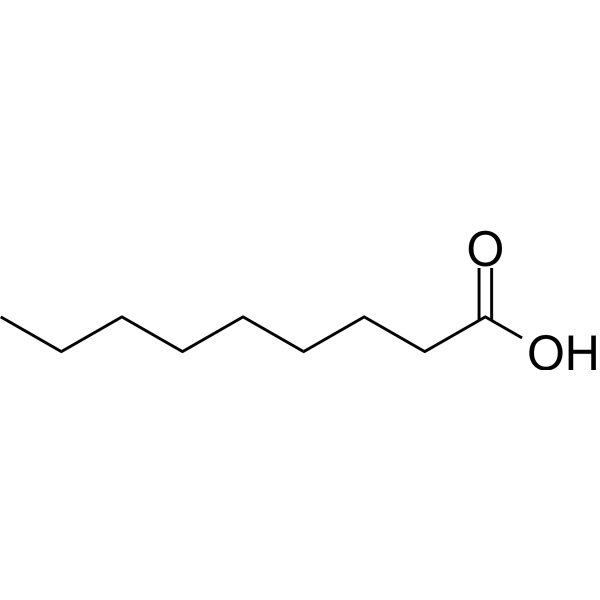
Nonanoic acidAnti-bacterial Agent -
HY-W011819
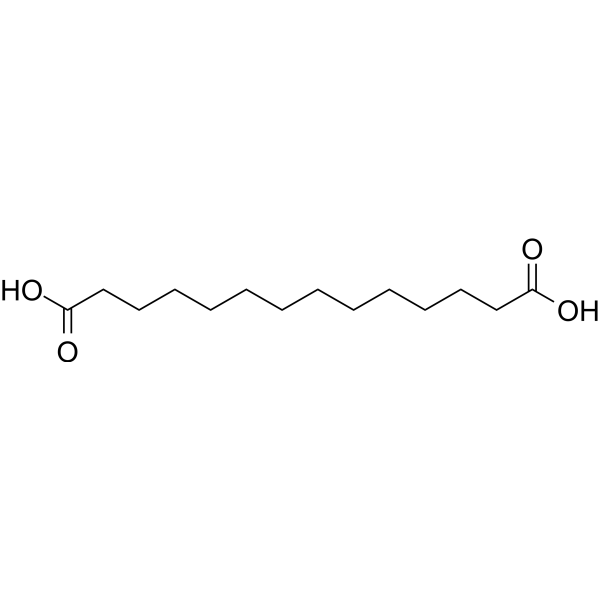
Tetradecanedioic acidEndogenous Metabolite -
HY-B0704
Azelaic acidAnti-inflammatory Agent -

HY-W018161R
Hexadecanedioic acid (Standard)Analytical Standard -
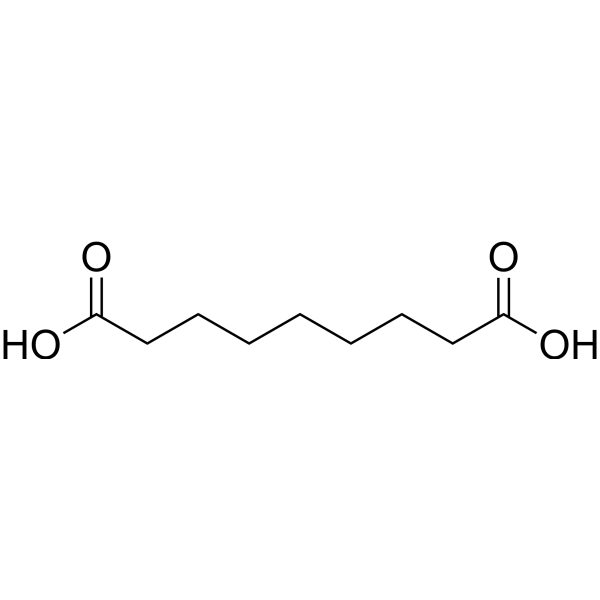
HY-B0704R
Azelaic acid (Standard) -

HY-W012241R
Dodecanedioic acid (Standard)Standard of Dodecanedioic acid -
HY-Y0366
Lauric acidMiddle Chain-free Fatty Acid
MedChemExpress(MCE)の使用を引用している文献 Hexadecanedioic acid
More

生物活性
製品説明
IC50 & Target
[1]|
GPX4 |
体外実験
Hexadecanedioic acid (40-80 μg/mL; 24 h) reduces hepatic steatosis and inhibits ferroptosis in free fatty acid-induced HepG2 cells by downregulating XBP1 and Hrd1, and upregulating the Nrf2/SLC7A11/GPX4 pathway[1].
MedChemExpress (MCE) has not independently confirmed the accuracy of these methods. They are for reference only. Further protocols information, click here.
体内実験
MedChemExpress (MCE) has not independently confirmed the accuracy of these methods. They are for reference only.
-
Animal Model:C57BL/6J (male, 8 weeks old, SPF grade, high-fat diet-induced)[1]
-
Dosage:8 mg/0.2 mL; 16 mg/0.2 mL
-
Administration:I.g.,; every other day; 12 weeks
-
Result:Reduced body weight, epididymal fat index, liver weight, and liver index compared to HFD-fed control mice.
Reduced hepatocellular steatosis grade and lipid droplet area ratio (16 mg/0.2 mL dose showed greater effect than 8 mg/0.2 mL dose).
Downregulated hepatic mRNA and protein expression of XBP1 and Hrd1, and upregulated mRNA and protein expression of Nrf2, SLC7A11, and GPX4 (16 mg/0.2 mL dose showed more pronounced effects).
Decreased serum levels of LPS, MDA, ROS, Fe2+, IL-1β, and TNF-α, and increased serum GSH levels (16 mg/0.2 mL dose had a stronger impact).
Improved hepatic mitochondrial morphology, reducing ferroptosis-related structural damage, and alleviated intestinal mucosal shedding caused by the high-fat diet.
Downregulated ileal mRNA and protein expression of CD36 and MTP, and upregulated epididymal white adipose tissue mRNA and protein expression of PPARγ and FABP4 (16 mg/0.2 mL dose showed more significant modulation).
Downregulated hepatic mRNA and protein expression of DGAT2 and MTP, reduced the p-IRE1α/IRE1α ratio and XBP1s/XBP1u ratio in liver tissue, and reduced serum VLDL levels (16 mg/0.2 mL dose caused a larger decrease).


化学情報
-
CAS 番号 505-54-4
-
性状 Solid
-
分子量 286.41
-
分子式 C16H30O4
-
Color White to off-white
-
SMILES
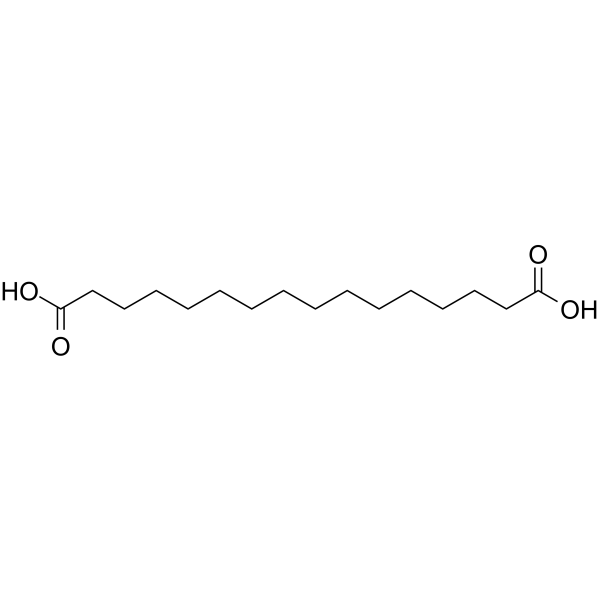
O=C(O)CCCCCCCCCCCCCCC(O)=O
-
別名
Thapsic acid; ヘキサデカン二酸; タプシン酸
-
Structure Classification
-
Initial Source
-
輸送条件
Room temperature in continental US; may vary elsewhere.
-
保管条件
Store at room temperature 3 years
In solvent -80°C 2 years -20°C 1 year


Publications (1)
-
Journal Impact Factor
-
Most Recent
-
Nat Commun
2024 Sep 19;15(1):8221. PMID: 39300135


溶剤 & 溶解度
体外:
DMSO : 100 mg/mL (349.15 mM; Need ultrasonic; Hygroscopic DMSO has a significant impact on the solubility of product, please use newly opened DMSO)
Please refer to the solubility information to select the appropriate solvent. Once prepared, please aliquot and store the solution to prevent product inactivation from repeated freeze-thaw cycles.
Storage method and period of stock solution: -80°C, 2 years; -20°C, 1 year. When stored at -80°C, please use it within 2 years. When stored at -20°C, please use it within 1 year.
Please refer to the solubility information to select the appropriate solvent. Once prepared, please aliquot and store the solution to prevent product inactivation from repeated freeze-thaw cycles.
Storage method and period of stock solution: -80°C, 2 years; -20°C, 1 year. When stored at -80°C, please use it within 2 years. When stored at -20°C, please use it within 1 year.
濃度 (開始) × 体積 (開始) = 濃度 (終了) × 体積 (終了)

プロトコル
-
RNA extraction experimental
By lysing cells, releasing RNA, and removing impurities such as proteins and DNA, high-purity RNA products are finally obtained. The commonly used traditional method is the guanidine isothiocyanate/phenol/chloroform method (Trizol), which is suitable for a variety of animal materials including animal tissues, microorganisms, cultured cells, etc., and most plant materials.
-
Ferroptosis Solutions
Ferroptosis is an iron-dependent, non-apoptotic form of regulated cell death characterized by lethal lipid peroxidation and sensitivity to suppression by iron chelators or lipophilic radical-trapping antioxidants. The core pathway links cystine uptake through system Xc−, glutathione availability, GPX4-dependent detoxification of phospholipid hydroperoxides, iron-dependent oxidative reactions, and polyunsaturated-phospholipid metabolism into a cell-death program that is biochemically and morphologically distinct from apoptosis, necrosis, and autophagy. The ferroptosis pathway is experimentally linked to phenotype through chemical and genetic perturbation. Erastin induces ferroptosis by inhibiting cystine uptake through system Xc− and weakening antioxidant defenses, while GPX4 inhibition or depletion causes lipid peroxide accumulation and ferroptotic cancer-cell death. ACSL4 and oxidizable arachidonoyl- or adrenoyl-containing phosphatidylethanolamines shape ferroptosis sensitivity by con
-
Research Protocol for Metabolic Diseases
AMP-activated protein kinase, AMPK, is a conserved cellular energy sensor that responds to reduced cellular energy status and coordinates metabolism by increasing ATP-generating catabolic pathways while suppressing ATP-consuming anabolic processes. In metabolic disease research, the AMPK pathway is experimentally relevant because it regulates hepatic lipid synthesis, fatty acid oxidation, glucose production, skeletal-muscle glucose disposal, mTORC1-linked biosynthesis, autophagy, mitochondrial homeostasis, and whole-body energy balance. The central pathway logic is that energy stress, metformin, exercise-like stimulation, or direct AMPK activators increase AMPKα Thr172 phosphorylation and downstream substrate phosphorylation, including ACC and RAPTOR. Phosphorylation of ACC suppresses lipogenesis and supports fatty acid oxidation, whereas phosphorylation of RAPTOR suppresses mTORC1 signaling and links cellular energy status to growth and protein synthesis control. The pathway is linked


純度とドキュメンテーション
-
データシート (272 KB)
-
SDS (396 KB)
- English - EN (396 KB)
- Français - FR (396 KB)
- Deutsch - DE (396 KB)
- Norwegian - NO (396 KB)
- Español - ES (396 KB)
- Swedish - SV (396 KB)
- Italian - IT (396 KB)
- Korean - KR (396 KB)
- Portuguese - PT (396 KB)
-
取扱説明書 (2659 KB)
参考文献


Complete Stock Solution Preparation Table
Please refer to the solubility information to select the appropriate solvent. Once prepared, please aliquot and store the solution to prevent product inactivation from repeated freeze-thaw cycles.
Storage method and period of stock solution: -80°C, 2 years; -20°C, 1 year. When stored at -80°C, please use it within 2 years. When stored at -20°C, please use it within 1 year.
| Optional Solvent | Concentration Solvent Mass | 1 mg | 5 mg | 10 mg | 25 mg |
|---|---|---|---|---|---|
| DMSO | 1 mM | 3.4915 mL | 17.4575 mL | 34.9150 mL | 87.2875 mL |
| 5 mM | 0.6983 mL | 3.4915 mL | 6.9830 mL | 17.4575 mL | |
| 10 mM | 0.3491 mL | 1.7457 mL | 3.4915 mL | 8.7287 mL | |
| 15 mM | 0.2328 mL | 1.1638 mL | 2.3277 mL | 5.8192 mL | |
| 20 mM | 0.1746 mL | 0.8729 mL | 1.7457 mL | 4.3644 mL | |
| 25 mM | 0.1397 mL | 0.6983 mL | 1.3966 mL | 3.4915 mL | |
| 30 mM | 0.1164 mL | 0.5819 mL | 1.1638 mL | 2.9096 mL | |
| 40 mM | 0.0873 mL | 0.4364 mL | 0.8729 mL | 2.1822 mL | |
| 50 mM | 0.0698 mL | 0.3491 mL | 0.6983 mL | 1.7457 mL | |
| 60 mM | 0.0582 mL | 0.2910 mL | 0.5819 mL | 1.4548 mL | |
| 80 mM | 0.0436 mL | 0.2182 mL | 0.4364 mL | 1.0911 mL | |
| 100 mM | 0.0349 mL | 0.1746 mL | 0.3491 mL | 0.8729 mL |


Hexadecanedioic acid 関連分類
HY-W018161 関連分類
 Powered by Bioz