



L-NMMA acetate
Based on 11 publication(s) in Google Scholar
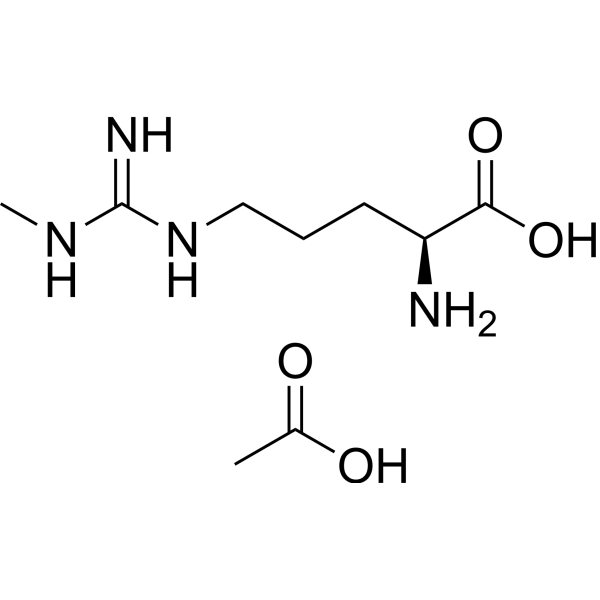
L-NMMA (Tilarginine) acetate is a non-selective and competitive inhibitor of nitric oxide synthase. L-NMMA acetate inhibits three subtypes, namely nNOS, eNOS, and iNOS, and reduces NO production. L-NMMA acetate alleviates mechanical allodynia, thermal hyperalgesia, and choroidal fibrosis. L-NMMA acetate is applicable to research related to nociception, bone cancer pain, and myopia.
For research use only. We do not sell to patients.
- Purity : 99.95%
- CAS No.: 53308-83-1
- Formula: C9H20N4O4
- Molecular Weight:248.28
-
Storage:
4°C, sealed storage, away from moisture
* In solvent : -80°C, 6 months; -20°C, 1 month (sealed storage, away from moisture)

To place orders, for customer services and technical support, please contact: MedChemExpress USA
Tel: 609-228-6898 E-mail: [email protected] [email protected]


-
 Biological Activity
-
Chemical Information
-
Solvent & Solubility
- Protocols
- Purity & Documentation
- References
-
 Help & FAQs


-
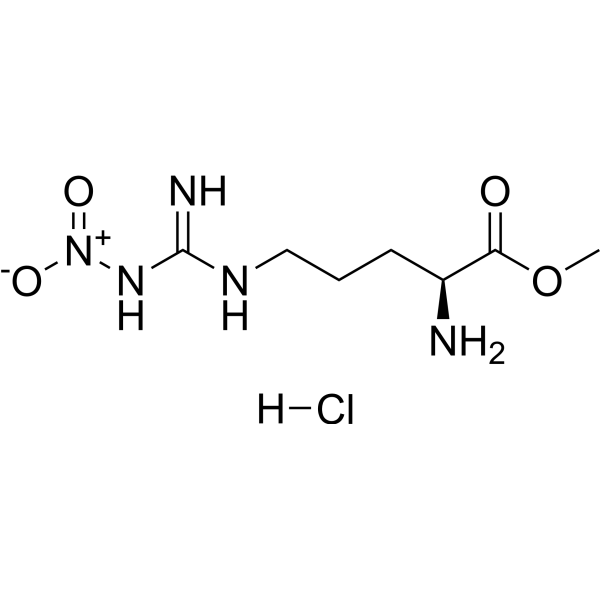
HY-18729A
L-NAME hydrochlorideNO Synthase Inhibitor -
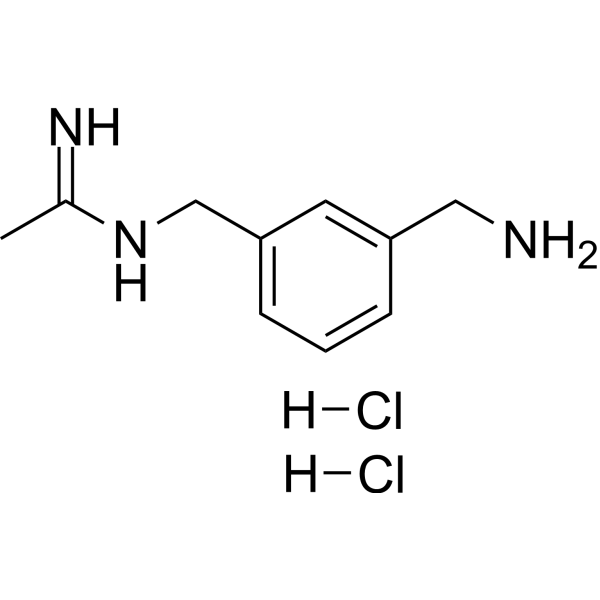
HY-18731
1400W DihydrochlorideNO Synthase Inhibitor -
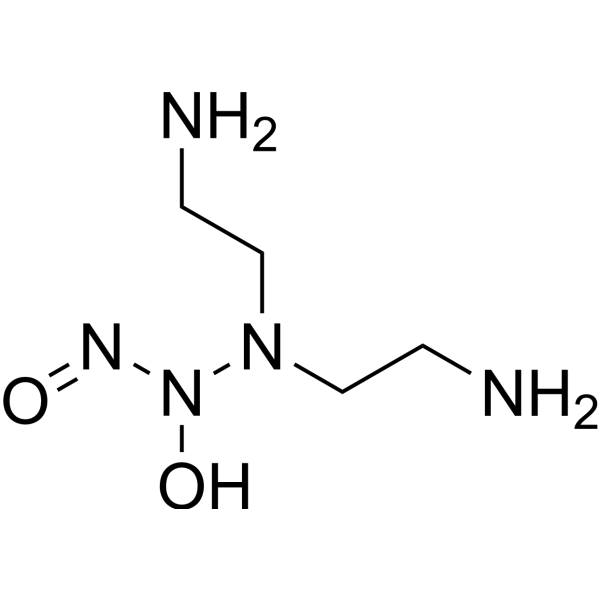
HY-136278
DETA NONOateNO Donor -
HY-113216
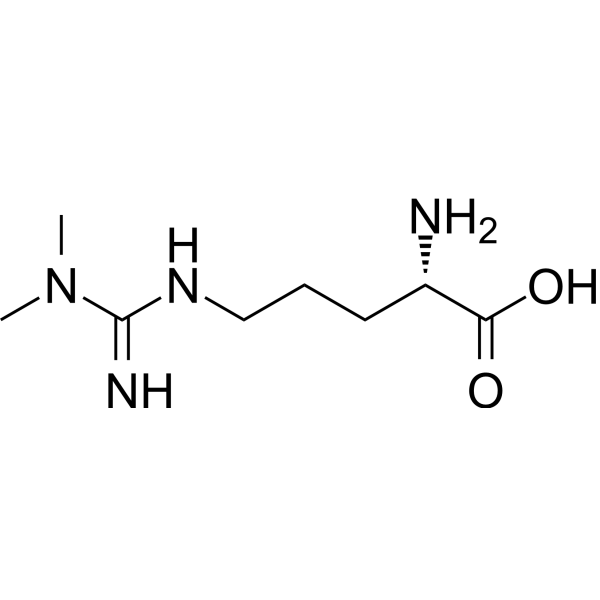
Asymmetric dimethylarginineEndogenous Metabolite -
HY-10224
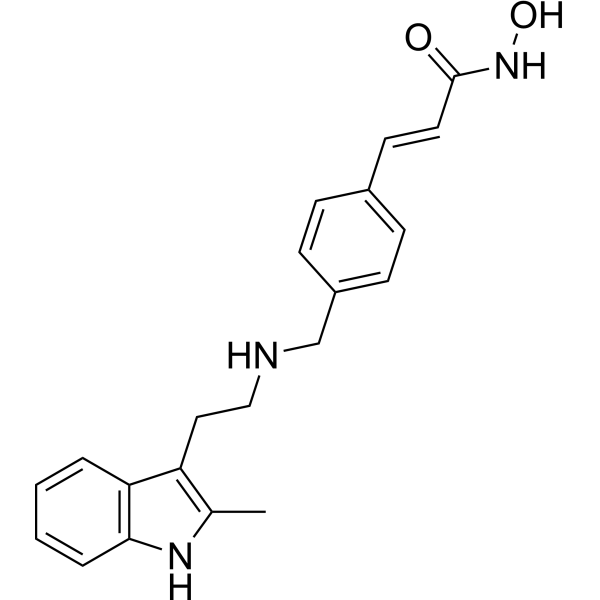
PanobinostatHDAC Inhibitor -
HY-15763
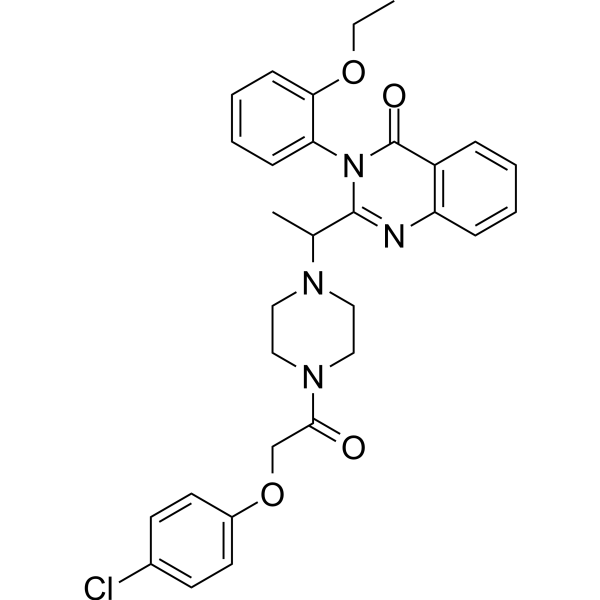
ErastinFerroptosis Inducer -
HY-112885B
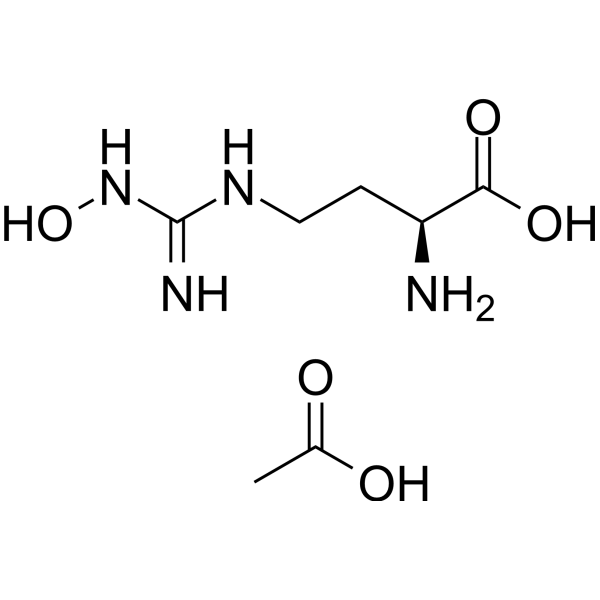
nor-NOHA monoacetateArginase Inhibitor -
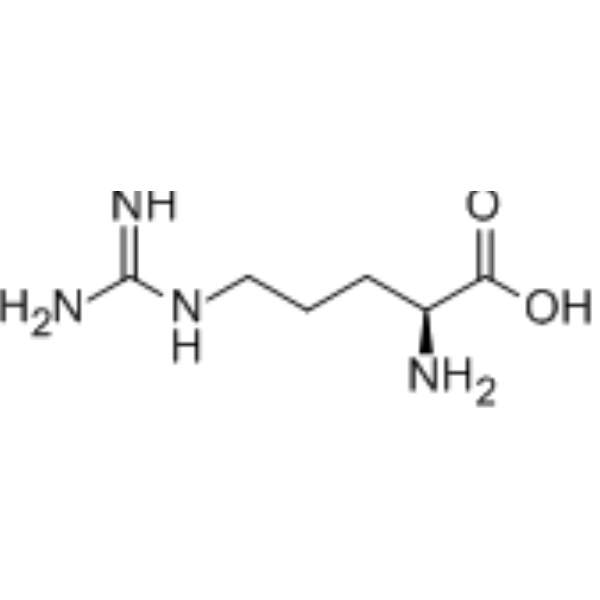
HY-N0455
L-ArginineeNOS Substrate -
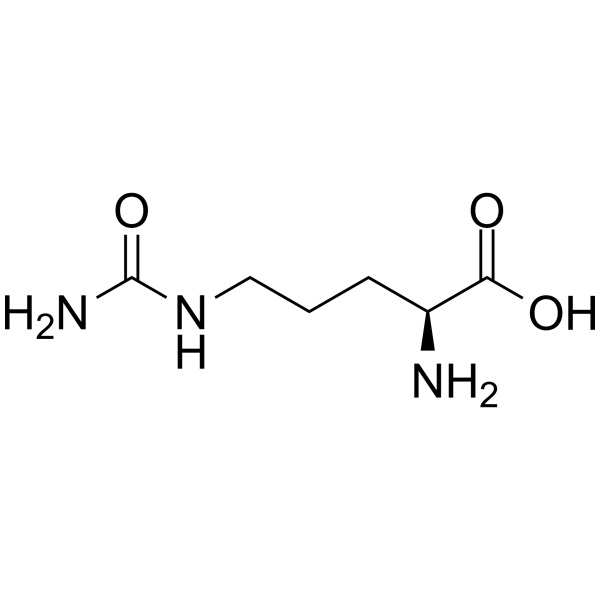
HY-N0391
L-CitrullineEndogenous Metabolite -
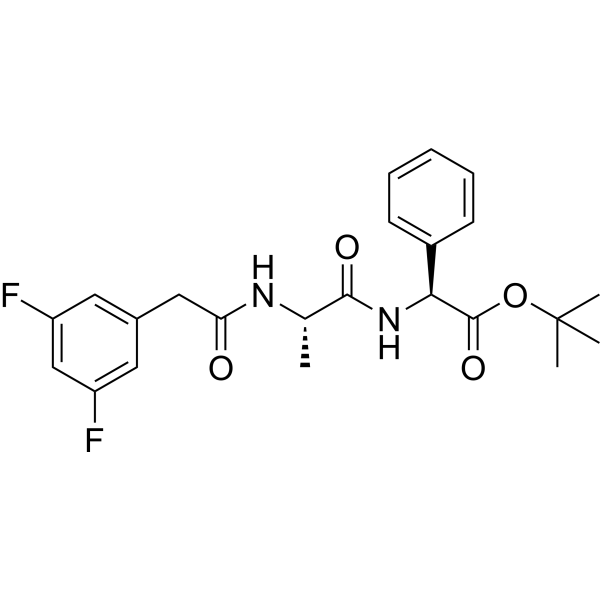
HY-13027
DAPTγ-secretase Inhibitor -
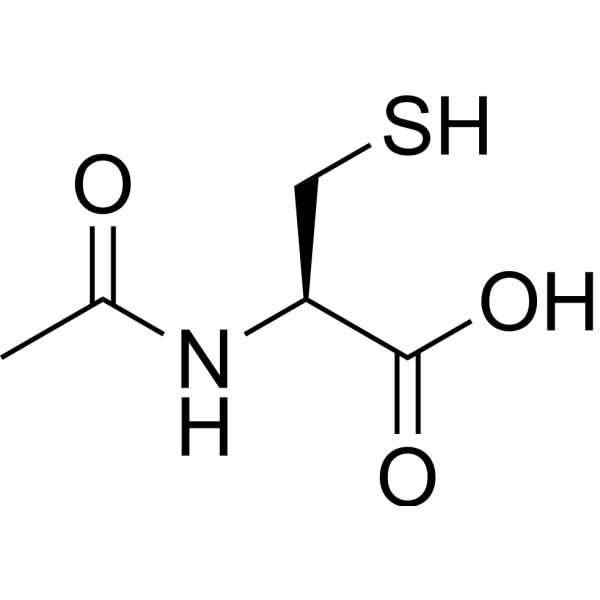
HY-B0215
AcetylcysteineMucolytic Agent -

HY-N6782
OligomycinH+-ATP-Synthase Inhibitor
Publications Citing Use of MedChemExpress (MCE) L-NMMA acetate
More- Cell Metab. 2025 Jan 7;37(1):291-304.e9. [Abstract]
- Nat Immunol. 2023 Jan;24(1):162-173. [Abstract]
- Nat Commun. 2021 May 10;12(1):2587. [Abstract]
- Cell Mol Gastroenterol Hepatol. 2025;19(6):101474. [Abstract]
- Cell Mol Gastroenterol Hepatol. 2021;11(3):683-696. [Abstract]
- Life Sci. 2025 Feb 15:363:123415. [Abstract]
- EMBO Rep. 2025 Oct 20. [Abstract]
- Front Cell Dev Biol. 2021 Dec 23;9:741911. [Abstract]
- FASEB J. 2025 Sep 30;39(18):e71057. [Abstract]
- Eur J Immunol. 2020 Jun;50(6):795-808. [Abstract]
- Theriogenology. 2025 Oct 1:245:117517. [Abstract]
 Customer Validation & Images

-
Cell Proliferation/Viability Assay
-
Bio/Physico-chemical Assay
-
Cell Proliferation/Viability Assay
-
Bio/Physico-chemical Assay
-
Bio/Physico-chemical Assay


Biological Activity
Description
IC50 & Target
|
eNOS |
iNOS |
nNOS |
Cellular Effect
|
Cell Line

|
Type | Value | Description | References |
|---|---|---|---|---|
| RAW264.7 | CC50 |
214.41 μM
Compound: L-NMMA
|
Cytotoxicity against mouse RAW264.7 cells assessed as effect on cell viability measured after 12 hrs by MTT assay
Cytotoxicity against mouse RAW264.7 cells assessed as effect on cell viability measured after 12 hrs by MTT assay
|
[PMID: 35503996] |
| RAW264.7 | IC50 |
17 μM
Compound: L-NMMA
|
Anti-inflammatory activity in mouse RAW264.7 cells assessed as inhibition of LPS-induced NO production pre-incubated for 2 hrs before LPS stimulation for 24 hrs by nitrate/nitrite assay
Anti-inflammatory activity in mouse RAW264.7 cells assessed as inhibition of LPS-induced NO production pre-incubated for 2 hrs before LPS stimulation for 24 hrs by nitrate/nitrite assay
|
[PMID: 31095383] |
| RAW264.7 | IC50 |
20.34 μM
Compound: L-NMMA
|
Antiinflammatory activity in mouse RAW264.7 assessed as inhibition of LPS-induced NO production preincubated for 12 hrs followed by LPS stimulation and measured after 6 hrs by Griess reagent based assay
Antiinflammatory activity in mouse RAW264.7 assessed as inhibition of LPS-induced NO production preincubated for 12 hrs followed by LPS stimulation and measured after 6 hrs by Griess reagent based assay
|
[PMID: 35503996] |
| RAW264.7 | IC50 |
39.9 μM
Compound: L-NMMA
|
Inhibition of LPS-induced NO production in mouse RAW264.7 cells after 18 hrs by Griess assay
Inhibition of LPS-induced NO production in mouse RAW264.7 cells after 18 hrs by Griess assay
|
[PMID: 28654256] |
| RAW264.7 | IC50 |
47.2 μM
Compound: L-NMMA
|
Inhibition of LPS-induced NO production in mouse RAW264.7 cells incubated for 18 hrs by Griess reagent based assay
Inhibition of LPS-induced NO production in mouse RAW264.7 cells incubated for 18 hrs by Griess reagent based assay
|
[PMID: 33325237] |
| RAW264.7 | IC50 |
65.5 μM
Compound: L-NMMA monoacetate
|
Anti-inflammatory activity in mouse RAW264.7 cells assessed as inhibition of LPS-induced NO production
Anti-inflammatory activity in mouse RAW264.7 cells assessed as inhibition of LPS-induced NO production
|
[PMID: 31836445] |
| RAW264.7 | IC50 |
78.3 μM
Compound: L-NMMA
|
Inhibition of NO production in mouse RAW264.7 cells incubated for 24 hrs by Griess reagent based analysis
Inhibition of NO production in mouse RAW264.7 cells incubated for 24 hrs by Griess reagent based analysis
|
[PMID: 34890996] |
In Vivo
L-NMMA (20 nmol; intravitreal injection; once every other day; 2 to 4 weeks) acetate alleviates choroidal fibrosis and delays myopia progression by inhibiting the NO signaling pathway in lens-induced myopic guinea pigs[2].
MedChemExpress (MCE) has not independently confirmed the accuracy of these methods. They are for reference only.
-
Animal Model:C3H/HeJ (male, 4-6 weeks old, 20-22 g, intramedullary inoculation of NCTC 2472 osteosarcoma cells)[1]
-
Dosage:50 µg
-
Administration:i.t.; single administration
-
Result:Increased paw withdrawal mechanical threshold to 0.90 g at 2 h and 0.63 g at 12 h compared to 0.40 g in vehicle-treated tumor mice.
Increased paw withdrawal thermal latency to 16.2 sec at 2 h and 12.7 sec at 12 h compared to 10.1 sec in vehicle-treated tumor mice.
Lost analgesic effect at 24 h post-administration.
-
Animal Model:British short-haired tricolor guinea pigs (2-week-old, 110-130 g, lens-induced myopia model)[2]
-
Dosage:20 nmol
-
Administration:intravitreal injection; once every other day; 2 and 4 weeks
-
Result:Increased refraction significantly after 2 and 4 weeks compared to the lens-induced myopia group.
Reduced the D-value of axial length between the myopic eye and control eye significantly after 2 and 4 weeks compared to the lens-induced myopia group.
Increased choroidal thickness to 80.62 μm at 4 weeks compared to 63.54 μm in the lens-induced myopia group.
Reduced degradation of choroidal pigment particles and narrowed particle gaps compared to the lens-induced myopia group.
Produced denser, more orderly choroidal tissue structure compared to the lens-induced myopia group.
Reduced choroidal fibrosis compared to the lens-induced myopia group.
Lowered gene expression levels of NOS1, NOS3, TGF-β1, COL I, and α-SMA significantly after 2 and 4 weeks compared to the lens-induced myopia group.
Lowered protein levels of NOS1, NOS3, TGF-β1, COL I, and α-SMA significantly after 2 and 4 weeks compared to the lens-induced myopia group.
Reduced expression of COL I, α-SMA, NOS1, NOS3, and TGF-β1 in choroidal tissues compared to the lens-induced myopia group.


Chemical Information
-
CAS No. 53308-83-1
-
Appearance Solid
-
Molecular Weight 248.28
-
Formula C9H20N4O4
-
Color White to off-white
-
SMILES
N[C@@H](CCCNC(NC)=N)C(O)=O.O=C(C)O
-
Synonyms
Tilarginine acetate; Methylarginine acetate
-
Structure Classification
-
Initial Source
-
Shipping
Room temperature in continental US; may vary elsewhere.
-
Storage
4°C, sealed storage, away from moisture
* In solvent : -80°C, 6 months; -20°C, 1 month (sealed storage, away from moisture)


Publications (11)
-
Journal Impact Factor
-
Most Recent
-
Cell Metab
Lighting up arginine metabolism reveals its functional diversity in physiology and pathology. [Abstract]2025 Jan 7;37(1):291-304.e9. PMID: 39413790 -
Nat Immunol
Ammonia detoxification promotes CD8+ T cell memory development by urea and citrulline cycles. [Abstract]2023 Jan;24(1):162-173. PMID: 36471170
L-NMMA acetate purchased from MedChemExpress. Usage Cited in: Nat Immunol. 2023 Jan;24(1):162-173. [Abstract]
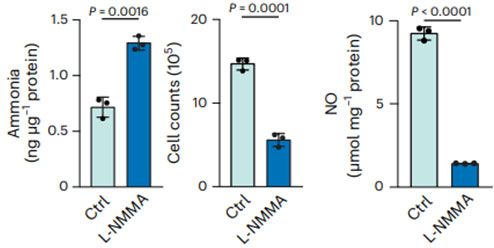
L-NMMA acetate (200 μM; 48 h) led to elevating ammonia and inhibiting CD8+ TM cell induction, in parallel with the inhibition of NO production.
L-NMMA acetate purchased from MedChemExpress. Usage Cited in: Nat Immunol. 2023 Jan;24(1):162-173. [Abstract]
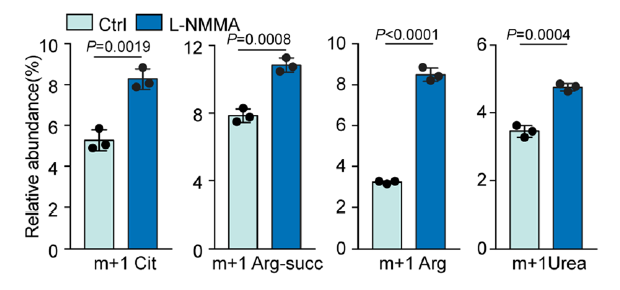
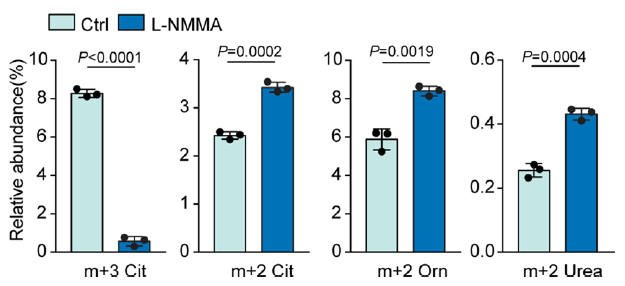
L-NMMA acetate (100 μM; 48 h) led to the accumulation of m + 1 arginine and a slowed nitrogen flow in CD8+ TM cells.
L-NMMA acetate purchased from MedChemExpress. Usage Cited in: Nat Immunol. 2023 Jan;24(1):162-173. [Abstract]
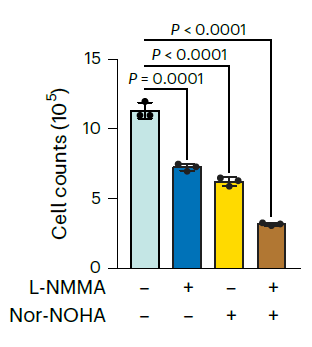
L-NMMA acetate (100 μM; 48 h) blocked formation of CD8+ TM cells.
L-NMMA acetate purchased from MedChemExpress. Usage Cited in: Nat Immunol. 2023 Jan;24(1):162-173. [Abstract]
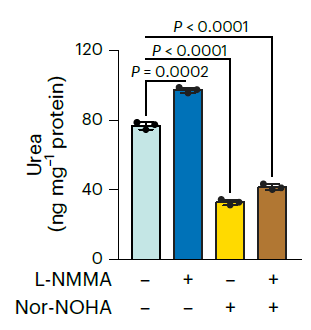
CD8+ TM cells were treated with L-NMMA acetate (100 μM; 48 h) and the level of urea was analyzed.
L-NMMA acetate purchased from MedChemExpress. Usage Cited in: Nat Immunol. 2023 Jan;24(1):162-173. [Abstract]
IL-15-derived CD8+ TM cells were treated with L-NMMA acetate (100 μM; 48 h), then were cultured with [U4] 15N-arginine for 6 hours and LC-MS/MS analysis was performed for m + 2, m + 3 citrulline, m + 2 ornithine and m + 2 urea.
-
Nat Commun
An infection-induced RhoB-Beclin 1-Hsp90 complex enhances clearance of uropathogenic Escherichia coli. [Abstract]2021 May 10;12(1):2587. PMID: 33972537 -
Cell Mol Gastroenterol Hepatol
2025;19(6):101474. PMID: 39923847 -
Cell Mol Gastroenterol Hepatol
2021;11(3):683-696. PMID: 33075564 -
Life Sci
Identification and regulation of a novel leptin receptor-linked enhancer during zebrafish ventricle regeneration. [Abstract]2025 Feb 15:363:123415. PMID: 39864617 -
EMBO Rep
Tudor-based proteomic strategy pan-specifically enriches and identifies protein arginine methylation. [Abstract]2025 Oct 20. PMID: 41116072 -
Front Cell Dev Biol
mTOR Signaling Regulates the Development and Therapeutic Efficacy of PMN-MDSCs in Acute GVHD. [Abstract]2021 Dec 23;9:741911. PMID: 35004668 -
FASEB J
Spatial Metabolism of Primary Limited Cutaneous Amyloidosis Based on Mass Spectrometry Imaging. [Abstract]2025 Sep 30;39(18):e71057. PMID: 40955599 -
Eur J Immunol
Fibroblast transdifferentiation promotes conversion of M1 macrophages and replenishment of cardiac resident macrophages following cardiac injury in mice. [Abstract]2020 Jun;50(6):795-808. PMID: 32068249 -
Theriogenology
2025 Oct 1:245:117517. PMID: 40460471


Solvent & Solubility
In Vitro:
H2O : ≥ 50 mg/mL (201.39 mM)
* "≥" means soluble, but saturation unknown.
Please refer to the solubility information to select the appropriate solvent. Once prepared, please aliquot and store the solution to prevent product inactivation from repeated freeze-thaw cycles.
Storage method and period of stock solution: -80°C, 6 months; -20°C, 1 month (sealed storage, away from moisture). When stored at -80°C, please use it within 6 months. When stored at -20°C, please use it within 1 month.
* Note: If you choose water as the stock solution, please dilute it to the working solution, then filter and sterilize it with a 0.22 μm filter before use.
Please refer to the solubility information to select the appropriate solvent. Once prepared, please aliquot and store the solution to prevent product inactivation from repeated freeze-thaw cycles.
Storage method and period of stock solution: -80°C, 6 months; -20°C, 1 month (sealed storage, away from moisture). When stored at -80°C, please use it within 6 months. When stored at -20°C, please use it within 1 month.
* Note: If you choose water as the stock solution, please dilute it to the working solution, then filter and sterilize it with a 0.22 μm filter before use.
Concentration (start) × Volume (start) = Concentration (final) × Volume (final)
In Vivo:
For the following dissolution methods, please prepare the working solution directly:
It is recommended to prepare fresh solutions and use them promptly within a short period of time.
The percentages shown for the solvents indicate their volumetric ratio in the final prepared solution. If precipitation or phase separation occurs during preparation, heat and/or sonication can be used to aid dissolution.
Add each solvent one by one: PBS
Solubility: 100 mg/mL (402.77 mM); Clear solution; Need ultrasonic

Protocols
-
Fibrosis/Collagen Morphometry
Fibrosis and collagen morphometry is based on the quantitative visualization of fibrillar collagen deposition in tissue sections using histochemical stains such as Sirius Red (Picrosirius Red) or Masson's trichrome, followed by image-based or polarization-enhanced analysis to estimate collagen proportional area as a surrogate of extracellular matrix accumulation during fibrotic remodeling. Sirius Red combined with polarized light microscopy enhances detection of collagen fibers due to birefringence properties, enabling more specific visualization of collagen type I and III fibrils compared to conventional bright-field histology, while whole-section or region-restricted digital morphometry reduces field-selection bias in fibrosis assessment. Alternative quantitative approaches include second harmonic generation (SHG) and two-photon excited fluorescence microscopy, which enable label-free detection of fibrillar collagen and have been validated against histological staining and biochemica
-
Collagen: Sirius Red Staining
Sirius Red or picrosirius red staining is a histochemical method for visualizing collagen-rich extracellular matrix in tissue sections, and collagen fibers are detected as red-stained structures under bright-field microscopy with enhanced birefringence under polarized light. Picrosirius red is useful for assessing total collagen organization, distribution, and fibrosis burden, but polarized color should not be interpreted as a definitive collagen type I versus type III readout because color is affected by fiber orientation, thickness, and packing.
-
Connective Tissue: Masson's Trichrome/Collagen Trichrome Staining
Masson’s Trichrome (collagen/trichrome staining) is a histological technique that differentially stains tissue compartments using sequential acidic dyes to distinguish collagen from muscle and cytoplasmic components based on dye affinity and tissue permeability differences, enabling visualization of fibrosis and connective tissue architecture in histological sections. The classical formulation typically uses Weigert's iron hematoxylin for nuclear staining, Biebrich scarlet-acid fuchsin for cytoplasm and muscle, and aniline blue (or light green variants) for collagen, producing a characteristic blue/green collagen signal contrasted against red cytoplasm and dark nuclei. The staining principle relies on selective displacement of smaller dye molecules by larger anionic dyes in collagen-rich regions under controlled acidified conditions, which enhances collagen-specific dye retention. This property makes the method widely used for fibrosis assessment in organs such as heart, liver, lung, a


Purity & Documentation
-
Data Sheet (277 KB)
-
SDS (394 KB)
- English - EN (394 KB)
- Français - FR (394 KB)
- Deutsch - DE (394 KB)
- Norwegian - NO (394 KB)
- Español - ES (394 KB)
- Swedish - SV (394 KB)
- Italian - IT (394 KB)
- Korean - KR (394 KB)
- Portuguese - PT (394 KB)
-
Handling Instructions (2659 KB)
References
[1]. Yang Y, et al. Role of nitric oxide synthase in the development of bone cancer pain and effect of L-NMMA. Mol Med Rep. 2016;13(2):1220-1226. [Content Brief]
[2]. Li T, et al. Suppressive effect of nitric oxide synthase (NOS) inhibitor L-NMMA acetate on choroidal fibrosis in experimental myopic guinea pigs through the nitric oxide signaling pathway. Eur J Pharmacol. 2023;960:176111. [Content Brief]
[3]. Babbedge RC, et al. Anti-nociceptive activity of nitric oxide synthase inhibitors in the mouse: dissociation between the effect of L-NAME and L-NMMA. J Pharm Pharmacol. 1993;45(1):77-79. [Content Brief]


Complete Stock Solution Preparation Table
Please refer to the solubility information to select the appropriate solvent. Once prepared, please aliquot and store the solution to prevent product inactivation from repeated freeze-thaw cycles.
Storage method and period of stock solution: -80°C, 6 months; -20°C, 1 month (sealed storage, away from moisture). When stored at -80°C, please use it within 6 months. When stored at -20°C, please use it within 1 month.
| Optional Solvent | Concentration Solvent Mass | 1 mg | 5 mg | 10 mg | 25 mg |
|---|---|---|---|---|---|
| H2O | 1 mM | 4.0277 mL | 20.1386 mL | 40.2771 mL | 100.6928 mL |
| 5 mM | 0.8055 mL | 4.0277 mL | 8.0554 mL | 20.1386 mL | |
| 10 mM | 0.4028 mL | 2.0139 mL | 4.0277 mL | 10.0693 mL | |
| 15 mM | 0.2685 mL | 1.3426 mL | 2.6851 mL | 6.7129 mL | |
| 20 mM | 0.2014 mL | 1.0069 mL | 2.0139 mL | 5.0346 mL | |
| 25 mM | 0.1611 mL | 0.8055 mL | 1.6111 mL | 4.0277 mL | |
| 30 mM | 0.1343 mL | 0.6713 mL | 1.3426 mL | 3.3564 mL | |
| 40 mM | 0.1007 mL | 0.5035 mL | 1.0069 mL | 2.5173 mL | |
| 50 mM | 0.0806 mL | 0.4028 mL | 0.8055 mL | 2.0139 mL | |
| 60 mM | 0.0671 mL | 0.3356 mL | 0.6713 mL | 1.6782 mL | |
| 80 mM | 0.0503 mL | 0.2517 mL | 0.5035 mL | 1.2587 mL | |
| 100 mM | 0.0403 mL | 0.2014 mL | 0.4028 mL | 1.0069 mL |
* Note: If you choose water as the stock solution, please dilute it to the working solution, then filter and sterilize it with a 0.22 μm filter before use.


L-NMMA acetate Related Classifications
HY-18732A Related Classifications
 Powered by Bioz