



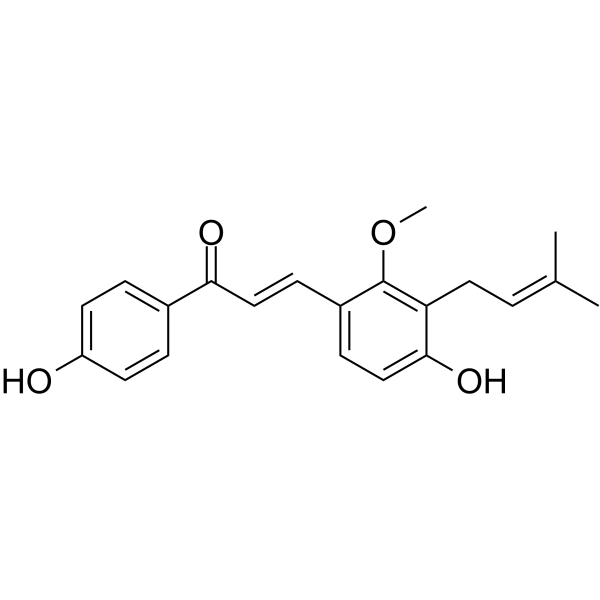
Licochalcone C
Based on 6 publication(s) in Google Scholar
Licochalcone C could inhibit α-glucosidase, with IC50s of <100 nM and 92.43 μM for α-glucosidase and protein tyrosine phosphatase 1B (PTP1B), respectively.
For research use only. We do not sell to patients.
- Purity : 99.55%
- CAS No.: 144506-14-9
- Formula: C21H22O4
- Molecular Weight:338.40
-
Storage:
4°C, protect from light
* In solvent : -80°C, 6 months; -20°C, 1 month (protect from light)

To place orders, for customer services and technical support, please contact: MedChemExpress USA
Tel: 609-228-6898 E-mail: [email protected] [email protected]


-
 Biological Activity
-
Chemical Information
-
Solvent & Solubility
- Purity & Documentation
- References
-
 Help & FAQs


-
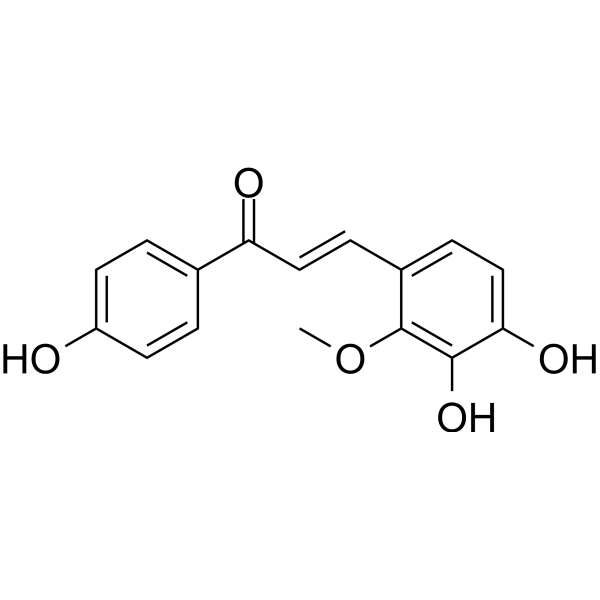
HY-N0373
Licochalcone BApoptosis Inducer -
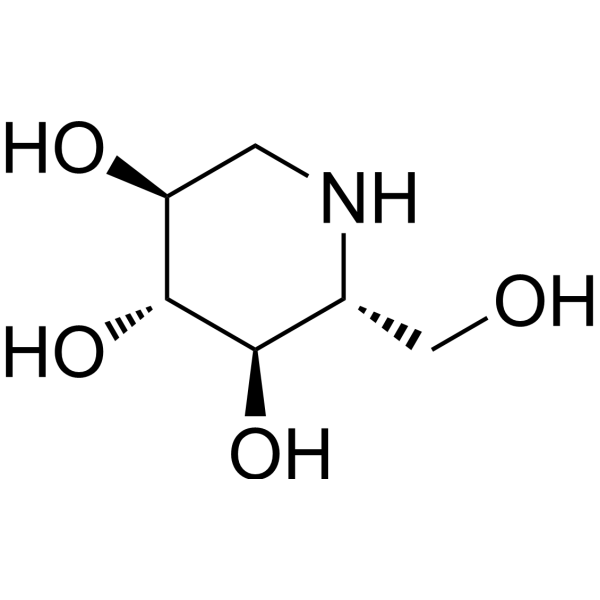
HY-14860
1-Deoxynojirimycinα-glucosidase Inhibitor -
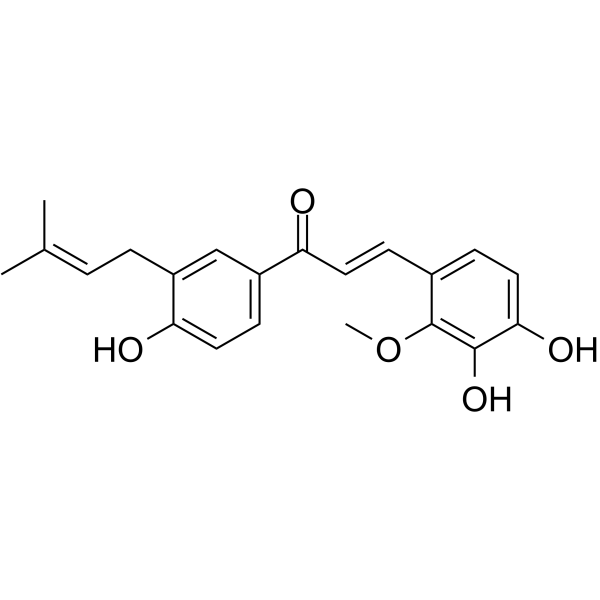
HY-N4187
Licochalcone DNF-κB p65 Inhibitor -
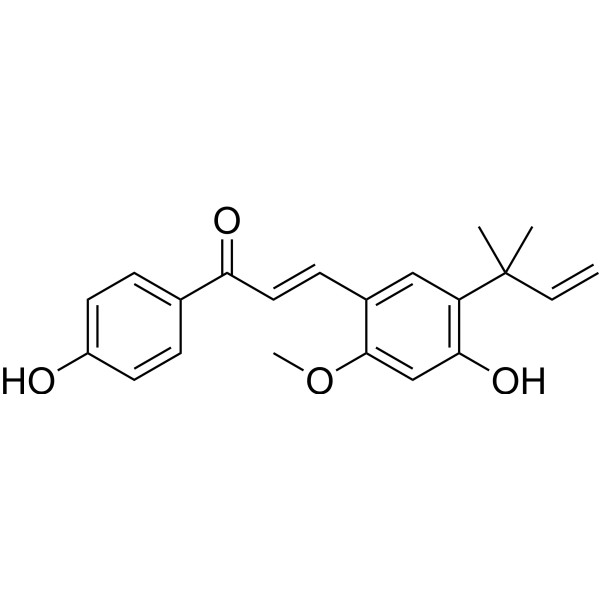
HY-N0372
Licochalcone AUGTs inhibitor -
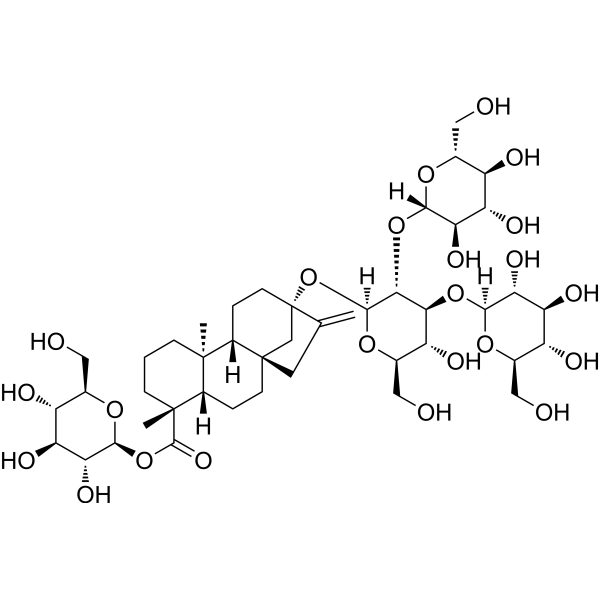
HY-N0466
Rebaudioside Aα-Glucosidase Inhibitor -
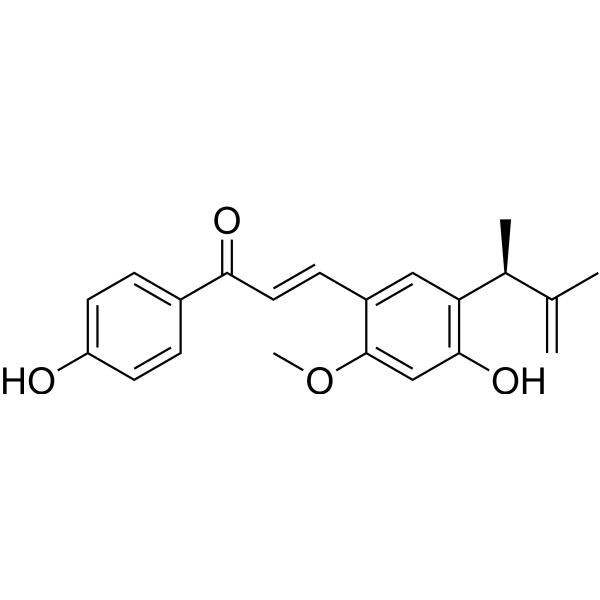
HY-N4182
Licochalcone Ep38 MAPK Inhibitor -

HY-14860R
1-Deoxynojirimycin (Standard)α-glucosidase Inhibitor -
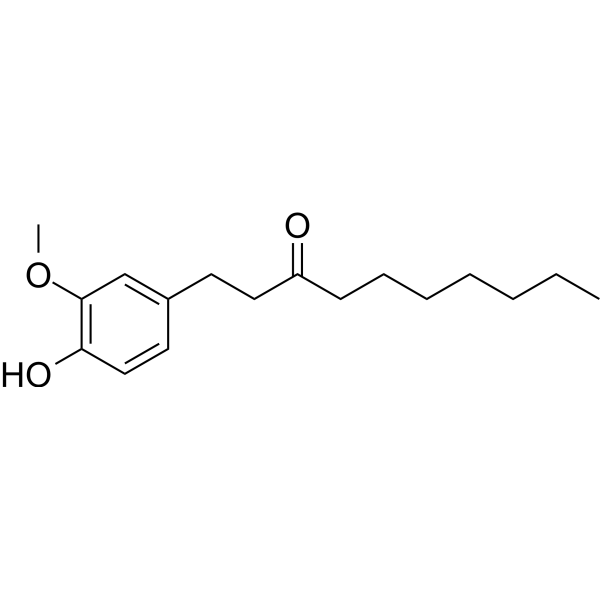
HY-14617
Paradol -
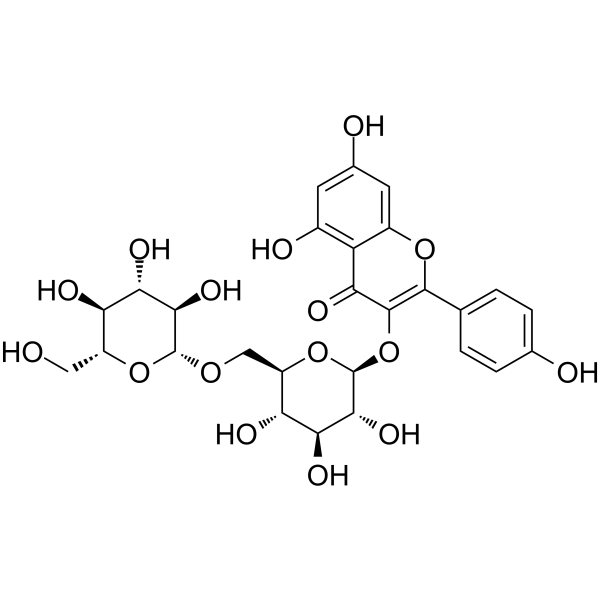
HY-N1510
Kaempferol 3-O-gentiobiosideFlavonoid -
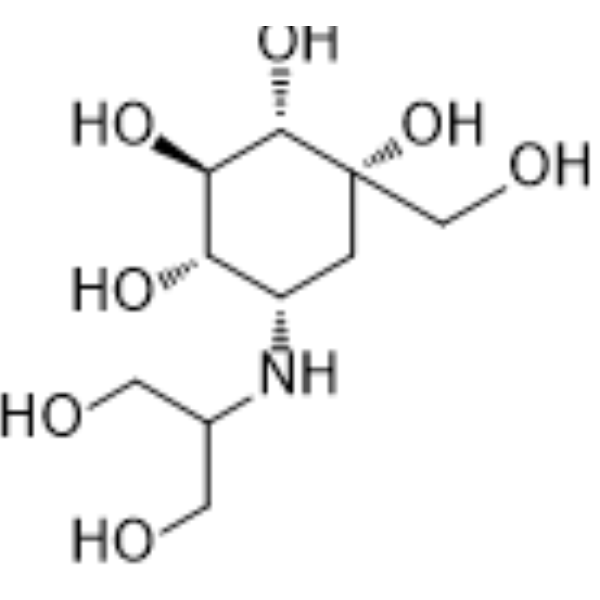
HY-B0025
VogliboseGlucosidase Inhibitor -
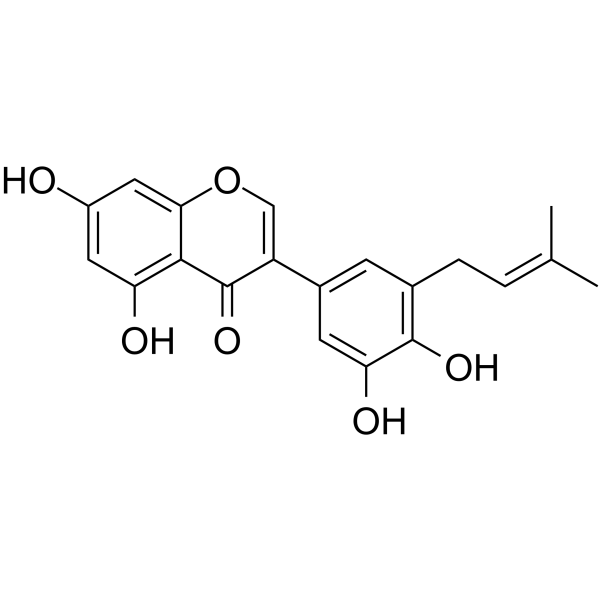
HY-N3962
Glycyrrhisoflavone -
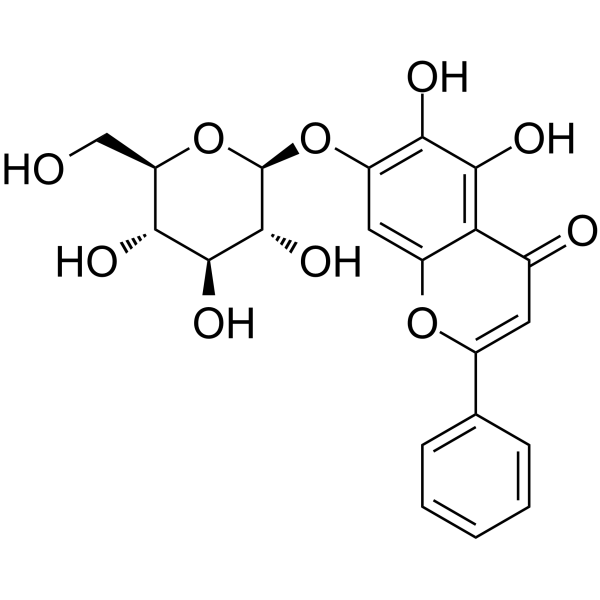
HY-N2025
Oroxin APartial PPARγ Agonist
Publications Citing Use of MedChemExpress (MCE) Licochalcone C
More

Biological Activity
Description
IC50 & Target
IC50: <100 nM (α-glucosidase), 92.43 μM (PTP1B)[1].
Cellular Effect
|
Cell Line

|
Type | Value | Description | References |
|---|---|---|---|---|
| RBL-2H3 | IC50 |
24 μM
Compound: LicoC
|
Antiinflammatory activity in RBL2H3 cells assessed as inhibition of degranulation
Antiinflammatory activity in RBL2H3 cells assessed as inhibition of degranulation
|
[PMID: 24316124] |
In Vitro
Licochalcone C could inhibit α- glucosidase, with IC50s of <100 nM and 92.43 μM for α- glucosidase and PTP1B, respectively[1]. It is also indicated that Licochalcone C induces T24 cell apoptosis in a concentration?dependent manner. Licochalcone C treatment reduces the levels of the anti?apoptotic mRNAs (Bcl-2, Bcl-w and Bcl-XL) and increases expression of the pro-apoptotic mRNAs (Bax and Bim). The Bcl-2 family inhibitor (ABT-737) reduces apoptosis induced by licochalcone C in T24 cells[2].
MedChemExpress (MCE) has not independently confirmed the accuracy of these methods. They are for reference only. .


Chemical Information
-
CAS No. 144506-14-9
-
Appearance Solid
-
Molecular Weight 338.40
-
Formula C21H22O4
-
Color Light yellow to yellow
-
SMILES
O=C(C1=CC=C(O)C=C1)/C=C/C2=CC=C(O)C(C/C=C(C)\C)=C2OC
-
Structure Classification
-
Initial Source
-
Shipping
Room temperature in continental US; may vary elsewhere.
-
Storage
4°C, protect from light
* In solvent : -80°C, 6 months; -20°C, 1 month (protect from light)


Publications (6)
-
Journal Impact Factor
-
Most Recent
-
Phytomedicine
Licochalcone C suppresses gastric cancer progression and enhances 5-FU chemosensitivity by targeting RAC3-mediated PI3K-AKT-mTOR signaling. [Abstract]2026 Oct:160:158634. PMID: 42537463 -
Food Chem
Effects of sun drying combined with baking processes on the flavor quality of Chongqing Tuocha raw tea. [Abstract]2025 Dec 30:497:146992. PMID: 41285060 -
Food Chem
Flavonoid-mediated metabolic underpinning quality variation in red bud-sport pear mutants. [Abstract]2025 Oct 15:489:144992. PMID: 40466530 -
Biomolecules
Licochalcone E, a β-Amyloid Aggregation Inhibitor, Regulates Microglial M1/M2 Polarization via Inhibition of CTL1-Mediated Choline Uptake. [Abstract]2023 Jan 17;13(2):191. PMID: 36830561 -
Front Cell Dev Biol
Licarin-B Exhibits Activity Against the Toxoplasma gondii RH Strain by Damaging Mitochondria and Activating Autophagy. [Abstract]2021 Jun 11:9:684393. PMID: 34179016 -
Bioorg Chem
Interpretable machine learning and molecular simulations identify natural pancreatic lipase inhibitors and hydrophobic hotspot residues. [Abstract]2026 Jul 15:176:109873. PMID: 41997005


Solvent & Solubility
In Vitro:
DMSO : 33.33 mg/mL (98.49 mM; Need ultrasonic; Hygroscopic DMSO has a significant impact on the solubility of product, please use newly opened DMSO)
Please refer to the solubility information to select the appropriate solvent. Once prepared, please aliquot and store the solution to prevent product inactivation from repeated freeze-thaw cycles.
Storage method and period of stock solution: -80°C, 6 months; -20°C, 1 month (protect from light). When stored at -80°C, please use it within 6 months. When stored at -20°C, please use it within 1 month.
Please refer to the solubility information to select the appropriate solvent. Once prepared, please aliquot and store the solution to prevent product inactivation from repeated freeze-thaw cycles.
Storage method and period of stock solution: -80°C, 6 months; -20°C, 1 month (protect from light). When stored at -80°C, please use it within 6 months. When stored at -20°C, please use it within 1 month.
Concentration (start) × Volume (start) = Concentration (final) × Volume (final)
In Vivo:
Select the appropriate dissolution method based on your experimental animal and administration route.
- For the following dissolution methods, please ensure to first prepare a clear stock solution using an In Vitro approach and then sequentially add co-solvents:
- To ensure reliable experimental results, the clarified stock solution can be appropriately stored based on storage conditions. As for the working solution for In Vivo experiments, it is recommended to prepare freshly and use it on the same day.
- The percentages shown for the solvents indicate their volumetric ratio in the final prepared solution. If precipitation or phase separation occurs during preparation, heat and/or sonication can be used to aid dissolution.
Add each solvent one by one: 10% DMSO 40% PEG300 5% Tween-80 45% Saline
Solubility: ≥ 2.5 mg/mL (7.39 mM); Clear solution
This protocol yields a clear solution of ≥ 2.5 mg/mL (saturation unknown).
Taking 1 mL working solution as an example, add 100 μL DMSO stock solution (25.0 mg/mL) to 400 μL PEG300, and mix evenly; then add 50 μL Tween-80 and mix evenly; then add 450 μL Saline to adjust the volume to 1 mL.
Preparation of Saline: Dissolve 0.9 g sodium chloride in ddH₂O and dilute to 100 mL to obtain a clear Saline solution.
Add each solvent one by one: 10% DMSO 90% (20% SBE-β-CD in Saline)
Solubility: ≥ 2.5 mg/mL (7.39 mM); Clear solution
This protocol yields a clear solution of ≥ 2.5 mg/mL (saturation unknown).
Taking 1 mL working solution as an example, add 100 μL DMSO stock solution (25.0 mg/mL) to 900 μL 20% SBE-β-CD in Saline, and mix evenly.
Preparation of 20% SBE-β-CD in Saline (4°C, storage for one week): 2 g SBE-β-CD powder is dissolved in 10 mL Saline, completely dissolve until clear.
In Vivo Dissolution Calculator
Please enter the basic information of animal experiments:
-
-
-
-
Recommended: Prepare an additional quantity of animals to account for potential losses during experiments.
Please enter your animal formula composition:
-
%DMSO +
Recommended: Keep the proportion of DMSO in working solution below 2% if your animal is weak.
-
%+
-
+%Tween-80 + +
-
%Saline +
The co-solvents required include: DMSO, . All of co-solvents are available by MedChemExpress (MCE). , Tween 80. All of co-solvents are available by MedChemExpress (MCE).
Working solution concentration: 0.22 mg/mL
Method for preparing stock solution: mg drug dissolved in μL DMSO. Stock solution concentration: mg/mL. * In solvent : -80°C, 6 months; -20°C, 1 month (protect from light)
1. Take μL DMSO stock solution;
2. Add μL .
μL , mix evenly;
3. Then add μL Tween 80, mix evenly;
4. Then add μL
Please ensure that the stock solution in the first step is dissolved to a clear state, and add co-solvents in sequence. You can use ultrasonic heating (ultrasonic cleaner, recommended frequency 20-40 kHz), vortexing, etc. to assist dissolution.


Purity & Documentation
-
Data Sheet (272 KB)
-
SDS (393 KB)
- English - EN (393 KB)
- Français - FR (393 KB)
- Deutsch - DE (393 KB)
- Norwegian - NO (393 KB)
- Español - ES (393 KB)
- Swedish - SV (393 KB)
- Italian - IT (393 KB)
- Korean - KR (393 KB)
- Portuguese - PT (393 KB)
-
Handling Instructions (2659 KB)
References


Complete Stock Solution Preparation Table
Please refer to the solubility information to select the appropriate solvent. Once prepared, please aliquot and store the solution to prevent product inactivation from repeated freeze-thaw cycles.
Storage method and period of stock solution: -80°C, 6 months; -20°C, 1 month (protect from light). When stored at -80°C, please use it within 6 months. When stored at -20°C, please use it within 1 month.
| Optional Solvent | Concentration Solvent Mass | 1 mg | 5 mg | 10 mg | 25 mg |
|---|---|---|---|---|---|
| DMSO | 1 mM | 2.9551 mL | 14.7754 mL | 29.5508 mL | 73.8771 mL |
| 5 mM | 0.5910 mL | 2.9551 mL | 5.9102 mL | 14.7754 mL | |
| 10 mM | 0.2955 mL | 1.4775 mL | 2.9551 mL | 7.3877 mL | |
| 15 mM | 0.1970 mL | 0.9850 mL | 1.9701 mL | 4.9251 mL | |
| 20 mM | 0.1478 mL | 0.7388 mL | 1.4775 mL | 3.6939 mL | |
| 25 mM | 0.1182 mL | 0.5910 mL | 1.1820 mL | 2.9551 mL | |
| 30 mM | 0.0985 mL | 0.4925 mL | 0.9850 mL | 2.4626 mL | |
| 40 mM | 0.0739 mL | 0.3694 mL | 0.7388 mL | 1.8469 mL | |
| 50 mM | 0.0591 mL | 0.2955 mL | 0.5910 mL | 1.4775 mL | |
| 60 mM | 0.0493 mL | 0.2463 mL | 0.4925 mL | 1.2313 mL | |
| 80 mM | 0.0369 mL | 0.1847 mL | 0.3694 mL | 0.9235 mL |


Licochalcone C Related Classifications
HY-N0374 Related Classifications
 Powered by Bioz