



Mutant IDH1-IN-1
Based on 2 publication(s) in Google Scholar
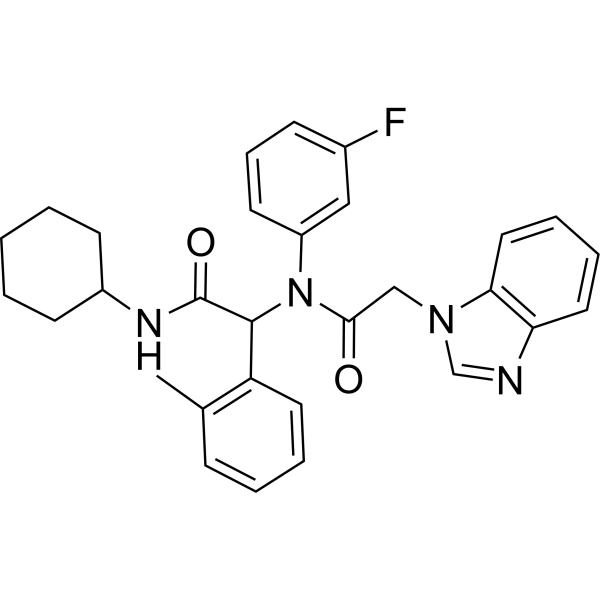
Mutant IDH1-IN-1 (Agios 135) is a selective mutant IDH1 inhibitor with activity against both IDH1R132H and IDH1R132C. Mutant IDH1-IN-1 reduces the level of 2-hydroxyglutarate (2-HG), stabilizes mutant IDH1 protein, and restores blocked monocyte differentiation. Mutant IDH1-IN-1 can be used in tumor-related research.
For research use only. We do not sell to patients.
- Purity : 98.78%
- CAS No.: 1355326-21-4
- Formula: C30H31FN4O2
- Molecular Weight:498.59
-
Storage:Powder -20°C, 3 years , 4°C, 2 years ; In solvent -80°C, 2 years , -20°C, 1 year

To place orders, for customer services and technical support, please contact: MedChemExpress USA
Tel: 609-228-6898 E-mail: [email protected] [email protected]


-
 Biological Activity
-
Chemical Information
-
Solvent & Solubility
- Protocols
- Purity & Documentation
- References
-
 Help & FAQs


-
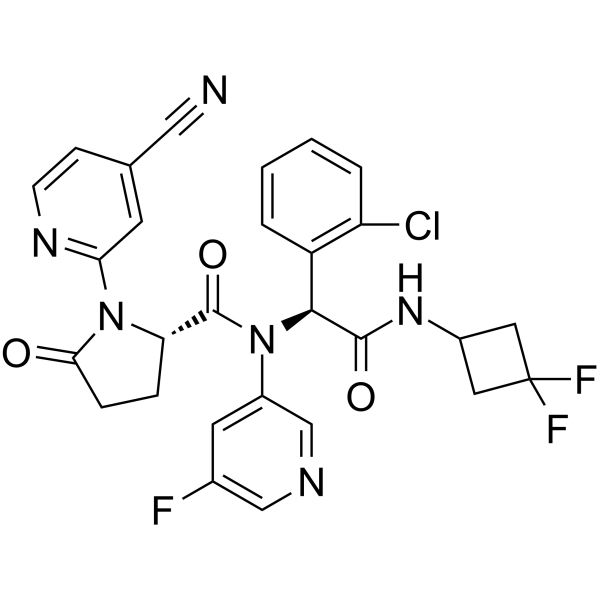
HY-18767
IvosidenibIDH1 Inhibitor -
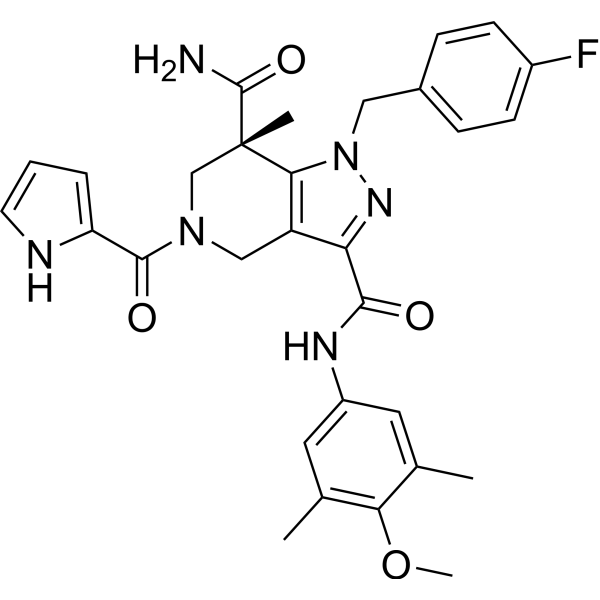
HY-19540
GSK864IDH1 Inhibitor -
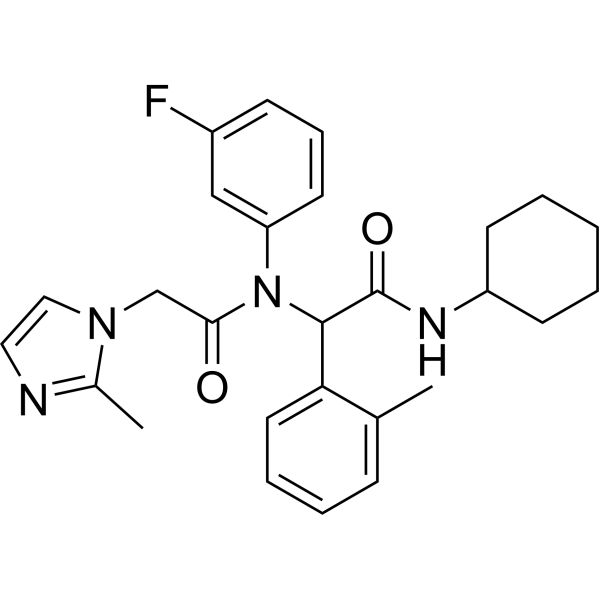
HY-18082
AGI-5198IDH1 Inhibitor -
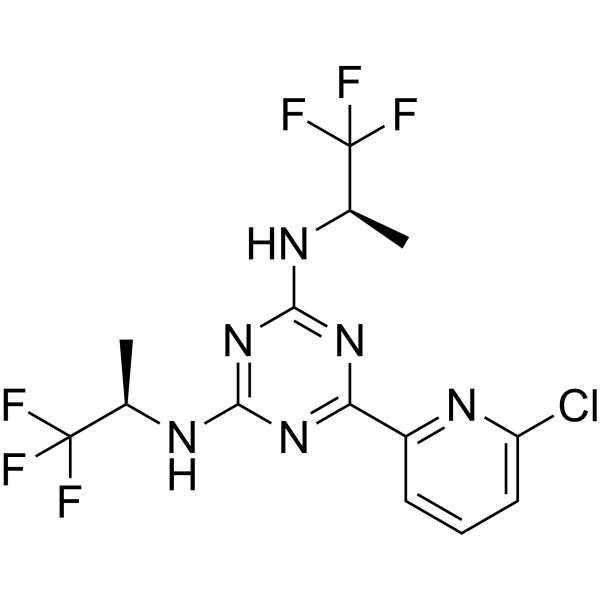
HY-104042
VorasidenibmIDH1/2 Inhibitor -
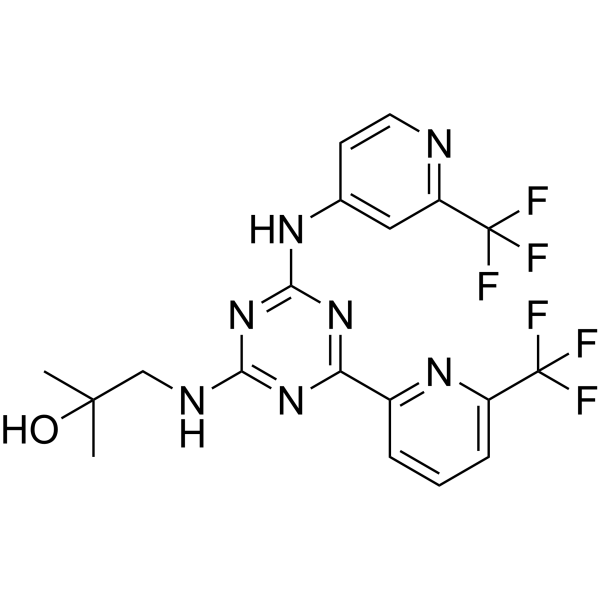
HY-18690
EnasidenibMutant IDH2 Inhibitor -
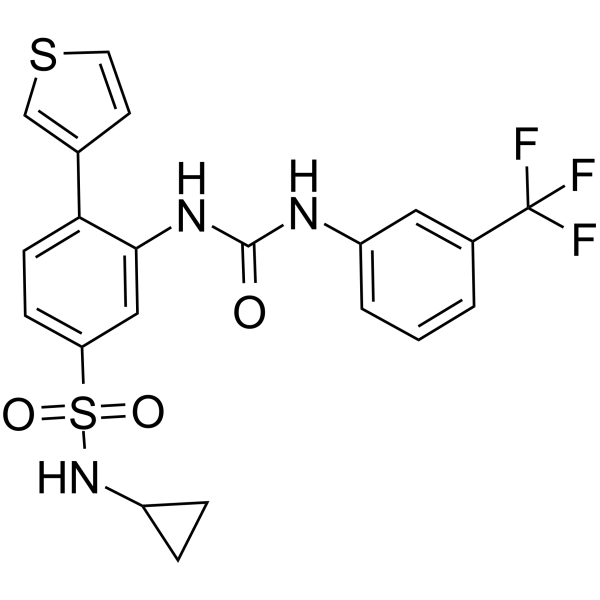
HY-15734
AGI-6780Anti-cancer Agent -
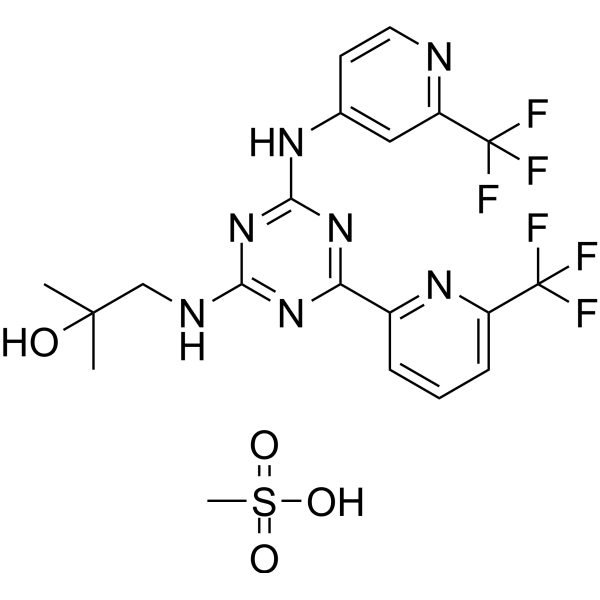
HY-18690A
Enasidenib mesylateMutant IDH2 Inhibitor -
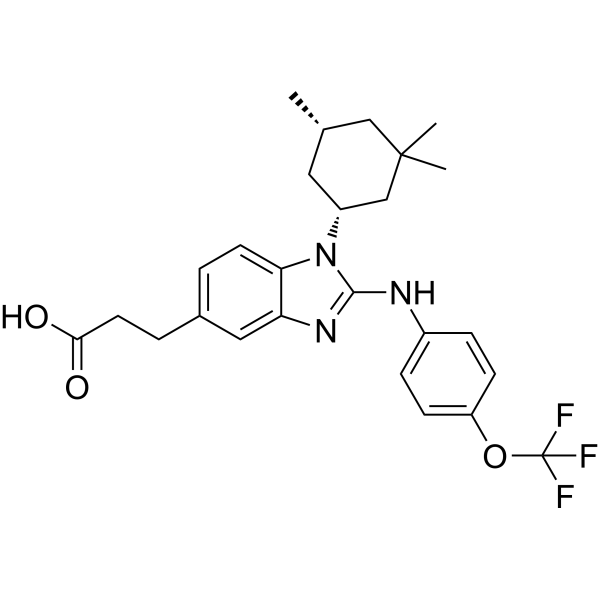
HY-100020
BAY-1436032Pan-mutant-IDH1 Inhibitor -
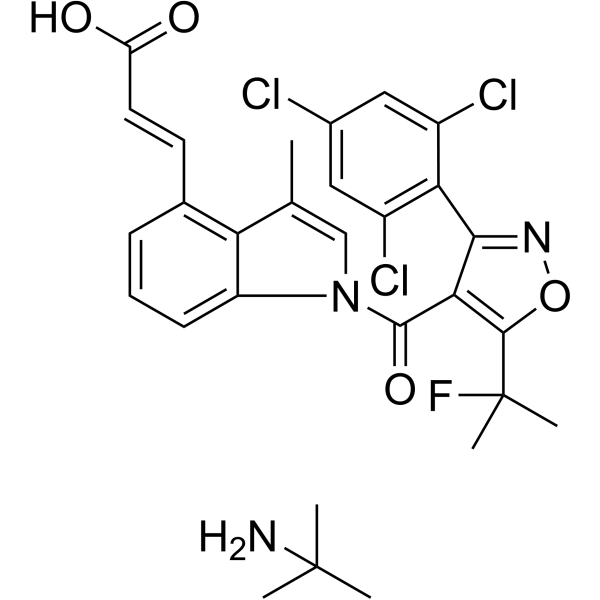
HY-129545
DS-1001bIDH-1 Inhibtior -
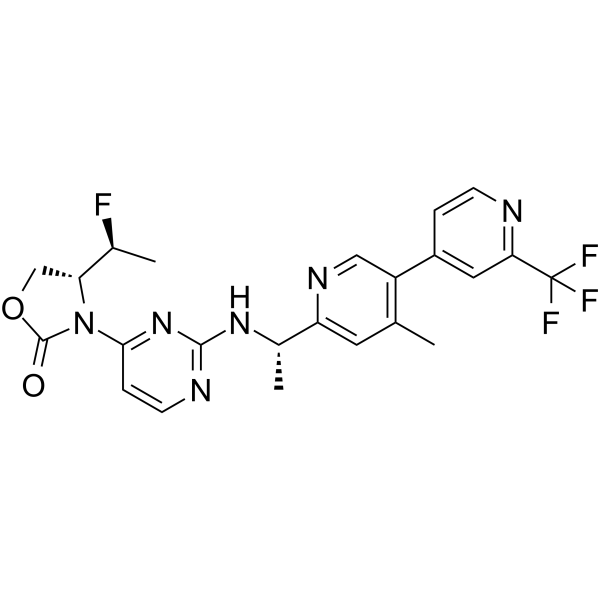
HY-104036
IDH-305IDH1(R132) Inhibitor -
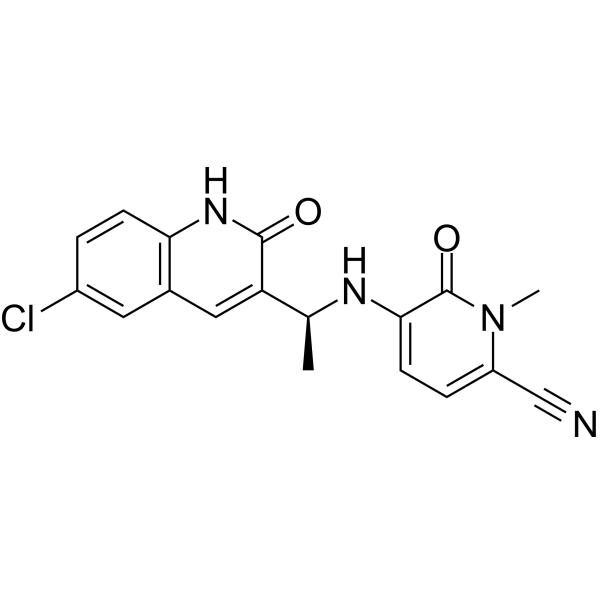
HY-114226
OlutasidenibIDH1m Inhibitor -
HY-13972
Mutant IDH1 inhibitor
Publications Citing Use of MedChemExpress (MCE) Mutant IDH1-IN-1
More Customer Validation & Images

-
WB


Biological Activity
Description
IC50 & Target
[1]|
IDH1 |
In Vitro
Mutant IDH1-IN-1 (30-50 min) potently inhibits purified recombinant IDH1R132H (with an IC50 of 0.38 µM) and IDH1R132C (with an IC50 of 0.09 µM), exhibits only weak activity against wild-type IDH1, and shows no activity against wild-type IDH2[1].
Mutant IDH1-IN-1 (48 h) reduces 2-HG production in HT1080 (IDH1R132C), SNU1079 (IDH1R132C), RBE (IDH1R132S), JJ012 (IDH1R132G), U87 (IDH1R132H) and THP-1 (IDH1R132H) cells without significant cytotoxicity[1].
Mutant IDH1-IN-1 (0.5 µM; 4 days) rescues doxycycline (HY-N0565)-induced monocytic differentiation of THP-1 (IDH1R132H) acute myeloid leukemia (AML) cells[1].
Mutant IDH1-IN-1 (4 days) reduces 2-HG production in 3D tumor spheres of HT1080 (R132C), JJ012 (R132G), and U87 (R132H)[1].
Mutant IDH1-IN-1 (compound 2) (30 min) potently inhibits the de novo reductive activity of the homodimeric IDH1R132H, with an IC50 of 0.042 μM[2].
Mutant IDH1-IN-1 (30 min) potently inhibits the de novo reductive activity of the homodimeric IDH1R132C, with an IC50 of 0.004 μM[2].
Mutant IDH1-IN-1 (30 min) inhibits the de novo reductive activity of the heterodimer IDH1R132H/WT, with an IC50 value of 0.080 μM[2].
Mutant IDH1-IN-1 (30 min) inhibits the oxidative activity of the heterodimeric R132H/WT IDH1, with an IC50 of 0.143 μM[2].
Mutant IDH1-IN-1 (30 min) inhibits the oxidative activity of the homodimeric WT/WT IDH1, with an IC50 value of 1.998 μM[2].
MedChemExpress (MCE) has not independently confirmed the accuracy of these methods. They are for reference only. Further protocols information, click here.
-
Cell Line:THP-1 (R132H) AML cells engineered for doxycycline-inducible mIDH1 expression
-
Concentration:0.5 µM
-
Incubation Time:4 days
-
Result:Increased the number of adherent differentiated THP-1 (R132H) cells compared to DMSO control, indicating rescue of the 2-HG-induced differentiation block.


Chemical Information
-
CAS No. 1355326-21-4
-
Appearance Solid
-
Molecular Weight 498.59
-
Formula C30H31FN4O2
-
Color White to off-white
-
SMILES
O=C(C(C1=C(C)C=CC=C1)N(C(CN2C=NC3=C2C=CC=C3)=O)C4=CC(F)=CC=C4)NC5CCCCC5
-
Synonyms
Agios 135
-
Shipping
Room temperature in continental US; may vary elsewhere.
-
Storage
Powder -20°C 3 years 4°C 2 years In solvent -80°C 2 years -20°C 1 year


Publications (2)
-
Journal Impact Factor
-
Most Recent
-
J Med Chem
Differentiating Inhibition Selectivity and Binding Affinity of Isocitrate Dehydrogenase 1 Variant Inhibitors. [Abstract]2023 Apr 13;66(7):5279-5288. PMID: 36952395 -
Sci Rep
Assessing inhibitors of mutant isocitrate dehydrogenase using a suite of pre-clinical discovery assays. [Abstract]2017 Oct 6;7(1):12758. PMID: 28986582
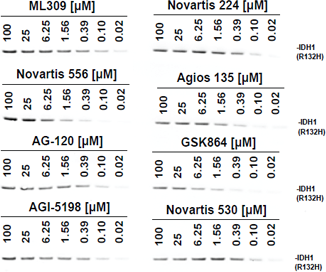
Mutant IDH1-IN-1 purchased from MedChemExpress. Usage Cited in: Sci Rep. 2017 Oct 6;7(1):12758. [Abstract]
Represented western blot of an isothermal dose-response at melting temperature of 59°C demonstrating cellular mIDH1 enzyme thermal stabilization with mIDH1 inhibitors.


Solvent & Solubility
In Vitro:
DMSO : ≥ 45 mg/mL (90.25 mM; Hygroscopic DMSO has a significant impact on the solubility of product, please use newly opened DMSO)
* "≥" means soluble, but saturation unknown.
Please refer to the solubility information to select the appropriate solvent. Once prepared, please aliquot and store the solution to prevent product inactivation from repeated freeze-thaw cycles.
Storage method and period of stock solution: -80°C, 2 years; -20°C, 1 year. When stored at -80°C, please use it within 2 years. When stored at -20°C, please use it within 1 year.
Please refer to the solubility information to select the appropriate solvent. Once prepared, please aliquot and store the solution to prevent product inactivation from repeated freeze-thaw cycles.
Storage method and period of stock solution: -80°C, 2 years; -20°C, 1 year. When stored at -80°C, please use it within 2 years. When stored at -20°C, please use it within 1 year.
Concentration (start) × Volume (start) = Concentration (final) × Volume (final)

Protocols
-
Primary monocyte-to-macrophage differentiation
Primary human monocytes can be differentiated ex vivo into monocyte-derived macrophages by culturing purified blood monocytes for approximately 5-7 days in macrophage-supporting cytokine conditions; M-CSF commonly yields CD14^high/CD163^high macrophages, while GM-CSF yields a phenotypically distinct macrophage population, so the cytokine condition should be chosen according to the downstream model. The readout of successful differentiation is a combined change in morphology, adherence, surface phenotype, and function: differentiated macrophages become adherent, enlarge, acquire macrophage-associated markers such as CD14, CD68, CD163, CD206, or HLA-DR depending on culture condition, and show increased phagocytic capacity compared with starting monocytes.
-
THP-1 Cell Differentation
Macrophages are important immune effector cells and play an important role in innate and adaptive immune responses. THP-1 cells are usually induced to differentiate into macrophages with PMA.
-
Monocyte-derived dendritic cell differentiation
Human monocyte-derived dendritic cells are generated by isolating PBMC-derived monocytes and culturing them with GM-CSF plus IL-4, which produces cells with dendritic-cell antigen-presenting properties, reduced monocyte phenotype, and increased dendritic-cell functional readouts such as antigen uptake, allogeneic T-cell stimulation, and expression of markers including HLA-DR, CD80, CD86, CD83, CD1a, or CD209 depending on protocol and maturation state. The main readout is phenotypic and functional differentiation: immature MoDCs are commonly evaluated by loss or reduction of CD14 with acquisition of dendritic-cell markers and antigen uptake capacity, whereas mature MoDCs are evaluated by increased CD83, CD80, CD86, HLA-DR, and T-cell stimulatory function after exposure to maturation stimuli such as TNF-α or a cytokine/PGE2 cocktail.


Purity & Documentation
-
Data Sheet (281 KB)
-
SDS (254 KB)
- English - EN (254 KB)
- Français - FR (254 KB)
- Deutsch - DE (254 KB)
- Norwegian - NO (254 KB)
- Español - ES (254 KB)
- Swedish - SV (254 KB)
- Italian - IT (254 KB)
- Korean - KR (254 KB)
- Portuguese - PT (254 KB)
-
Handling Instructions (2659 KB)
References
[1]. Urban DJ, et al. Assessing inhibitors of mutant isocitrate dehydrogenase using a suite of pre-clinical discovery assays. Sci Rep. 2017;7(1):12758. Published 2017 Oct 6. [Content Brief]
[2]. Deng G, et al. Selective inhibition of mutant isocitrate dehydrogenase 1 (IDH1) via disruption of a metal binding network by an allosteric small molecule. J Biol Chem. 2015;290(2):762-774. [Content Brief]


Complete Stock Solution Preparation Table
Please refer to the solubility information to select the appropriate solvent. Once prepared, please aliquot and store the solution to prevent product inactivation from repeated freeze-thaw cycles.
Storage method and period of stock solution: -80°C, 2 years; -20°C, 1 year. When stored at -80°C, please use it within 2 years. When stored at -20°C, please use it within 1 year.
| Optional Solvent | Concentration Solvent Mass | 1 mg | 5 mg | 10 mg | 25 mg |
|---|---|---|---|---|---|
| DMSO | 1 mM | 2.0057 mL | 10.0283 mL | 20.0566 mL | 50.1414 mL |
| 5 mM | 0.4011 mL | 2.0057 mL | 4.0113 mL | 10.0283 mL | |
| 10 mM | 0.2006 mL | 1.0028 mL | 2.0057 mL | 5.0141 mL | |
| 15 mM | 0.1337 mL | 0.6686 mL | 1.3371 mL | 3.3428 mL | |
| 20 mM | 0.1003 mL | 0.5014 mL | 1.0028 mL | 2.5071 mL | |
| 25 mM | 0.0802 mL | 0.4011 mL | 0.8023 mL | 2.0057 mL | |
| 30 mM | 0.0669 mL | 0.3343 mL | 0.6686 mL | 1.6714 mL | |
| 40 mM | 0.0501 mL | 0.2507 mL | 0.5014 mL | 1.2535 mL | |
| 50 mM | 0.0401 mL | 0.2006 mL | 0.4011 mL | 1.0028 mL | |
| 60 mM | 0.0334 mL | 0.1671 mL | 0.3343 mL | 0.8357 mL | |
| 80 mM | 0.0251 mL | 0.1254 mL | 0.2507 mL | 0.6268 mL |


Mutant IDH1-IN-1 Related Classifications
HY-12475 Related Classifications
 Powered by Bioz