



Cancer Targeted Therapy
Cancer targeted therapy is the foundation of precision medicine; it uses drugs or other substances to target specific genes and proteins that control cancer cells’ growth, division and spreading. Compared to traditional chemotherapy drugs, targeted-drugs can specifically act on cancer cells with high efficacy without damaging normal cells. Drugs used in cancer targeted therapy mainly includes small molecules and macromolecules (e.g., monoclonal antibodies), which can target cancer cells and constituents in the tumor microenvironment to activate the immune system. Anti-angiogenesis drugs, such as those targeting vascular endothelial growth factor (VEGF), epidermal growth factor receptor (EGFR), transforming growth factor (TGF)-α, TGF-β, Tumor necrosis factor (TNF)-α, and platelet-derived endothelial growth factor (PDGFR) inhibit the proliferation and metastasis of cancer cells. In recent years, the proportion of antibody drugs in cancer treatment has gradually become prominent. Antibody-drug conjugates (ADCs) are a new type of targeted drugs that are composed of monoclonal antibody, cytotoxic drug and linker. ADCs can deliver drugs to tumor cells and minimize the toxicity to normal tissues. Proteolysis-targeting chimera (PROTAC) is a useful technology for targeted protein degradation. PROTAC exploits the ubiquitin-proteasome system and forms a ternary complex with a hijacked E3 ubiquitin ligase and target protein, leading to polyubiquitination and degradation of the target protein.
Targeted therapy is a useful strategy in treatment of cancer either alone or in combination with standard chemotherapy. At present, targeted therapy has proved significant clinical success in the treatment of many types of cancer, including breast cancer, colorectal cancer, leukemia, ovarian cancer and lung cancer.
-
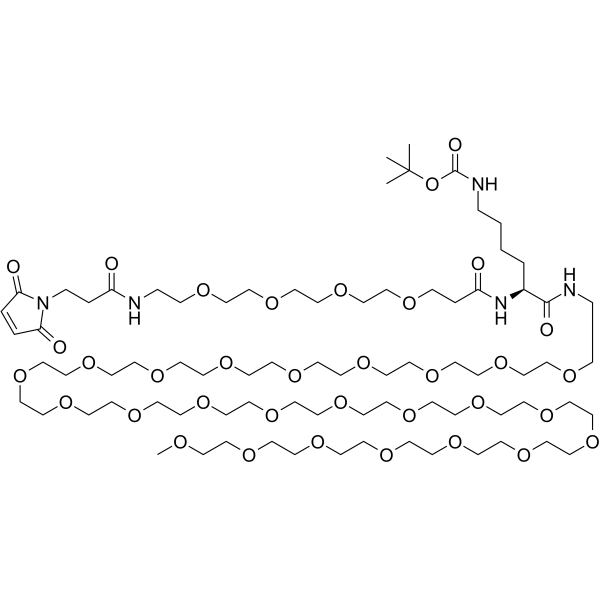
pan-TEAD-IN-1
 0 ImagesCat. No.: HY-159912CAS No.: 3027484-09-6
pan-TEAD-IN-1 (Compound 3) is an orally active pan-TEAD inhibitor targeting the palmitoylation site of TEAD, disrupting its interaction with the coactivators YAP/TAZ, thereby suppressing the transcriptional upregulation of oncogenes (e.g., Ctgf and Cyr61) in the Hippo signaling pathway. pan-TEAD-IN-1 exhibits excellent activity with a luciferase IC50 of 0.36 nM and an H226 cell IC50 of 1.52 nM. It also shows favorable pharmacokinetics (AUC0–∞ = 228.7 μg/mL·min, T1/2 = 183.9 min). In TEAD-dependent xenograft mouse models, pan-TEAD-IN-1 significantly inhibited tumor growth, showing promise for research in TEAD-dependent cancers.
-
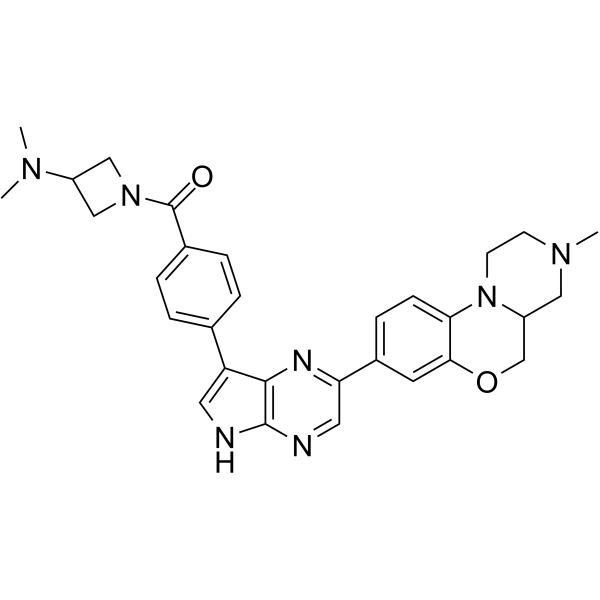
HPK1-IN-9
 0 ImagesCat. No.: HY-145035CAS No.: 2734168-78-4
HPK1-IN-9 is potent inhibitor of HPK1. HPK1 is a serine/threonine protein kinase cloned from hematopoietic progenitor cells and belongs to the MAP4K family of mammalian Ste-20-related protein kinases. HPK1-IN-9 has the potential for the research of HPK1 related diseases (extracted from patent WO2021213317A1, compound 112) .
-
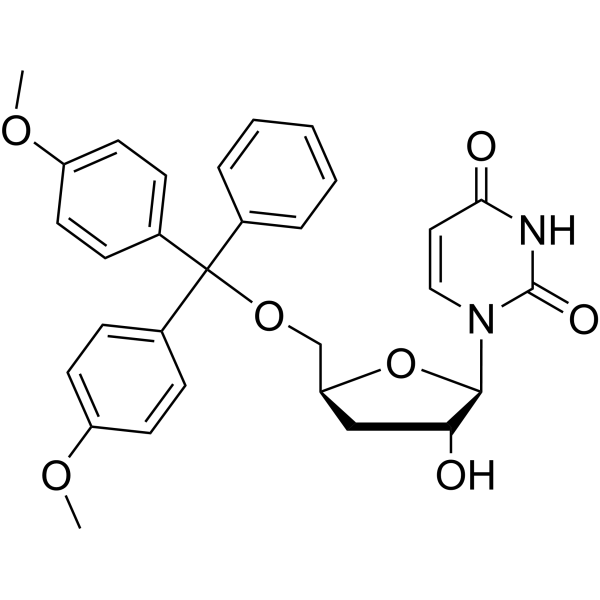
5’-O-DMTr-3’-deoxyuridine
 0 ImagesCat. No.: HY-154237CAS No.: 86234-42-6
5’-O-DMTr-3’-deoxyuridine is a purine nucleoside analog. Purine nucleoside analogs have broad antitumor activity targeting indolent lymphoid malignancies. Anticancer mechanisms in this process rely on inhibition of DNA synthesis, induction of apoptosis, etc.
-
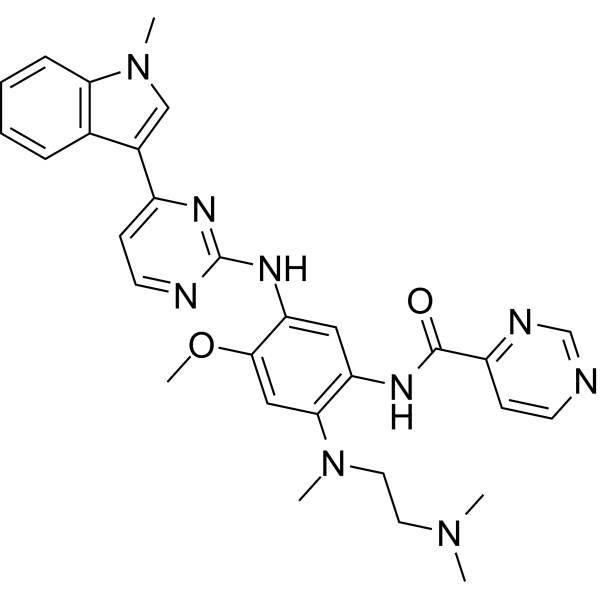
EGFR-IN-62
 0 ImagesCat. No.: HY-147862CAS No.: 2890261-65-9
EGFR-IN-62 (compound 9h) is a potent and reversible EGFR kinase inhibitor, with IC50 values of 10 nM (L858R/T790 M), 29 nM (WT), and 242 nM (L858R/T790 M/C797S), respectively. EGFR-IN-62 shows antiproliferative activity against A549 and H1975 cell lines, with IC50 values of 2.53 and 1.56 μM, respectively. EGFR-IN-62 induces dose-dependent apoptosis process, G1/G0-phase arrestation, and the inhibition of motility on A549 and/or H1975 cell lines.
-
KWR137
 0 ImagesCat. No.: HY-168934
KWR137 is an orally active Werner protein (WRN) inhibitor with a human IC50 of 8 nM. KWR137 inhibits the ATPase activity required for WRN helicase function, induces WRN protein degradation, suppresses cancer cell proliferation, and slows tumor growth without causing weight loss or off-target effects. KWR137 can be used for the research of colorectal cancer.
-
Brefeldin A 4-O-nicotinate
 0 ImagesCat. No.: HY-173280CAS No.: 3035018-34-6Synonyms: CHNQD-01228
Brefeldin A 4-O-nicotinate (CHNQD-01228) is a dual inhibitor of Arf1 and BMX proteins. The IC50 value for the proliferation of T24 cells is 0.22 μM. It can also dose-dependently inhibit the migration and colony formation of T24 cells, induce G1 phase arrest and trigger Apoptosis. Brefeldin A 4-O-nicotinate exerts its anti-cancer activity by targeting the BMX protein to inhibit the AKT/p-AKT and STAT3/p-STAT3 signaling pathways, as well as by inhibiting the Arf1 protein to eliminate bladder cancer stem cells and activate anti-tumor immunity. Brefeldin A 4-O-nicotinate can be used in the research related to bladder cancer.
-
Cathepsin K-IN-8
 0 ImagesCat. No.: HY-177315CAS No.: 501126-27-8
Cathepsin K-IN-8 (cxample 6-60) is a cathepsin K inhibitor that can be used for the study of inflammation, rheumatoid arthritis, osteoarthritis, osteoporosis and tumors.
-
(Rac)-Mefloquine
 0 ImagesCat. No.: HY-17437CCAS No.: 49752-90-1Synonyms: (Rac)-Mefloquin
(Rac)-Mefloquine ((Rac)-Mefloquin) is an orally active NF-κB inhibitor. (Rac)-Mefloquine inhibits the NF-κB and IKK signaling pathways, suppresses NF-κB-Luc luciferase activity, blocks the activation of p65 and IκBα, and reduces the expression of downstream target genes of NF-κB. (Rac)-Mefloquine activates apoptosis-related factors and induces apoptosis in tumor cells. (Rac)-Mefloquine functions as a tumor cell inhibitor. (Rac)-Mefloquine can be used for the research of colorectal cancer.
-
DSPE-PEG2000-DHLASLWWGTEL
 0 ImagesCat. No.: HY-182099A
DSPE-PEG2000-DHLASLWWGTEL is a PEG compound which composed of DSPE and a GPC3 targeting peptide DHLASLWWGTEL. The DHLASLWWGTEL peptide partially and specifically binds to GPC3-positive cells, achieving precise targeting. DSPE-PEG2000-DHLASLWWGTEL can be used for drug delivery.
-
DOPE-PEG2000-K237
 0 ImagesCat. No.: HY-187474ASynonyms: DOPE-PEG2000-Mal-Cys-HTMYYHHYQHHL
DOPE-PEG2000-K237 (DOPE-PEG2000-Mal-Cys-HTMYYHHYQHHL) is an amphiphilic lipid-PEG-peptide conjugate composed of DOPE (1,2-dioleoyl-sn-glycero-3-phosphoethanolamine), PEG2000, and the K237 peptide (sequence: HTMYYHHYQHHL). K237 peptide is a tumor-homing peptide identified by phage display that specifically binds to vasculature in tumor tissues. DOPE-PEG2000-K237 is used for tumor-targeted drug delivery via functionalization of liposomes and nanoparticles.
-
Ald-Ph-amido-PEG3-C-COOH
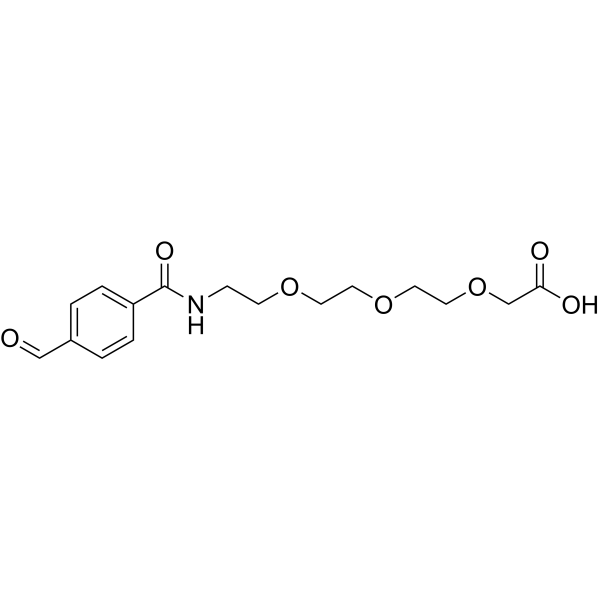 0 ImagesCat. No.: HY-130098CAS No.: 1007215-91-9
Ald-Ph-amido-PEG3-C-COOH is a noncleavable linker used for the antibody-drug conjugate (ADC).
-
hsa-miR-3651 antagomir
 0 ImagesCat. No.: HY-RI00757A
hsa-miR-3651 antagomirs are chemically-modified oligonucleotides that hybridize with mature miRNAs. The miRNA antagomirs have 2 phosphorothioates at the 5' end, 4 phosphorothioates at the 3' end, 1 cholesterol group at the 3' end, and full-length nucleotide 2'-methoxy modification. The miRNA antagomirs strongly compete with mature miRNAs to prevent the complementary pairing of miRNAs and their target genes, thereby inhibiting miRNAs from functioning. Stability of miRNA antagomirs appears to be significantly higher than miRNA inhibitors, they exhibits enhanced cellular uptake, stability and regulatory activity in vivo.
-
hsa-miR-4760-3p antagomir
 0 ImagesCat. No.: HY-RI01378A
hsa-miR-4760-3p antagomirs are chemically-modified oligonucleotides that hybridize with mature miRNAs. The miRNA antagomirs have 2 phosphorothioates at the 5' end, 4 phosphorothioates at the 3' end, 1 cholesterol group at the 3' end, and full-length nucleotide 2'-methoxy modification. The miRNA antagomirs strongly compete with mature miRNAs to prevent the complementary pairing of miRNAs and their target genes, thereby inhibiting miRNAs from functioning. Stability of miRNA antagomirs appears to be significantly higher than miRNA inhibitors, they exhibits enhanced cellular uptake, stability and regulatory activity in vivo.
-
hsa-miR-6716-5p inhibitor
 0 ImagesCat. No.: HY-RI01999
hsa-miR-6716-5p inhibitors are chemically-modified oligonucleotides that hybridize with mature miRNAs. The miRNA inhibitors have full-length nucleotide 2'-methoxy modification. The miRNA inhibitors strongly compete with mature miRNAs to prevent the complementary pairing of miRNAs and their target genes, thereby inhibiting miRNAs from functioning.
-
mmu-miR-12197-3p inhibitor
 0 ImagesCat. No.: HY-RI02620
mmu-miR-12197-3p inhibitors are chemically-modified oligonucleotides that hybridize with mature miRNAs. The miRNA inhibitors have full-length nucleotide 2'-methoxy modification. The miRNA inhibitors strongly compete with mature miRNAs to prevent the complementary pairing of miRNAs and their target genes, thereby inhibiting miRNAs from functioning.
-
mmu-miR-505-5p antagomir
 0 ImagesCat. No.: HY-RI03241A
mmu-miR-505-5p antagomirs are chemically-modified oligonucleotides that hybridize with mature miRNAs. The miRNA antagomirs have 2 phosphorothioates at the 5' end, 4 phosphorothioates at the 3' end, 1 cholesterol group at the 3' end, and full-length nucleotide 2'-methoxy modification. The miRNA antagomirs strongly compete with mature miRNAs to prevent the complementary pairing of miRNAs and their target genes, thereby inhibiting miRNAs from functioning. Stability of miRNA antagomirs appears to be significantly higher than miRNA inhibitors, they exhibits enhanced cellular uptake, stability and regulatory activity in vivo.
-
mmu-miR-7061-5p inhibitor
 0 ImagesCat. No.: HY-RI03867
mmu-miR-7061-5p inhibitors are chemically-modified oligonucleotides that hybridize with mature miRNAs. The miRNA inhibitors have full-length nucleotide 2'-methoxy modification. The miRNA inhibitors strongly compete with mature miRNAs to prevent the complementary pairing of miRNAs and their target genes, thereby inhibiting miRNAs from functioning.
-
rno-miR-471-3p antagomir
 0 ImagesCat. No.: HY-RI04487A
rno-miR-471-3p antagomirs are chemically-modified oligonucleotides that hybridize with mature miRNAs. The miRNA antagomirs have 2 phosphorothioates at the 5' end, 4 phosphorothioates at the 3' end, 1 cholesterol group at the 3' end, and full-length nucleotide 2'-methoxy modification. The miRNA antagomirs strongly compete with mature miRNAs to prevent the complementary pairing of miRNAs and their target genes, thereby inhibiting miRNAs from functioning. Stability of miRNA antagomirs appears to be significantly higher than miRNA inhibitors, they exhibits enhanced cellular uptake, stability and regulatory activity in vivo.
-
Thalidomide-NH-amido-PEG1-C2-NH2 hydrochloride
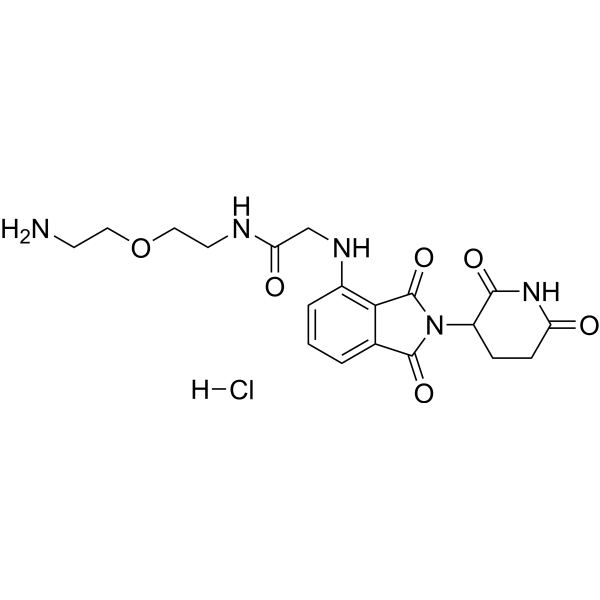 0 ImagesCat. No.: HY-138854ACAS No.: 2983036-29-7
Thalidomide-NH-amido-PEG1-C2-NH2 hydrochloride is a synthesized E3 ligase ligand-linker conjugate that incorporates the Thalidomide based cereblon ligand and a linker used in PROTAC technology.



