



Cancer Targeted Therapy
Cancer targeted therapy is the foundation of precision medicine; it uses drugs or other substances to target specific genes and proteins that control cancer cells’ growth, division and spreading. Compared to traditional chemotherapy drugs, targeted-drugs can specifically act on cancer cells with high efficacy without damaging normal cells. Drugs used in cancer targeted therapy mainly includes small molecules and macromolecules (e.g., monoclonal antibodies), which can target cancer cells and constituents in the tumor microenvironment to activate the immune system. Anti-angiogenesis drugs, such as those targeting vascular endothelial growth factor (VEGF), epidermal growth factor receptor (EGFR), transforming growth factor (TGF)-α, TGF-β, Tumor necrosis factor (TNF)-α, and platelet-derived endothelial growth factor (PDGFR) inhibit the proliferation and metastasis of cancer cells. In recent years, the proportion of antibody drugs in cancer treatment has gradually become prominent. Antibody-drug conjugates (ADCs) are a new type of targeted drugs that are composed of monoclonal antibody, cytotoxic drug and linker. ADCs can deliver drugs to tumor cells and minimize the toxicity to normal tissues. Proteolysis-targeting chimera (PROTAC) is a useful technology for targeted protein degradation. PROTAC exploits the ubiquitin-proteasome system and forms a ternary complex with a hijacked E3 ubiquitin ligase and target protein, leading to polyubiquitination and degradation of the target protein.
Targeted therapy is a useful strategy in treatment of cancer either alone or in combination with standard chemotherapy. At present, targeted therapy has proved significant clinical success in the treatment of many types of cancer, including breast cancer, colorectal cancer, leukemia, ovarian cancer and lung cancer.
-
hsa-miR-6819-5p antagomir
 0 ImagesCat. No.: HY-RI02203A
hsa-miR-6819-5p antagomirs are chemically-modified oligonucleotides that hybridize with mature miRNAs. The miRNA antagomirs have 2 phosphorothioates at the 5' end, 4 phosphorothioates at the 3' end, 1 cholesterol group at the 3' end, and full-length nucleotide 2'-methoxy modification. The miRNA antagomirs strongly compete with mature miRNAs to prevent the complementary pairing of miRNAs and their target genes, thereby inhibiting miRNAs from functioning. Stability of miRNA antagomirs appears to be significantly higher than miRNA inhibitors, they exhibits enhanced cellular uptake, stability and regulatory activity in vivo.
-
mmu-miR-212-3p antagomir
 0 ImagesCat. No.: HY-RI02825A
mmu-miR-212-3p antagomirs are chemically-modified oligonucleotides that hybridize with mature miRNAs. The miRNA antagomirs have 2 phosphorothioates at the 5' end, 4 phosphorothioates at the 3' end, 1 cholesterol group at the 3' end, and full-length nucleotide 2'-methoxy modification. The miRNA antagomirs strongly compete with mature miRNAs to prevent the complementary pairing of miRNAs and their target genes, thereby inhibiting miRNAs from functioning. Stability of miRNA antagomirs appears to be significantly higher than miRNA inhibitors, they exhibits enhanced cellular uptake, stability and regulatory activity in vivo.
-
mmu-miR-666-5p antagomir
 0 ImagesCat. No.: HY-RI03450A
mmu-miR-666-5p antagomirs are chemically-modified oligonucleotides that hybridize with mature miRNAs. The miRNA antagomirs have 2 phosphorothioates at the 5' end, 4 phosphorothioates at the 3' end, 1 cholesterol group at the 3' end, and full-length nucleotide 2'-methoxy modification. The miRNA antagomirs strongly compete with mature miRNAs to prevent the complementary pairing of miRNAs and their target genes, thereby inhibiting miRNAs from functioning. Stability of miRNA antagomirs appears to be significantly higher than miRNA inhibitors, they exhibits enhanced cellular uptake, stability and regulatory activity in vivo.
-
mmu-miR-7661-3p antagomir
 0 ImagesCat. No.: HY-RI04071A
mmu-miR-7661-3p antagomirs are chemically-modified oligonucleotides that hybridize with mature miRNAs. The miRNA antagomirs have 2 phosphorothioates at the 5' end, 4 phosphorothioates at the 3' end, 1 cholesterol group at the 3' end, and full-length nucleotide 2'-methoxy modification. The miRNA antagomirs strongly compete with mature miRNAs to prevent the complementary pairing of miRNAs and their target genes, thereby inhibiting miRNAs from functioning. Stability of miRNA antagomirs appears to be significantly higher than miRNA inhibitors, they exhibits enhanced cellular uptake, stability and regulatory activity in vivo.
-
RMC-3943
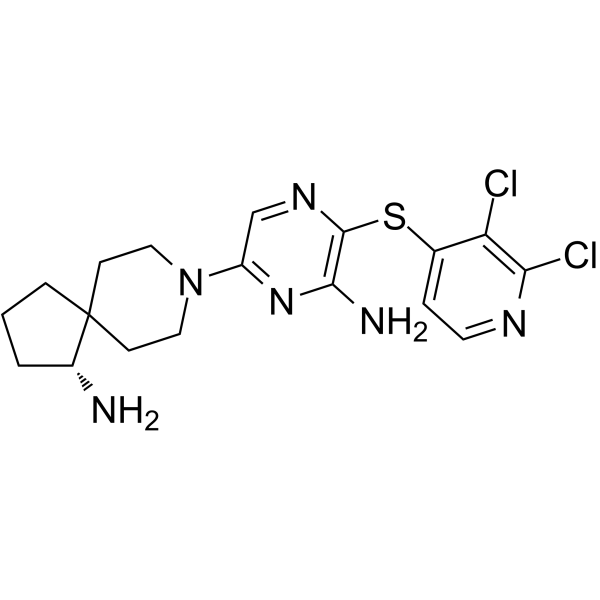 0 ImagesCat. No.: HY-141524CAS No.: 1801764-60-2
-
Antitumor agent-69
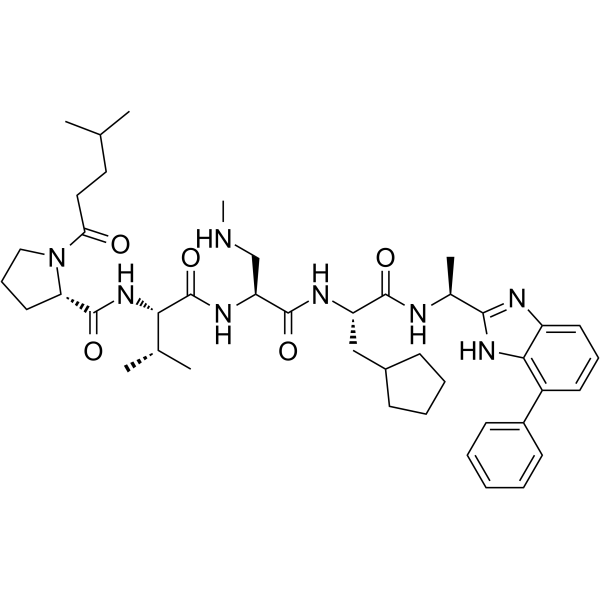 0 ImagesCat. No.: HY-146187CAS No.: 2417651-42-2
Antitumor agent-69 (compound 12) is a potent inhibitor of protein-protein interaction between DOT1L and MLL-AF9/MLL-ENL, with Kis of 9 nM and 109 nM for AF9 and ENL, respectively. Antitumor agent-69 exhibits anticancer cellular activitiy.
-
Chimmitecan
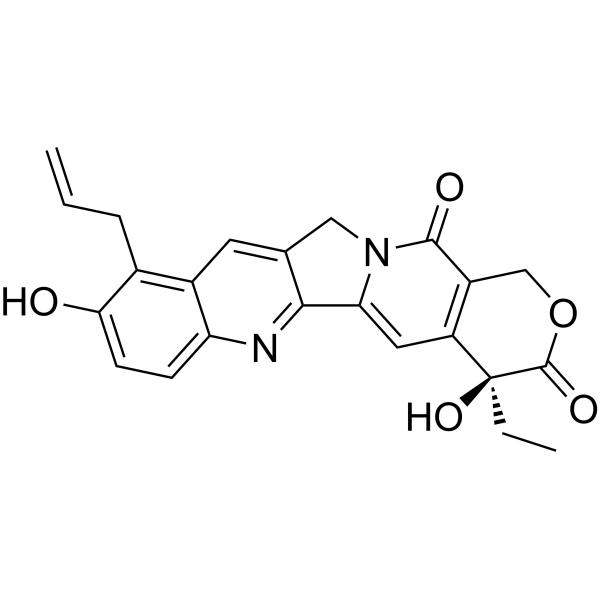 0 ImagesSynonyms: (S)-9-Allyl-10-Hydroxycamptothecin
Chimmitecan ((S)-9-Allyl-10-Hydroxycamptothecin), a novel 9-small-alkyl-substituted lipophilic Camptothecin (HY-16560), is a potent inhibitor of topoisomerase I. Chimmitecan exhibits anticancer activity.
-
Boc-HyNic-PEG2-alkyne
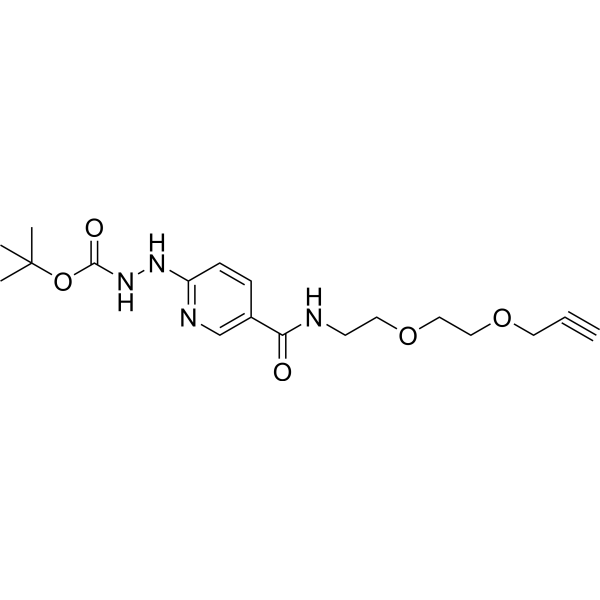 0 ImagesCat. No.: HY-133500CAS No.: 2741603-98-3
-
AZD-7648 (GMP)
 0 ImagesCat. No.: HY-111783GCAS No.: 2230820-11-6
AZD-7648 (GMP) is AZD-7648 (HY-111783) produced by using GMP guidelines. GMP small molecules works appropriately as an auxiliary reagent for cell therapy manufacture. AZD-7648 is a potent, orally active, selective DNA-PK inhibitor with an IC50 of 0.6 nM. AZD-7648 induces apoptosis and shows antitumor activity.
-
Tubulin polymerization-IN-42
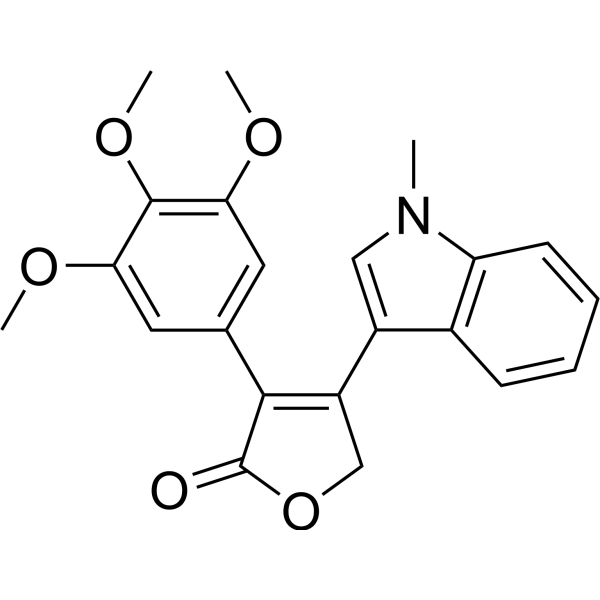 0 ImagesCat. No.: HY-155043CAS No.: 2640220-51-3
Tubulin polymerization-IN-42 (compound 10j), an indole-substituted furanone, is an inhibitor of tubulin polymerization with anti-cancer activity.
-
WEE1-IN-9
 0 ImagesCat. No.: HY-161879CAS No.: 2510782-14-4

-
endo-BCN-PEG3-NH-Boc
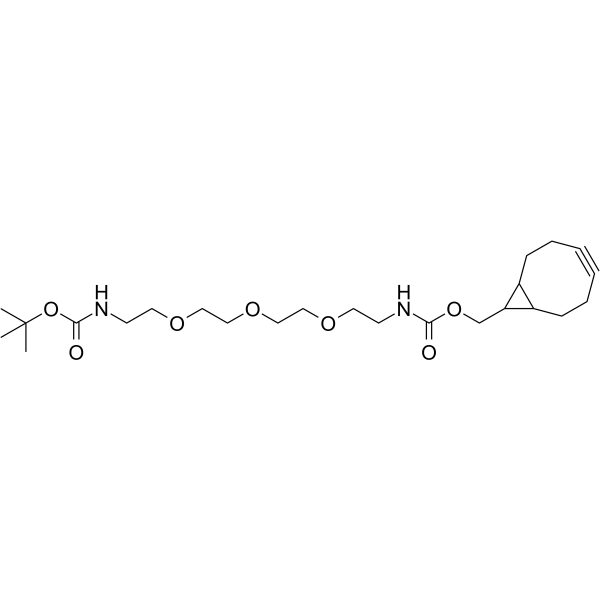 0 ImagesCat. No.: HY-140077CAS No.: 1807501-84-3
-
rel-(2S,3R)-Voruciclib hydrochloride
 0 ImagesCat. No.: HY-12422ECAS No.: 1253647-46-9
rel-(2S,3R)-Voruciclib hydrochloride is the rel-(2S,3R)-enantiomer of Voruciclib. Voruciclib is an orally active CDK inhibitor.

-
WDR5 ligand 4
 0 ImagesCat. No.: HY-184594CAS No.: 2407457-23-0
WDR5 ligand 4 is a WDR5 ligand. WDR5 ligand 4 can be used as a ligand for target protein for PROTAC in the synthesis of WDR5 PROTAC degraders. WDR5 ligand 4 can be coupled with the VHL ligand (S,R,S)-AHPC-Me (HY-112078) via linker to synthesize MS67 (HY-141796). WDR5 ligand 4 can be used in cancer research.
-
Pachypodol (Standard)
 0 ImagesCat. No.: HY-N3121RCAS No.: 33708-72-4
Pachypodol (Standard) is the analytical standard of Pachypodol (HY-N3121). This product is intended for research and analytical applications. Pachypodol is an orally active methoxyflavonoid compound. Pachypodol activates the ERK-dependent Nrf2 pathway and inhibits Apoptosis. Pachypodol exhibits activities such as antioxidant, cytoprotective, anti-inflammatory effects. Pachypodol improves cognition. Pachypodol exerts protective effects against cardiac and liver damage. Pachypodol has anticancer activity against colon cancer.

-
hsa-miR-28-3p antagomir
 0 ImagesCat. No.: HY-RI00501A
hsa-miR-28-3p antagomirs are chemically-modified oligonucleotides that hybridize with mature miRNAs. The miRNA antagomirs have 2 phosphorothioates at the 5' end, 4 phosphorothioates at the 3' end, 1 cholesterol group at the 3' end, and full-length nucleotide 2'-methoxy modification. The miRNA antagomirs strongly compete with mature miRNAs to prevent the complementary pairing of miRNAs and their target genes, thereby inhibiting miRNAs from functioning. Stability of miRNA antagomirs appears to be significantly higher than miRNA inhibitors, they exhibits enhanced cellular uptake, stability and regulatory activity in vivo.
-
hsa-miR-4508 antagomir
 0 ImagesCat. No.: HY-RI01122A
hsa-miR-4508 antagomirs are chemically-modified oligonucleotides that hybridize with mature miRNAs. The miRNA antagomirs have 2 phosphorothioates at the 5' end, 4 phosphorothioates at the 3' end, 1 cholesterol group at the 3' end, and full-length nucleotide 2'-methoxy modification. The miRNA antagomirs strongly compete with mature miRNAs to prevent the complementary pairing of miRNAs and their target genes, thereby inhibiting miRNAs from functioning. Stability of miRNA antagomirs appears to be significantly higher than miRNA inhibitors, they exhibits enhanced cellular uptake, stability and regulatory activity in vivo.



