



Cancer Targeted Therapy
Cancer targeted therapy is the foundation of precision medicine; it uses drugs or other substances to target specific genes and proteins that control cancer cells’ growth, division and spreading. Compared to traditional chemotherapy drugs, targeted-drugs can specifically act on cancer cells with high efficacy without damaging normal cells. Drugs used in cancer targeted therapy mainly includes small molecules and macromolecules (e.g., monoclonal antibodies), which can target cancer cells and constituents in the tumor microenvironment to activate the immune system. Anti-angiogenesis drugs, such as those targeting vascular endothelial growth factor (VEGF), epidermal growth factor receptor (EGFR), transforming growth factor (TGF)-α, TGF-β, Tumor necrosis factor (TNF)-α, and platelet-derived endothelial growth factor (PDGFR) inhibit the proliferation and metastasis of cancer cells. In recent years, the proportion of antibody drugs in cancer treatment has gradually become prominent. Antibody-drug conjugates (ADCs) are a new type of targeted drugs that are composed of monoclonal antibody, cytotoxic drug and linker. ADCs can deliver drugs to tumor cells and minimize the toxicity to normal tissues. Proteolysis-targeting chimera (PROTAC) is a useful technology for targeted protein degradation. PROTAC exploits the ubiquitin-proteasome system and forms a ternary complex with a hijacked E3 ubiquitin ligase and target protein, leading to polyubiquitination and degradation of the target protein.
Targeted therapy is a useful strategy in treatment of cancer either alone or in combination with standard chemotherapy. At present, targeted therapy has proved significant clinical success in the treatment of many types of cancer, including breast cancer, colorectal cancer, leukemia, ovarian cancer and lung cancer.
-
5-(2,3,5-Tri-O-benzyl-beta-D-ribofuranosyl)-3-methyl-2-benzyloxypyridine
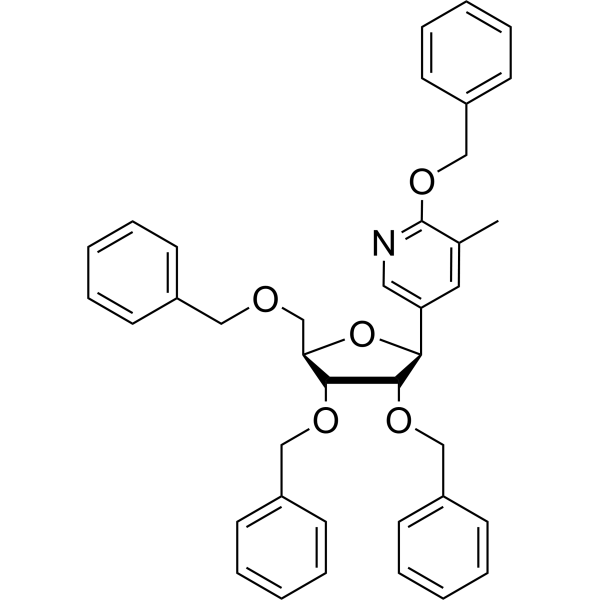 0 ImagesCat. No.: HY-154416CAS No.: 1846584-69-7
5-(2,3,5-Tri-O-benzyl-beta-D-ribofuranosyl)-3-methyl-2-benzyloxypyridine is a purine nucleoside analog. Purine nucleoside analogs have broad antitumor activity targeting indolent lymphoid malignancies. Anticancer mechanisms in this process rely on inhibition of DNA synthesis, induction of apoptosis, etc.
-
Lovastatin-d9 (epimer mixture)
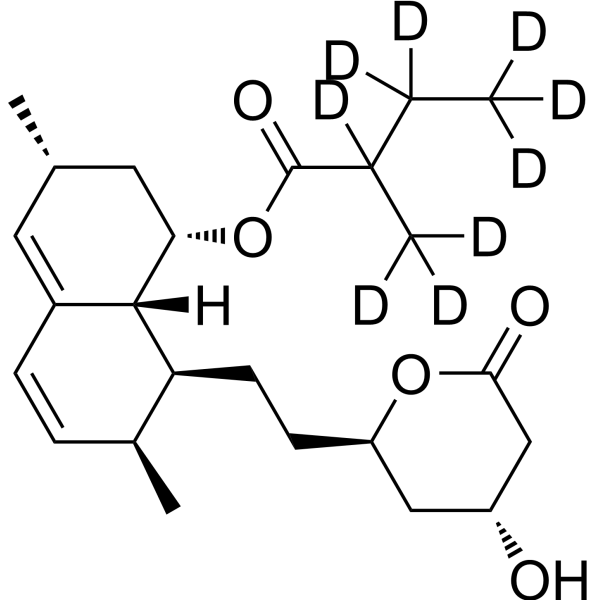 0 ImagesCat. No.: HY-N0504S1CAS No.: 2508138-69-8Synonyms: Mevinolin-d9 (epimer mixture)
Lovastatin-d9 is the deuterium labeled Lovastatin. Lovastatin is a cell-permeable HMG-CoA reductase inhibitor used to lower cholesterol.
-
rno-miR-128-2-5p antagomir
 0 ImagesCat. No.: HY-RI04223A
rno-miR-128-2-5p antagomirs are chemically-modified oligonucleotides that hybridize with mature miRNAs. The miRNA antagomirs have 2 phosphorothioates at the 5' end, 4 phosphorothioates at the 3' end, 1 cholesterol group at the 3' end, and full-length nucleotide 2'-methoxy modification. The miRNA antagomirs strongly compete with mature miRNAs to prevent the complementary pairing of miRNAs and their target genes, thereby inhibiting miRNAs from functioning. Stability of miRNA antagomirs appears to be significantly higher than miRNA inhibitors, they exhibits enhanced cellular uptake, stability and regulatory activity in vivo.
-
RIPK1-IN-23
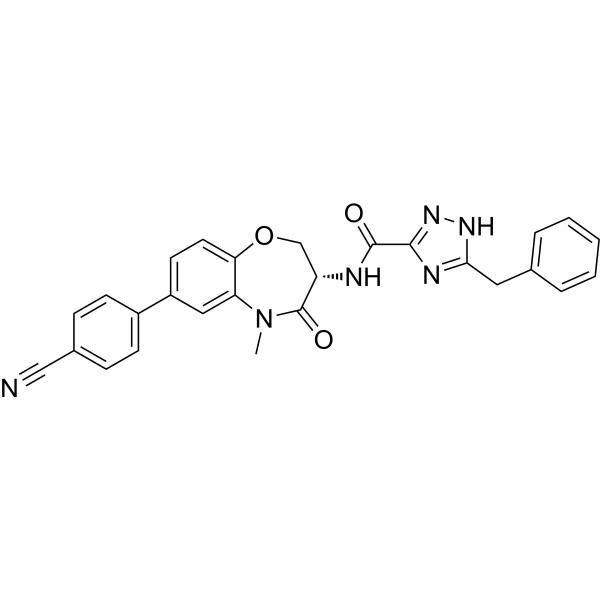 0 ImagesCat. No.: HY-157963CAS No.: 3031534-16-1
RIPK1-IN-23 (compound 19) is a RIPK1 inhibitor with potent anti-necroptotic effects in HT-29 cells (EC50 of 1.7 nM). RIPK1-IN-23 shows anti-inflammatory activities.
-
Antiproliferative agent-52
 0 ImagesCat. No.: HY-161824CAS No.: 2913194-20-2
Antiproliferative agent-52 is a tubulin inhibitor with a porcine tubulin KD of 29.65 μM. Antiproliferative agent-52 binds to the colchicine-binding site at the α-tubulin and β-tubulin interface and inhibits tubulin polymerization. Antiproliferative agent-52 exhibits antiproliferative activity against tumor cells. Antiproliferative agent-52 serves as a lead compound for development of thienopyrimidine and heterocyclic fused pyrimidines with antiproliferative activity. Antiproliferative agent-52 can be used for the research of ovarian cancer, non-small cell lung cancer.
-
TTK/PLK1-IN-1
 0 ImagesCat. No.: HY-164955CAS No.: 1817791-70-0
TTK/PLK1-IN-1 (Formula I) is the inhibitor for threonine tyrosine kinase (TTK) and polo-like kinase 1 (PLK1) with IC50 of 7 nM and 72 nM. TTK/PLK1-IN-1 regulates spindle assembly checkpoint (SAC), and exhibits antitumor efficacy against TNBC.
-
YW-N-7 TFA
 0 ImagesCat. No.: HY-170855A
YW-N-7 TFA is a PROTAC degrader targeting RET kinase, with an IC50 of 8.4 nM. YW-N-7 TFA inhibits RET kinase activity and induces proteasome-mediated degradation of RET fusion proteins, while enhancing the anti-tumor activity of Selpercatinib (LOXO-292) (HY-114370). YW-N-7 TFA can be used in the research of cancers associated with RET gene abnormalities, including medullary thyroid carcinoma, papillary thyroid carcinoma and non-small cell lung cancer.
-
WCA-814
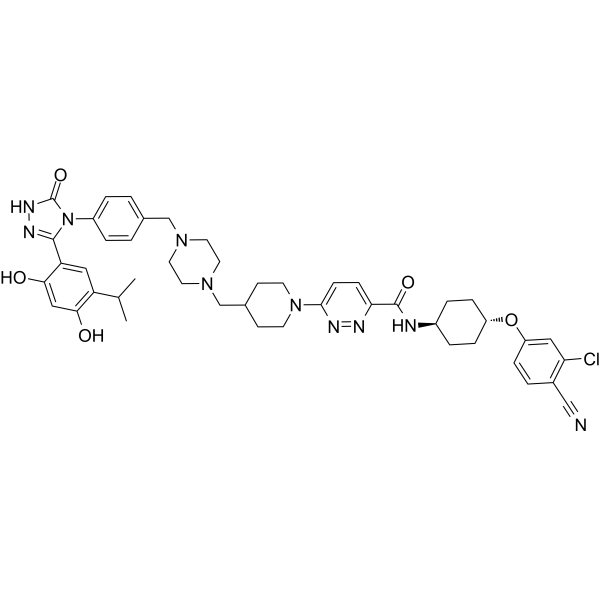 0 ImagesCat. No.: HY-149914CAS No.: 2951858-45-8
WCA-814 is an androgen receptor (AR) antagonist-Hsp90 inhibitor conjugate. WCA-814 induces the degradation of full-length and AR-V7. WCA-814 has cytotoxic effect in prostatic cancer cells (IC50: 171.2 nM, 26.5 nM for LNCaP, 22Rv1 cell).
-
BL20-MMAE
 0 ImagesCat. No.: HY-177109CAS No.: 2765612-38-0
BL20-MMAE is an antibody-drug conjugate targeting ROR1, which is formed by conjugating an anti-ROR1 antibody with the Auristatin payload MMAE (HY-15162) via a BL20 linker.
-
hsa-miR-937-5p antagomir
 0 ImagesCat. No.: HY-RI02523A
hsa-miR-937-5p antagomirs are chemically-modified oligonucleotides that hybridize with mature miRNAs. The miRNA antagomirs have 2 phosphorothioates at the 5' end, 4 phosphorothioates at the 3' end, 1 cholesterol group at the 3' end, and full-length nucleotide 2'-methoxy modification. The miRNA antagomirs strongly compete with mature miRNAs to prevent the complementary pairing of miRNAs and their target genes, thereby inhibiting miRNAs from functioning. Stability of miRNA antagomirs appears to be significantly higher than miRNA inhibitors, they exhibits enhanced cellular uptake, stability and regulatory activity in vivo.
-
mmu-miR-448-5p antagomir
 0 ImagesCat. No.: HY-RI03145A
mmu-miR-448-5p antagomirs are chemically-modified oligonucleotides that hybridize with mature miRNAs. The miRNA antagomirs have 2 phosphorothioates at the 5' end, 4 phosphorothioates at the 3' end, 1 cholesterol group at the 3' end, and full-length nucleotide 2'-methoxy modification. The miRNA antagomirs strongly compete with mature miRNAs to prevent the complementary pairing of miRNAs and their target genes, thereby inhibiting miRNAs from functioning. Stability of miRNA antagomirs appears to be significantly higher than miRNA inhibitors, they exhibits enhanced cellular uptake, stability and regulatory activity in vivo.
-
mmu-miR-7017-3p antagomir
 0 ImagesCat. No.: HY-RI03770A
mmu-miR-7017-3p antagomirs are chemically-modified oligonucleotides that hybridize with mature miRNAs. The miRNA antagomirs have 2 phosphorothioates at the 5' end, 4 phosphorothioates at the 3' end, 1 cholesterol group at the 3' end, and full-length nucleotide 2'-methoxy modification. The miRNA antagomirs strongly compete with mature miRNAs to prevent the complementary pairing of miRNAs and their target genes, thereby inhibiting miRNAs from functioning. Stability of miRNA antagomirs appears to be significantly higher than miRNA inhibitors, they exhibits enhanced cellular uptake, stability and regulatory activity in vivo.
-
KRAS G12C inhibitor 30
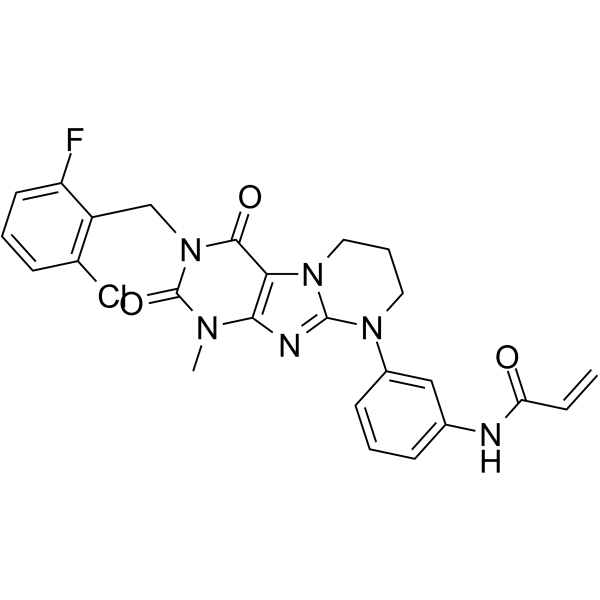 0 ImagesCat. No.: HY-142481CAS No.: 2752352-90-0
KRAS G12C inhibitor 30 is a KRAS G12C inhibitor extracted from patent WO2021252339A1, compound 2. KRAS G12C inhibitor 30 can be used for the research of cancer.
-
KRAS inhibitor-18
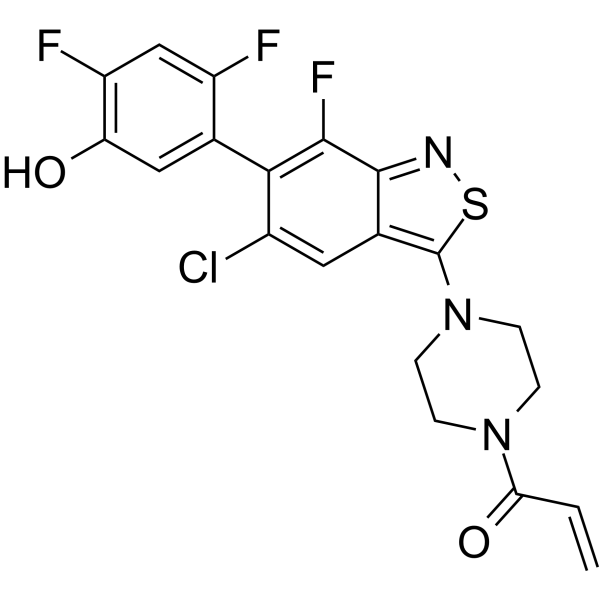 0 ImagesCat. No.: HY-146476CAS No.: 2230873-66-0
KRAS inhibitor-18 (compound 3-10) is a potent KRAS G12C inhibitor with an IC50 of 4.74 µM. KRAS inhibitor-18 shows p-ERK inhibition activities with IC50s of 66.4, 11.1 µM in MIA PaCA-2, A549 cells, respectively. KRAS inhibitor-18 has the potential for the research of pancreatic, colorectal, and lung cancers.
-
NSC 698600
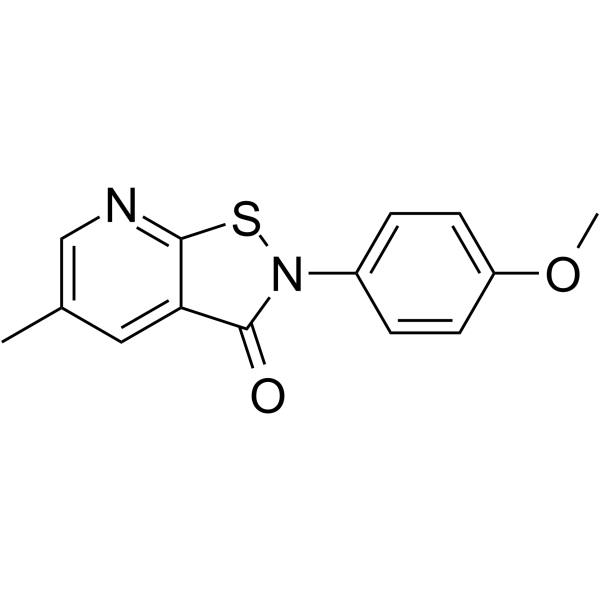 0 ImagesCat. No.: HY-147289CAS No.: 908069-17-0
NSC 698600 is a potent PCAF inhibitor, with IC50 of 6.51 µM (PCAF/H31-21). NSC 698600 exhibits good activity of inhibiting the proliferation of cancer cells.
-
hsa-miR-1287-3p inhibitor
 0 ImagesCat. No.: HY-RI00207
hsa-miR-1287-3p inhibitors are chemically-modified oligonucleotides that hybridize with mature miRNAs. The miRNA inhibitors have full-length nucleotide 2'-methoxy modification. The miRNA inhibitors strongly compete with mature miRNAs to prevent the complementary pairing of miRNAs and their target genes, thereby inhibiting miRNAs from functioning.
-
hsa-miR-374b-3p inhibitor
 0 ImagesCat. No.: HY-RI00830
hsa-miR-374b-3p inhibitors are chemically-modified oligonucleotides that hybridize with mature miRNAs. The miRNA inhibitors have full-length nucleotide 2'-methoxy modification. The miRNA inhibitors strongly compete with mature miRNAs to prevent the complementary pairing of miRNAs and their target genes, thereby inhibiting miRNAs from functioning.
-
hsa-miR-4804-5p antagomir
 0 ImagesCat. No.: HY-RI01450A
hsa-miR-4804-5p antagomirs are chemically-modified oligonucleotides that hybridize with mature miRNAs. The miRNA antagomirs have 2 phosphorothioates at the 5' end, 4 phosphorothioates at the 3' end, 1 cholesterol group at the 3' end, and full-length nucleotide 2'-methoxy modification. The miRNA antagomirs strongly compete with mature miRNAs to prevent the complementary pairing of miRNAs and their target genes, thereby inhibiting miRNAs from functioning. Stability of miRNA antagomirs appears to be significantly higher than miRNA inhibitors, they exhibits enhanced cellular uptake, stability and regulatory activity in vivo.
-
Amprenavir (Standard)
 0 ImagesSynonyms: VX-478 (Standard)
-
Avicin G
 0 ImagesCat. No.: HY-134505CAS No.: 197787-17-0
Avicin G is a sphingomyelinase inhibitor and plasma membrane disruptor. Avicin G inhibits the enzymatic activities of neutral sphingomyelinases (SMPD2/3) and acid sphingomyelinase (SMPD1), elevates intracellular sphingomyelin levels, and alters the distribution of sphingomyelin. Avicin G interferes with the lateral segregation of GTP- and GDP-bound H-Ras, inhibits the signal output of oncogenic K-Ras and H-Ras, reduces the phosphorylation of ERK and Akt, increases lysosomal pH, and inhibits the endocytic recycling of epidermal growth factor receptor. Avicin G can be used in research related to pancreatic ductal adenocarcinoma and non-small cell lung cancer.



