Others
-
Others Related Products (76528)
Related Products (76528)



-
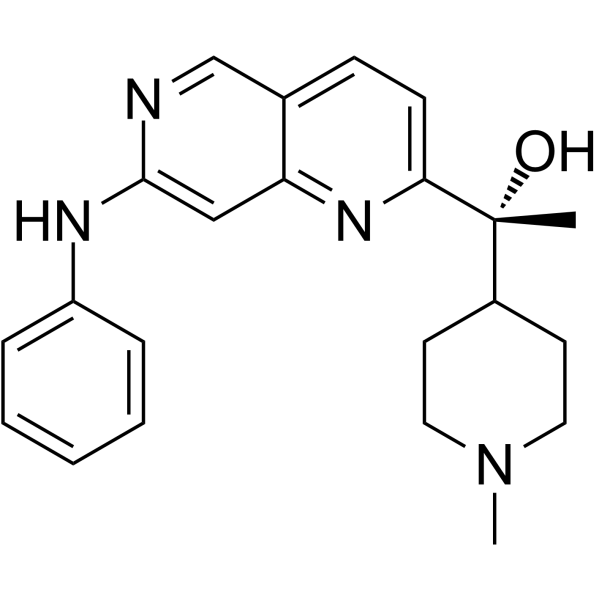
CDK5-IN-3
 0 Images
CDK5-IN-3 (compound 11) is a potent CDK5 inhibitor, with IC50s of 0.6 nM and 18 nM for CDK5/p25 and CDK2/CycA, respectively. CDK5-IN-3 can be used for the research of autosomal dominant polycystic kidney disease (ADPKD).
-
1,2-Distearoyl-sn-Glycero-3-Phosphatidylglycerol sodium
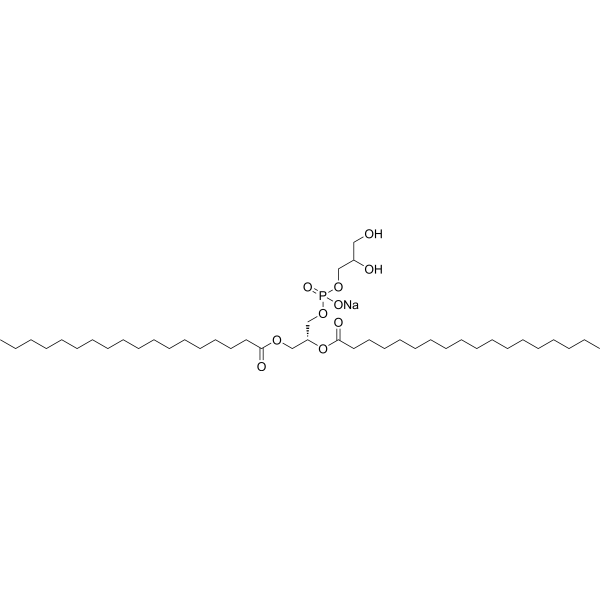 0 ImagesSynonyms: DSPG sodium
1,2-Distearoyl-sn-Glycero-3-Phosphatidylglycerol (sodium) is the component of liposomes for drug delivery.
-
α-Vitamin E-d6
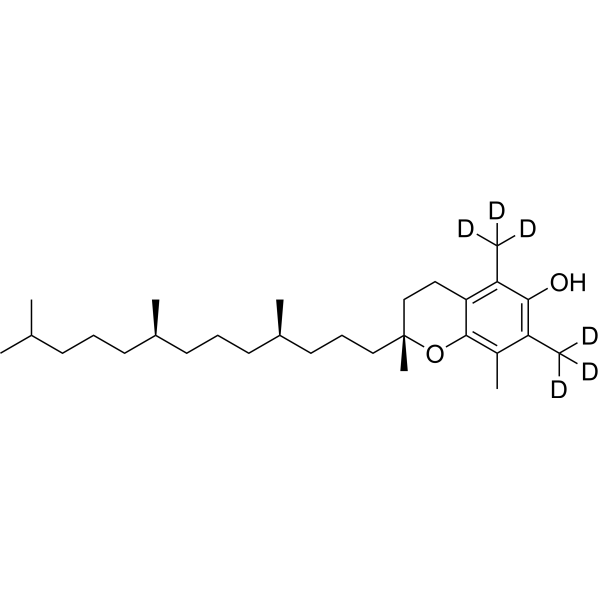 0 ImagesSynonyms: (+)-α-Tocopherol-d6; D-α-Tocopherol-d6
α-Vitamin E-d6 is the deuterium labeled α-Vitamin E.
-
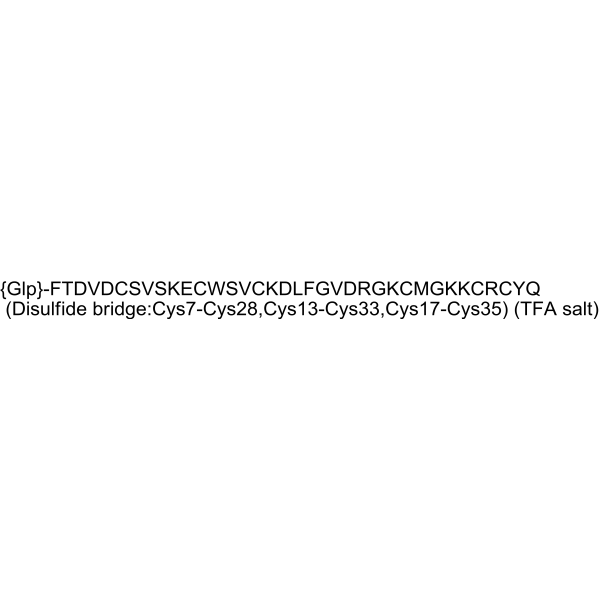
Liraglutide-13C5,15N tetraTFA
 0 ImagesCat. No.: HY-P0014S1
Liraglutide-13C6,15 tetraTFA is the 13C and 15N labeled Liraglutide (HY-P0014). Liraglutide is a glucagon-like peptide-1 (GLP-1) receptor agonist used for the study of type 2 diabetes mellitus.
-
FLAG peptide TFA
 0 ImagesCat. No.: HY-P0223APurity: 99.61%
FLAG peptide TFA is the TFA salt form of FLAG peptide (HY-P0223). FLAG peptide TFA is a multifunctional fusion tag for the purification of recombinant proteins. FLAG peptide TFA maintances the natural folding of its fusing proteins. FLAG peptide TFA can be removed by enterokinase, and eluted under non-denaturing conditions.
-
Ribonuclease T1, Aspergillus oryzae
 0 Images
Ribonulease T1, Aspergillus oryzae (Rnase T1), is commonly used in biochemical research. Ribonuclease T1 is an endonuclease that can specifically degrade single stranded RNA. Ribonuclease T1 can form nucleoside 2 ', 3 '-cyclic phosphoric acid intermediates to cut the phosphodiester bond between 3' -guanosine residues and adjacent nucleoside 5 '-OH groups to produce 3' -GMP terminal oligonucleotides.
-
Oligopeptide P11-4
 0 Images
Oligopeptide P11-4 is an α-peptide that can be self-assembled into β-sheet amyloids with a hydrogel appearance at low pH. Oligopeptide P11-4 can be used in biomimetic mineralization, enamel regeneration and oral care agent.

-
GFOGER peptide
 0 Images
GFOGER peptide is an artificially synthesized collagen-mimetic sequence. GFOGER peptide acts as a ligand for α2β1, α11β1 and α1β1 integrins, thereby supporting integrin-mediated cell adhesion to collagen. GFOGER peptide triggers signaling pathways mediated by the α2β1 integrin receptor and upregulates osteoblast differentiation. GFOGER peptide accelerates and enhances bone formation at sites of refractory femoral defects. GFOGER peptide can be passively adsorbed onto polymer scaffolds for cell-free/growth factor-free bone formation. GFOGER peptide is used in biomaterials such as hydrogels and 3D bioinks for tissue engineering research including bone formation.
-
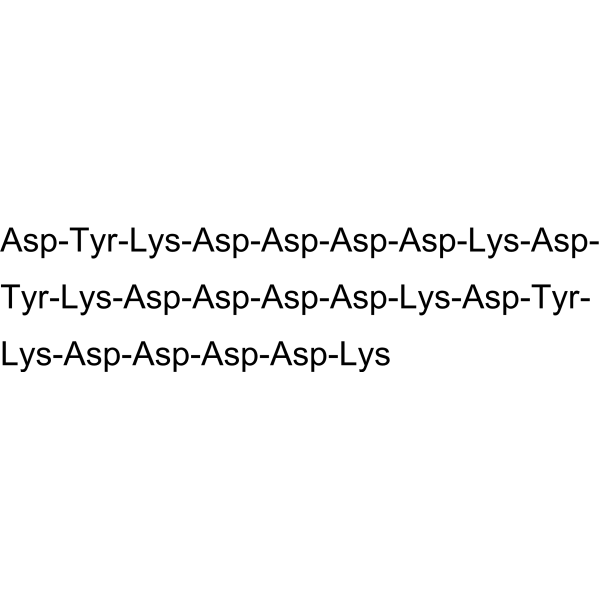
3x DYKDDDDK Tag
 0 Images
3x DYKDDDDK Tag is a useful tool for investigating the function and localization of proteins whose antibodies (Abs) are not available. Often it is also used in a 3X FLAG format (3x DYKDDDDK Tag) for purifying difficult proteins that accumulate in low abundance .
-
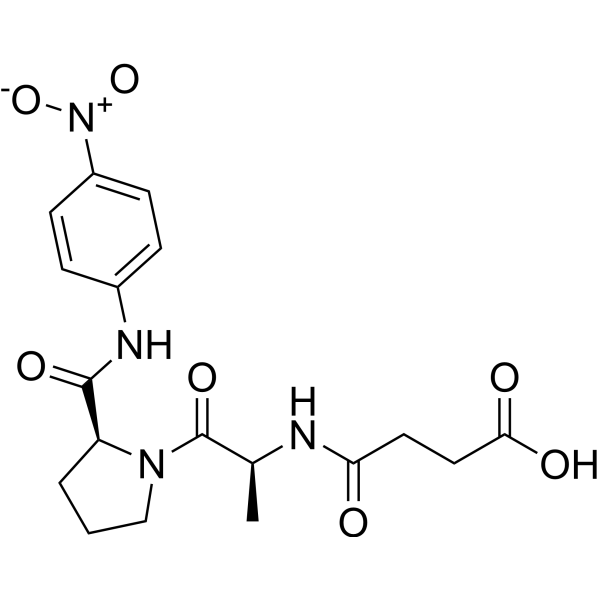
Suc-Ala-Pro-pNA
 0 Images
Suc-Ala-Pro-pNA is a peptide that serves as a substrate to detect the activity and stability of prolyl endopeptidase (PEP).
-
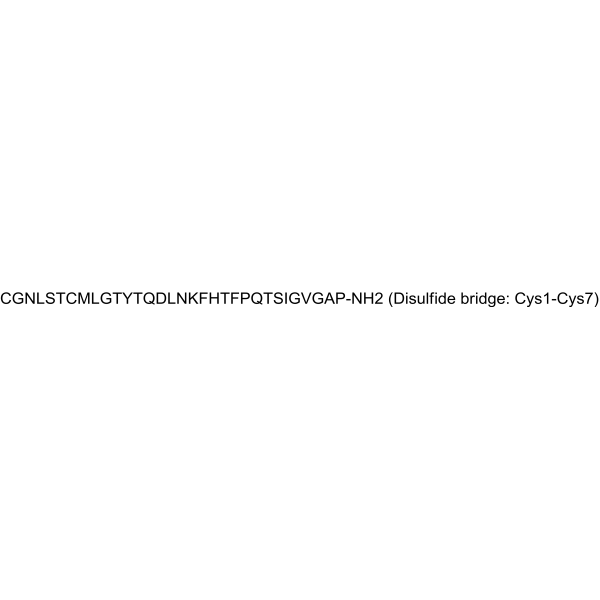
Calcitonin (rat)
 0 Images
Calcitonin (rat) is a polypeptide that can be found by peptide screening. Peptide screening is a research tool that pools active peptides primarily by immunoassay. Peptide screening can be used for protein interaction, functional analysis, epitope screening, especially in the field of agent research and development.
-
RVG-Cys acetate
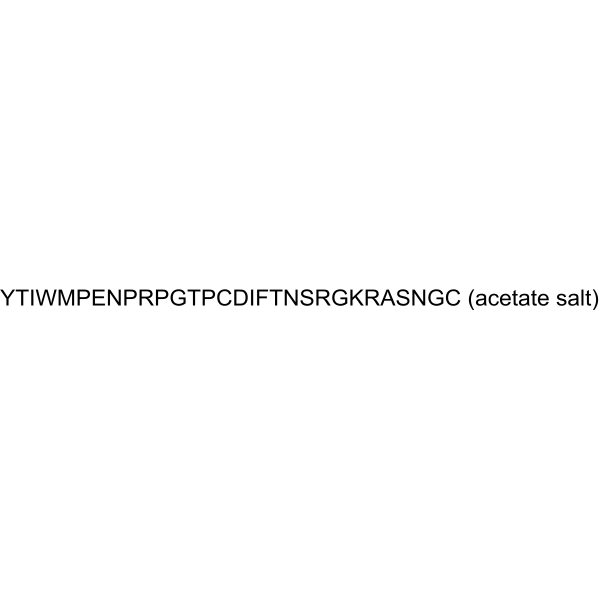 0 ImagesCat. No.: HY-P5623A1Purity: 99.72%Synonyms: RVG29-Cys acetate; RDP-Cys acetate; Rabies Virus Glycoprotein-29-Cys acetate
RVG-Cys (RVG29-Cys) acetate is a peptide derived from rabies virus glycoprotein (RVG29) with Cys attached to facilitate subsequent conjugation. RVG-Cys acetate enhances the specific targeted delivery of proteins in brain tissue and neurons.

-
Hydroxy-β-sanshool
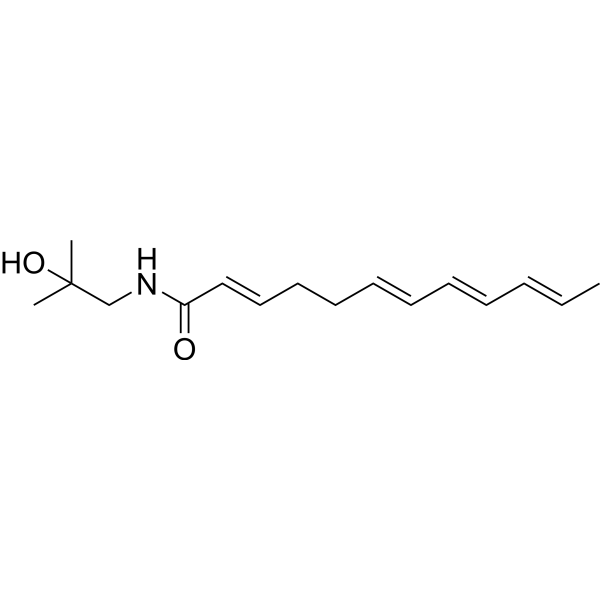 0 Images
Hydroxy-β-sanshool is an alkylamide exists in Zanthoxylum bungeanum oil and Zanthoxylum schinifolium oil.
-
3-Methoxybenzeneboronic acid
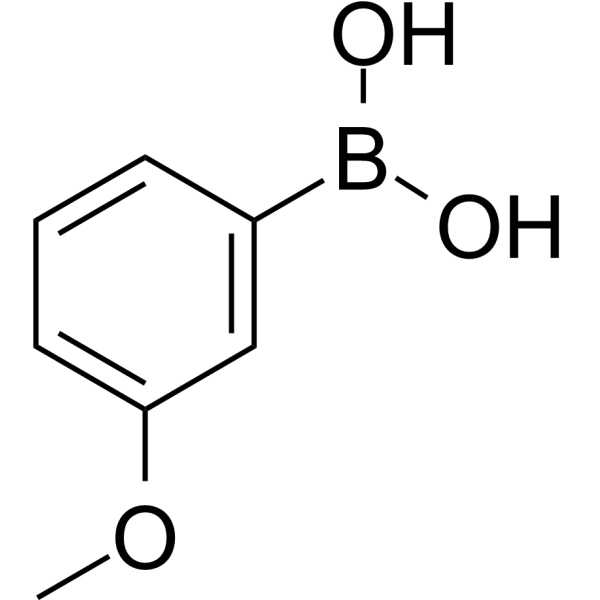 0 ImagesSynonyms: 3-Methoxyphenylboronic acid
3-Methoxybenzeneboronic acid (3-Methoxyphenylboronic acid) is a boronic acid derivative. 3-Methoxybenzeneboronic acid shows best suitable binding pattern at the active site by interacting non-covalently with amino acid residues of proteins. 3-Methoxybenzeneboronic acid is a biochemical reagent that can be used as a biological material or organic compound for life science related research.
-
3-Coumaranone
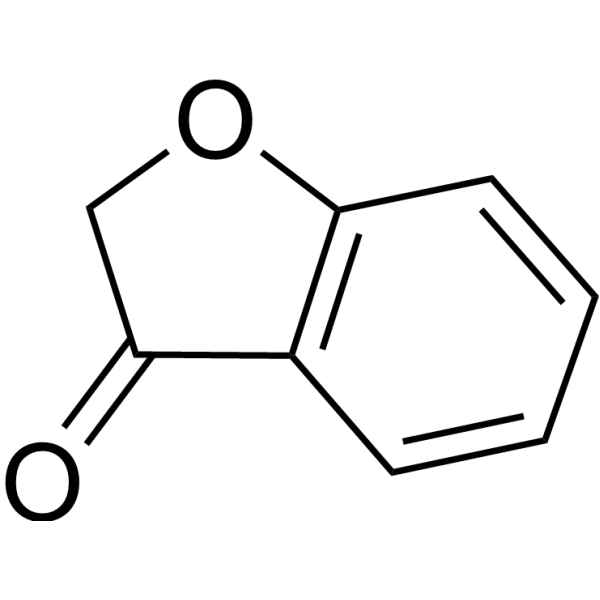 0 ImagesSynonyms: Benzofuran-3-one
3-Coumaranone is a biochemical reagent that can be used as a biological material or organic compound for life science related research.