Others
-
Others Related Products (76573)
Related Products (76573)

-
Ethidium bromide (solution)
 0 Images
Ethidium bromide (solution) is an intercalating agent commonly used as a fluorescent tag (nucleic acid stain) in molecular biology laboratories for techniques such as agarose gel electrophoresis.
Solvent and Concentration: Sterile water: 10 mg/Ml
-
TMA-DPH (solution)
 0 ImagesCat. No.: HY-DY1057CAS No.: 115534-33-3
TMA-DPH (solution) is a hydrophobic fluorescent membrane probe (Ex=355 nm; Em=430 nm). TMA-DPH is able to anchor on the cell surface and localize to different regions of the phospholipid bilayer. By analyzing the fluorescence polarization values of TMA-DPH in the plasma membrane and membrane substructures, the fluidity of the cell membrane can be determined.
Solvent and concentration: DMSO: 10 mM
-
Halo tag TMR (solution)
 0 ImagesCat. No.: HY-DY1107CAS No.: 2764890-88-0
Halo tag TMR (solution) is a red fluorescent dye composed of Halo tag ligand molecules and TMR (TAMRA). Halo tag can quickly and stably covalently bind to Halo protein with high specificity and affinity (Ex/Em = 550/576 nm).
Solvent and concentration: DMSO: 5 mM
-
Phosphoenolpyruvate carboxylase, Microorganism
 0 Images
Phosphoenolpyruvate carboxylase, Microorganism (PEPC) is a carbon dioxide fixing enzyme that in an irreversible manner and in the presence of Mg2+, converts phosphoenolpyruvate and bicarbonate into oxaloacetate and inorganic phosphorus. Phosphoenolpyruvate carboxylase catalyses the primary assimilation of CO(2) in Crassulacean acid metabolism plants. Phosphoenolpyruvate carboxylase plays a major role in setting the day-night pattern of metabolism in plants.
-
Recombinant Kex2 protease
 0 ImagesCat. No.: HY-E70200CAS No.: 99676-46-7
Recombinant Kex2 protease is a membrane-bound, Ca2+-dependent serine protease. Recombinant Kex2 protease specifically recognize and cleave the carboxyl-terminal peptide bonds of dibasic amino acids.
-
Glucose isomerase (immobilized)
 0 Images
Glucose isomerase (immobilized) is glucose isomerase, which catalyzes the reversible isomerization of D-glucose and D-xylose into D-fructose and D-xylulose, respectively. Glucose isomerase (immobilized) can be used to produce fructose syrup under high-temperature conditions above 90 ℃. Glucose isomerase (immobilized) is widely distributed in prokaryotes.
-
N4-Benzoylcytosine
 0 Images
N4-Benzoylcytosine is a biochemical reagent that can be used as a biological material or organic compound for life science related research.
-
(+)-Columbianetin
 0 Images
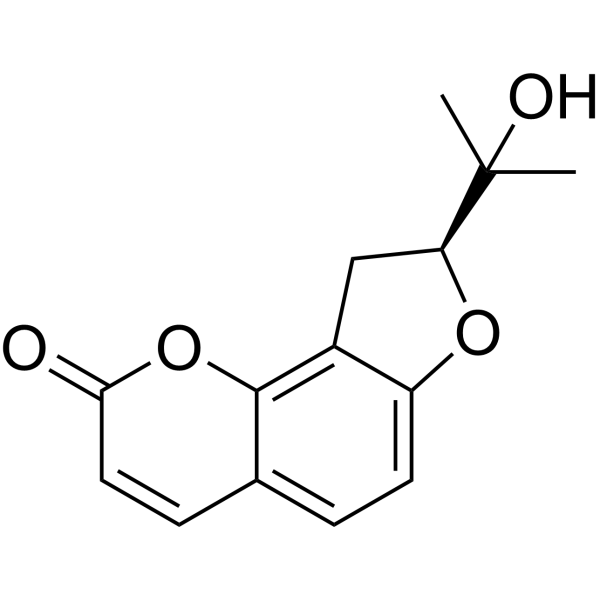
(+)-Columbianetin ((S)-Columbianetin) acts as an inhibitor of JNK/ERK. (+)-Columbianetin inhibits UVA-induced phosphorylation of JNK and ERK, reduces the production of MMP-1, reverses UVA-induced Collagen (HY-NP003) degradation, and alleviates UVA-mediated inhibition of Smad2/3 phosphorylation and translocation. (+)-Columbianetin regulates the AP-1 and ASK1-MAPK signaling pathways, inhibits the production of ROS and blocks sub-G1 cell cycle arrest. (+)-Columbianetin is applicable to research related to skin aging.
-
L-Cystine-3,3'-13C2
 0 Images
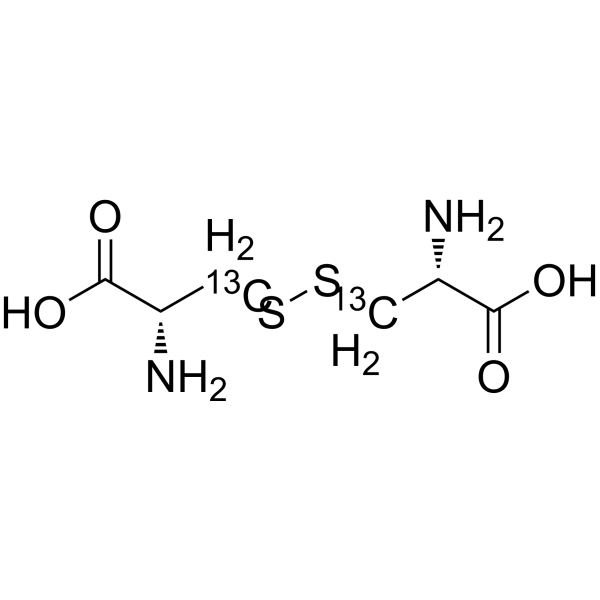
L-Cystine-3,3'-13C2 is the 13C labeled L-Cystine. L-Cystine is an amino acid and intracellular thiol, which plays a critical role in the regulation of cellular processes.
-
β-Carotene-d8
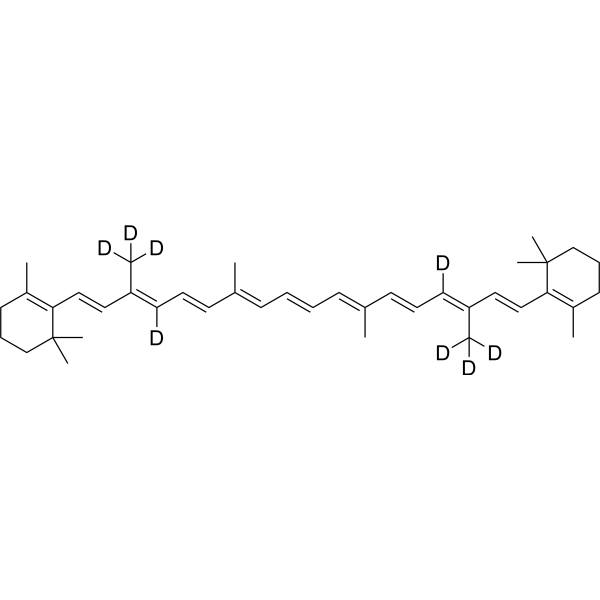 0 ImagesCat. No.: HY-N0411S1CAS No.: 53163-44-3Synonyms: Provitamin A-d8; beta-Carotene-d8
β-Carotene-d8 is the deuterium labeled β-Carotene (HY-N0411).
-
C18-Ceramide-d7
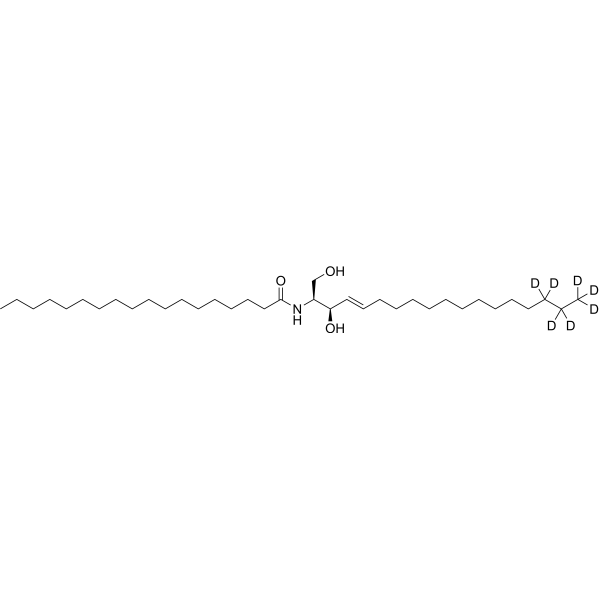 0 Images
C18-Ceramide-d7 is deuterium labeled C18-Ceramide.
-
PD 128907 hydrochloride
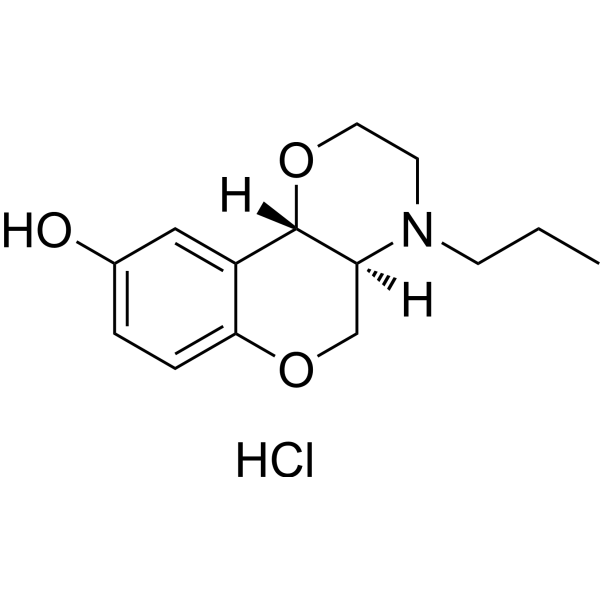 0 Images
PD 128907 (hydrochloride) is a biochemical reagent that can be used as a biological material or organic compound for life science related research.
-
β-Apo-13-carotenone
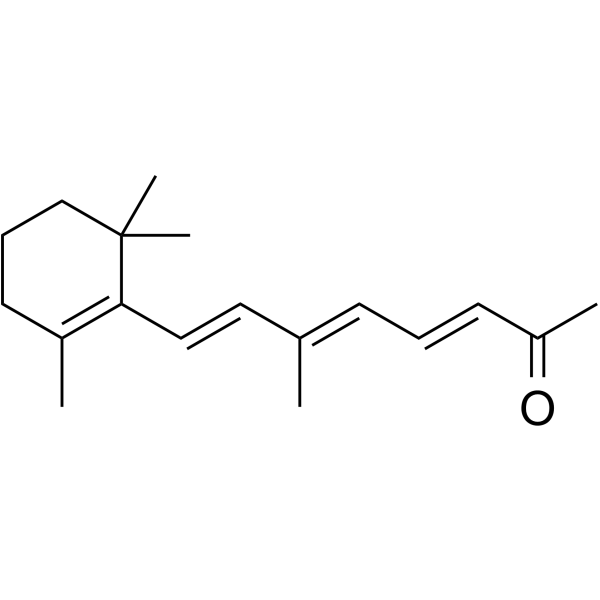 0 ImagesCat. No.: HY-101953CAS No.: 17974-57-1Synonyms: D'Orenone
β-Apo-13-carotenone (D'Orenone) is a naturally occurring β-apocarotenoid functioned as an antagonist of RXRα.
-
Dimethyl silicone oil, viscosity 100 cSt (25 °C)
 0 ImagesCat. No.: HY-104035ECAS No.: 63148-62-9Synonyms: Poly(dimethylsiloxane) (PDMS), viscosity 100 cSt (25 °C); Dimethylsilcone fluid, viscosity 100 cSt (25 °C)
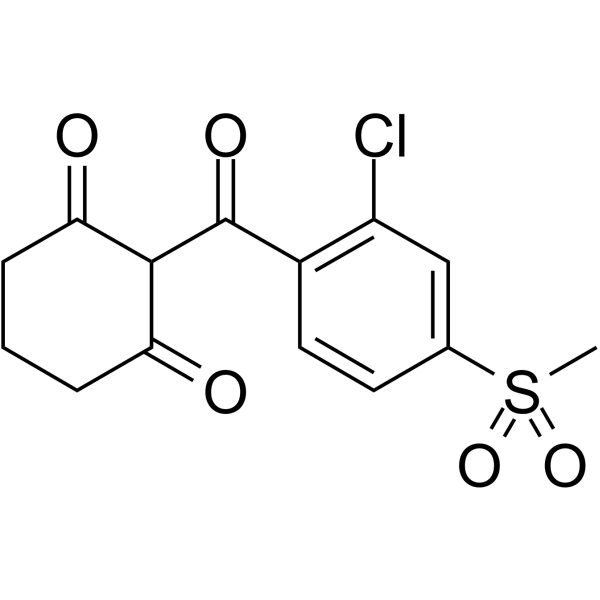
Dimethyl silicone oil, viscosity 100 cSt (25 °C) (Poly(dimethylsiloxane) (PDMS), viscosity 100 cSt (25 °C); Dimethylsilcone fluid, viscosity 100 cSt (25 °C)) is a transparent, colorless, and inert polydimethylsiloxane liquid with stable properties. Dimethyl silicone oil, viscosity 100 cSt (25 °C) exhibits high dielectric strength and excellent lubrication, cushioning, and thermal conductivity. Dimethyl silicone oil, viscosity 100 cSt (25 °C) can be used in cosmetics, lubricants, and electronics.
-
(+)-Fluprostenol
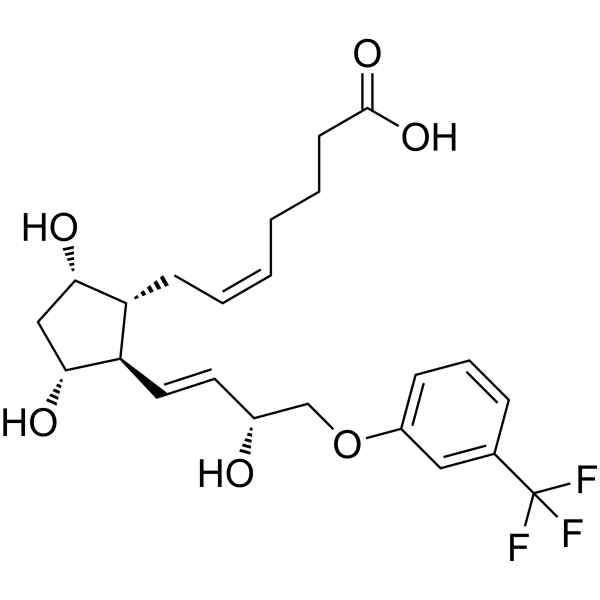 0 ImagesCat. No.: HY-108560CAS No.: 54276-17-4
(+)-Fluprostenol is a potent agonist of PTGER2. (+)-Fluprostenol decreases the expression of Oviductal glycoprotein 1 (OVGP1).
-
Fluxametamide
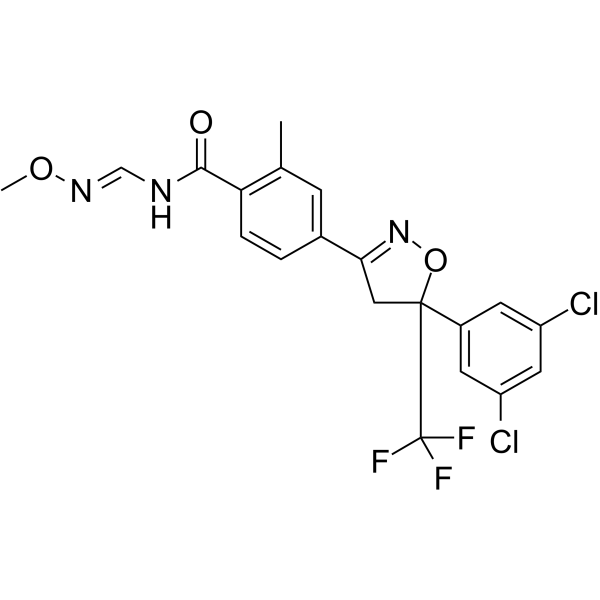 0 Images
Fluxametamide is an insecticide with wide spectrum, acts as an antagonist of GABA- and glutamate-gated chloride channels, with IC50 of 1.95 nM and 225 nM for M. domestica GABACls and GluCls.
-
Mn(III)TMPyP pentachloride
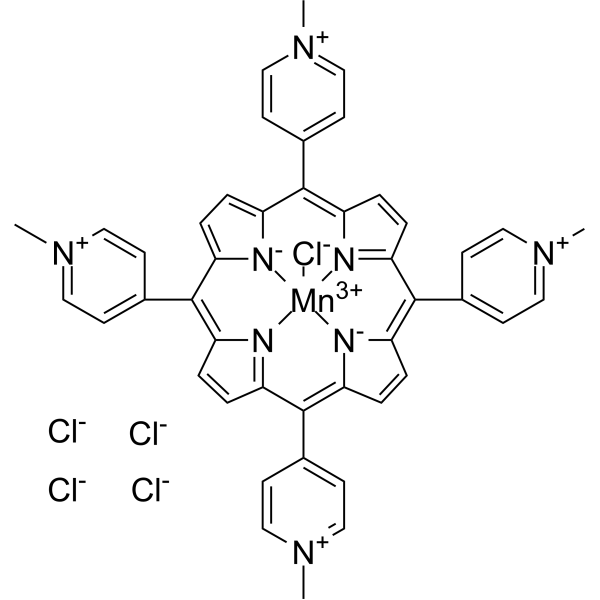 0 ImagesCat. No.: HY-109748CAS No.: 125565-45-9
MnIIITMPyP pentachloride is a biochemical reagent that can be used as a biological material or organic compound for life science related research.
-
CCG-232601
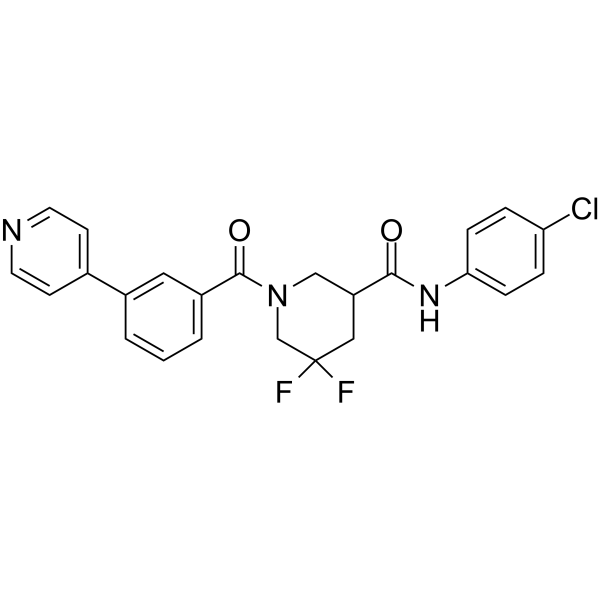 0 Images
CCG-232601 (compound 8f) is a potent and orally active Rho/MRTF/SRF transcriptional pathway inhibitor. CCG-232601 inhibits the development of Bleomycin-induced dermal fibrosis in mice. CCG-232601 has the potential for the research of antifibrotic for systemic scleroderma.