



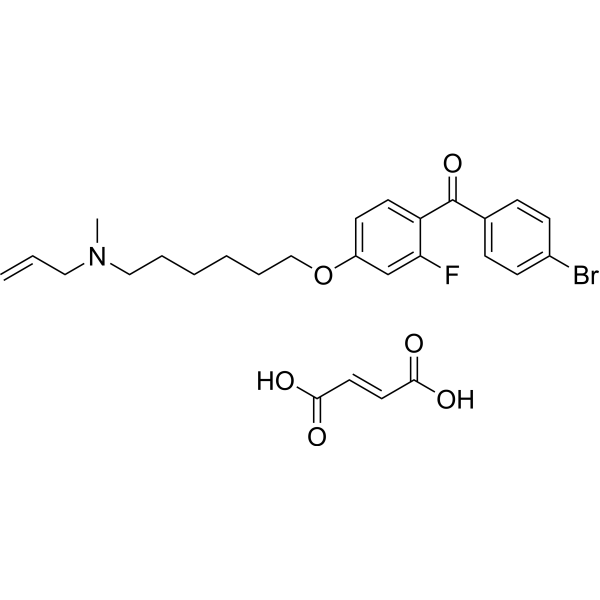
Ro 48-8071
Based on 13 publication(s) in Google Scholar
Ro 48-8071 is an inhibitor of OSC (Oxidosqualene cyclase) with IC50 of appr 6.5 nM.
For research use only. We do not sell to patients.
- Purity : 99.89%
- CAS No.: 189197-69-1
- Formula: C27H31BrFNO6
- Molecular Weight:564.44
-
Storage:
4°C, sealed storage, away from moisture
* In solvent : -80°C, 6 months; -20°C, 1 month (sealed storage, away from moisture)

To place orders, for customer services and technical support, please contact: MedChemExpress USA
Tel: 609-228-6898 E-mail: [email protected] [email protected]


-
 Biological Activity
-
Chemical Information
-
Solvent & Solubility
- Protocol
- Purity & Documentation
- References
-
 Help & FAQs


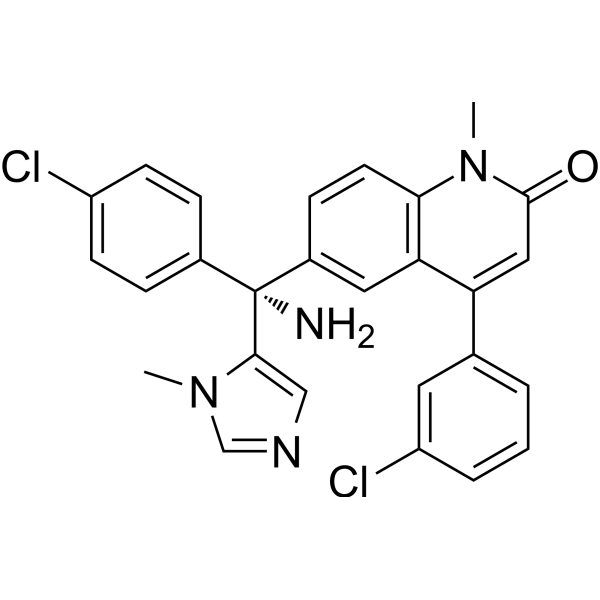
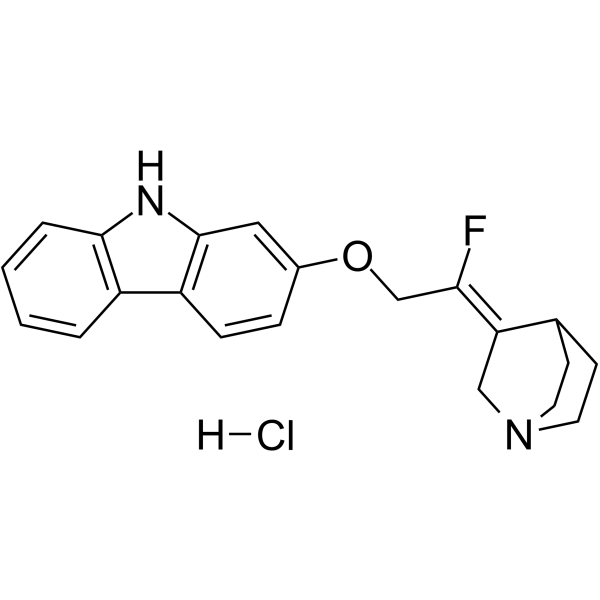
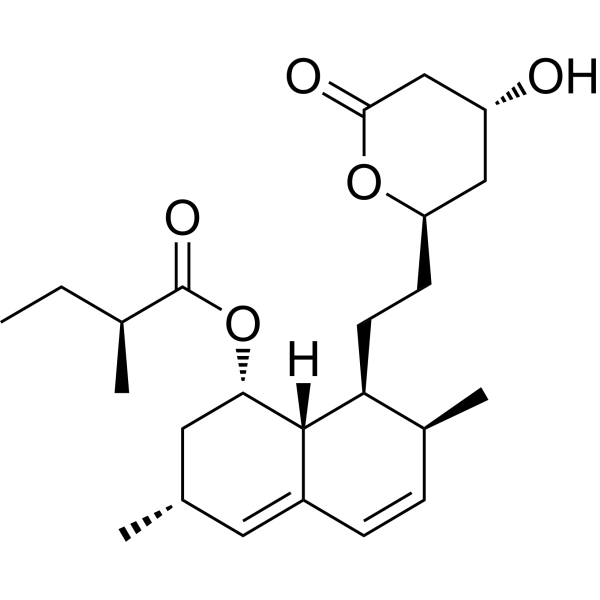
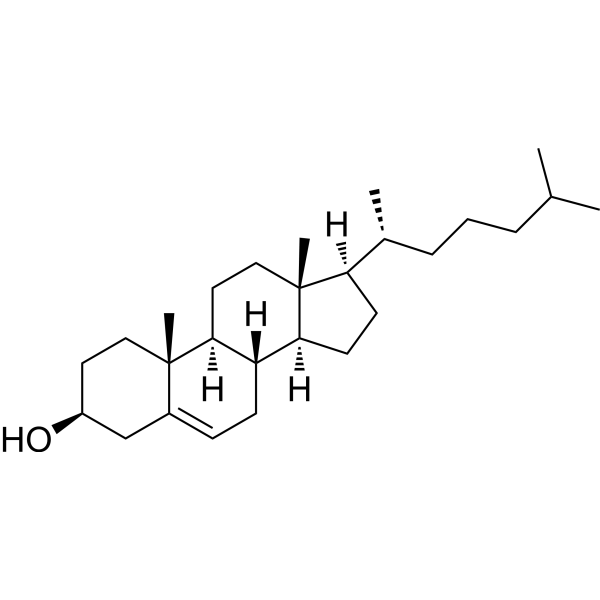
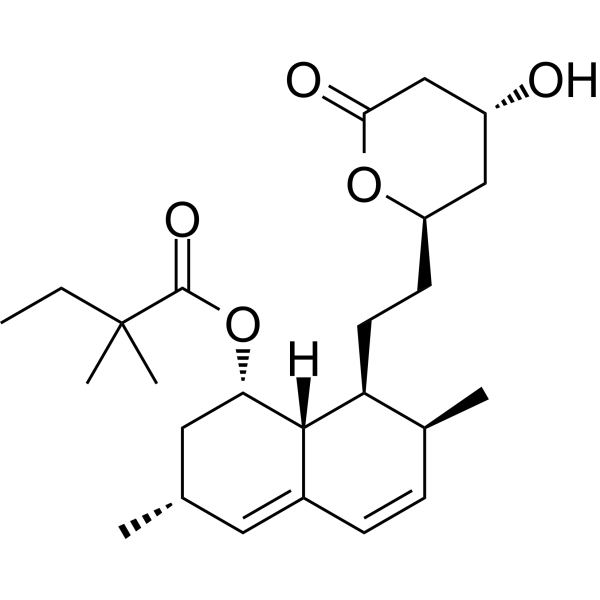
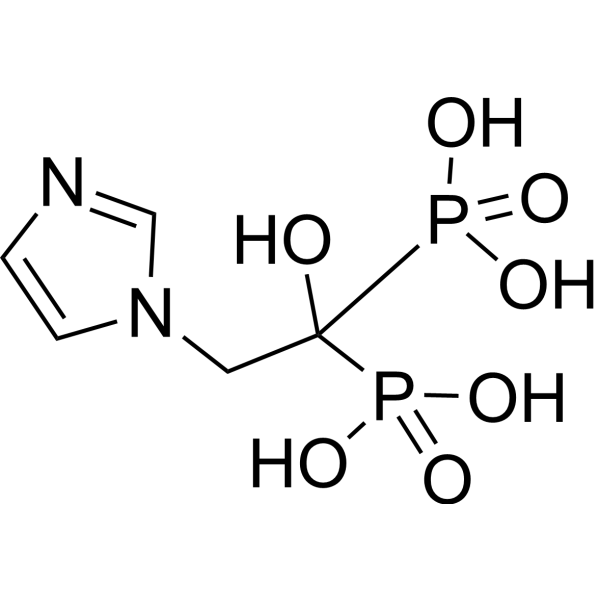
Publications Citing Use of MedChemExpress (MCE) Ro 48-8071
More- Cancer Cell. 2023 Jul 10;41(7):1276-1293.e11. [Abstract]
- Nat Commun. 2023 Jul 17;14(1):4267. [Abstract]
- Mol Cell. 2021 Jul 1;81(13):2736-2751.e8. [Abstract]
- Cell Death Dis. 2021 May 13;12(5):482. [Abstract]
- Cell Death Discov. 2025 Feb 8;11(1):55. [Abstract]
- Sci China Life Sci. 2022 Feb;65(2):341-361. [Abstract]
- Cell Rep. 2022 Dec 13;41(11):111827. [Abstract]
- Mol Med Rep. 2021 Dec;24(6):828. [Abstract]
- Neoplasia. 2025 Oct 27:70:101243. [Abstract]
- ACS Synth Biol. 2023 May 19;12(5):1408-1414. [Abstract]
- Cancer Res Commun. 2024 Sep 1;4(9):2427-2443. [Abstract]
- Immunomedicine. 2022 Dec;2(2):e1041. [Abstract]
- Oncotarget. 2017 Feb 28;8(9):14860-14875. [Abstract]
 Customer Validation & Images

-
Cell Proliferation/Viability Assay

-
Cell Proliferation/Viability Assay

-
Flow Cytometry

-
WB

-
In Vivo Efficacy Study


Biological Activity
Description
IC50 & Target
IC50: appr 6.5 nM (Oxidosqualene cyclase)[1]
Cellular Effect
|
Cell Line

|
Type | Value | Description | References |
|---|---|---|---|---|
| A549 | IC50 |
11.3 μM
Compound: 2
|
Cytotoxicity against human A549 cells after 72 hrs by MTT assay
Cytotoxicity against human A549 cells after 72 hrs by MTT assay
|
[PMID: 22533316] |
| Caco-2 | IC50 |
2.99 μM
Compound: 2
|
Cytotoxicity against human Caco2 cells after 72 hrs by MTT assay
Cytotoxicity against human Caco2 cells after 72 hrs by MTT assay
|
[PMID: 22533316] |
| HCEC | IC50 |
3.8 μM
Compound: 2
|
Cytotoxicity against human HCEC cells assessed as reduction in cell survival after 72 hrs by MTT assay
Cytotoxicity against human HCEC cells assessed as reduction in cell survival after 72 hrs by MTT assay
|
[PMID: 22533316] |
| HeLa | IC50 |
2.89 μM
Compound: 2
|
Cytotoxicity against human HeLa cells after 72 hrs by MTT assay
Cytotoxicity against human HeLa cells after 72 hrs by MTT assay
|
[PMID: 22533316] |
| KB | IC50 |
2.88 μM
Compound: 2
|
Cytotoxicity against human KB cells after 72 hrs by MTT assay
Cytotoxicity against human KB cells after 72 hrs by MTT assay
|
[PMID: 22533316] |
| LN-18 | IC50 |
6.1 μM
Compound: 2
|
Cytotoxicity against human LN18 cells assessed as reduction in cell survival after 72 hrs by MTT assay
Cytotoxicity against human LN18 cells assessed as reduction in cell survival after 72 hrs by MTT assay
|
[PMID: 22533316] |
| LN-229 | IC50 |
8.8 μM
Compound: 2
|
Cytotoxicity against human LN229 cells assessed as reduction in cell survival after 72 hrs by MTT assay
Cytotoxicity against human LN229 cells assessed as reduction in cell survival after 72 hrs by MTT assay
|
[PMID: 22533316] |
| LNCaP | IC50 |
>30 μM
Compound: 2
|
Cytotoxicity against human LNCAP cells after 72 hrs by MTT assay
Cytotoxicity against human LNCAP cells after 72 hrs by MTT assay
|
[PMID: 22533316] |
| MCF7 | IC50 |
6.77 μM
Compound: 2
|
Cytotoxicity against human MCF7 cells after 72 hrs by MTT assay
Cytotoxicity against human MCF7 cells after 72 hrs by MTT assay
|
[PMID: 22533316] |
| OVCAR | IC50 |
>30 μM
Compound: 2
|
Cytotoxicity against human OVCAR cells after 72 hrs by MTT assay
Cytotoxicity against human OVCAR cells after 72 hrs by MTT assay
|
[PMID: 22533316] |
In Vitro
In HepG2 cells, Ro 48-8071 reduces cholesterol synthesis dose dependently with an IC50 value of appr 1.5 nM[1]. Ro 48-8071 (10 μM) significantly reduces the viability of PC-3 prostate cancer cells, but not normal prostate cells. Ro 48-8071 (10-30 μM) induces apoptosis of both LNCaP and C4-2 cell lines in a dose-dependent manner. And castration-resistant PC-3 and DU145 cells also demonstrate significant levels of apoptosis following 24-hour treatment with Ro 48-8071. Ro 48-8071 (10-25 μM) reduces AR protein expression in a dose-dependent manner. Ro 48-8071 (0.1-1 μM) increases ERβ protein expression dose-dependently in both hormone-dependent LNCaP and castration-resistant PC-3 cells[2]. Using mammalian cells engineered to express human ERα or ERβ protein, together with an ER-responsive luciferase promoter, Ro 48-8071 dose-dependently inhibits 17β-estradiol (E2)-induced ERα responsive luciferase activity (IC50, appr 10 μM), under conditions that are non-toxic to the cells[3].
MedChemExpress (MCE) has not independently confirmed the accuracy of these methods. They are for reference only.
In Vivo
MedChemExpress (MCE) has not independently confirmed the accuracy of these methods. They are for reference only.


Chemical Information
-
CAS No. 189197-69-1
-
Appearance Solid
-
Molecular Weight 564.44
-
Formula C27H31BrFNO6
-
Color White to light yellow
-
SMILES
O=C(C1=CC=C(Br)C=C1)C2=CC=C(OCCCCCCN(C)CC=C)C=C2F.O=C(O)/C=C/C(O)=O
-
Shipping
Room temperature in continental US; may vary elsewhere.
-
Storage
4°C, sealed storage, away from moisture
* In solvent : -80°C, 6 months; -20°C, 1 month (sealed storage, away from moisture)


Publications (13)
-
Journal Impact Factor
-
Most Recent
-
Cancer Cell
Exhaustion-associated cholesterol deficiency dampens the cytotoxic arm of antitumor immunity. [Abstract]2023 Jul 10;41(7):1276-1293.e11. PMID: 37244259 -
Nat Commun
A polycistronic system for multiplexed and precalibrated expression of multigene pathways in fungi. [Abstract]2023 Jul 17;14(1):4267. PMID: 37460548 -
Mol Cell
The ZMYND8-regulated mevalonate pathway endows YAP-high intestinal cancer with metabolic vulnerability. [Abstract]2021 Jul 1;81(13):2736-2751.e8. PMID: 33932349 -
Cell Death Dis
Targeting epigenetic modulation of cholesterol synthesis as a therapeutic strategy for head and neck squamous cell carcinoma. [Abstract]2021 May 13;12(5):482. PMID: 33986254 -
Cell Death Discov
Inhibition of lanosterol synthase linking with MAPK/JNK signaling pathway suppresses endometrial cancer. [Abstract]2025 Feb 8;11(1):55. PMID: 39922821
Ro 48-8071 purchased from MedChemExpress. Usage Cited in: Cell Death Discov. 2025 Feb 8;11(1):55. [Abstract]
The results of CCK8 reflected the IC50 of Ro 48-8071 (0-2 μM) in EC cells and that Ro 48-8071 significantly inhibited the proliferation of EC cells.
Ro 48-8071 purchased from MedChemExpress. Usage Cited in: Cell Death Discov. 2025 Feb 8;11(1):55. [Abstract]
Clone formation and Transwell experiments showed that the activity of EC cells was significantly inhibited by Ro 48-8071 (0-1 μM).
Ro 48-8071 purchased from MedChemExpress. Usage Cited in: Cell Death Discov. 2025 Feb 8;11(1):55. [Abstract]
Flow cytometry analysis found that Ro 48-8071 (0-1 μM) can promote the apoptosis of EC cells.
Ro 48-8071 purchased from MedChemExpress. Usage Cited in: Cell Death Discov. 2025 Feb 8;11(1):55. [Abstract]
Ro 48-8071 (0-1 μM) reduces the expression of phosphorylated JNK protein.
Ro 48-8071 purchased from MedChemExpress. Usage Cited in: Cell Death Discov. 2025 Feb 8;11(1):55. [Abstract]
Images of isolated tumors from the subcutaneous tumor nude mice model established using Ishikawa cells treated with Ro 48-8071 or SP600125(n = 6 mice per group).
-
Sci China Life Sci
2022 Feb;65(2):341-361. PMID: 34047913 -
Cell Rep
EGFR-phosphorylated GDH1 harmonizes with RSK2 to drive CREB activation and tumor metastasis in EGFR-activated lung cancer. [Abstract]2022 Dec 13;41(11):111827. PMID: 36516759 -
Mol Med Rep
Cholesterol biosynthesis inhibitor RO 48‑8071 inhibits pancreatic ductal adenocarcinoma cell viability by deactivating the JNK and ERK/MAPK signaling pathway. [Abstract]2021 Dec;24(6):828. PMID: 34590153 -
Neoplasia
Cholesterol biosynthesis as a drug-induced vulnerability in diffuse large B cell lymphoma insensitive to EZH2 inhibition. [Abstract]2025 Oct 27:70:101243. PMID: 41151153 -
ACS Synth Biol
2023 May 19;12(5):1408-1414. PMID: 36853024 -
Cancer Res Commun
2024 Sep 1;4(9):2427-2443. PMID: 39028932 -
Immunomedicine
Metabolic inhibitor screening identifies dihydrofolate reductase as an inducer of the tumor immune escape mediator CD24. [Abstract]2022 Dec;2(2):e1041. PMID: 36816458 -
Oncotarget
Disabled cell density sensing leads to dysregulated cholesterol synthesis in glioblastoma. [Abstract]2017 Feb 28;8(9):14860-14875. PMID: 28118603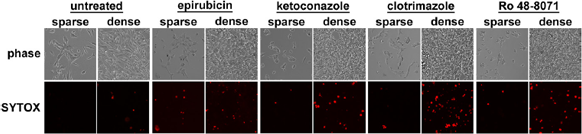
Ro 48-8071 purchased from MedChemExpress. Usage Cited in: Oncotarget. 2017 Feb 28;8(9):14860-14875. [Abstract]
Cell death in TS600 glioma cells. Dead cells are visualized with SYTOX Orange 24 hours after treatment with DMSO (mock), 1 μM epirubicin, 10 μM clotrimazole, 5 μM ketoconazole, or 1 μM Ro 48-8071.


Solvent & Solubility
In Vitro:
H2O : 100 mg/mL (177.17 mM; Need ultrasonic)
DMSO : ≥ 55 mg/mL (97.44 mM; Hygroscopic DMSO has a significant impact on the solubility of product, please use newly opened DMSO)
* "≥" means soluble, but saturation unknown.
Please refer to the solubility information to select the appropriate solvent. Once prepared, please aliquot and store the solution to prevent product inactivation from repeated freeze-thaw cycles.
Storage method and period of stock solution: -80°C, 6 months; -20°C, 1 month (sealed storage, away from moisture). When stored at -80°C, please use it within 6 months. When stored at -20°C, please use it within 1 month.
* Note: If you choose water as the stock solution, please dilute it to the working solution, then filter and sterilize it with a 0.22 μm filter before use.
Please refer to the solubility information to select the appropriate solvent. Once prepared, please aliquot and store the solution to prevent product inactivation from repeated freeze-thaw cycles.
Storage method and period of stock solution: -80°C, 6 months; -20°C, 1 month (sealed storage, away from moisture). When stored at -80°C, please use it within 6 months. When stored at -20°C, please use it within 1 month.
* Note: If you choose water as the stock solution, please dilute it to the working solution, then filter and sterilize it with a 0.22 μm filter before use.
Concentration (start) × Volume (start) = Concentration (final) × Volume (final)
In Vivo:
Select the appropriate dissolution method based on your experimental animal and administration route.
- For the following dissolution methods, please ensure to first prepare a clear stock solution using an In Vitro approach and then sequentially add co-solvents:
- To ensure reliable experimental results, the clarified stock solution can be appropriately stored based on storage conditions. As for the working solution for In Vivo experiments, it is recommended to prepare freshly and use it on the same day.
- The percentages shown for the solvents indicate their volumetric ratio in the final prepared solution. If precipitation or phase separation occurs during preparation, heat and/or sonication can be used to aid dissolution.
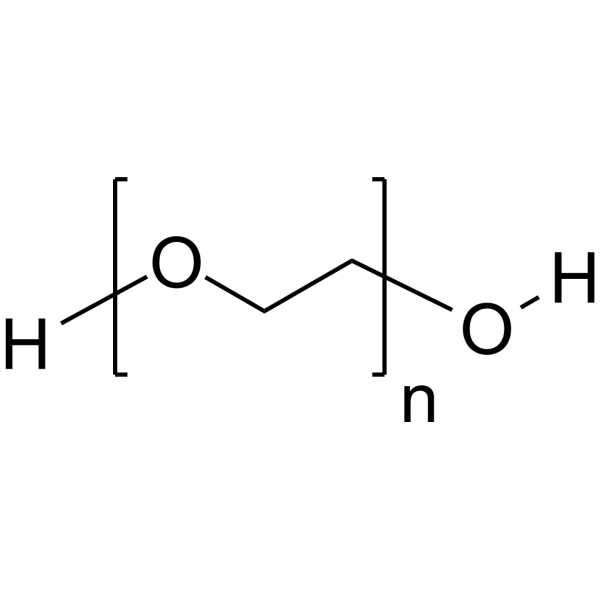
Add each solvent one by one: 10% DMSO 40% PEG300 5% Tween-80 45% Saline
Solubility: ≥ 2.5 mg/mL (4.43 mM); Clear solution
This protocol yields a clear solution of ≥ 2.5 mg/mL (saturation unknown).
Taking 1 mL working solution as an example, add 100 μL DMSO stock solution (25.0 mg/mL) to 400 μL PEG300, and mix evenly; then add 50 μL Tween-80 and mix evenly; then add 450 μL Saline to adjust the volume to 1 mL.
Preparation of Saline: Dissolve 0.9 g sodium chloride in ddH₂O and dilute to 100 mL to obtain a clear Saline solution.
Add each solvent one by one: 10% DMSO 90% (20% SBE-β-CD in Saline)
Solubility: ≥ 2.5 mg/mL (4.43 mM); Clear solution
This protocol yields a clear solution of ≥ 2.5 mg/mL (saturation unknown).
Taking 1 mL working solution as an example, add 100 μL DMSO stock solution (25.0 mg/mL) to 900 μL 20% SBE-β-CD in Saline, and mix evenly.
Preparation of 20% SBE-β-CD in Saline (4°C, storage for one week): 2 g SBE-β-CD powder is dissolved in 10 mL Saline, completely dissolve until clear.
For the following dissolution methods, please prepare the working solution directly:
It is recommended to prepare fresh solutions and use them promptly within a short period of time.
The percentages shown for the solvents indicate their volumetric ratio in the final prepared solution. If precipitation or phase separation occurs during preparation, heat and/or sonication can be used to aid dissolution.
Add each solvent one by one: PBS
Solubility: 12.5 mg/mL (22.15 mM); Clear solution; Need ultrasonic and warming and heat to 60°C
In Vivo Dissolution Calculator
Please enter the basic information of animal experiments:
-
-
-
-
Recommended: Prepare an additional quantity of animals to account for potential losses during experiments.
Working solution concentration: 0.22 mg/mL
This product has good water solubility, please refer to the measured solubility data in water/PBS/Saline for details.

Protocol
Animal Administration[2]
Six-week-old male athymic nude mice (nu/nu) weighing 20-22 g are used in the assay. Castration-resistant PC-3 cells (5×10⁶ in 0.15 mL solution) are mixed with matrigel and RPMI-1640 medium (1/1, v/v) and injected subcutaneously into both flanks of each mouse (n=6 animals/group) and tumors allowed to develop. The tumors are measured twice per week with a digital caliper. Tumor volumes are calculated by the formula (L × W × H) × π/6. Drug treatment is started when tumor volumes reach appr 100 mm3. Mice are given daily tail vein injections of 0.1 mL solution of either 5 or 20 mg/kg Ro 48-8071 for 5 days. This is followed by an injection every other day for six additional treatments and then a final injection 2 hours prior to sacrifice. Control mice receive the same volume of phosphate-buffered saline on the same schedule. The animals are weighed and tumor volumes are measured twice weekly throughout the drug treatment period.
MedChemExpress (MCE) has not independently confirmed the accuracy of these methods. They are for reference only.


Purity & Documentation
-
Data Sheet (278 KB)
-
SDS (394 KB)
- English - EN (394 KB)
- Français - FR (394 KB)
- Deutsch - DE (394 KB)
- Norwegian - NO (394 KB)
- Español - ES (394 KB)
- Swedish - SV (394 KB)
- Italian - IT (394 KB)
- Korean - KR (394 KB)
- Portuguese - PT (394 KB)
-
Handling Instructions (2659 KB)
References
[1]. Morand OH, et al. Ro 48-8.071, a new 2,3-oxidosqualene:lanosterol cyclase inhibitor lowering plasma cholesterol in hamsters, squirrel monkeys, and minipigs: comparison to simvastatin. J Lipid Res. 1997 Feb;38(2):373-90. [Content Brief]
[2]. Liang Y, et al. Cholesterol biosynthesis inhibitor RO 48-8071 suppresses growth of hormone-dependent and castration-resistant prostate cancer cells. Onco Targets Ther. 2016 May 30;9:3223-32 [Content Brief]
[3]. Liang Y, et al. Cholesterol biosynthesis inhibitors as potent novel anti-cancer agents: suppression of hormone-dependent breast cancer by the oxidosqualene cyclase inhibitor RO 48-8071. Breast Cancer Res Treat. 2014 Jul;146(1):51-62. [Content Brief]
[4]. Chuang JC, et al. Sustained and selective suppression of intestinal cholesterol synthesis by Ro 48-8071, an inhibitor of 2,3-oxidosqualene:lanosterol cyclase, in the BALB/c mouse. Biochem Pharmacol. 2014 Apr 1;88(3):351-63. [Content Brief]


Complete Stock Solution Preparation Table
Please refer to the solubility information to select the appropriate solvent. Once prepared, please aliquot and store the solution to prevent product inactivation from repeated freeze-thaw cycles.
Storage method and period of stock solution: -80°C, 6 months; -20°C, 1 month (sealed storage, away from moisture). When stored at -80°C, please use it within 6 months. When stored at -20°C, please use it within 1 month.
| Optional Solvent | Concentration Solvent Mass | 1 mg | 5 mg | 10 mg | 25 mg |
|---|---|---|---|---|---|
| DMSO / H2O | 1 mM | 1.7717 mL | 8.8583 mL | 17.7167 mL | 44.2917 mL |
| 5 mM | 0.3543 mL | 1.7717 mL | 3.5433 mL | 8.8583 mL | |
| 10 mM | 0.1772 mL | 0.8858 mL | 1.7717 mL | 4.4292 mL | |
| 15 mM | 0.1181 mL | 0.5906 mL | 1.1811 mL | 2.9528 mL | |
| 20 mM | 0.0886 mL | 0.4429 mL | 0.8858 mL | 2.2146 mL | |
| 25 mM | 0.0709 mL | 0.3543 mL | 0.7087 mL | 1.7717 mL | |
| 30 mM | 0.0591 mL | 0.2953 mL | 0.5906 mL | 1.4764 mL | |
| 40 mM | 0.0443 mL | 0.2215 mL | 0.4429 mL | 1.1073 mL | |
| 50 mM | 0.0354 mL | 0.1772 mL | 0.3543 mL | 0.8858 mL | |
| 60 mM | 0.0295 mL | 0.1476 mL | 0.2953 mL | 0.7382 mL | |
| 80 mM | 0.0221 mL | 0.1107 mL | 0.2215 mL | 0.5536 mL | |
| H2O | 100 mM | 0.0177 mL | 0.0886 mL | 0.1772 mL | 0.4429 mL |
* Note: If you choose water as the stock solution, please dilute it to the working solution, then filter and sterilize it with a 0.22 μm filter before use.


Ro 48-8071 Related Classifications
HY-18630A Related Classifications
 Powered by Bioz