



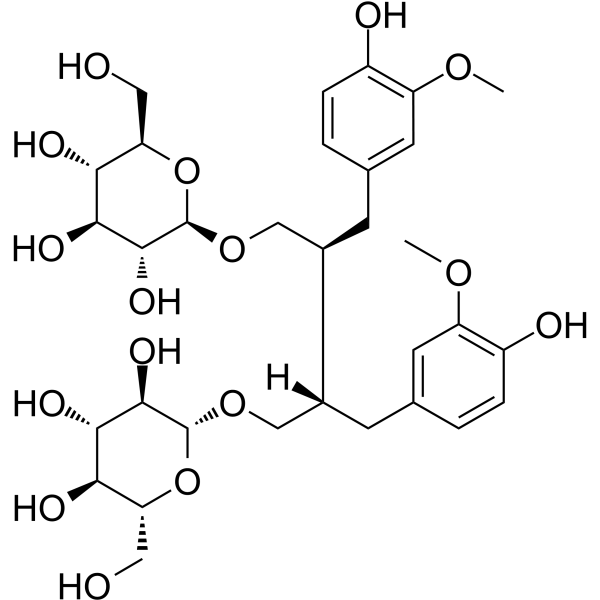
Secoisolariciresinol diglucoside
Based on 7 publication(s) in Google Scholar
Secoisolariciresinol diglucoside ((S,S)-SDG), the main lignan in wholegrain flaxseed, is known for its beneficial effects including anti-inflammatory, antioxidant, anti-mutagenic, anti-microbial, anti-obesity, hypolipidemic, and neuroprotective effects.
For research use only. We do not sell to patients.
- Purity : 99.58%
- CAS No.: 257930-74-8
- Formula: C32H46O16
- Molecular Weight:686.70
-
Storage:Powder -20°C, 3 years , 4°C, 2 years ; In solvent -80°C, 2 years , -20°C, 1 year

To place orders, for customer services and technical support, please contact: MedChemExpress USA
Tel: 609-228-6898 E-mail: [email protected] [email protected]


-
 Biological Activity
-
Chemical Information
-
Solvent & Solubility
- Protocols
- Purity & Documentation
- References
-
 Help & FAQs


-
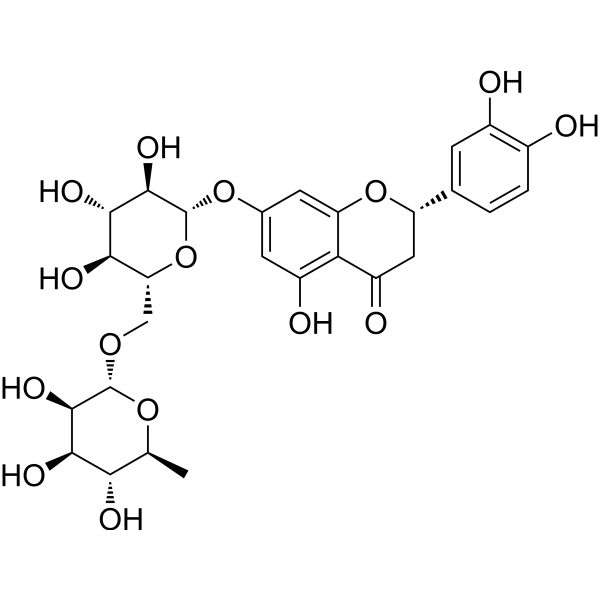
HY-N0636
EriocitrinAntioxidant Agent -
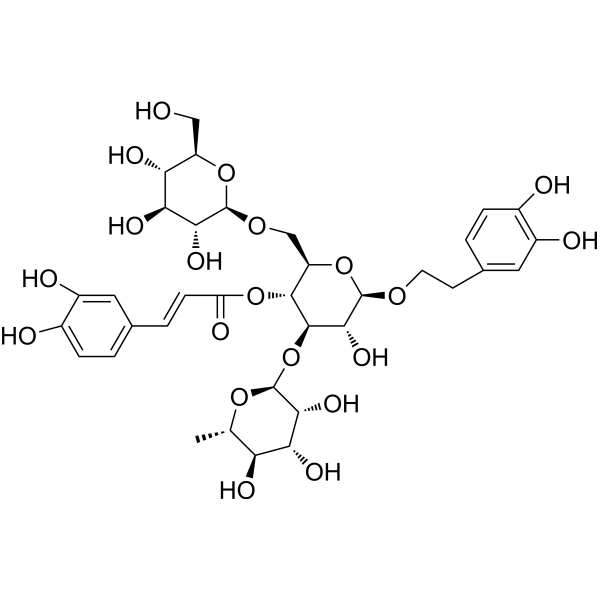
HY-N0020
EchinacosideWnt/β-catenin Signaling Inhibitor -
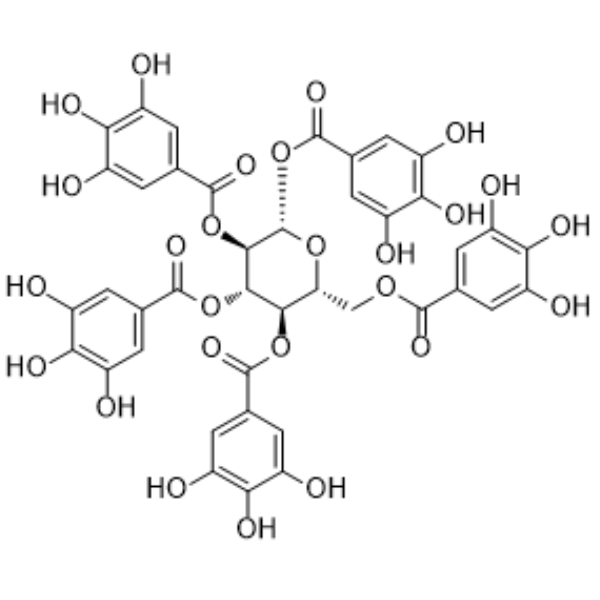
HY-N0527
PentagalloylglucoseAntioxidant -
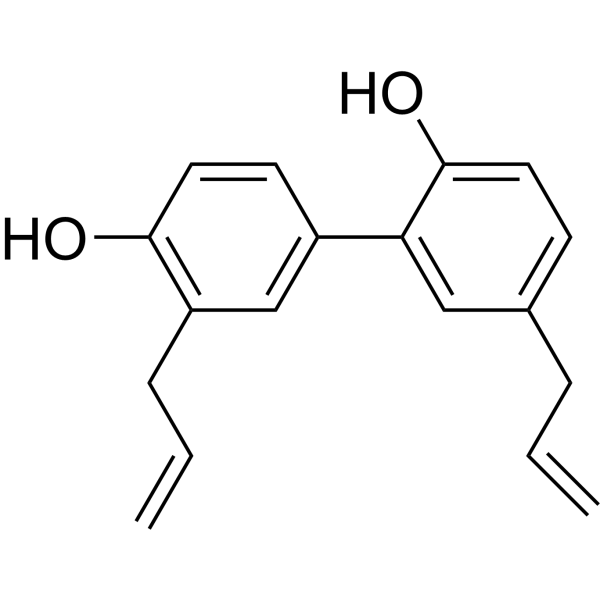
HY-N0003
HonokiolAutophagy Inducer -
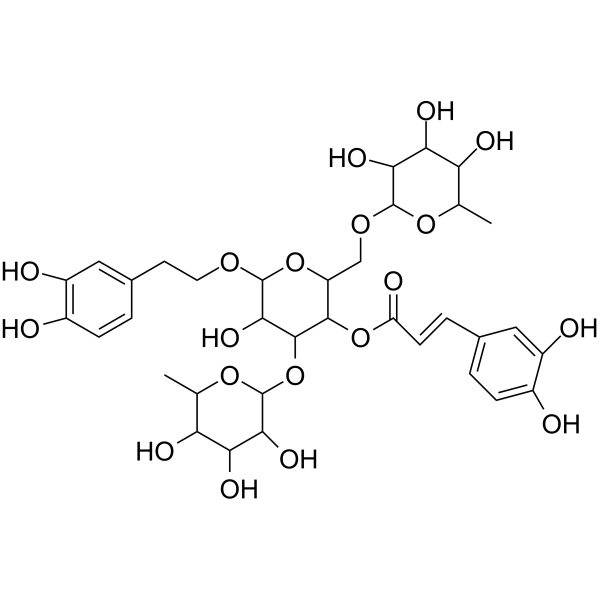
HY-N0033
PoliumosideAldose Reductase Inhibitor -
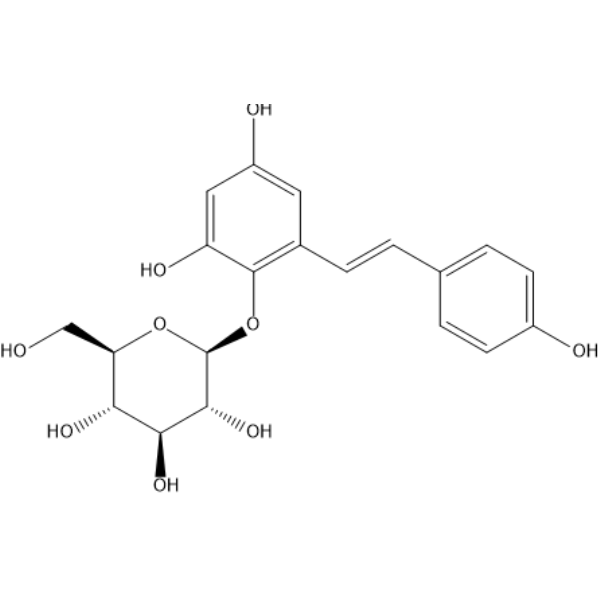
HY-N0652
2,3,5,4'-Tetrahydroxystilbene 2-O-β-D-glucosideNatural Product -
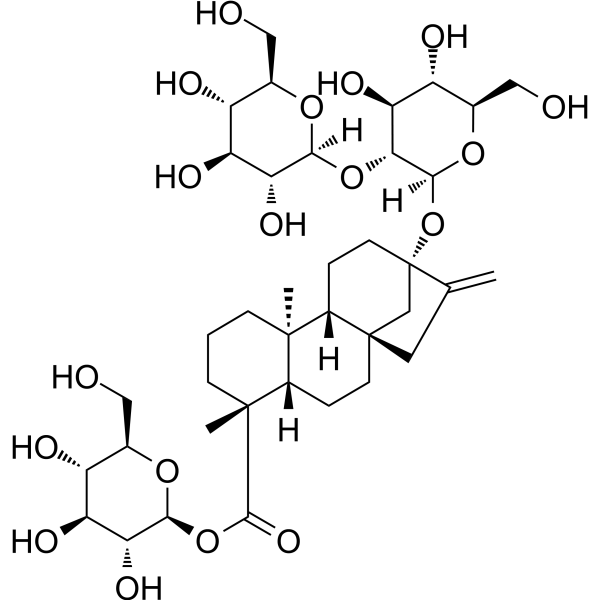
HY-N0669
Steviosidesweetener -
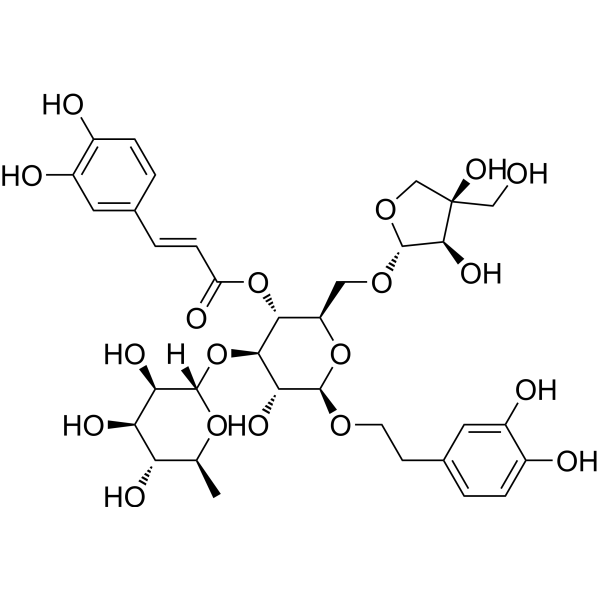
HY-N0029
Forsythoside BTNF Inhibitor -
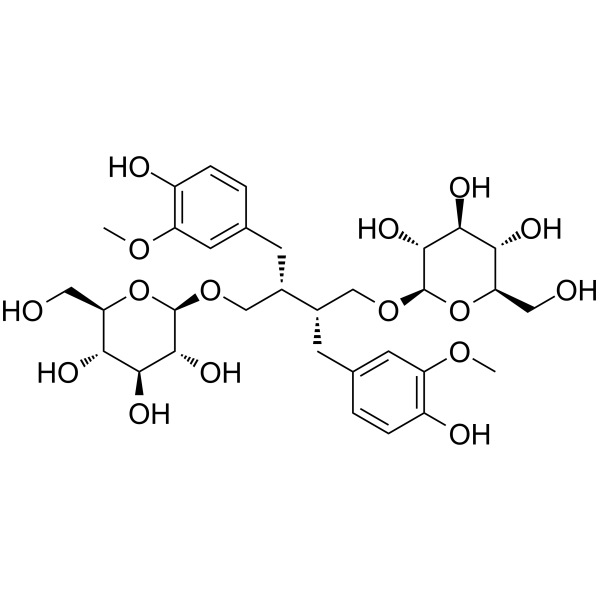
HY-N6937
(R,R)-Secoisolariciresinol diglucosideFree Rradical Scavenger -
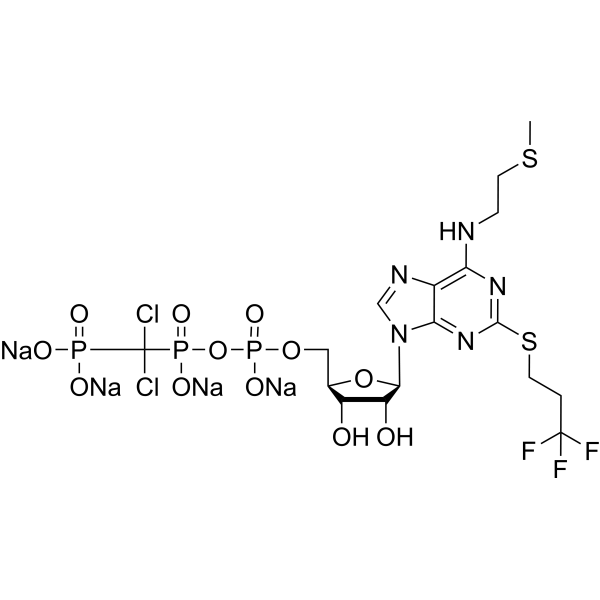
HY-19638A
Cangrelor tetrasodiumP2Y12 Antagonist -
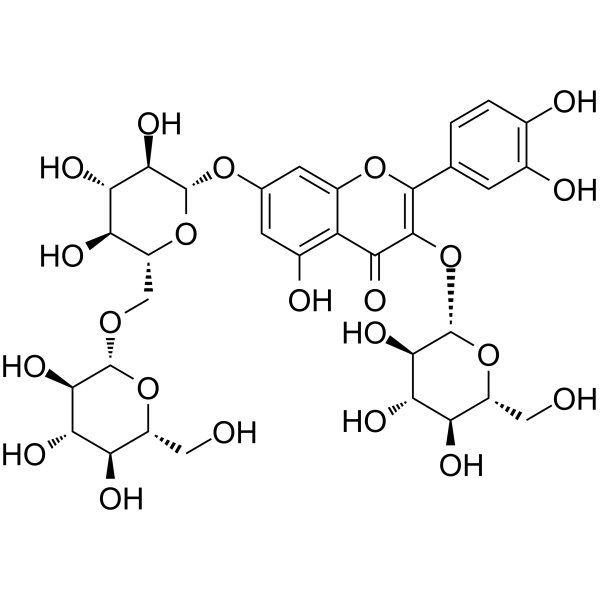
HY-N1968
Quercetin-3-O-β-D-glucose-7-O-β-D-gentiobiosidenNatural Product
Publications Citing Use of MedChemExpress (MCE) Secoisolariciresinol diglucoside
More- Adv Sci (Weinh). 2025 Dec;12(46):e05291. [Abstract]
- Int Immunopharmacol. 2020 Jan:78:105931. [Abstract]
- Sci Rep. 2025 Jan 9;15(1):1493. [Abstract]
- Mediators Inflamm. 2020 Jun 24:2020:3621261. [Abstract]
- Drug Dev Res. 2026 May;87(3):e70285. [Abstract]
- Drug Dev Res. 2022 Aug;83(5):1152-1166. [Abstract]
- Biomed Pharmacother. 2023 Aug:164:114964. [Abstract]
 Customer Validation & Images

-
In Vivo Efficacy Study

-
Histological Imaging/Staining

-
Flow Cytometry

-
ELISA

-
RT-PCR


Biological Activity
Description
In Vitro
Secoisolariciresinol diglucoside (1-500 μM) possesses strong reducing power and high free radical scavenging activity for hydroxyl, peroxyl and DPPH free radicals[1].
Secoisolariciresinol diglucoside (1-50 μM; 24 h) attenuates human monocyte adhesion to and migration across human brain endothelial monolayers[2].
MedChemExpress (MCE) has not independently confirmed the accuracy of these methods. They are for reference only. Further protocols information, click here.
In Vivo
MedChemExpress (MCE) has not independently confirmed the accuracy of these methods. They are for reference only.
-
Animal Model:Hand feeding mice (10 weeks old, male) are injected with TNFα[2]
-
Dosage:4 mg/mouse
-
Administration:P.o. 2 h before i.c. administration of TNFα
-
Result:Attenuated adhesion of leukocytes to the endothelium by 50% and attenuated migration of leukocytes across the BBB by 64%.
Clinical Trial
| NCT Number | Sponsor | Condition | Start Date |
Phase

|
|---|---|---|---|---|
| NCT01329991 | Plexxikon| | 2011-05 | PHASE1 |


Chemical Information
-
CAS No. 257930-74-8
-
Appearance Solid
-
Molecular Weight 686.70
-
Formula C32H46O16
-
Color White to off-white
-
SMILES
COC(C=C1C[C@H](CO[C@@H]2O[C@@H]([C@H]([C@@H]([C@H]2O)O)O)CO)[C@@H](CO[C@@H]3O[C@@H]([C@H]([C@@H]([C@H]3O)O)O)CO)CC4=CC(OC)=C(C=C4)O)=C(C=C1)O
-
Synonyms
(S,S)-SDG; (S,S)-LGM2605
-
Structure Classification
-
Initial Source
-
Shipping
Room temperature in continental US; may vary elsewhere.
-
Storage
Powder -20°C 3 years 4°C 2 years In solvent -80°C 2 years -20°C 1 year


Publications (7)
-
Journal Impact Factor
-
Most Recent
-
Adv Sci (Weinh)
ZFPL1 Promotes Colorectal Cancer Progression by Stabilizing ASS1 to Drive the Urea Cycle and M2 Macrophage-Mediated Metastatic Colonization. [Abstract]2025 Dec;12(46):e05291. PMID: 41216870 -
Int Immunopharmacol
Secoisolariciresinol diglucoside suppresses Dextran sulfate sodium salt-induced colitis through inhibiting NLRP1 inflammasome. [Abstract]2020 Jan:78:105931. PMID: 31812068
Secoisolariciresinol diglucoside purchased from MedChemExpress. Usage Cited in: Int Immunopharmacol. 2020 Jan:78:105931. [Abstract]
The length of colons in mice were measured treated with Secoisolariciresinol diglucoside (SDG) (200 mg/kg).
Secoisolariciresinol diglucoside purchased from MedChemExpress. Usage Cited in: Int Immunopharmacol. 2020 Jan:78:105931. [Abstract]
Analyzing the pathological changes in colitis tissues using H&E staining treated with Secoisolariciresinol diglucoside (SDG) (200 mg/kg).
Secoisolariciresinol diglucoside purchased from MedChemExpress. Usage Cited in: Int Immunopharmacol. 2020 Jan:78:105931. [Abstract]
Analysing the macrophage infiltration in DSS-induced colitis treated with Secoisolariciresinol diglucoside (SDG) (200 mg/kg).
Secoisolariciresinol diglucoside purchased from MedChemExpress. Usage Cited in: Int Immunopharmacol. 2020 Jan:78:105931. [Abstract]
Analysing of the secretion of pro-inflammatory cytokines of IL-1β, IL-18 and TNF-α using ELISA in colonic tissues treated with Secoisolariciresinol diglucoside (SDG) (200 mg/kg).
Secoisolariciresinol diglucoside purchased from MedChemExpress. Usage Cited in: Int Immunopharmacol. 2020 Jan:78:105931. [Abstract]
mRNA expression level of NLRP1, ASC, and caspase-1 treated with Secoisolariciresinol diglucoside (SDG) (200 mg/kg).

Secoisolariciresinol diglucoside purchased from MedChemExpress. Usage Cited in: Int Immunopharmacol. 2020 Jan:78:105931. [Abstract]
Viability of RAW264.7 mouse macrophages treated with Secoisolariciresinol diglucoside (SDG) in graded concentrations (0, 5, 10, 25, 50, 75, 100 µM) was measured by MTT assay.

Secoisolariciresinol diglucoside purchased from MedChemExpress. Usage Cited in: Int Immunopharmacol. 2020 Jan:78:105931. [Abstract]
Representative images of immunofluorescence staining of ASC, and caspase-1 p20 in RAW264.7 mouse macrophages treated with Secoisolariciresinol diglucoside (SDG) (200 mg/kg).
-
Sci Rep
Network pharmacology uncovers that secoisolariciresinol diglucoside ameliorate premature ovarian insufficiency via PI3K/Akt pathway. [Abstract]2025 Jan 9;15(1):1493. PMID: 39788972 -
Mediators Inflamm
Secoisolariciresinol Diglucoside Exerts Anti-Inflammatory and Antiapoptotic Effects through Inhibiting the Akt/I κ B/NF- κ B Pathway on Human Umbilical Vein Endothelial Cells. [Abstract]2020 Jun 24:2020:3621261. PMID: 32684834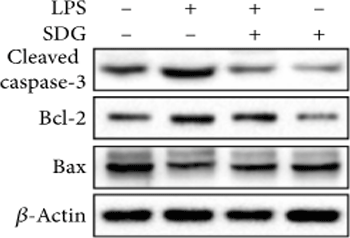
Secoisolariciresinol diglucoside purchased from MedChemExpress. Usage Cited in: Mediators Inflamm. 2020 Jun 24:2020:3621261. [Abstract]
Representative immunoblots of cleaved caspase-3, Bcl-2, and Bax proteins in different groups.
-
Drug Dev Res
Secoisolariciresinol Diglucoside Alleviates LPS-Induced Acute Lung Injury by Inhibiting the NF-κB/NLRP3 Signaling Pathway. [Abstract]2026 May;87(3):e70285. PMID: 42041133 -
Drug Dev Res
Secoisolariciresinol diglucoside induces pyroptosis by activating caspase-1 to cleave GSDMD in colorectal cancer cells. [Abstract]2022 Aug;83(5):1152-1166. PMID: 35472101 -
Biomed Pharmacother
Secoisolariciresinol diglucoside Ameliorates Osteoarthritis via Nuclear factor-erythroid 2-related factor-2/ nuclear factor kappa B Pathway: In vitro and in vivo experiments. [Abstract]2023 Aug:164:114964. PMID: 37269815


Solvent & Solubility
In Vitro:
DMSO : 200 mg/mL (291.25 mM; Need ultrasonic; Hygroscopic DMSO has a significant impact on the solubility of product, please use newly opened DMSO)
H2O : ≥ 100 mg/mL (145.62 mM)
* "≥" means soluble, but saturation unknown.
Please refer to the solubility information to select the appropriate solvent. Once prepared, please aliquot and store the solution to prevent product inactivation from repeated freeze-thaw cycles.
Storage method and period of stock solution: -80°C, 2 years; -20°C, 1 year. When stored at -80°C, please use it within 2 years. When stored at -20°C, please use it within 1 year.
* Note: If you choose water as the stock solution, please dilute it to the working solution, then filter and sterilize it with a 0.22 μm filter before use.
Please refer to the solubility information to select the appropriate solvent. Once prepared, please aliquot and store the solution to prevent product inactivation from repeated freeze-thaw cycles.
Storage method and period of stock solution: -80°C, 2 years; -20°C, 1 year. When stored at -80°C, please use it within 2 years. When stored at -20°C, please use it within 1 year.
* Note: If you choose water as the stock solution, please dilute it to the working solution, then filter and sterilize it with a 0.22 μm filter before use.
Concentration (start) × Volume (start) = Concentration (final) × Volume (final)
In Vivo:
For the following dissolution methods, please prepare the working solution directly:
It is recommended to prepare fresh solutions and use them promptly within a short period of time.
The percentages shown for the solvents indicate their volumetric ratio in the final prepared solution. If precipitation or phase separation occurs during preparation, heat and/or sonication can be used to aid dissolution.
Add each solvent one by one: PBS
Solubility: 50 mg/mL (72.81 mM); Clear solution; Need ultrasonic

Protocols
-
Research Protocol for Inflammation-related Diseases
The NLRP3 inflammasome is a cytosolic innate immune signaling platform that integrates priming signals and danger-signal activation to promote caspase-1 activation, maturation of IL-1β and IL-18, and gasdermin D-mediated pyroptotic cell death. The core experimental logic is to determine whether inflammatory disease phenotypes are driven by increased NLRP3 expression, ASC-containing inflammasome assembly, caspase-1 cleavage, GSDMD cleavage, and extracellular release of IL-1β/IL-18 rather than by nonspecific cell injury alone. The pathway is strongly linked to inflammation-related disease phenotypes because monosodium urate crystals activate NALP3/NLRP3 inflammasome signaling in gout-like crystal inflammation, cholesterol crystals activate NLRP3 inflammasomes in atherogenesis models, and DSS-induced intestinal inflammation has been reported to involve NLRP3 inflammasome activity. However, experimental colitis studies also show context-dependent protective effects of NLRP3 inflammasome co
-
Research Protocol for Metabolic Diseases
AMP-activated protein kinase, AMPK, is a conserved cellular energy sensor that responds to reduced cellular energy status and coordinates metabolism by increasing ATP-generating catabolic pathways while suppressing ATP-consuming anabolic processes. In metabolic disease research, the AMPK pathway is experimentally relevant because it regulates hepatic lipid synthesis, fatty acid oxidation, glucose production, skeletal-muscle glucose disposal, mTORC1-linked biosynthesis, autophagy, mitochondrial homeostasis, and whole-body energy balance. The central pathway logic is that energy stress, metformin, exercise-like stimulation, or direct AMPK activators increase AMPKα Thr172 phosphorylation and downstream substrate phosphorylation, including ACC and RAPTOR. Phosphorylation of ACC suppresses lipogenesis and supports fatty acid oxidation, whereas phosphorylation of RAPTOR suppresses mTORC1 signaling and links cellular energy status to growth and protein synthesis control. The pathway is linked
-
Genotoxicity/Mutagenicity Study
The bacterial reverse mutation assay detects point mutations that restore amino-acid prototrophy in auxotrophic Salmonella typhimurium or Escherichia coli tester strains; after exposure to a test article, mutagenic activity is read out as an increased number of revertant colonies on minimal agar compared with the vehicle control. The assay uses tester strains with different mutation targets so that base-substitution and frameshift mutagens can be detected, and testing is performed with and without exogenous mammalian metabolic activation because some chemicals require biotransformation to become mutagenic.


Purity & Documentation
-
Data Sheet (278 KB)
-
SDS (254 KB)
- English - EN (254 KB)
- Français - FR (254 KB)
- Deutsch - DE (254 KB)
- Norwegian - NO (254 KB)
- Español - ES (254 KB)
- Swedish - SV (254 KB)
- Italian - IT (254 KB)
- Korean - KR (254 KB)
- Portuguese - PT (254 KB)
-
Handling Instructions (2659 KB)
References
[1]. Mishra OP, et al. Synthesis and antioxidant evaluation of (S,S)- and (R,R)-secoisolariciresinol diglucosides (SDGs). Bioorg Med Chem Lett. 2013 Oct 1;23(19):5325-8. [Content Brief]
[2]. Rom S, et, al. Secoisolariciresinol diglucoside is a blood-brain barrier protective and anti-inflammatory agent: implications for neuroinflammation. J Neuroinflammation. 2018 Jan 27;15(1):25. [Content Brief]


Complete Stock Solution Preparation Table
Please refer to the solubility information to select the appropriate solvent. Once prepared, please aliquot and store the solution to prevent product inactivation from repeated freeze-thaw cycles.
Storage method and period of stock solution: -80°C, 2 years; -20°C, 1 year. When stored at -80°C, please use it within 2 years. When stored at -20°C, please use it within 1 year.
| Optional Solvent | Concentration Solvent Mass | 1 mg | 5 mg | 10 mg | 25 mg |
|---|---|---|---|---|---|
| H2O / DMSO | 1 mM | 1.4562 mL | 7.2812 mL | 14.5624 mL | 36.4060 mL |
| 5 mM | 0.2912 mL | 1.4562 mL | 2.9125 mL | 7.2812 mL | |
| 10 mM | 0.1456 mL | 0.7281 mL | 1.4562 mL | 3.6406 mL | |
| 15 mM | 0.0971 mL | 0.4854 mL | 0.9708 mL | 2.4271 mL | |
| 20 mM | 0.0728 mL | 0.3641 mL | 0.7281 mL | 1.8203 mL | |
| 25 mM | 0.0582 mL | 0.2912 mL | 0.5825 mL | 1.4562 mL | |
| 30 mM | 0.0485 mL | 0.2427 mL | 0.4854 mL | 1.2135 mL | |
| 40 mM | 0.0364 mL | 0.1820 mL | 0.3641 mL | 0.9101 mL | |
| 50 mM | 0.0291 mL | 0.1456 mL | 0.2912 mL | 0.7281 mL | |
| 60 mM | 0.0243 mL | 0.1214 mL | 0.2427 mL | 0.6068 mL | |
| 80 mM | 0.0182 mL | 0.0910 mL | 0.1820 mL | 0.4551 mL | |
| 100 mM | 0.0146 mL | 0.0728 mL | 0.1456 mL | 0.3641 mL |
* Note: If you choose water as the stock solution, please dilute it to the working solution, then filter and sterilize it with a 0.22 μm filter before use.


Secoisolariciresinol diglucoside Related Classifications
HY-105008 Related Classifications
 Powered by Bioz