



Akt1 Activator
-
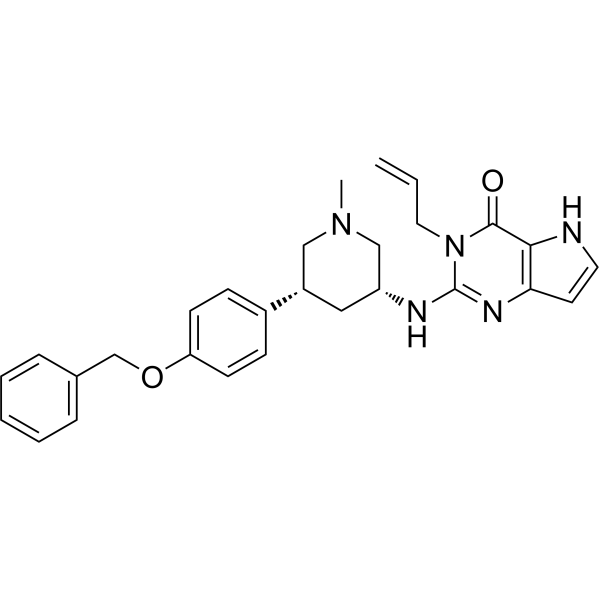
SETDB1-TTD-IN-1
 0 Images
SETDB1-TTD-IN-1 is a SETDB1 methyltransferase activator and SETDB1-TTD competitive inhibitor (Kd of 88 nM), and selectivity for SETDB1-TTD over other tudor and bromodomain proteins. SETDB1-TTD-IN-1 stimulates methyltransferase activity via increased catalytic activity, promotes Akt1 Lys64 methylation, Akt1 Thr308 phosphorylation and activation. SETDB1-TTD-IN-1 prevents SETDB1-TTD-histone H3 peptide association, induces global gene expression changes, exhibits cellular target engagement, and acts as a tool compound for SETDB1-TTD function exploration. SETDB1-TTD-IN-1 can be used for the research of breast cancer.
-
Avenanthramide B
 0 ImagesCat. No.: HY-W795967CAS No.: 108605-69-2
Avenanthramide B is an oat phytoalexin, a porcine liver esterase inhibitor, and an amyloglucosidase inhibitor, with an IC50 of 4.4 mg/mL against Aspergillus niger amyloglucosidase. Avenanthramide B increases the activation status of Akt1 and the expression level of eNOS, elevates the levels of NO and cGMP, and reduces the level of superoxide anions. Avenanthramide B acts on amyloglucosidase via a competitive mixed mechanism, functions as a fluorescence quencher, and exerts bidirectional regulatory effects on protein thermal stability. Avenanthramide B serves as a substrate for oat leaf peroxidase. Avenanthramide B can be used in research related to type 2 diabetes.
-
Perfluorotetradecanoic acid
 0 ImagesSynonyms: PFTeDA
Perfluorotetradecanoic acid (PFTeDA) is an orally active perfluoroalkyl substance. Perfluorotetradecanoic acid directly binds to the ligand-binding domain of purified hPPARγ, with a Kd value of 157.8 μM. Perfluorotetradecanoic acid significantly reduces the activity of the SIRT1/PGC1α and AMPK signaling pathways while stimulating the activity of the AKT1/mTOR signaling pathway. Perfluorotetradecanoic acid significantly upregulates the expression of corticosterone biosynthesis genes. Perfluorotetradecanoic acid increases ROS levels and promotes Apoptosis. Perfluorotetradecanoic acid impairs Leydig cell function and male reproductive endocrine function in adult male rats.



