



Aryl Hydrocarbon Receptor Inhibitor
- 1
-
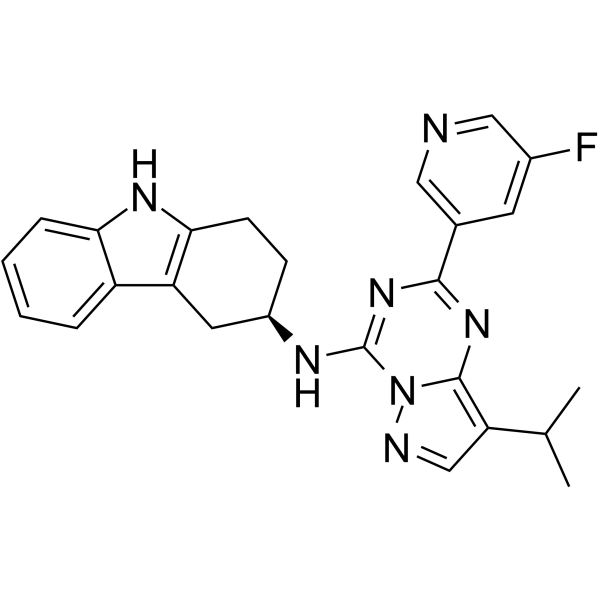
IK-175
 0 ImagesSynonyms: AHR antagonist 5 free base
IK-175 is a selective and orally active aryl hydrocarbon receptor (AHR) inhibitor. IK-175 effectively blocks AHR from translocating from the cytoplasm to the nucleus. IK-175 is highly selective for AHR over other receptors, transporters, and kinases.
-
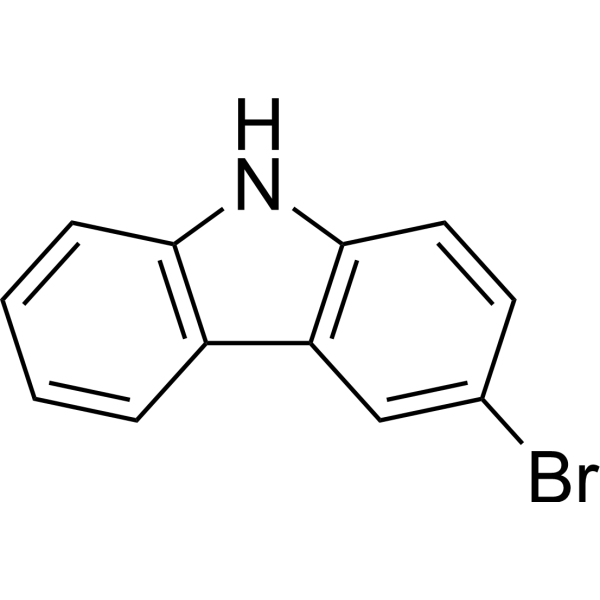
3-Bromocarbazole
 0 Images
3-Bromocarbazole is an inhibitor of the aryl hydrocarbon receptor (AHR). 3-Bromocarbazole induces the mRNA expression of CYP1A1 and CYP1B1, with EC50 values of 2500 nM and 1100 nM, respectively. 3-Bromocarbazole inhibits motor neuron axon length by downregulating the mRNA transcription levels of α1-tubulin, Gap43, Syn2a and shha in zebrafish larvae. 3-Bromocarbazole reduces central nervous system neurogenesis by downregulating the mRNA transcription levels of elavl3, nrd, mbp and gfap in zebrafish larvae. 3-Bromocarbazole induces developmental neurotoxicity and decreases body length in zebrafish larvae or embryos; at high concentrations, it also reduces hatching rate, and increases mortality and malformation rate. 3-Bromocarbazole can be used in studies related to developmental neurotoxicity and breast cancer.
-
Brevifolincarboxylic acid
 0 Images
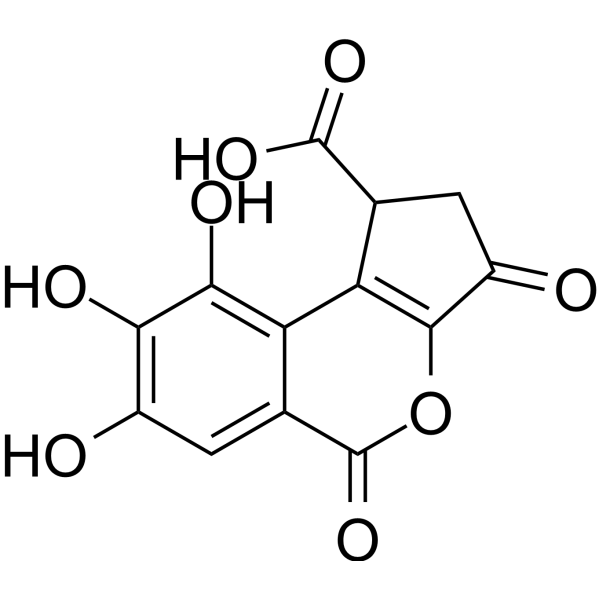
Brevifolincarboxylic acid is a phenolic compound. Brevifolincarboxylic acid can be isolated from Duchesnea chrysantha. Brevifolincarboxylic acid inhibits α-glucosidase with an IC50 value of 323.46 μM. Brevifolincarboxylic acid has an inhibitory effect on the aryl hydrocarbon receptor (AhR). Brevifolincarbacid scavenges ROS. Brevifolincarbacid restores the glucose uptake activity of myotubes. Brevifolincarboxylic acid has antitumor activity against lung and gastric cancer. Brevifolincarbacid can be used in the study of diabetes and inflammatory diseases.
-
Foscarbidopa
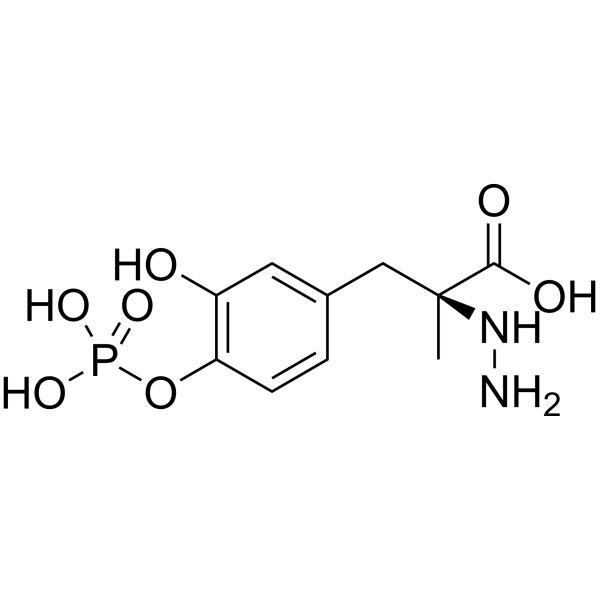 0 ImagesCat. No.: HY-109131CAS No.: 1907685-81-7Synonyms: ABBV-951; Carbidopa 4′-monophosphate
Foscarbidopa (ABBV-951; Carbidopa 4′-monophosphate) is an inhibitory prodrug targeting peripheral aromatic L-amino acid decarboxylase. Foscarbidopa is hydrolyzed into Carbidopa (HY-B0311) by phosphatases in vivo to suppress peripheral metabolism of levodopa and elevate brain delivery of levodopa. Foscarbidopa can be used for the research of Parkinson’s disease and advanced Parkinson’s disease.
-
hCYP1B1-IN-2
 0 ImagesCat. No.: HY-161649CAS No.: 3043683-33-3
hCYP1B1-IN-2 (compound 3n) is a potent human cytochrome P450 1B1 enzyme hCYP1B1 inhibitor. hCYP1B1-IN-2 shows the extremely potent anti-hCYP1B1 activity (IC50=0.040 nM) and blocks AhR transcription activity. hCYP1B1-IN-2 potently inhibits hCYP1B1 via a mix inhibition manner, showing a Ki value of 21.71 pM.
-
AHR-IN-1
 0 ImagesCat. No.: HY-169753CAS No.: 2247951-12-6
AHR-IN-1 (1-103) is an aryl hydrocarbon receptor (AHR) inhibitor with IC50 < 0.5 μM.
-
CYP1B1-IN-10
 0 ImagesCat. No.: HY-175554CAS No.: 2785358-47-4
CYP1B1-IN-10 (Compound 15C) is a highly selective human cytochrome P450 1B1 (hCYP1B1) inhibitor (IC50=0.11 μM). CYP1B1-IN-10 is promising for research of hormone-dependent tumors (e.g., breast and ovarian cancers).
-
Penisimplicissin
 0 ImagesCat. No.: HY-182495CAS No.: 873207-55-7
Penisimplicissin is a funicone-like compound and antiviral agent. Penisimplicissin reduces the expression of AhR and viral nucleocapsid protein. Penisimplicissin improves the cell viability and morphological characteristics of CCoV-infected cells. Penisimplicissin inhibits CCoV infection. Penisimplicissin can be used in studies related to canine coronavirus infection.
-
S101
 0 ImagesCat. No.: HY-165526CAS No.: 362508-67-6
S101 is an inhibitor of SLP-76 and AhR. By inhibiting SLP-76 phosphorylation, S101 blocks the TCR signaling pathway and prevents AhR nuclear translocation, thereby selectively suppressing the proliferation of activated T cells, inducing their apoptosis, and reducing TNF-α levels. S101 can be used in studies of graft rejection, psoriasis, and superantigen-induced toxic shock.
-
1,2,3,4,7,8,9-Heptachlorodibenzofuran
 0 ImagesCat. No.: HY-W517092CAS No.: 55673-89-7Synonyms: 1,2,3,4,7,8,9-HpCDF
1,2,3,4,7,8,9-Heptachlorodibenzofuran (1,2,3,4,7,8,9-HpCDF) is a compound that induces the expression of CYP1A1 and CYP1B1 genes in human peripheral blood lymphocytes, while also promoting the expression of the aryl hydrocarbon receptor repressor (AhRR). 1,2,3,4,7,8,9-Heptachlorodibenzofuran can increase ethoxyresorufin-O-deethylase (EROD) activity in isolated human peripheral blood lymphocytes in a concentration-dependent manner, which serves as a marker of CYP1A1 activity. Furthermore, 1,2,3,4,7,8,9-Heptachlorodibenzofuran exhibits immunosuppressive effects by reducing the number of splenic plaque-forming cells in mice and increasing aryl hydrocarbon hydroxylase (AHH) activity in liver microsomes of mice injected with sheep red blood cells. 1,2,3,4,7,8,9-Heptachlorodibenzofuran can be used in research in the fields of immunology, metabolic diseases, and environmental toxicology.
-
1,2,3,4,7,8-Hexachlorodibenzofuran
 0 ImagesCat. No.: HY-W775354CAS No.: 70648-26-9Synonyms: 1,2,3,4,7,8-HxCDF
1,2,3,4,7,8-Hexachlorodibenzofuran (1,2,3,4,7,8-HxCDF) promotes the gene expressions of CYP1A1, CYP1B1, and aryl hydrocarbon receptor repressor (AhRR) in human peripheral blood lymphocytes (PBLs). 1,2,3,4,7,8-Hexachlorodibenzofuran activates the ethoxyresorufin-Odeethylase, achieves 20% of the maximum response caused by TCDD with a BMR20TCDD of 0.115-0.143 nM.
-
26-Deoxyactein (Standard)
 0 ImagesCat. No.: HY-N6264RCAS No.: 264624-38-6
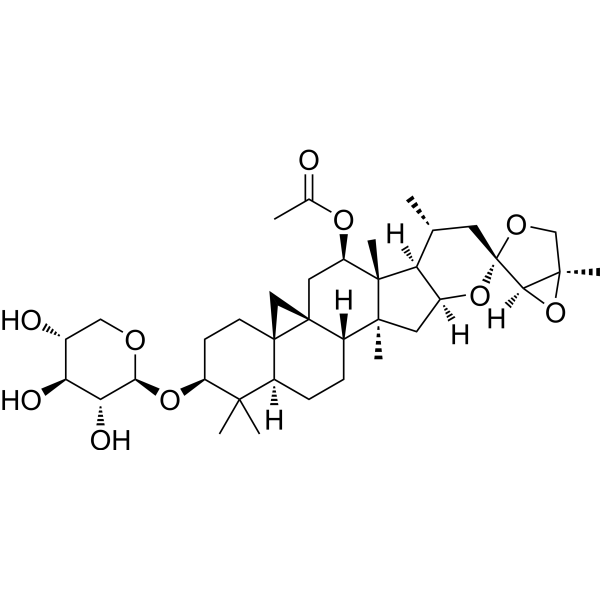
26-Deoxyactein (Standard) is the analytical standard of 26-Deoxyactein. This product is intended for research and analytical applications. 26-Deoxyactein is a constituent isolated from Cimicifuga racemosa, prevents TCDD-induced osteoblasts damage. 26-Deoxyactein inhibits increased AhR, CYP1A1 and ERK levels.
-
Brevifolincarboxylic acid (Standard)
 0 ImagesCat. No.: HY-N4095RCAS No.: 18490-95-4
Brevifolincarboxylic acid (Standard) is the analytical standard of Brevifolincarboxylic acid (HY-N4095). This product is intended for research and analytical applications. Brevifolincarboxylic acid is a phenolic compound. Brevifolincarboxylic acid can be isolated from Duchesnea chrysantha. Brevifolincarboxylic acid inhibits α-glucosidase with an IC50 value of 323.46 μM. Brevifolincarboxylic acid has an inhibitory effect on the aryl hydrocarbon receptor (AhR). Brevifolincarbacid scavenges ROS. Brevifolincarbacid restores the glucose uptake activity of myotubes. Brevifolincarboxylic acid has antitumor activity against lung and gastric cancer. Brevifolincarbacid can be used in the study of diabetes and inflammatory diseases.
-
3-Bromocarbazole-d7
 0 Images
3-Bromocarbazole-d7 is the d7-labeled 3-Bromocarbazole (HY-33798). 3-Bromocarbazole is an inhibitor of the aryl hydrocarbon receptor (AHR). 3-Bromocarbazole induces the mRNA expression of CYP1A1 and CYP1B1, with EC50 values of 2500 nM and 1100 nM, respectively. 3-Bromocarbazole inhibits motor neuron axon length by downregulating the mRNA transcription levels of α1-tubulin, Gap43, Syn2a and shha in zebrafish larvae. 3-Bromocarbazole reduces central nervous system neurogenesis by downregulating the mRNA transcription levels of elavl3, nrd, mbp and gfap in zebrafish larvae. 3-Bromocarbazole induces developmental neurotoxicity and decreases body length in zebrafish larvae or embryos; at high concentrations, it also reduces hatching rate, and increases mortality and malformation rate. 3-Bromocarbazole can be used in studies related to developmental neurotoxicity and breast cancer.
-
Plumericin
 0 Images
Plumericin is an anti-inflammatory, antioxidant, and antibacterial agent. Plumericin reduces Apoptosis, promotes Nrf-2 and inhibits NF-κB and AhR activation, blocks STAT3 signaling. Plumericin inhibits Mycobacterium tuberculosis growth. Plumericin can be used for the research of chronic kidney disease, vascular diseases, inflammatory bowel diseases, peritonitis, and tuberculosis.
- 1



