



Bacterial
Anything that destroys bacteria or suppresses their growth or their ability to reproduce. Heat, chemicals such as chlorine, and antibiotic drugs all have antibacterial properties. Many antibacterial products for cleaning and handwashing are sold today. Such products do not reduce the risk for symptoms of viral infectious diseases in otherwise healthy persons. This does not preclude the potential contribution of antibacterial products to reducing symptoms of bacterial diseases in the home.
All Product Categories
-
Bacterial Inhibitors
(7521)
View all products
-
Bacterial Agonists
(3)
View all products
-
Bacterial Antagonists
(9)
View all products
-
Bacterial Activators
(24)
View all products
-
Bacterial Modulators
(27)
View all products
-
Bacterial Chemicals
(2)
View all products
-
Bacterial Inducers
(7)
View all products
-
Bacterial Controls
(14)
View all products
-
Bacterial Substrates
(2)
View all products
-
Bacterial Ligand
(1)
View all products
-
Bacterial Related Products (8852)
Related Products (8852)

-
Antibodies (14)
-
Related Compound Screening Libraries (1)
-
Aurein 3.1
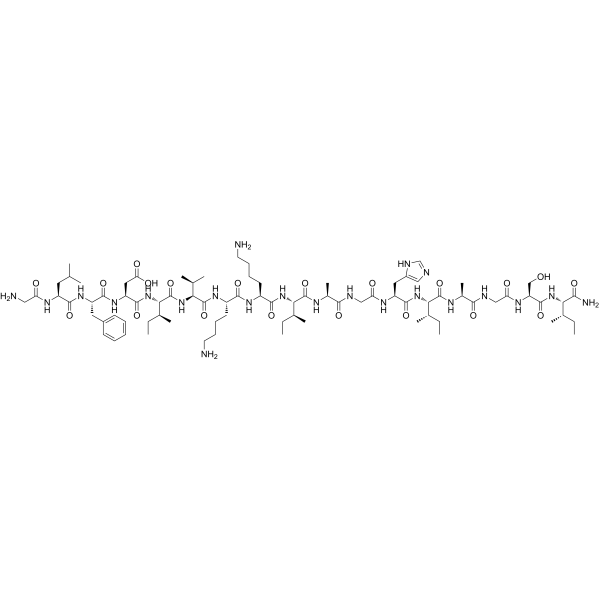 0 ImagesCat. No.: HY-P5574CAS No.: 302343-11-9Aurein 3.1 is an antibiotic antimicrobial peptide. Aurein 2.6 is active against Gram-positive bacterial (MIC: 80, 50, 50, 50, 50 μM for M. luteus, S. aureus, S. epidermis, S. mutans, B. subtilis).
-
10-Methoxy-canthin-6-one
 0 ImagesSynonyms: Mtx-C10-Methoxy-canthin-6-one (Mtx-C) is analkaloid derivative. 10-Methoxy-canthin-6-one can induce DNA damage by intercalating into DNA. 10-Methoxy-canthin-6-one can inhibit cancer cells proliferation, cause G2/M phase arrest and induce myeloid differentiation. T10-Methoxy-canthin-6-one can upregulate the expression of myeloperoxidase, CD15, CD11b, and CD14, as well as activation of p38 MAPK. 10-Methoxy-canthin-6-one also exhibits anti-bacterial activity. 10-Methoxy-canthin-6-one can be used for the researches of cancer and infection, such as acute myeloid leukemias (AML).
-
PDF-IN-1
 0 ImagesCat. No.: HY-113753CAS No.: 900783-19-9PDF-IN-1 (compound 2) is a potential Peptide deformylase (PDF) inhibitor. PDF-IN-1 can be used for the development of new broad-spectrum antibiotics.
-
Glepidotin B
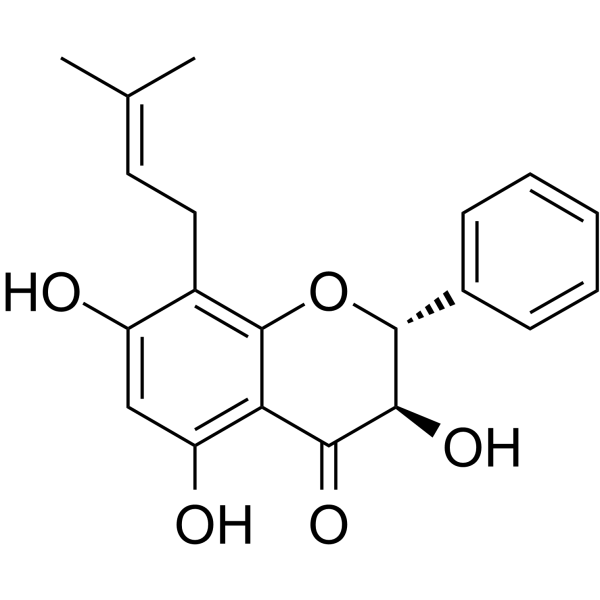 0 ImagesCat. No.: HY-N3947CAS No.: 87440-56-0Glepidotin B is a dihydroflavonol compound isolated from the extracts of American licorice, Glycyrrhiza lepidota (Leguminosae). Glepidotin B is an antimicrobial agent.
-
Fluconazole-13C2,15N
 0 ImagesCat. No.: HY-B0101S1CAS No.: 1309935-84-9Synonyms: UK-49858-13C2,15NFluconazole-13C2,15N (UK-49858-13C2,15N) is the 13C and 15N labeled isotope of Fluconazole (HY-B0101). Fluconazole (UK-49858) is a triazole antifungal agent with excellent activities against a broad range of fungi, especially against Candida albicans. Fluconazole inhibits C. albicans and Candida kefyr with IC99s range from 0.20 μg/mL to 0.39 μg/mL.
-
Cefixime trihydrate (Standard)
 0 ImagesCat. No.: HY-B1381ARCAS No.: 125110-14-7Synonyms: FR-17027 trihydrate (Standard); FK-027 trihydrate (Standard); CL-284635 trihydrate (Standard)Cefixime (trihydrate) (Standard) is the analytical standard of Cefixime (trihydrate). This product is intended for research and analytical applications. Cefixime trihydrate (FR-17027 trihydrate) is an antibiotic and a third generation cephalosporin antibiotic, useful for the treatment of a number of bacterial infections.
-
Bombinin H5
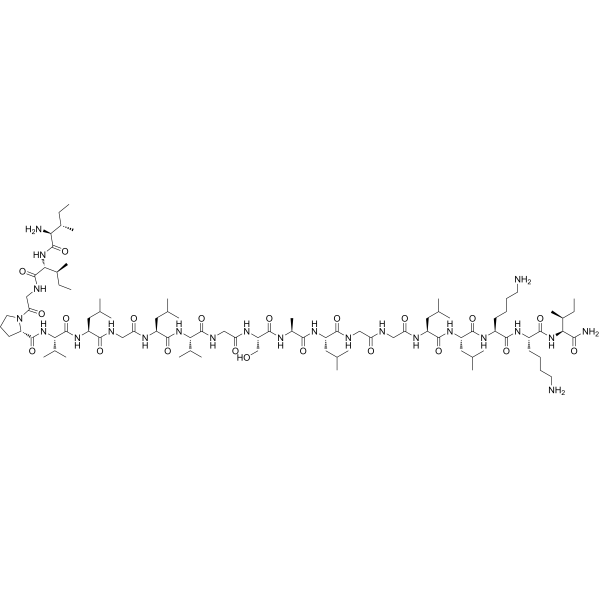 0 ImagesCat. No.: HY-P5677CAS No.: 325686-32-6Bombinin H5 is an antimicrobial peptide derived from the skin of moth Bombina variegata.
-
Sutezolid (Standard)
 0 ImagesSynonyms: PNU-100480 (Standard); U-100480 (Standard); PF-02341272 (Standard)Sutezolid (Standard) is the analytical standard of Sutezolid. This product is intended for research and analytical applications. Sutezolid (PNU-100480), an orally active oxazolidinone antimicrobial agent, acts by inhibiting bacterial protein synthesis. Sutezolid has potent activity against mycobacteria, and is used for the research of drug-resistant tuberculosis[1][2].
-
Tilmicosin-d3
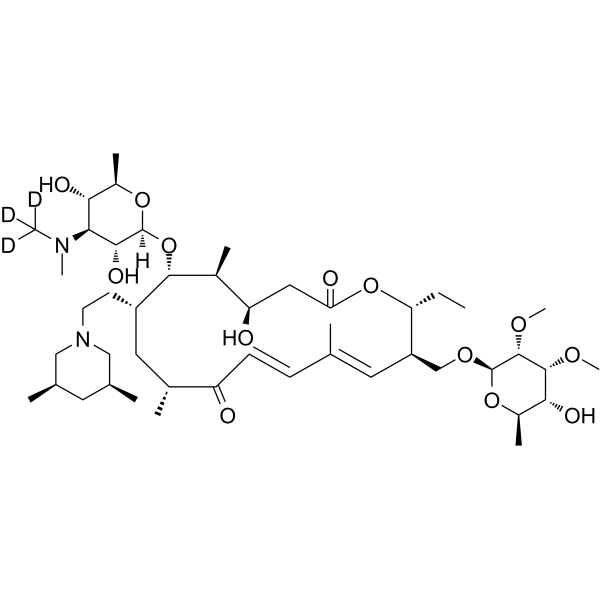 0 ImagesCat. No.: HY-B0905SCAS No.: 2714486-61-8Synonyms: LY-177370-d3; EL-870-d3Tilmicosin-d3 is the deuterium labeled Tilmicosin. Tilmicosin (LY-177370) is an orally active calcium channel antagonist and macrolide antibiotic with antimicrobial activity. Tilmicosin mainly acts on the 50S subunit of bacterial ribosomes, inhibiting protein synthesis. Tilmicosin is effective in the treatment of respiratory diseases in livestock such as cattle, sheep and pigs. In addition, Tilmicosin has immunomodulatory and anti-inflammatory effects.
-
Scolopin-2
 0 ImagesCat. No.: HY-P11193Scolopin-2 is an antimicrobial peptide that can be isolated from centipede venoms. Scolopin-2 shows strong antimicrobial activities against a panel of Gram-positive/negative bacteria and fungi (MIC ≤ 7.5 μg/mL) . Scolopin-2 shows moderate hemolytic activity against both human and rabbit red cells. Scolopin-2 can be used for antimicrobial research.
-
Amycolatopsin C
 0 ImagesCat. No.: HY-175427Amycolatopsin C is a glycosylated macrolactone with antibacterial activity. Amycolatopsin C selectively inhibits the growth of Mycobacterium bovis (BCG) and Mycobacterium tuberculosis (H37Rv) compared to other Gram-positive and Gram-negative bacteria. Amycolatopsin C demonstrates low levels of cytotoxicity toward mammalian cells and can be utilized in antibacterial research.
-
RT2
 0 ImagesCat. No.: HY-P10970CAS No.: 1539295-33-4RT2 is a tryptophan-rich cationic amphipathic antibacterial peptide, with main targets including lipopolysaccharide (LPS) on the bacterial surface and intracellular DNA. RT2 binds to bacterial surface LPS, and interacts with cytoplasmic membrane phospholipids, enabling it to rapidly penetrate the bacterial cell membrane and enter the cell, and then bind to components such as DNA in the cytoplasmic membrane, thereby exerting antibacterial effects. RT2 is promising for research of acute and chronic infections caused by planktonic bacteria.
-
Myristicin (Standard)
 0 ImagesMyristicin (Standard) is the analytical standard of Myristicin. This product is intended for research and analytical applications. Myristicine is an orally bioavailable serotonin receptor antagonist and weak monoamine oxidase (MAO) inhibitor. Myristicine also exerts anti-cancer effects on gastric cancer cells by inhibiting the EGFR/ERK signaling pathway. Myristicine is the main component of nutmeg essential oil and has anti-cancer, anti-proliferative, antibacterial, anti-inflammatory and apoptosis-inducing effects. Myristicine abuse can produce hallucinogenic effects, organ damage, etc.
-
Pravibismane
 0 ImagesSynonyms: BisEDT; MBN-101Pravibismane (BisEDT; MBN-101) is a broad-spectrum topical anti-infective and anti-biofilm agent. Pravibismane disrupts bacterial bioenergetics by reducing bacterial concentrations of ATP in both planktonic and biofilm phenotypes and exhibits potent anti-biofilm activity against diabetic foot infections (DFI)-relevant pathogens, such as S. aureus and P. aeruginosa. Pravibismane can be used for the study of diabetic foot infections.
-
Resveratrol-13C6
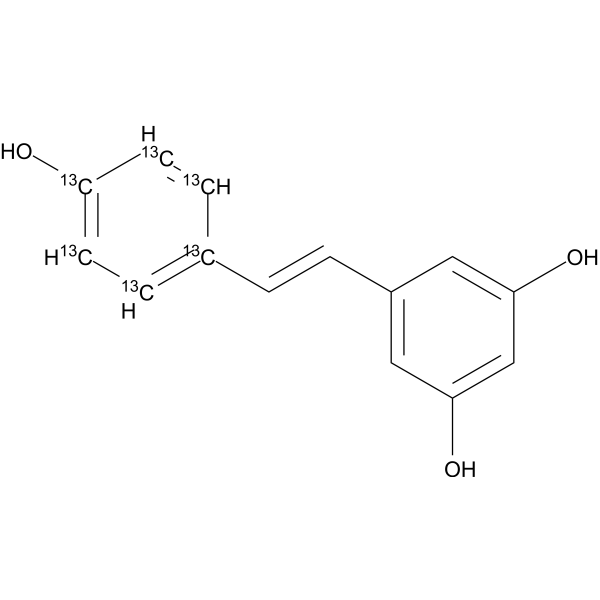 0 ImagesCat. No.: HY-16561S1Synonyms: trans-Resveratrol-13C6; SRT501-13C6Resveratrol-13C6 is the 13C-labeled Resveratrol. Resveratrol (trans-Resveratrol; SRT501), a natural polyphenolic phytoalexin that possesses anti-oxidant, anti-inflammatory, cardioprotective, and anti-cancer properties. Resveratrol (SRT 501) has a wide spectrum of targets including mTOR, JAK, β-amyloid, Adenylyl cyclase, IKKβ, DNA polymerase. Resveratrol also is a specific SIRT1 activator. Resveratrol is a potent pregnane X receptor (PXR) inhibitor. Resveratrol is an Nrf2 activator, ameliorates aging-related progressive renal injury in mice model. Resveratrol increases production of NO in endothelial cells.
-
Delpazolid (Standard)
 0 ImagesCat. No.: HY-100180RCAS No.: 1219707-39-7Synonyms: LCB01-0371 (Standard)4-Chlorosalicylic acid (Standard) is the analytical standard of 4-Chlorosalicylic acid. This product is intended for research and analytical applications. 4-Chlorosalicylic acid is a pharmaceutical intermediate. Inhibits monophenolase and diphenolase activity with IC50s of 1.89 mM and 1.10 mM. Potent antimicrobial activity. Against E. coli with the MIC of 250 μg/mL and with the MBC of 500 μg/mL.
-
Cilagicin
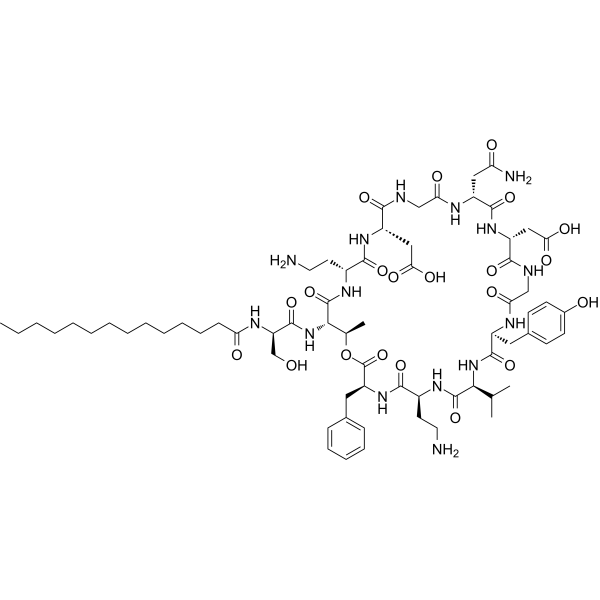 0 ImagesCat. No.: HY-P10209Cilagicin, a dodeca-lipodepsipeptide, is a Gram-positive active antibiotic. Cilagicin has a dual polyprenyl phosphate binding mechanism that impedes resistance development.
-
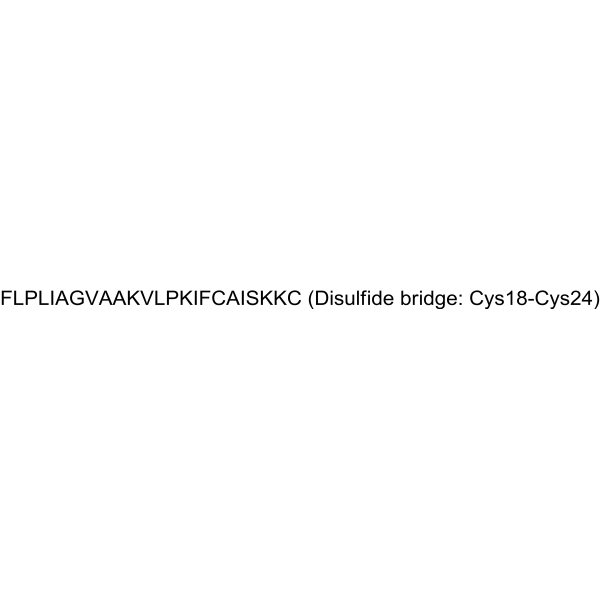
DRAMP18563
 0 ImagesCat. No.: HY-P11225CAS No.: 2699627-67-1Synonyms: MAP-04-02DRAMP18563 (MAP-04-02) is a linear antimicrobial peptide that can act as a delivery vector to transport dual-ring peptide inhibitors that cannot penetrate the outer membrane of Gram-negative bacteria to their target sites. DRAMP18563 can be used to study the delivery strategies of dual-ring peptide inhibitors.
-
Apalcillin
 0 ImagesCat. No.: HY-121195CAS No.: 63469-19-2Synonyms: PC-904Apalcillin (PC-904) in combination with Ro 48-1220, a penam sulfone β-lactamase inhibitor, demonstrated broad-spectrum activity against gram-negative aerobic and anaerobic bacteria, excluding Klebsiella oxytoca. It exhibited potent activity against β-lactamase-producing Moraxella catarrhalis, Haemophilus influenzae, and Neisseria gonorrhoeae, with effective MICs (11 μg/mL). The combination also inhibited Pseudomonas aeruginosa, Stenotrophomonas maltophilia, and Acinetobacter species at low MICs (0.25 to 4 μg/mL). However, its efficacy against oxacillin-resistant staphylococci and certain gram-positive organisms was limited. Apalcillin/Ro 48-1220 showed comparable efficacy to piperacillin/tazobactam against some extended-spectrum β-lactamase-producing Escherichia coli but was less effective against SHV-type β-lactamases.




