



Bacterial
Anything that destroys bacteria or suppresses their growth or their ability to reproduce. Heat, chemicals such as chlorine, and antibiotic drugs all have antibacterial properties. Many antibacterial products for cleaning and handwashing are sold today. Such products do not reduce the risk for symptoms of viral infectious diseases in otherwise healthy persons. This does not preclude the potential contribution of antibacterial products to reducing symptoms of bacterial diseases in the home.
All Product Categories
-
Bacterial Inhibitors
(7487)
View all products
-
Bacterial Agonists
(3)
View all products
-
Bacterial Antagonists
(9)
View all products
-
Bacterial Activators
(23)
View all products
-
Bacterial Modulators
(27)
View all products
-
Bacterial Chemicals
(2)
View all products
-
Bacterial Inducers
(7)
View all products
-
Bacterial Controls
(14)
View all products
-
Bacterial Substrates
(2)
View all products
-
Bacterial Ligand
(1)
View all products
-
Bacterial Related Products (8804)
Related Products (8804)

-
Antibodies (14)
-
Related Compound Screening Libraries (1)
-
Psoracorylifol B
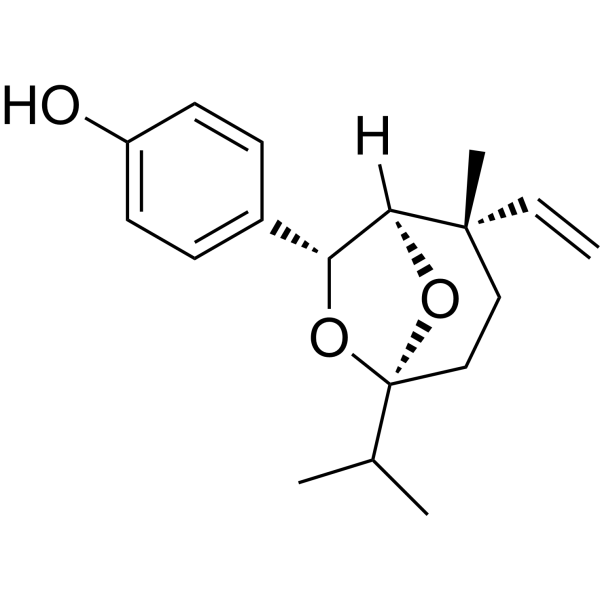 0 ImagesCat. No.: HY-N11054CAS No.: 879290-98-9Psoracorylifol B is a Helicobacter pylori inhibitor with MICs of both 12.5 μg/mL against H. pylori ATCC 43504 and H. pylori SS1.
-
Phenyl(9H-purin-6-yl)amine
 0 ImagesPhenyl(9H-purin-6-yl)amine is an antibacterial compound with the activity of inhibiting bacterial growth. The application of phenyl(9H-purin-6-yl)amine can be used to develop new antibacterial compounds. Phenyl(9H-purin-6-yl)amine has shown potential inhibitory effects in medical research.
-
Dimethyl sulfoxide-13C2
 0 ImagesCat. No.: HY-W782446CAS No.: 136321-15-8Synonyms: DMSO-13C2Dimethyl sulfoxide-13C2 (DMSO-13C2) is the 13C-labeled Dimethyl sulfoxide (HY-Y0320C). Dimethyl sulfoxide (DMSO) is an aprotic solvent that can dissolve water-insoluble therapeutic and toxic agents. Dimethyl sulfoxide (DMSO) has a strong affinity for water and has the ability to rapidly penetrate or enhance the penetration of?other?substances through biological membranes. Dimethyl sulfoxide also has potential free radical scavenging and anticholinesterase effects and may affect coagulation activity. Dimethyl sulfoxide also induces histamine release from mast cells but is thought to have low systemic toxicity.
-
Phenazine methylsulfate (Standard)
 0 ImagesCat. No.: HY-W004520RCAS No.: 299-11-6Synonyms: 5-Methylphenazinium methylsulfate (Standard)Phenazine (methylsulfate) (Standard) is the analytical standard of Phenazine (methylsulfate). This product is intended for research and analytical applications. Phenazine methylsulfate is a free radical generator that can act as an electron transfer reactant in cell viability assays. It also has insecticidal properties. Furthermore, Phenazine methylsulfate induces oxidative DNA damage and cell apoptosis, showing antitumor activity[1][2][3].
-
Enterocin Hybrid 1
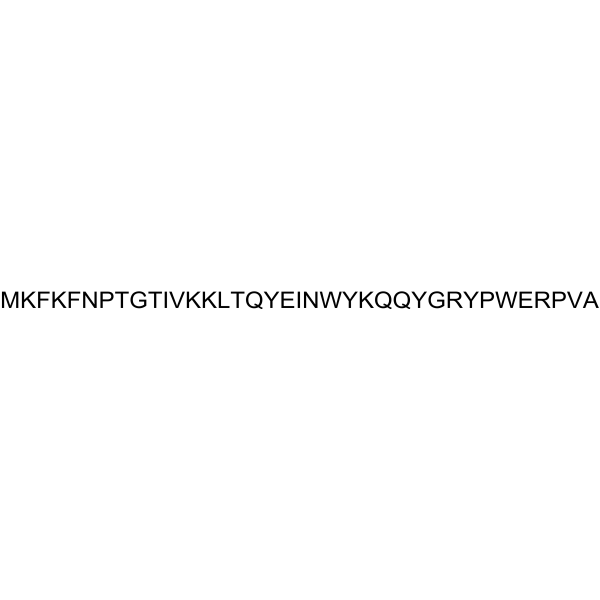 0 ImagesCat. No.: HY-P5204CAS No.: 2764845-25-0Synonyms: K1-EJ hybridEnterocin Hybrid 1 is a antibacterial agent, a antibacterial composition. Enterocin Hybrid 1 inhibits Vancomycin (HY-B0671)-resistant E. faecium, Staphylococcus haemoliticus.
-
TP-S1-68
 0 ImagesCat. No.: HY-123565CAS No.: 120187-04-4TP-S1-68 (Compound 10) is a TIE-2 inhibitor with an IC50 of 3.65 μM. TP-S1-68 exhibits antibacterial activity against a variety of fungal and bacteria. TP-S1-68 serves as a starting compound for the further development of TIE-2 inhibitors. TP-S1-68 can be used in research related to solid tumors, bacterial infections and fungal infections.
-
(S)-Grepafloxacin
 0 ImagesCat. No.: HY-117488CAS No.: 146761-69-5Synonyms: (S)-OPC-17116; (S)-dl-Grepafloxacin(S)-Grepafloxacin ((S)-OPC-17116) is the S-enantiomer of Grepafloxacin (HY-A0147).
-
Multicaulisin
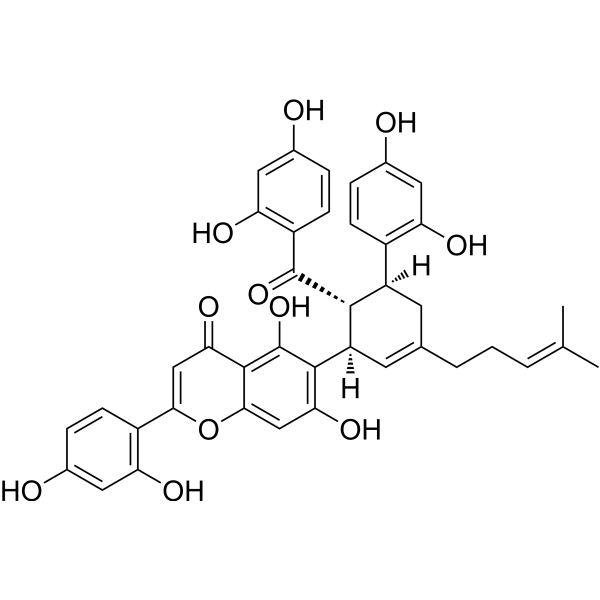 0 ImagesCat. No.: HY-N3515CAS No.: 286461-76-5Multicaulisin, a new Diels-Alder type adduct from Morus multicaulis roots, potently effects against Staphylococcus aureus (MRSA) isolates. Multicaulisin is an antibacterial agent and has the potential for MRSA infections research.
-
Lagerstroemia speciosa extract
 0 ImagesCat. No.: HY-N19071Lagerstroemia speciosa extract, derived from the crape myrtle tree, contains active ingredients including corosolic acid, ellagic acid, and flavonoids. It possesses anti-inflammatory, antioxidant, and antibacterial properties, helping to reduce inflammation, combat oxidative stress, and enhance overall immunity.
-
Antibacterial agent 256
 0 ImagesCat. No.: HY-168729CAS No.: 3052804-28-8Antibacterial agent 256 (Compound C09) is an inhibitor for type I signal peptidase (SPase I). Antibacterial agent 256 inhibits gram-positive bacteria, that inhibits S. aureus ATCC 29213, E. faecium QF31, E. faecalis SF23-1 and S. suis P1/7, with MIC of 1-16 μg/mL. Antibacterial agent 256 exhibits cytotoxicity in cancer cell HEp-2 and Caco-2 with CC50 of 14.65 μg/mL and 21.93 μg/mL. Antibacterial agent 256 exhibits a hemolytic activity on mouse RBCs, with an HC50 of 13.29 μg/mL. Antibacterial agent 256 ameliorates the MRSA skin infection in mouse model.
-
(-)-Pinocembrin
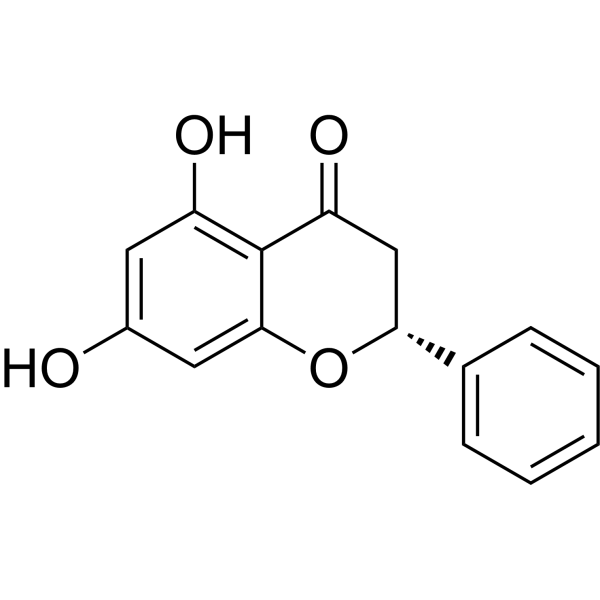 0 Images(-)-Pinocembrin exhibits anti-mycobacterium activity against mycobacteriuum tuberculosis H37Ra with an IC50 value of 1.11 mg/mL in dormant phase and 1.21 mg/mL in active phase, respectively. (-)-Pinocembrin has potent antiproliferative activity with IC50 values of 1.88-11.00 mg/mL against THP-1, A549, Panc-1, HeLa and MCF7 cell lines.
-
Luxafimloc
 0 ImagesCat. No.: HY-187797CAS No.: 2408524-70-7Synonyms: GSK3882347Luxafimloc (GSK3882347) is a FimH inhibitor and anti-infective agent. Luxafimloc inhibits the activity of the FimH adhesin molecule. Luxafimloc reduces the bacterial load in the bladder of mice with acute cystitis induced by Klebsiella pneumoniae infection. Luxafimloc can be used in studies related to urinary tract infections, including cystitis, uncomplicated urinary tract infection, complicated urinary tract infection, catheter-associated urinary tract infection, acute urinary tract infection, recurrent urinary tract infection, and chronic urinary tract infection.
-
Radicinol
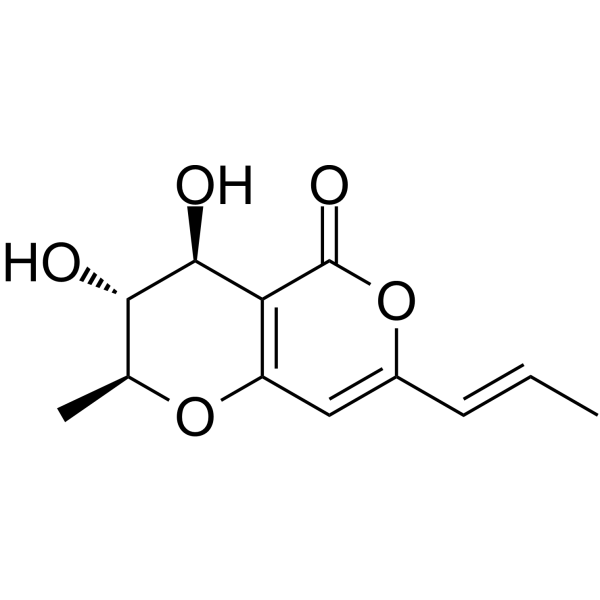 0 ImagesCat. No.: HY-137938CAS No.: 65647-66-7Radicinol is a metabolite of cochliobolus lunata, and absolute stereochemistry of radicinin.
-
Moxifloxacin-d5 TFA
 0 ImagesCat. No.: HY-66011CSSynonyms: BAY 12-8039-d5 free base TFAMoxifloxacin-d5 (BAY 12-8039-d5) TFA is the deuterated-labeled Moxifloxacin TFA. Moxifloxacin is an orally active 8-methoxyquinolone antimicrobial for use in the stud of acute bacterial sinusitis, acute bacterial exacerbations of chronic bronchitis, and community-acquired pneumonia.
-
Chloramphenicol succinate
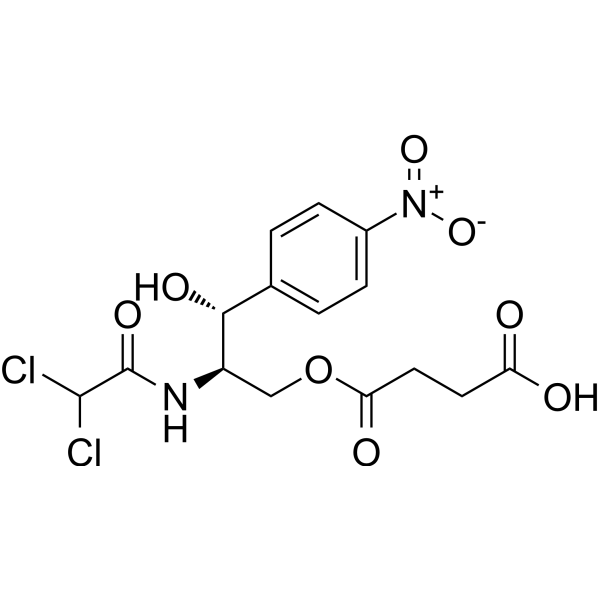 0 ImagesChloramphenicol succinate is a prodrug of Chloramphenicol (HY-B0239), acting as a P2Y14R inhibitor with an IC50 of 1.585 nM. Chloramphenicol succinate serves as a competitive substrate and inhibitor of succinate dehydrogenase (SDH), which may account for its toxicity. Chloramphenicol succinate exerts a significant inhibitory effect on colitis. Chloramphenicol succinate can be used in research related to myelosuppression, gray baby syndrome, aplastic anemia, bacterial meningitis and inflammatory bowel disease.
-
Ethambutol-d8
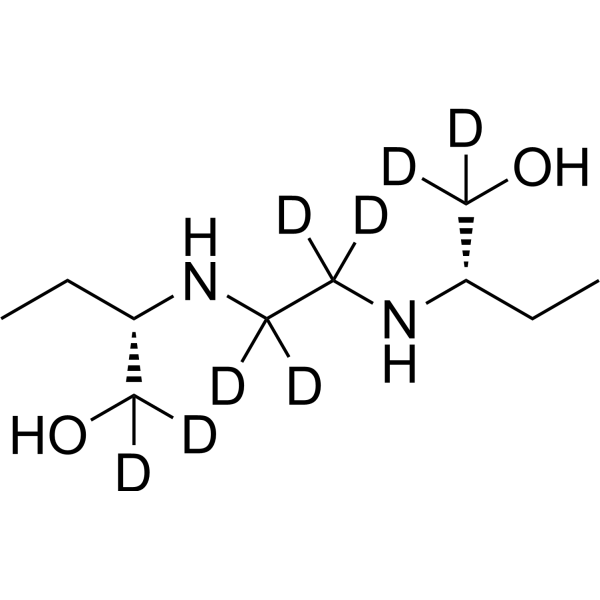 0 ImagesCat. No.: HY-B0535S2CAS No.: 1129526-23-3Synonyms: Emb-d8Ethambutol-d8 is deuterium labeled Ethambutol.
-
Bismuth subcitrate potassium (Standard)
 0 ImagesCat. No.: HY-16102RCAS No.: 880149-29-1Bismuth subcitrate potassium (Standard) is the analytical standard of Bismuth subcitrate potassium (HY-16102). This product is intended for research and analytical applications. Bismuth subcitrate potassium is a compound bismuth salt with oral activity. Bismuth subcitrate potassium has antibacterial activity and can inhibit the growth of Campylobacter pyloridis with a MIC50 of 8 μg/mL. Bismuth subcitrate potassium can be used in the study of gastrointestinal diseases infected by Campylobacter pyloridis.
-
Ciprofloxacin lactate (Standard)
 0 ImagesCat. No.: HY-W040298RCAS No.: 97867-33-9Synonyms: Bay-09867 lactate (Standard)Ciprofloxacin (lactate) (Standard) is the analytical standard of Ciprofloxacin (lactate). This product is intended for research and analytical applications. Ciprofloxacin (Bay-09867) lactate is a potent, orally active topoisomerase IV inhibitor. Ciprofloxacin lactate induces mitochondrial DNA and nuclear DNA damage and lead to mitochondrial dysfunction, ROS production. Ciprofloxacin lactate has anti-proliferative activity and induces apoptosis. Ciprofloxacin lactate is a fluoroquinolone antibiotic, exhibiting potent antibacterial activity[4].
-
Trimethylsilyl-L-(+)-rhamnose
 0 ImagesCat. No.: HY-167812CAS No.: 108392-01-4Trimethylsilyl-L-(+)-rhamnose is a chemically modified version of the natural sugar rhamnose that has activity in studying the role of rhamnose in bacterial cell walls. Trimethylsilyl-L-(+)-rhamnose can be used to explore the composition of bacterial cell walls and their biological functions. Trimethylsilyl-L-(+)-rhamnose can help scientists gain insight into bacterial growth and resistance mechanisms.
-
HG2
 0 ImagesCat. No.: HY-P5706HG2 is a fast-acting antimicrobial peptide. HG2 shows anti-biofilm and anti-inflammatory activities. HG2 is active against Gram-positive pathogens, especially against MRSA strains (MIC: 16-32 μg/mL). HG2 can bind to bacterial lipids and reduces ATP concentration in S. aureus MRSA USA300 cells.




