



Epigenetic Reader Domain Degrader
-
ARV-825
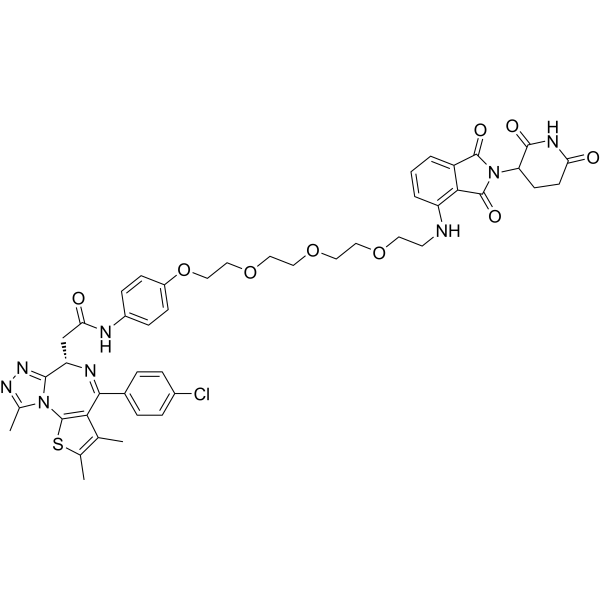 0 Images
ARV-825 is a BET protein PROTAC degrader that recruits cereblon, and it targets BRD2, BRD3, and BRD4 for degradation via the ubiquitin-proteasome pathway. ARV-825 downregulates c-MYC, PLK1, MYCN, CDK4/6, JAK2, pSTAT3/5, PIM1, and Bcl-xL, upregulates p21 and p27, and modulates H3K27Ac-mediated transcription, the G2/M checkpoint, the Wnt/β-catenin pathway, and amino acid transport pathways. ARV-825 induces G1 phase cell cycle arrest, caspase 3/PARP-mediated apoptosis, DNA damage, and reactive oxygen species (ROS) production, reduces mitochondrial respiration, and simultaneously inhibits cell proliferation, clonogenic growth, and cell migration. ARV-825 is used in research on gastric cancer, leukemia, neuroblastoma, and cholangiocarcinoma.
-
ARV-771
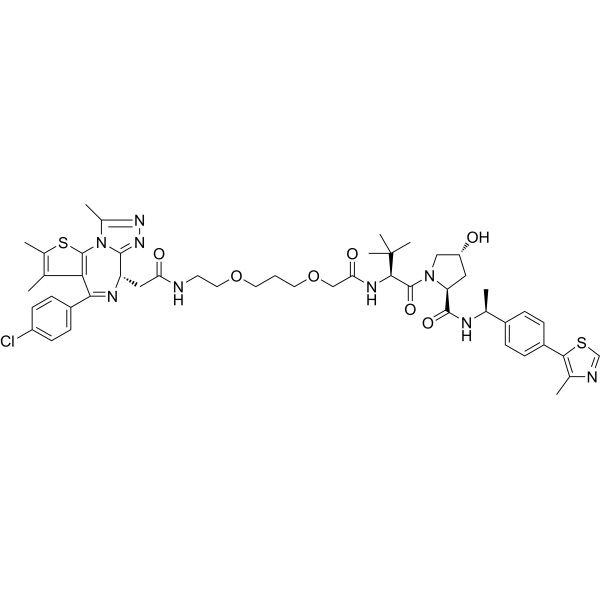 0 Images
ARV-771 is a BET PROTAC degrader, with Kd values of 34, 4.7, 8.3, 7.6, 9.6 and 7.6 nM against BRD2 (1), BRD2 (2), BRD3 (1), BRD3 (2), BRD4 (1) and BRD4 (2) , respectively. ARV-771 inhibits the transcription of AR/AR-v7 and its downstream target genes. By degrading BRD4 protein, ARV-771 enhances the sensitivity of prostate cancer cells to ferroptosis, suppresses cancer cell viability, and induces apoptosis. ARV-771 downregulates the levels of BRD4, c-MYC and AR-V7 in tumor tissues and inhibits tumor tissue growth. ARV-771 can be used in prostate cancer-related research.
-
FHD-609
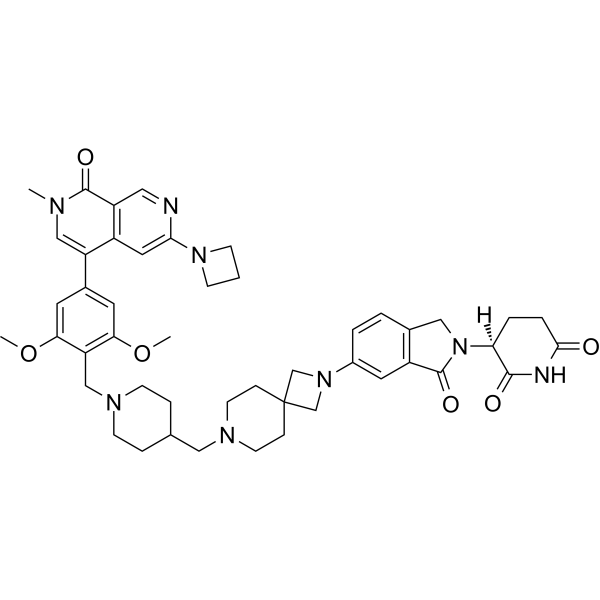 0 Images
FHD-609 is a BRD9 PROTAC degrader. FHD-609 induces BRD9 degradation, downregulates primary transcripts of HBG/HBD, Myc expression and proliferation gene sets, reduces the levels of synovial sarcoma tumor proliferation markers, and inhibits tumor growth. FHD-609 can be used in research related to advanced synovial sarcoma, SMARCB1-deficient tumors and adrenocortical carcinoma.
-
ZXH-3-26
 0 Images
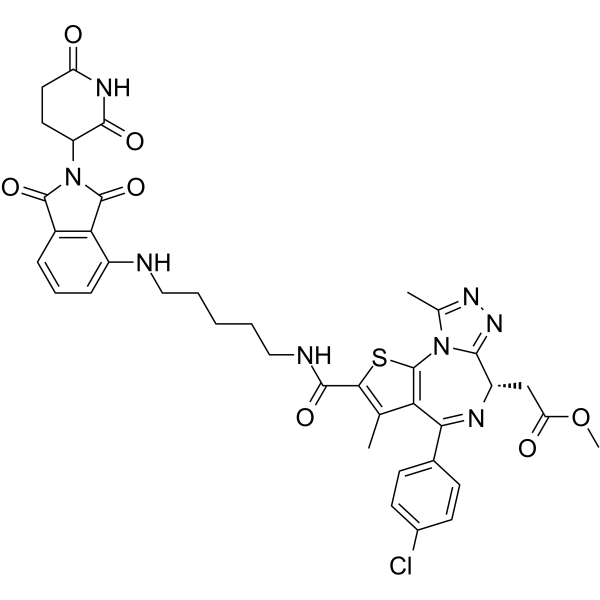
ZXH-3-26 is a CRBN-recruiting BRD4 PROTAC degrader with a DC50/5h of approximately 5 nM. ZXH-3-26 drives the ubiquitination and degradation of BRD4 by recruiting BRD4BD1 to the CRL4CRBN E3 ubiquitin ligase complex, thereby inhibiting the dynamic distribution of super-enhancers. ZXH-3-26 reverses TNF-α-induced impairment of the immunosuppressive function of mesenchymal stem cells, and affects RNA synthesis and the transcriptional elongation process of Pol II. ZXH-3-26 can be used in studies related to inflammatory arthritis, malignant tumors, and HIV latency.
-
A1874
 0 Images
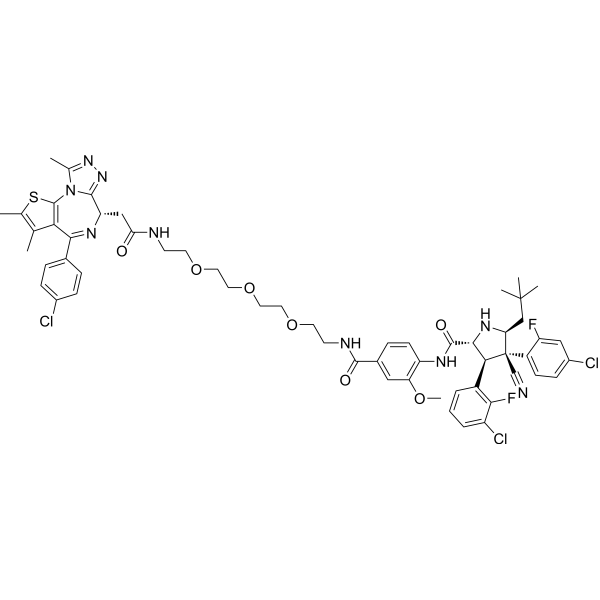
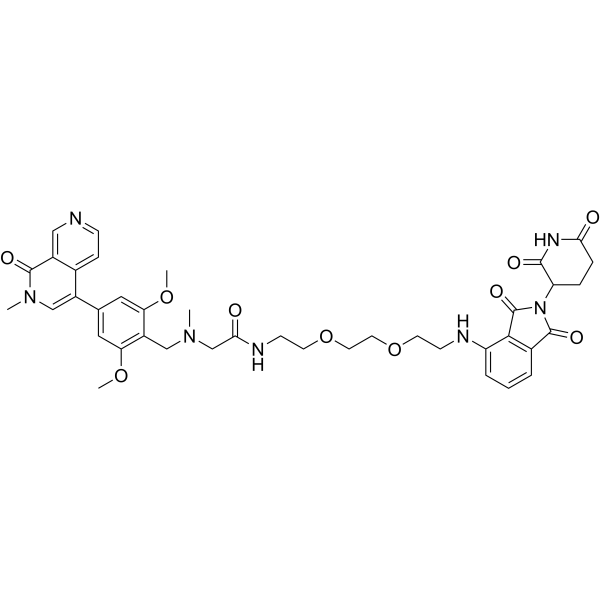
A1874 is an orally active BRD4 PROTAC degrader with a DC50 of 32 nM. A1874 degrades BRD4 via the ubiquitin-proteasome system by recruiting the MDM2 E3 ligase, while disrupting the MDM2-p53 interaction to stabilize p53 and upregulate p21, thereby inducing cell cycle arrest and apoptosis. A1874 exhibits selectivity for wild-type p53 cells and MDM2-amplified tumors, and it can be used in research on breast cancer, colorectal cancer, melanoma, lung cancer, lymphoma, myeloid leukemia, osteosarcoma, and glioblastoma.
-
PLX-3618
 0 Images
PLX-3618 is a molecular glue, that degrades BRD4 with DC50 of 12.2 nM. PLX-3618 promotes polyubiquitination and subsequent proteasomal degradation of BRD4 by recruiting of the E3 ligase substrate receptor, DCAF11. PLX-3618 inhibits the proliferation of various cancer cells, induces apoptosis in AML cells. PLX-3618 exhibits antitumor activity against AML in mouse models.
-
MS41
 0 Images
MS41 is a ENL PROTAC degrader with a DC50 of 3.50 nM. MS41 recruits the VHL E3 ubiquitin ligase, triggers ENL degradation via the ubiquitin-proteasome system, and simultaneously induces AF9 degradation. MS41 reduces the chromatin occupancy of ENL-associated transcription elongation complexes, suppresses oncogene expression, and activates differentiation gene expression. MS41 inhibits leukemia cell growth and induces cell cycle arrest and apoptosis. MS41 inhibits leukemia progression in xenograft mouse models. MS41 can be used for research on mixed lineage leukemia-rearranged leukemia and nephroblastoma.
-
SIM1
 0 Images
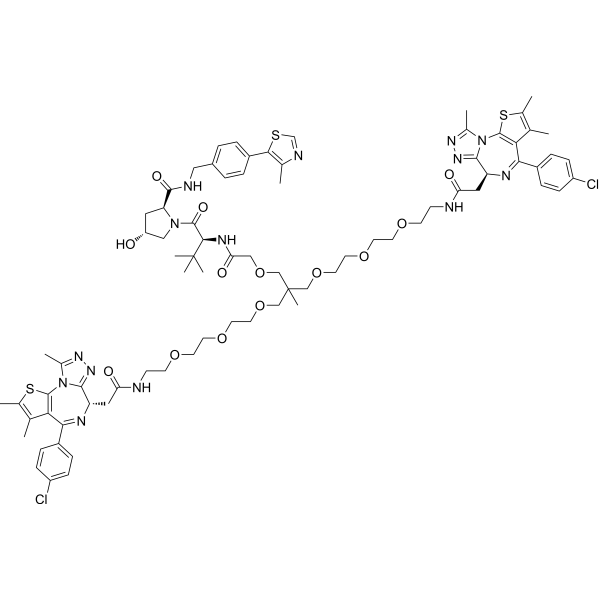
SIM1 is a potent von Hippel-Lindau (VHL)-based trivalent PROTAC capable of degradation for all BET family members, with preference for BRD2 degradation (IC50=1.1 nM; Kd=186 nM). SIM1 shows sustained anti-cancer activity.
-
IBG3
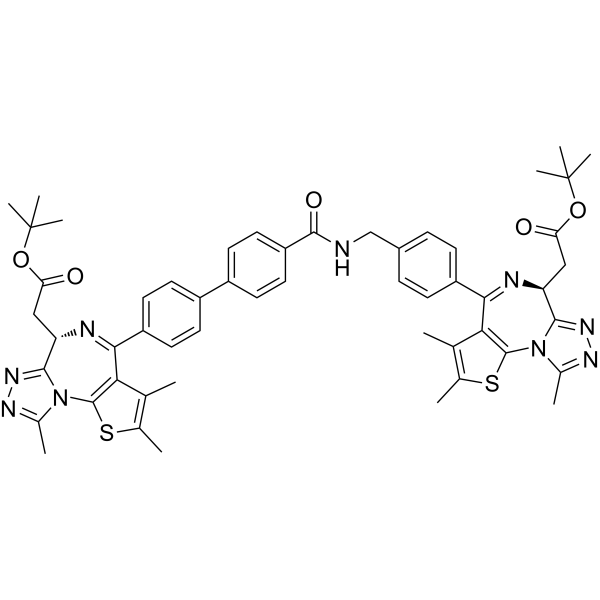 0 ImagesCat. No.: HY-160528Purity: 98.53%
IBG3 is a bivalent molecular glue degrader that targets BRD2 and BRD4, with an EC50 of 32 nM and a Kd of 0.6 µM against human BRD4. IBG3 exhibits selectivity for BRD2 and BRD4 over BRD3. By recruiting the DCAF16 E3 ligase, IBG3 cis-binds to the tandem bromodomains of BRD2 and BRD4, enhances BRD-DCAF16 binding affinity, promotes ubiquitination and proteasomal degradation, and does not degrade isolated bromodomains. IBG3 lacks degradation selectivity for PSMA-positive and PSMA-negative prostate cancer cells, but shows lower in vivo antitumor efficacy than the PSMA-targeting conjugate IBG-P3, and can be used in prostate cancer-related research.
-
TMX1
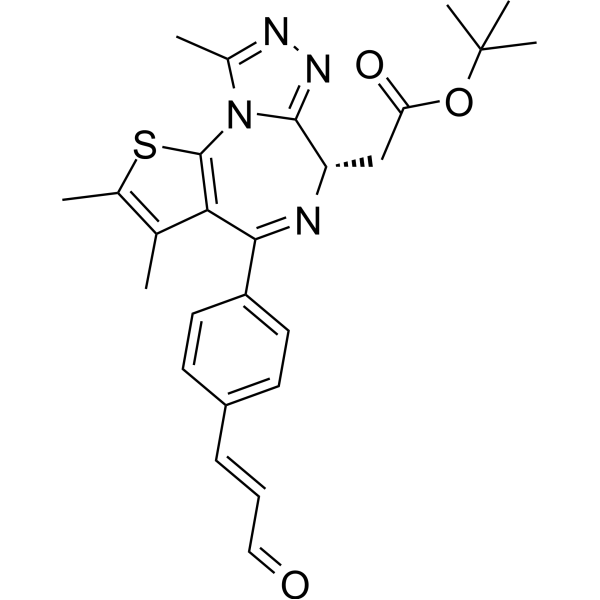 0 Images
TMX1 is a covalent, selective BRD4 molecular glue degrader. TMX1 binds to the JQ1-binding site of BRD4BD2, forms covalent bonds with Cys58 of DCAF16 and Cys87 of GAK in a BRD4BD2-dependent template-assisted manner, stabilizes the BRD4-TMX1-DCAF16 ternary complex, and promotes the ubiquitination of BRD4 via the CRL4DCAF16 ubiquitin ligase complex. TMX1 induces selective degradation of BRD4, mild degradation of BRD2 and BRD3, as well as DCAF16-dependent cytotoxicity.
-
Methyl (S)-2-(4-(4'-((4-(N-(3-cyano-4-methyl-1H-indol-7-yl)sulfamoyl)benzyl)carbamoyl)-[1,1'-biphenyl]-4-yl)-2,3,9-trimethyl-6H-thieno[3,2-f][1,2,4]triazolo[4,3-a][1,4]diazepin-6-yl)acetate
![Methyl (S)-2-(4-(4'-((4-(N-(3-cyano-4-methyl-1H-indol-7-yl)sulfamoyl)benzyl)carbamoyl)-[1,1'-biphenyl]-4-yl)-2,3,9-trimethyl-6H-thieno[3,2-f][1,2,4]triazolo[4,3-a][1,4]diazepin-6-yl)acetate](https://file.medchemexpress.com/product_pic/hy-153459.gif "Click to View Methyl (S)-2-(4-(4'-((4-(N-(3-cyano-4-methyl-1H-indol-7-yl)sulfamoyl)benzyl)carbamoyl)-[1,1'-biphenyl]-4-yl)-2,3,9-trimethyl-6H-thieno[3,2-f][1,2,4]triazolo[4,3-a][1,4]diazepin-6-yl)acetate Product Detail") 0 Images
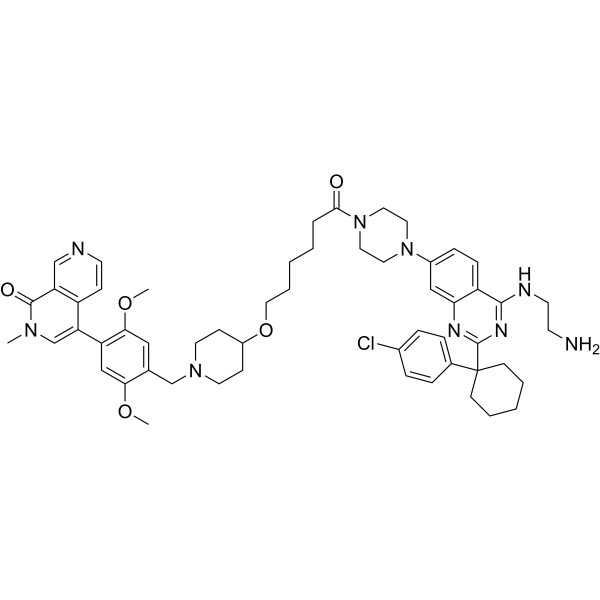
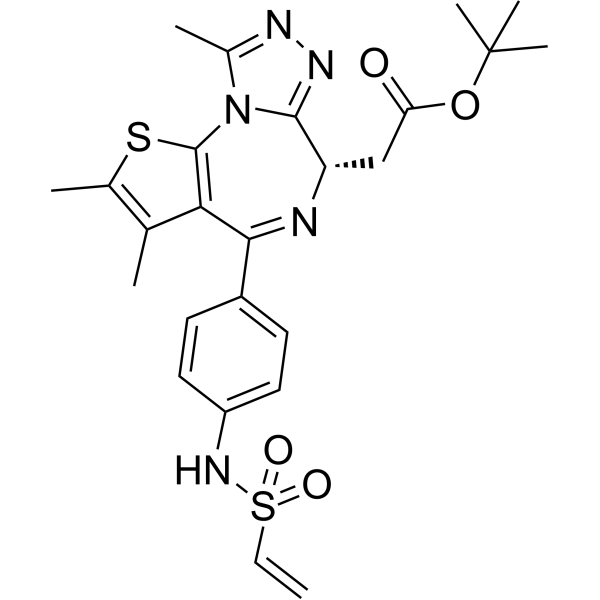
0 ImagesIBG1 is a bivalent molecular glue degrader targeting BRD2/BRD4, with IC50 values of 12.8 nM and 462 nM, respectively, and an EC50 of 44 nM. By binding to the adjacent BD1 and BD2 bromodomains of BRD2 and BRD4, IBG1 stabilizes the ternary complex formed with DCAF16, thereby driving CRL-mediated ubiquitination and proteasomal degradation. IBG1 induces cancer cell apoptosis and inhibits cancer cell growth in a DCAF16-dependent manner, and downregulates MYC expression through DCAF16-independent BET bromodomain inhibition. IBG1 can be used in research of various cancers including prostate cancer.

-
dBRD 9-A
 0 Images
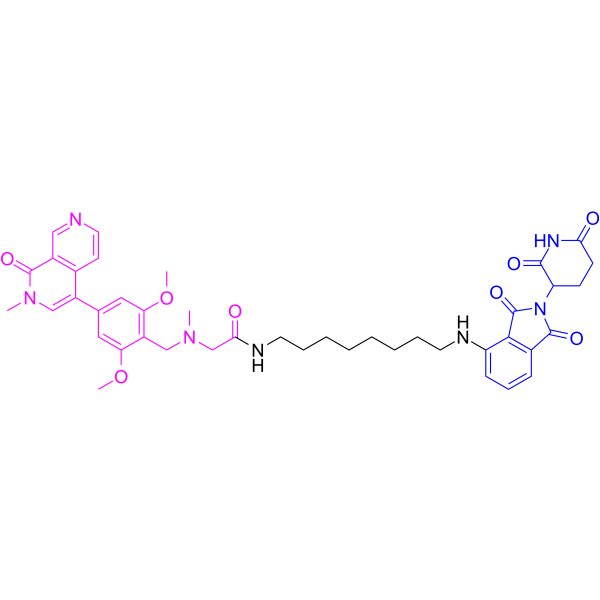
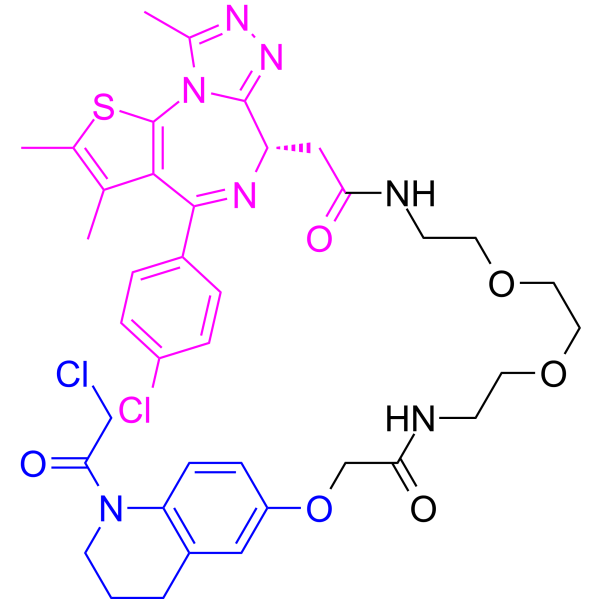
dBRD 9-A is a selective BRD9 PROTAC degrader. dBRD 9-A induces near complete BRD9 degradation dependent on E3 ubiquitin ligase CRBN and BRD9 bromodomain engagement, and drives loss of BRD9 chromatin binding genome-wide. dBRD 9-A downregulates oncogenic SS18-SSX-driven transcriptional programs, super enhancer-associated gene expression, and SS18-SSX1 super enhancer binding, and depletes GBAF complex members GLTSCR1/1L from SS18-SSX complexes. dBRD 9-A induces cell cycle arrest and increases apoptosis in synovial sarcoma cells. dBRD 9-A can be used for the research of synovial sarcoma.
-
BRD4 degrader-3
 0 Images
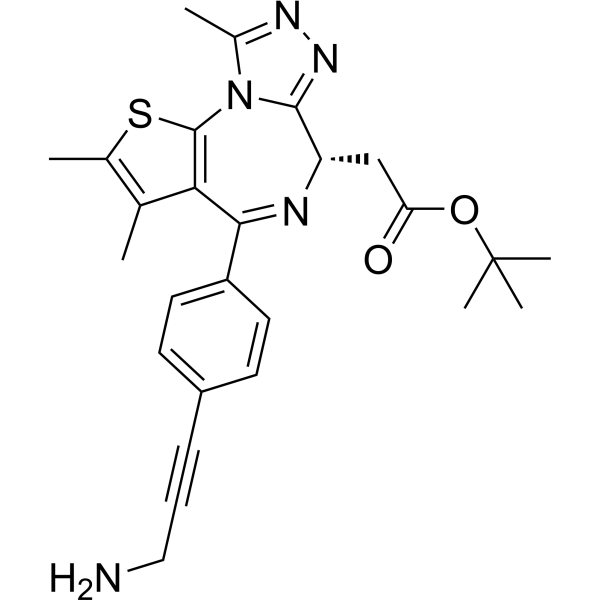
BRD4 degrader-3 is a molecular glue degrader targeting BRD4, with binding activity towards the BD1 and BD2 domains of BRD4. BRD4 degrader-3 regulates the activity of BRD4. BRD4 degrader-3 inhibits MYC expression in cancer cells. BRD4 degrader-3 suppresses cell proliferation. BRD4 degrader-3 can be used in research related to acute myeloid leukemia and prostate cancer.
-
MZP-54
 0 Images
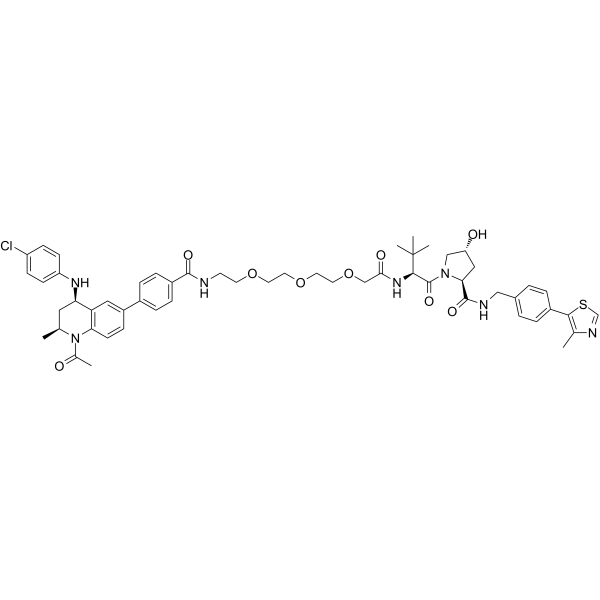
MZP-54 is a PROTAC degrader that selectively targets BRD3/BRD4, with a DC50 of < 0.05 μM in AML cells. MZP-54 recruits VHL to form a ternary complex, induces BRD3/BRD4 degradation via the ubiquitin-proteasome pathway, inhibits c-Myc expression, and exerts antiproliferative activity. MZP-54 can be used for the research of acute myeloid leukemia.



