



FXR
FXR; NR1H4
Farnesoid X receptor (FXR) is a ligand-activated transcription factor belonging to the nuclear receptor superfamily. FXR regulates the expression of various genes by binding to DNA either as a monomer or a heterodimer with the common partner for NRs, retinoid x receptor (RXR), to FXR response elements. Two known FXR genes exist, the FXRα and FXRβ.
FXR is mainly expressed in liver and small intestine, where it plays an important role in bile acid, lipid, and glucose metabolism. FXR affects several metabolic pathways through its specific target genes, regulating bile acid (BA) synthesis and homeostasis, glucose and lipid metabolism, also exhibiting a crucial role in intestinal bacterial growth and liver regeneration.
All Product Categories
-
FXR Related Products (183)
Related Products (183)

-
Antibodies (2)
-
FXR agonist 14
 0 ImagesCat. No.: HY-180221CAS No.: 3062988-46-6FXR agonist 14 (Compound V15) is a partial, selective, orally active FXR agonist with an EC50 of 0.67 nM. FXR agonist 14 ameliorates pathological features in high-fat and high-sugar diet-induced MASH mice. FXR agonist 14 shows significant anti-cholestatic liver disease effects.
-
(-)-(E)-Guggulsterone (Standard)
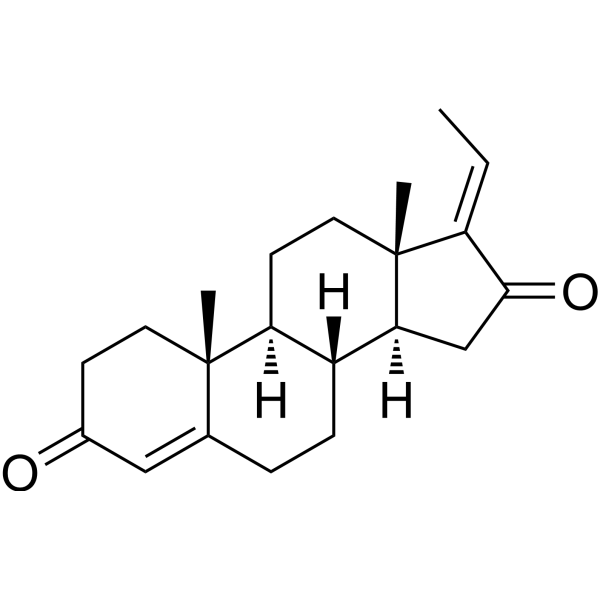 0 ImagesSynonyms: (E)-Guggulsterone (Standard)(-)-(E) -guggulsterone (Standard) is the analytical standard for (-)-(E) -guggulsterone ((E)-Guggulsterone) (HY-N7781). (-)-(E)-Guggulsterone is an orally active natural stereoisomer of Guggulsterone (HY-107738). (-)-(E)-Guggulsterone is an antagonist for the Farnesoid X Receptor (FXR) with an IC50 of 24.06 μM and possesses potent hypolipidemic properties. (-)-(E)-Guggulsterone suppresses dengue virus (DENV) replication by upregulating antiviral interferon responses by inducing HO-1 expression via Nrf2 activation. (-)-(E)-Guggulsterone exhibits antibacterial activities against Bacillus subtilis, Staphylococcus aureus and Pseudomonas aeruginosa. (-)-(E)-Guggulsterone has cardiac protective and antioxidant activities in rats.

-
FXR agonist 11
 0 ImagesCat. No.: HY-168332CAS No.: 2768502-17-4FXR agonist 11 (Compound 14) is an FXR agonist with an EC50 of 1.2 μM and a maximum effect of 73.7%. FXR agonist 11 can significantly increase GSH levels in the liver and is used to study drug-induced liver injury diseases.
-
PX20350
 0 ImagesCat. No.: HY-139418CAS No.: 1198085-23-2
-
Tauro 6-ethlchenodeoxycholic acid-d5(sodium)
 0 ImagesCat. No.: HY-W653920Tauro 6-ethlchenodeoxycholic acid-d5 sodium is deuterium labeled Tauro-obeticholic acid (HY-135399). Tauro-obeticholic acid is an active metabolite of Obeticholic acid. Obeticholic acid is an orally bioavailable farnesoid-X receptor (FXR) agonist.
-
FXR agonist 17
 0 ImagesCat. No.: HY-182026CAS No.: 3107769-23-0FXR agonist 17 is an orally active, steroidal FXR agonist with EC50 values of 42.2 nM (TR-FRET) and 176.4 nM (luciferase reporter assay), respectively. FXR agonist 17 activates TGR5 (EC50 = 2.6 μM) but does not activate hMRGPRX4. FXR agonist 17 exerts anti-inflammatory, hepatoprotective and antifibrotic effects, improves the non-alcoholic steatohepatitis (NAFLD) activity score and reduces the severity of liver fibrosis. FXR agonist 17 can be used for the research of NAFLD, cholestatic liver disease and liver fibrosis.
-
(E)-GW 4064
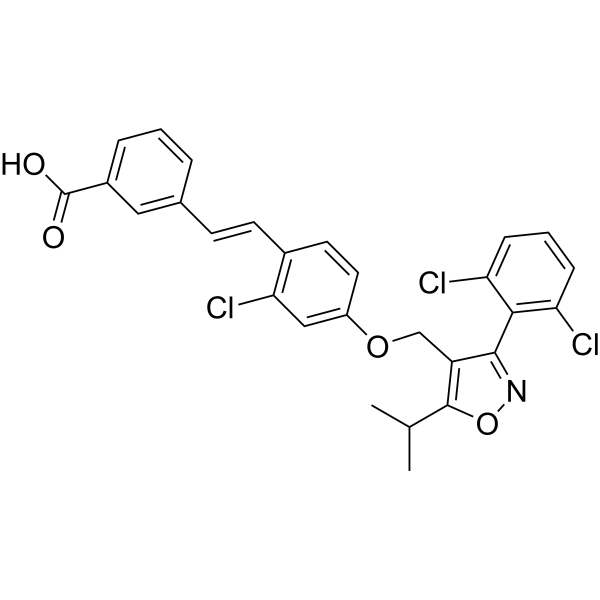 0 ImagesCat. No.: HY-50108ACAS No.: 1089660-72-9(E)-GW 4064 is a FXR agonist.
-
Fexarine
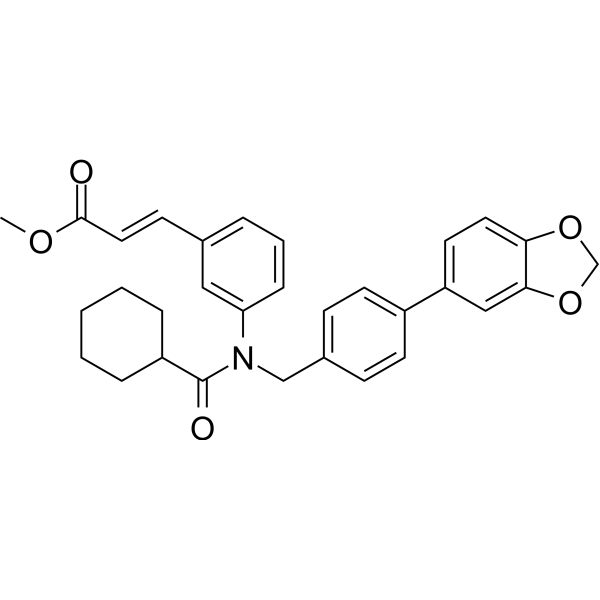 0 ImagesCat. No.: HY-122338CAS No.: 574013-67-5Fexarine is a potent, non-steroidal and selective agonist of farnesoid X receptor (EC50: 38 nM). Fexarine can be used for the research of diseases linked to cholesterol, bile acids.
-
FXR/CES2 modulator 1
 0 ImagesCat. No.: HY-168516CAS No.: 3004676-87-0
-
Hexanorcucurbitacin D
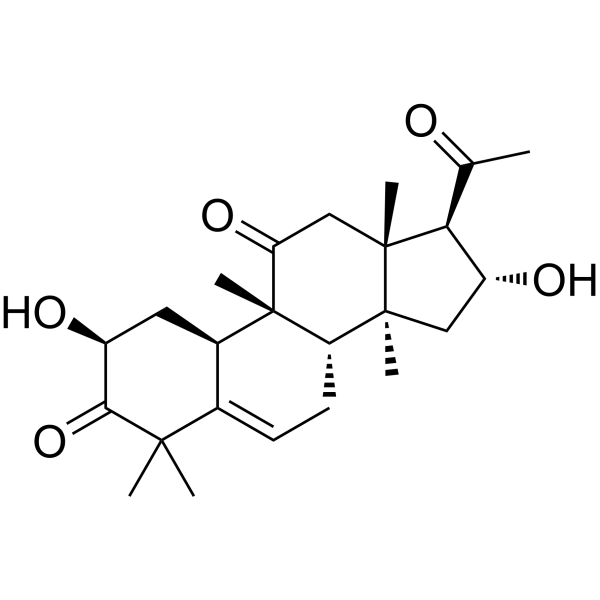 0 ImagesCat. No.: HY-N11081CAS No.: 29065-05-2Hexanorcucurbitacin D, a cucurbitacin, is a weak ecdysteroid receptor agonist. Hexanorcucurbitacin D can be isolated from Trichosanthes cucumeroides roots. Hexanorcucurbitacin D can be used for the research of cardiovascular disease (CVD).
-
Chenodeoxycholic Acid-d7
 0 ImagesCat. No.: HY-W712932Synonyms: CDCA-d7Chenodeoxycholic Acid-d7 (CDCA-d7) is the deuterium labeled Chenodeoxycholic Acid (HY-76847). Chenodeoxycholic Acid is a hydrophobic primary bile acid that activates nuclear receptors (FXR) involved in cholesterol metabolism.
-
BAR-2227
 0 ImagesCat. No.: HY-169192CAS No.: 2409154-23-8BAR-2227 (compound 3a) is a FXR agonist and LIFR inhibitor. BAR-2227 can be used to study liver fibrosis and inflammation.
-
Nelumol A
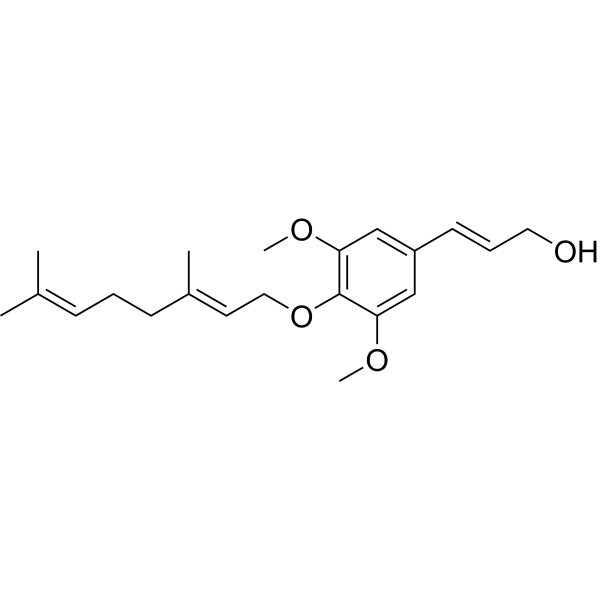 0 ImagesCat. No.: HY-N3209CAS No.: 77836-86-3Nelumol A is a farnesoid X receptor (FXR) agonist.
-
dual FXR/PPARδ agonist-2
 0 ImagesCat. No.: HY-175516dual FXR/PPARδ agonist-2 is a FXR/PPARδ dual agonist through hybridation of FXR agonist GW-4064 and PPARδ agonist GW-0742.dual FXR/PPARδ agonist-2 displays potent dual-target activities with a FXR agonistic EC50 of 12.28 nM and 69 % PPARδ activation at 100 nM. dual FXR/PPARδ agonist-2 shows anti-fibrotic effects in pulmonary fibrosis mouse model.
-
3-Epideoxycholic acid-d5
 0 ImagesCat. No.: HY-W7130103-Epideoxycholic acid-d5 is the deuterium labeled 3-Epideoxycholic acid (HY-48814). 3-Epideoxycholic acid is the microbial metabolite of Deoxycholic acid (HY-N0593). 3-Epideoxycholic acid targets FXR of dendritic cells, reduces their immunostimulatory properties, promotes the generation of Treg cells, and exhibits anti-inflammatory activity. 3-Epideoxycholic acid promotes the growth of bacteria Bacteroides.
-
FXR agonist 16
 0 ImagesCat. No.: HY-181761CAS No.: 3099198-78-1FXR agonist 16 is a FXR agonist with an EC50 of 2.2 μM. FXR agonist 16 activates FXR transcriptional activity, upregulates SHP and BSEP, and downregulates Cyp7a1. FXR agonist 16 exhibits hepatoprotective activity and reduces AST and ALT levels in free fatty acid-induced hepatocellular injury models. FXR agonist 16 can be used for the research of liver injury.
-
FXR antagonist 4
 0 ImagesCat. No.: HY-183279FXR antagonist 4 (Compound 4l) is an orally active, selective FXR antagonist with an IC50 of 0.70 μM. FXR antagonist 4 binds to FXR, differentially regulates bile acid and lipid transporter genes, and exerts no effect on gluconeogenesis-related genes. FXR modulator 1 activates the AMPK signaling pathway to inhibit fatty acid synthesis. FXR modulator 1 alleviates hepatic steatosis, ballooning degeneration and fibrosis, and improves dyslipidemia. FXR modulator 1 can be used for research on metabolic dysfunction-associated steatohepatitis.
-
Glyco-obeticholic acid-d5
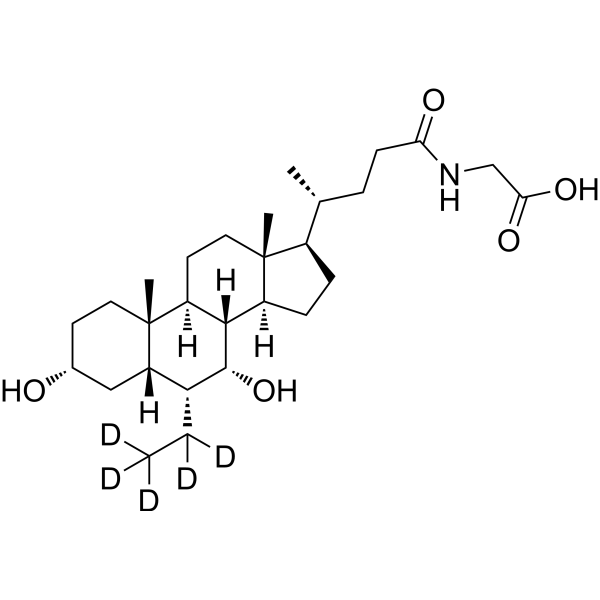 0 ImagesCat. No.: HY-135400SGlyco-obeticholic acid-d5 is the deuterium labeled Glyco-Obeticholic acid. Glyco-obeticholic acid is an active metabolite of Obeticholic acid. Obeticholic acid is a farnesoid X receptor (FXR) agonist.
-
FXR agonist 15
 0 ImagesCat. No.: HY-179703CAS No.: 2991276-14-1FXR agonist 15 is a selective, potent and orally active farnesoid X receptor (FXR) agonist with EC50 of 0.76 μM. FXR agonist 15 exhibits no obvious activation on other nuclear receptors including LXRα/β, PXR, PPARα/β/γ, THR-β, with EC50 values all >10 μM. FXR agonist 15 can alleviate steatosis, lobular inflammation, hepatocyte ballooning and liver fibrosis. FXR agonist 15 can be used for the research of nonalcoholic steatohepatitis (NASH).




