



Fungal
An antifungal agent is a drug that selectively eliminates fungal pathogens from a host with minimal toxicity to the host.
Classes: 1. Polyene Antifungal Drugs: Amphotericin, nystatin, and pimaricin interact with sterols in the cell membrane (ergosterol in fungi, cholesterol in humans) to form channels through which small molecules leak from the inside of the fungal cell to the outside. 2. Azole Antifungal Drugs: Fluconazole, itraconazole, and ketoconazole inhibit cytochrome P450-dependent enzymes (particularly C14-demethylase) involved in the biosynthesis of ergosterol, which is required for fungal cell membrane structure and function. 3. Allylamine and Morpholine Antifungal Drugs: lylamines (naftifine, terbinafine) inhibit ergosterol biosynthesis at the level of squalene epoxidase. The morpholine drug, amorolfine, inhibits the same pathway at a later step. 4. Antimetabolite Antifungal Drugs: 5-Fluorocytosine acts as an inhibitor of both DNA and RNA synthesis via the intracytoplasmic conversion of 5-fluorocytosine to 5-fluorouracil.
All Product Categories
-
Fungal Related Products (2751)
Related Products (2751)

-
Antibodies (1)
-
Related Compound Screening Libraries (1)
-
Pyrimethanil (Standard)
 0 ImagesPyrimethanil (Standard) is the analytical standard of Pyrimethanil. This product is intended for research and analytical applications. Pyrimethanil is an anilinopyrimidine and broad-spectrum contact fungicide for the control of Botrytis spp. on a wide variety of crops. Pyrimethanil inhibits the biosynthesis of methionine and other amino acids in Botrytis cinerea. Pyrimethanil can be used for the research of fungal diseases prevention on fruit, vegetable and ornamental plants with mold infection.

-
4',7-Dimethoxyisoflavone
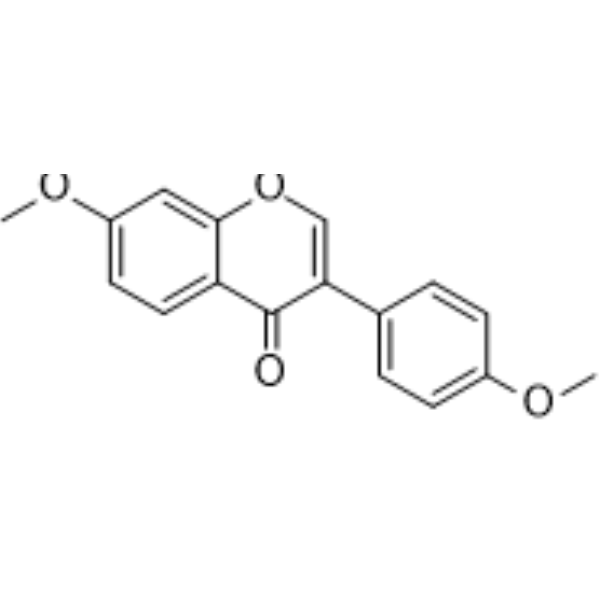 0 Images4',7-Dimethoxyisoflavone is isolated from the leaves of Albizzia lebbeck, which shows antifungal activity.
-
Flufenoxadiazam
 0 ImagesFlufenoxadiazam is a commercially available 1,2,4-oxadiazole-containing fungicide produced by BASF, with activity against Phakopsora pachyrhizi and Puccinia triticina. Flufenoxadiazam contains a trifluoromethyloxadiazole substructure essential for its activity. Flufenoxadiazam can be used for the research of soybean rust and corn rust.
-
Perinaphthenone
 0 ImagesSynonyms: PhenalenonePerinaphthenone has antifungal activity, with IC50s of 36.2 μM (at day 3), 13.3 μM (at day 3), and 39.0 μM (at 60 h) for Botrytis spp., Fusarium spp. and Botryodiplodia spp., respectively.
-
Homogentisic acid lactone
 0 ImagesHomogentisic acid lactone (Compound 1) is a fungal metabolite with fungicidal activity, which is found in the fungus WF5. Homogentisic acid lactone is active against the plant pathogenic fungus F. graminearum. Homogentisic acid lactone can be used as a substrate in the determination of serum paraoxonase/arylesterase 1 (PON1) activity.
-
Itraconazole-d3
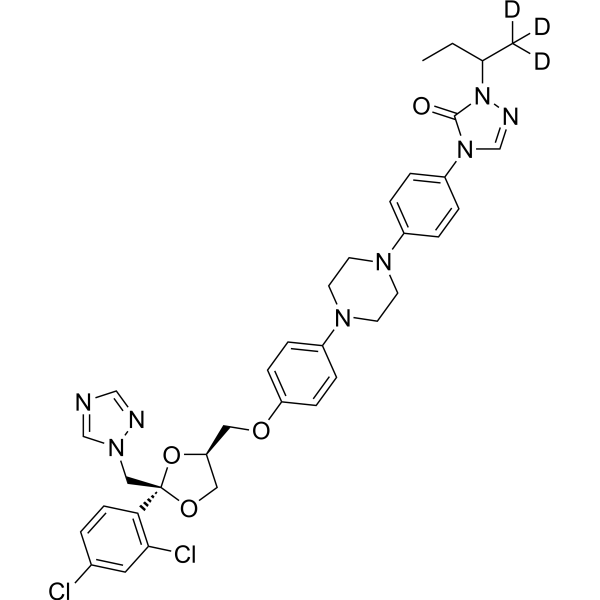 0 ImagesSynonyms: R51211-d3Itraconazole-d3 (R51211-d3) is the deuterium labeled Itraconazole (HY-17514). Itraconazole (R51211) is a triazole antifungal agent and a potent and orally active Hedgehog (Hh) signaling pathway antagonist with an IC50 of ~800 nM. Itraconazole potently inhibits lanosterol 14α-demethylase (cytochrome P450 enzyme), thereby inhibits the oxidative conversion of lanosterol to ergosterol. Itraconazole has anticancer and antiangiogenic effects. Itraconazole is a oxysterol-binding protein (OSBP) inhibitor.
-
Triclosan-13C12
 0 ImagesCat. No.: HY-W747491CAS No.: 1365620-36-5Triclosan-13C12 is 13C labeled Triclosan (HY-B1119). Triclosan is a broad-spectrum antibacterial agent that inhibits bacterial fatty acid synthesis at the enoyl-acyl carrier protein reductase (FabI) step. Triclosan inhibits E. coli enoyl-acyl carrier protein reductase (FabI) and FabI containing a glycine-to-valine substitution at position 93 (FabIG93V) with IC50s of 2 μM and 10 μM, respectively. Triclosan causes apoptotic effect in cultured rat neural stem cells (NSC). Triclosan exacerbates colitis and colitis-associated colorectal tumorigenesis in animal models.
-
Rolusafine
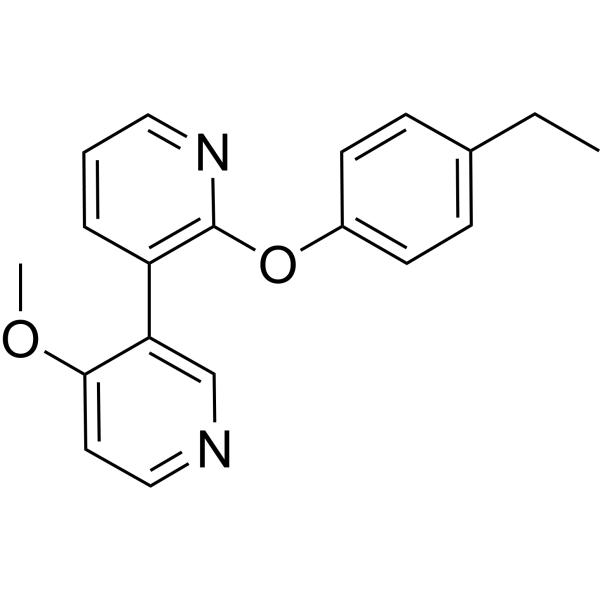 0 ImagesRolusafine is an antifungal agent.
-
Cercosporamide
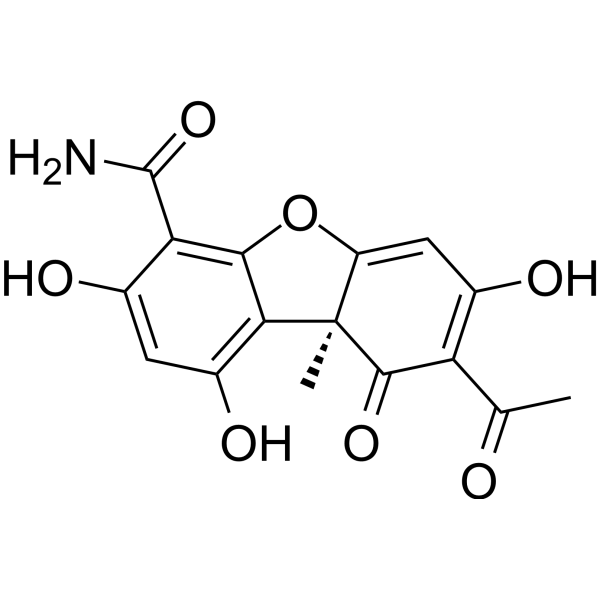 0 ImagesCat. No.: HY-16982CAS No.: 131436-22-1Synonyms: (-)-Cercosporamide
-
Murrayone
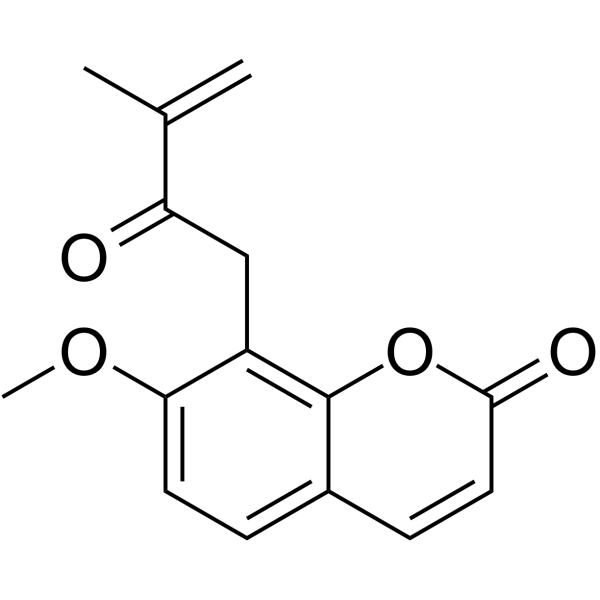 0 ImagesMurrayone is a coumarin compound with antifungal and antiplatelet activities. Murrayone disrupts fungal redox homeostasis, impairs cell membrane integrity, inhibits sporulation, spore germination and hyphal growth, and causes morphological damage to fungal cells. Murrayone reduces the disease severity of blueberry fruits infected with Botrytis cinerea. Murrayone can be used in studies related to fungal infections and vascular diseases.
-
SCH 51048
 0 ImagesSCH 51048 is a compound that can produce active metabolites, and its active metabolites have antifungal activity. Through metabolic studies and activity screening of the compound, metabolites and compounds with better activity were discovered.
-
Pectate Lyase
 0 ImagesPectate Lyase is an enzyme that exists in microorganisms, plants and animals. Pectate Lyase degrades pectic acid via the β-elimination mechanism. Pectate Lyase induces plant immune responses and participates in virulence. Pectate Lyase is applied in fields such as plant fiber degumming and fruit and vegetable processing.
-
SDH-IN-2
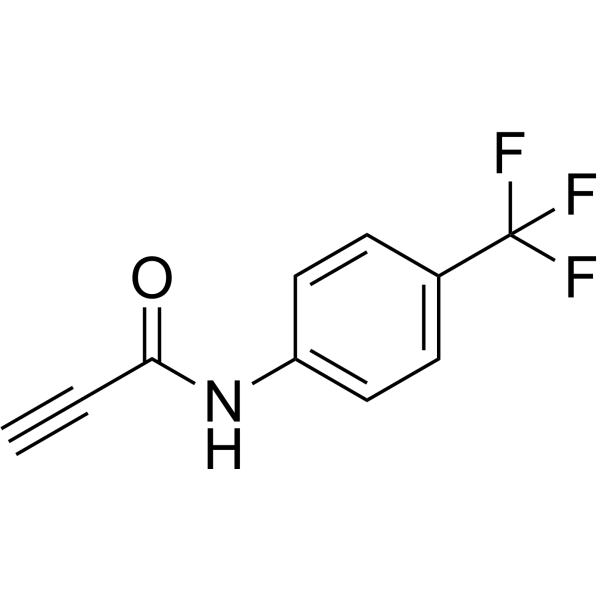 0 ImagesSDH-IN-2 is a potent succinate dehydrogenase (SDH) inhibitor with an IC50 of 0.55 μg/mL. SDH-IN-2 is also an antifungal agent. SDH-IN-2 inhibits phytopathogenic fungia with average EC50 values of 3.82-9.81 μg/mL for all the fungi. SDH-IN-2 is a click chemistry reagent, it contains an Alkyne group and can undergo copper-catalyzed azide-alkyne cycloaddition (CuAAc) with molecules containing Azide groups.
-
(±)-Voriconazole
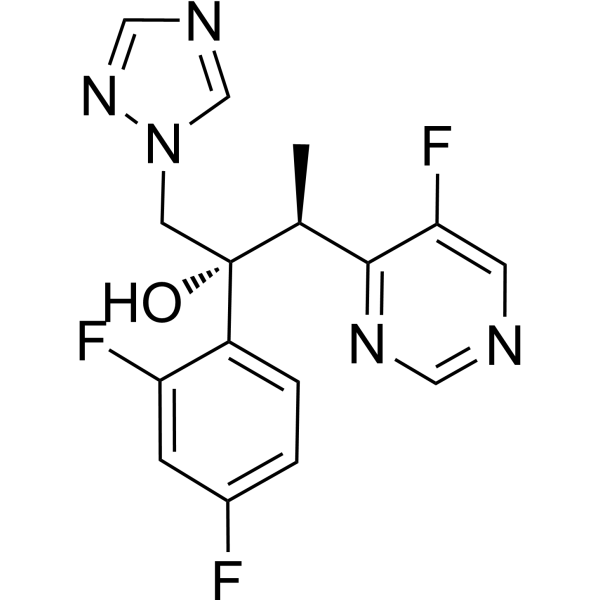 0 ImagesSynonyms: (±)-UK-109496(±)-Voriconazole ((±)-UK-109496) is a relative configuration of Voriconazole (HY-76200). Voriconazole is an antifungal agent.
-
Itraconazole-d5
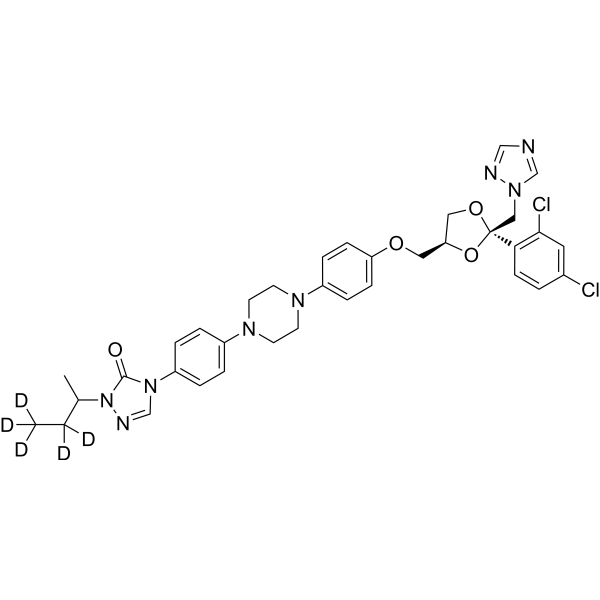 0 ImagesSynonyms: R51211-d5Itraconazole-d5 is the deuterium labeled Itraconazole. Itraconazole (R51211) is a triazole antifungal agent and a potent and orally active Hedgehog (Hh) signaling pathway antagonist with an IC50 of ~800 nM. Itraconazole potently inhibits lanosterol 14α-demethylase (cytochrome P450 enzyme), thereby inhibits the oxidative conversion of lanosterol to ergosterol. Itraconazole has anticancer and antiangiogenic effects.
-
L-Triguluronic acid
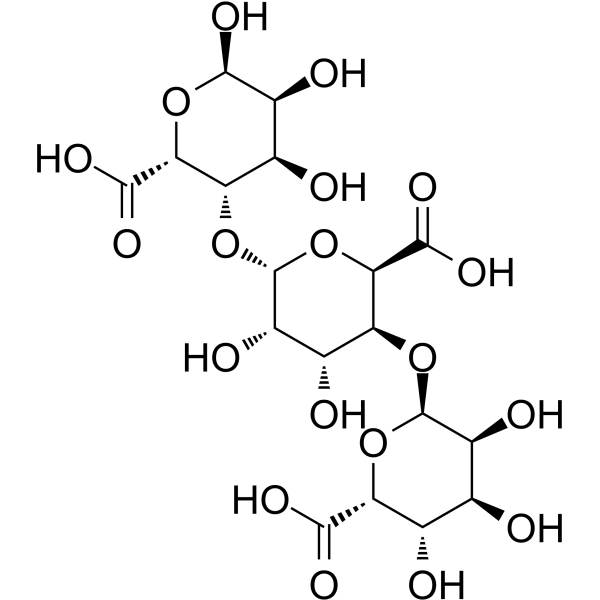 0 ImagesL-Triguluronic acid is a linear polysaccharide copolymer composed of three L-guluronic acid (G) and can be used to from Alginate. Alginate is a generic name of unbranched polyanionic polysaccharides and can be used for the research of anti-fungal agents delivery carries.
-
β-Phenylethyl β-D-glucoside
 0 ImagesSynonyms: Phenylethyl β-D-glucopyranosideβ-Phenylethyl β-D-glucoside (Phenylethyl β-D-glucopyranoside) (Compound 7), a phenolic compounds, is an antifungal agent. β-Phenylethyl β-D-glucoside can be isolated from the leaves of Piper crocatum. β-Phenylethyl β-D-glucoside has antifungal activity against Candida albicans. β-Phenylethyl β-D-glucoside can be used for fungal infections research.
-
Lactose octaacetate
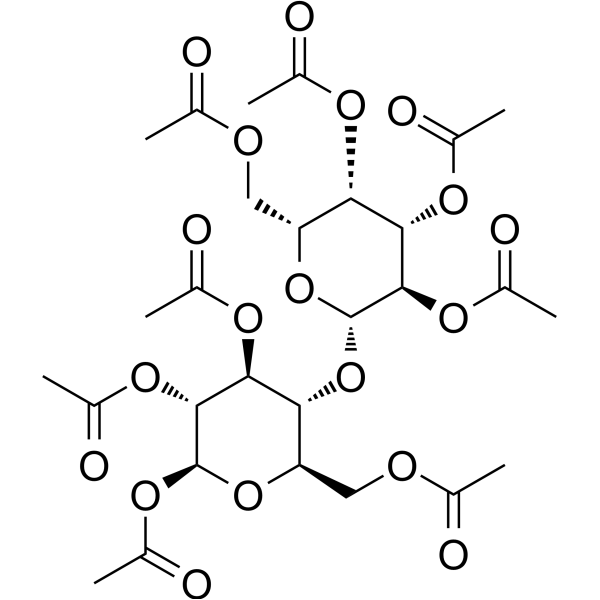 0 ImagesSynonyms: β-OctaacetyllactoseLactose octaacetate shows mild to moderate antifungal activity against some fungi, but it has low or no activity against bacteria and yeast. Lactose octaacetate shows low cytotoxicity to MDBK cells, Hep-2 and MDCK cells. Lactose octaacetate has antiviral activity against PV-1.




