



IRAK3
IRAK3, also known as IRAK-M, is a member of the interleukin-1 receptor-associated kinase (IRAK) family that primarily functions as a negative regulator of Toll-like receptor (TLR) and interleukin-1 receptor (IL-1R) signaling[1][2]. Mechanistically, IRAK3 inhibits the phosphorylation of IRAK1, thereby suppressing downstream activation of NF-κB and the NLRP3 inflammasome, reducing proinflammatory cytokine production[2]. In metabolic disease models, IRAK3 expression in macrophages is induced by PPARγ agonists, promoting an M2 anti-inflammatory phenotype and attenuating insulin resistance and atherosclerosis[1]. Pathway analyses further indicate that IRAK3 participates in NF-κB, MAPK, and cytokine-cytokine receptor signaling, integrating innate immune responses with metabolic regulation[1]. Compared with other IRAK isoforms, IRAK3 lacks canonical kinase activity and acts primarily through scaffolding and inhibitory mechanisms, distinguishing it from IRAK1 and IRAK4 in both inflammatory and autoimmune contexts[2]. Experimental evidence in autoimmune encephalomyelitis demonstrates that overexpression of IRAK3 limits neuroinflammation and pyroptosis in microglia, while knockout models exacerbate disease severity through enhanced IRAK1 phosphorylation[2]. For research applications, modulation of IRAK3 using agonists or gene expression tools allows precise investigation of macrophage polarization, inflammatory signaling, and therapeutic strategies targeting TLR-mediated pathways[1][2]. Overall, IRAK3 serves as a key checkpoint in innate immunity, linking receptor-mediated signaling to cellular homeostasis and disease modulation.
References:
- [1]. Wang Q, et al. Exploring the biological functions and immune regulatory roles of IRAK3, TNFRSF1A, CX3CR1, and JUNB in T2DM combined with MAFLD: integrated bioinformatics and single-cell analysis. Front Immunol. 2025 Aug 22;16:1587225. [Content Brief]
- [2]. Wang Y, et al. IRAK-M suppresses the activation of microglial NLRP3 inflammasome and GSDMD-mediated pyroptosis through inhibiting IRAK1 phosphorylation during experimental autoimmune encephalomyelitis. Cell Death Dis. 2023 Feb 10;14(2):103. [Content Brief]
All Product Categories
-
IRAK3 Related Products (3)
Related Products (3)


-
PROTAC IRAK3 degrader-1
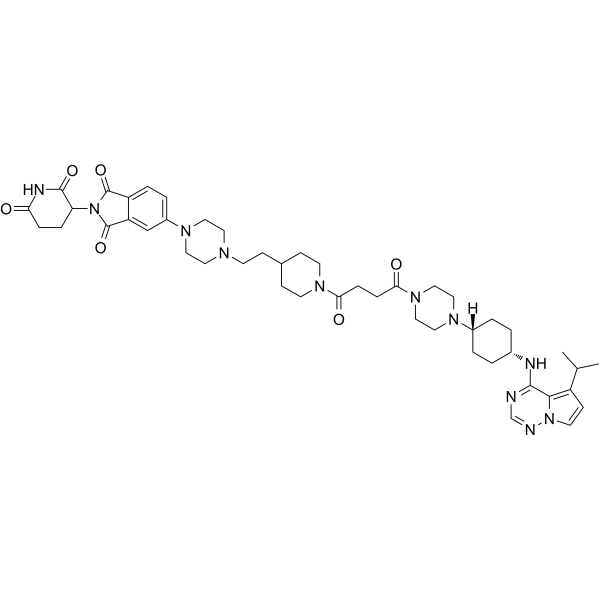 0 ImagesCat. No.: HY-142662CAS No.: 2712600-00-3




