



JNK
c-Jun N-terminal kinase
JNK (c-Jun N-terminal kinase), a kinase subfamily belonging to the MAPK, is activated in response to various stress stimuli and possesses a wide variety of regulatory functions. The JNK family of serine/threonine protein kinases comprises three isoforms (JNK1, JNK2 and JNK3). JNKs are involved in the emergence and progression of diverse pathologies such as neurodegenerative, cardiovascular and metabolic disorders as well as inflammation and cancer.
Similar to the other MAP kinases, JNKs are activated by a phosphorylation cascade generally involving two types of upstream kinases, the so-called MAP kinase kinase kinases (MAP3K, MKKK) and the MAP kinase kinases (MAP2K; MKK). At the MAP2K level, JNKs are activated by MKK4 and MKK7, the former is a common activator of the JNK and the p38 MAP kinase signaling pathway. The JNK cascade shares various intersection points with other pathways making it a part of a complex signaling network.
JNK Isoform Specific Products
All Product Categories
-
JNK Related Products (543)
Related Products (543)

-
Antibodies (16)
-
JNK Isoform Comparison
-
Nimustine
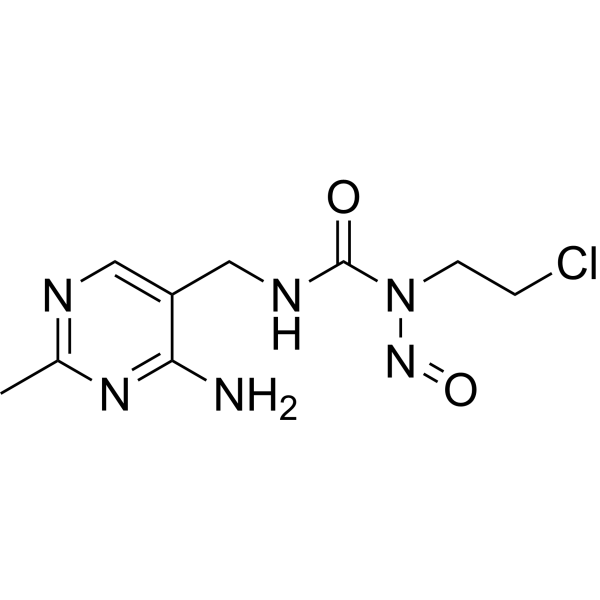 0 ImagesCat. No.: HY-13703CAS No.: 42471-28-3Nimustine is an alkylating agent, which induces DNA double-strand breaks (DSBs) and inter-strand crosslinks (ICLs), thereby activating the DNA damage response (DDR) signaling pathway. Nimustine activates p38 MAPK/JNK signaling pathway, and exhibits antitumor activity.
-
JNK3-IN-11
 0 ImagesCat. No.: HY-181993JNK3-IN-11 is a selective JNK3 inhibitor with an IC50 of 2.08 nM. JNK3-IN-11 binds to the JNK3 ATP-binding pocket, forming conserved hydrogen bonds with Met149 and a water-mediated hydrogen bond with Lys93. JNK3-IN-11 suppresses TGF-β1-induced c-Jun phosphorylation, reduces profibrotic markers COL1A1 and PAI-1, restores E-cadherin expression, and has protection against podocyte injure. JNK3-IN-11 can be used for the research of chronic kidney disease.
-
GR2-128
 0 ImagesCat. No.: HY-184396GR2-128 is a dual inhibitor targeting MLK3 and NAMPT with IC50 values of 84 nM and 14 nM, respectively. GR2-128 inhibits downstream JNK/c‑Jun signaling and reduces NAD+ levels. GR2-128 exhibits antiproliferative and pro-apoptotic activities in triple-negative breast cancer cells without significant toxicity to normal cells. GR2-128 suppresses tumor growth, reduces macrophage and neutrophil infiltration, and increases tumor T-cell markers in a syngeneic mouse model, and can be used for triple-negative breast cancer research.
-
Mapk10 Mouse Pre-designed siRNA Set A
 0 ImagesCat. No.: HY-RS08096
Mapk10 Mouse Pre-designed siRNA Set A contains three designed siRNAs for Mapk10 gene (Mouse), as well as a negative control, a positive control, and a FAM-labeled negative control.
-
OVA-E1 peptide
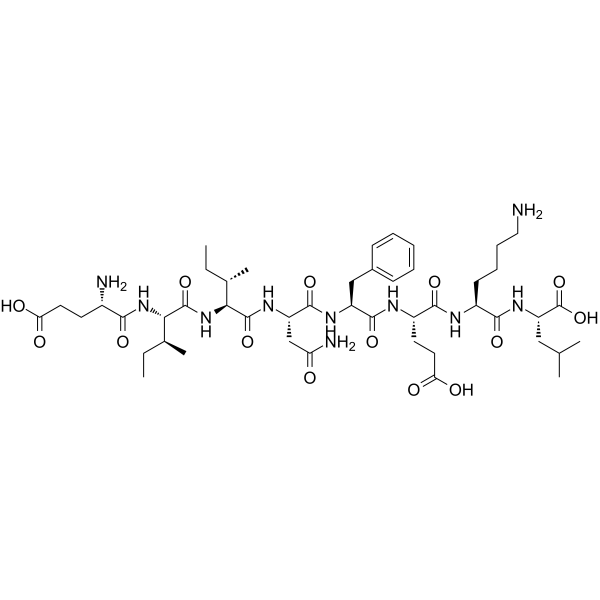 0 ImagesCat. No.: HY-P2319CAS No.: 153316-01-9OVA-E1 peptide, is an antagonist variant of SIINFEKL [OVA (257-264). OVA-E1 peptide, activates the p38 and JNK cascades similarly in mutant and wild-type thymocytes.
-
JNK-IN-24
 0 ImagesCat. No.: HY-175276CAS No.: 2226808-28-0JNK-IN-24, a JNK inhibitor, is an anti-metastatic cancer agent. JNK-IN-24 downregulates JNK and MMP1 expression in Scrib knockdown induced cancer tissues. JNK-IN-24 promotes recovery from tumorous wing disc phenotype of ScribRNAi. JNK-IN-24 can be used for the study in various epithelial cell-derived cancers.
-
Lucidone
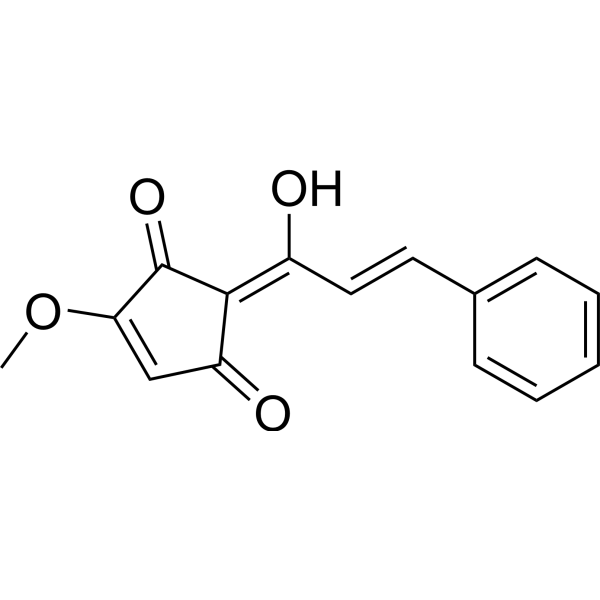 0 ImagesLucidone, an anti-inflammatory agent that can be isolated from the fruit of Lindera erythrocarpa Makino. Lucidone inhibits LPS-induced NO and PGE2 production in RAW 264.7 mouse macrophages. Lucidone also decreases TNF-α secretion, iNOS and COX-2 expression. Lucidone prevents NF-κB translocation and inhibits JNK and p38MAPK signals. Lucidone also has inhibitory activity against Dengue virus (DENV) (EC50=25 μM).

-
(Thr17)-c-Jun (11-23)
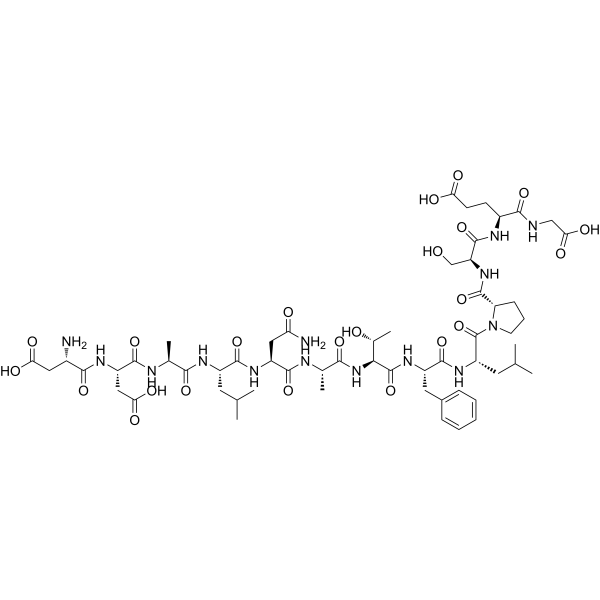 0 ImagesCat. No.: HY-P4699CAS No.: 2243207-05-6(Thr17)-c-Jun (11-23) is a fragment peptide of c-Jun.
-
BSO-07
 0 ImagesCat. No.: HY-162886BSO-07 is a ROS/JNK activator with significant anticancer effects, having an IC50 value of 24.81 μM against human breast cancer (BC) cells. BSO-07 induces apoptosis (Apoptosis) and paraptosis by activating JNK and increasing ROS levels, including enhancing the expression of apoptosis-associated proteins such as PARP, Bax, phosphorylated p53, ATF4, and CHOP, while decreasing the levels of anti-apoptotic proteins like Bcl-2, Bcl-xL, and Survivin. BSO-07 holds promise for research in the field of breast cancer.
-
Polyphyllin I (Standard)
 0 ImagesCat. No.: HY-N0047RCAS No.: 50773-41-6Polyphyllin I (Standard) is the analytical standard of Polyphyllin I. This product is intended for research and analytical applications. Polyphyllin I is a bioactive constituent extracted from Paris polyphylla, has strong anti-tumor activity. Polyphyllin I is an activator of the JNK signaling pathway and is an inhibitor of PDK1/Akt/mTOR signaling. Polyphyllin I induces autophagy, G2/M phase arrest and apoptosis.
-
Anti-inflammatory agent 116
 0 ImagesCat. No.: HY-184324CAS No.: 2975573-18-1Anti-inflammatory agent 116 is an anti-inflammatory agent. Anti-inflammatory agent 116 inhibits the abnormal activation of the NF-κB/MAPK signaling pathway. Anti-inflammatory agent 116 binds to the p50 subunit and impairs the DNA-binding ability of the p65-p50 heterodimer. Anti-inflammatory agent 116 inhibits LPS-induced production of NO and MtROS, secretion of IL-1β and TNF-α, expression of iNOS and COX-2, phosphorylation of IKK, IκB, p65, p38, ERK and JNK, as well as nuclear translocation of p65. Anti-inflammatory agent 116 alleviates sepsis-associated acute liver injury in mice. Anti-inflammatory agent 116 can be used for the research of sepsis-associated acute liver injury.
-
JNK-IN-19
 0 ImagesCat. No.: HY-169314CAS No.: 3059122-56-1JNK-IN-19 (Compound Q8) is a c-Jun N-terminal kinase inhibitor that is used for treating and/or preventing an injury before, during, or after a surgical procedure.

-
Curcumin monoglucoside
 0 ImagesCat. No.: HY-N12669CAS No.: 387818-26-0Curcumin monoglucoside is a flavonoid derivative possessing antioxidant, anti-apoptotic, neuroprotective effects, and antibacterial activity. Curcumin monoglucoside can be used in research on Parkinson's disease.
-
Lonchocarpin
 0 ImagesCat. No.: HY-119590CAS No.: 31501-55-0Synonyms: LonchocarpineLonchocarpin (Lonchocarpine) is a Wnt/β-catenin signaling pathway inhibitor. The IC50 of Lonchocarpin in SW480 pBAR/Renilla cells is 4 μM. Acting downstream of β-catenin stabilization, Lonchocarpin inhibits β-catenin nuclear localization and TCF-mediated transcription, as well as the proliferation and migration of colorectal cancer cells. Lonchocarpin enhances Nrf2/ARE-mediated antioxidant responses in primary astrocytes via AMPK and JNK-related signaling, reduces H2O2-induced ROS production, and increases the expression of HO-1, NQO1 and MnSOD. Lonchocarpin can be used in research on colorectal cancer and oxidative stress.
-
Umckalin
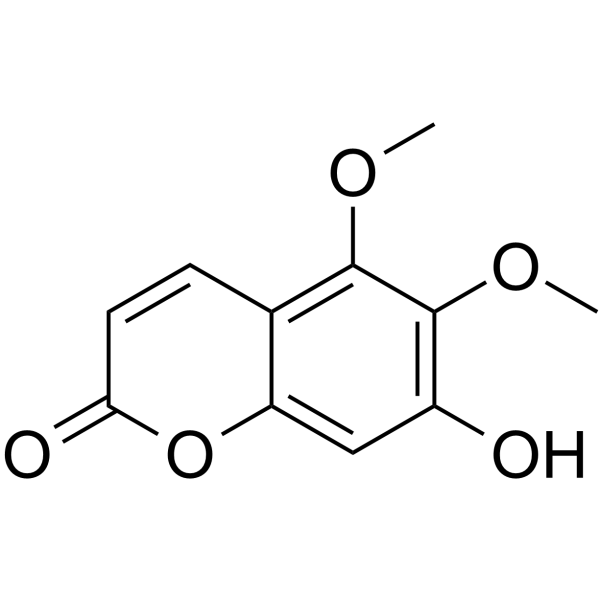 0 ImagesCat. No.: HY-N8712CAS No.: 43053-62-9
-
SET-171
 0 ImagesCat. No.: HY-168337CAS No.: 3052985-32-4SET-171 is a JNK (c-Jun N-terminal kinase) inhibitor that exhibits significant anticancer activity and lipid metabolism regulation by inhibiting liver pyruvate kinase (PKL) expression. In anticancer studies, SET-171 shows IC50 values of 8.82 μM and 2.97 μM against HepG2 and Huh7 cell lines, respectively, indicating high cytotoxicity. Additionally, in non-alcoholic fatty liver disease (NAFLD)-related studies, SET-171 significantly reduces triacylglycerol (TAG) levels and inhibits the expression of steatosis-related proteins. SET-171 holds promise for research on hepatocellular carcinoma (HCC) and NAFLD.
-
Mapk10 Rat Pre-designed siRNA Set A
 0 ImagesCat. No.: HY-RS08097
Mapk10 Rat Pre-designed siRNA Set A contains three designed siRNAs for Mapk10 gene (Rat), as well as a negative control, a positive control, and a FAM-labeled negative control.
-
Vernodalin
 0 ImagesCat. No.: HY-N19029CAS No.: 21871-10-3Vernodalin is an orally active, cytotoxic sesquiterpene lactone with a Kd value of 9.55 μM for p38 MAPK. Vernodalin downregulates the expression of phosphorylated ERK, JNK, AKT, PI3K, mTOR, p38MAPK, FAK, MMP-2, MMP-9, and uPA, while upregulates the expression of TIMP-1 and TIMP-2. Vernodalin increases ROS production, upregulates the expression of Bax and caspase 3, downregulates the expression of Bcl-2, and induces apoptosis (apoptosis), oxidative stress response and cell cycle arrest. Vernodalin inhibits the proliferation, adhesion and metastasis of cancer cells. Vernodalin enhances the activity of VEGF-B, AMPK and eNOS signaling pathways. Vernodalin alleviates myocardial injury and restores hemodynamic parameters. Vernodalin inhibits the growth of Trypanosoma brucei rhodesiense. Vernodalin can be used in research related to various cancers including gastric cancer, colorectal cancer and lung cancer, as well as African human trypanosomiasis and myocardial infarction.




