



Cereblon
Cereblon (CRBN) functions as the substrate receptor of the CRL4 E3 ubiquitin ligase, mediating protein ubiquitination and degradation[1]. Mechanistically, CRBN regulates the Wnt signaling pathway by targeting Casein kinase 1α (CK1α), a negative regulator of β-Catenin, for degradation[1]. This Wnt-dependent modulation of CRBN influences developmental and disease-relevant phenotypes in zebrafish and Drosophila models[1]. Clinically, CRBN mutations have been identified in multiple myeloma patients with extramedullary disease, conferring resistance to immunomodulatory drugs (IMiDs) and highlighting its role in drug responsiveness[2]. Notably, these mutations include a Q99 truncating mutation and an R283K point mutation, impairing CRBN-mediated anti-myeloma activity[2]. Compared with related ubiquitin ligase substrate receptors, CRBN exhibits unique specificity for neo-substrates under both IMiD-bound and unbound conditions, distinguishing its functional isoform-dependent effects[1][2]. CRBN-targeted agonists, including IMiDs, exploit this substrate specificity to induce selective protein degradation, providing a basis for experimental modulation of Wnt and cancer-related pathways[1][2]. Therefore, CRBN serves as a central regulator of ubiquitin-mediated proteostasis, bridging signal transduction, disease pathophysiology, and therapeutic interventions[1][2].
References:
- [1]. Shen C, et al. The E3 ubiquitin ligase component, Cereblon, is an evolutionarily conserved regulator of Wnt signaling. Nat Commun. 2021 Sep 6;12(1):5263. [Content Brief]
- [2]. Egan JB, et al. Extramedullary myeloma whole genome sequencing reveals novel mutations in Cereblon, proteasome subunit G2 and the glucocorticoid receptor in multi drug resistant disease. Br J Haematol. 2013 Jun;161(5):748-751. [Content Brief]
-
Cereblon Related Products (275)
Related Products (275)

-
WH-10417-099
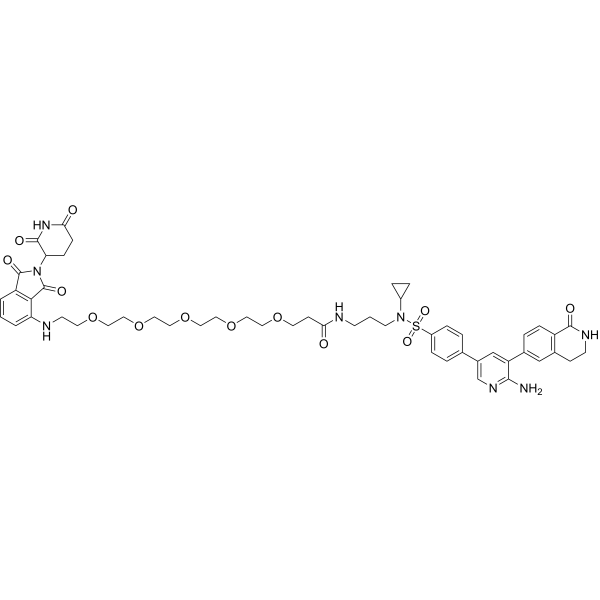 0 ImagesWH-10417-099 is a CRBN-based PROTAC multi-kinase degrader that induces the degradation of the maximum number of unique kinases (over 125 unique kinases, such as CSNK1E and PI3Kγ) simultaneously. WH-10417-099 induces protein degradation via the ubiquitin biotinylation (E-STUB) pathway, exhibits synergistic effects with SB-405483 (HY-W1135319). The E3 ligase ligand and linker of WH-10417-099 can form the conjugate Pomalidomide 4'-PEG5-acid (HY-131647).
-
ZXH-4-130
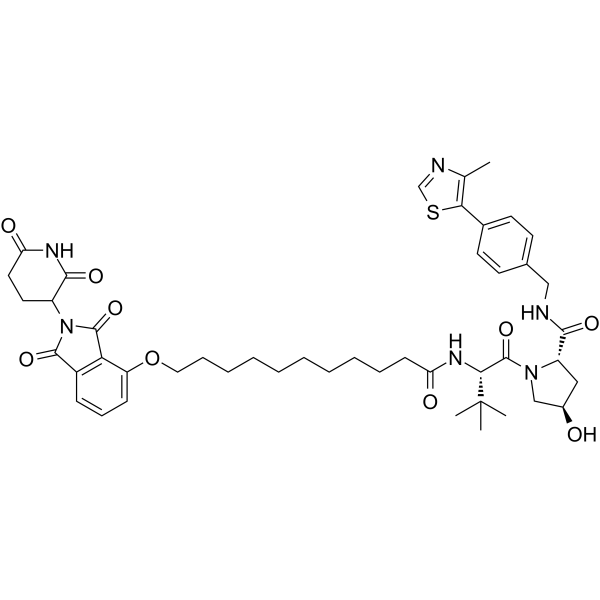 0 ImagesZXH-4-130 is a potent and selective Cereblon (CRBN) degrader. ZXH-4-130 recruits the VHL E3 ligase to specifically target CRBN as a substrate for selective degradation as a hetero-PROTAC molecule. ZXH-4-130 can be applied in studies on the biological functions of CRBN and related research of frontotemporal dementia.
-
PROTAC PARP2 degrader-1
 0 ImagesCat. No.: HY-183013CAS No.: 2925182-32-5PROTAC PARP2 degrader-1 is an orally active PARP2 PROTAC degrader with a DC50 of 2 μM. PROTAC PARP2 degrader-1 potently inhibits the enzymatic activities of PARP1 (IC50 = 2.74 nM) and PARP2 (IC50 = 0.32 nM), with approximately 10-fold higher selectivity for PARP2. PROTAC PARP2 degrader-1 induces cell cycle arrest and apoptosis, and exhibits significant anti-tumor efficacy in mouse models. PROTAC PARP2 degrader-1 can be used for the research of triple-negative breast cancer.
-
PROTAC Chk1 degrader-1
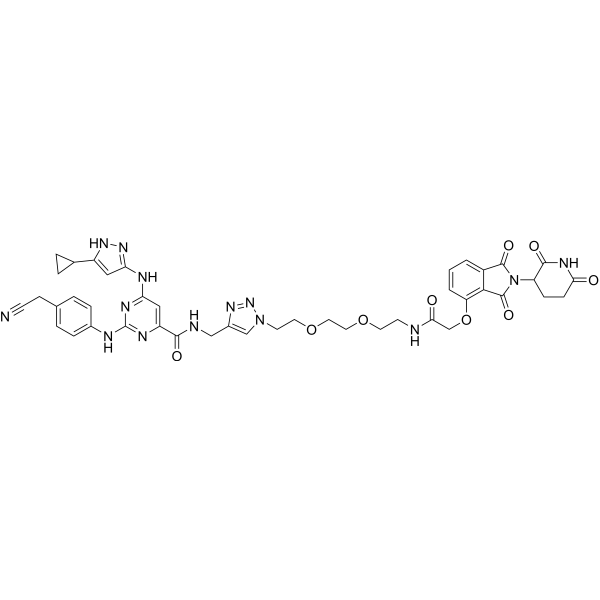 0 ImagesPROTAC Chk1 degrader-1 is a Chk1-targeting PROTAC.PROTAC Chk1 degrader-1 recruits the Cereblon E3 ligase to induce ubiquitination and proteasomal degradation of Chk1.PROTAC Chk1 degrader-1 exhibits Chk1 degradation activity in malignant melanoma cells without showing a hook effect.PROTAC Chk1 degrader-1 can be used for the research of malignant melanoma.
-
PROTAC HPK1 Degrader-5
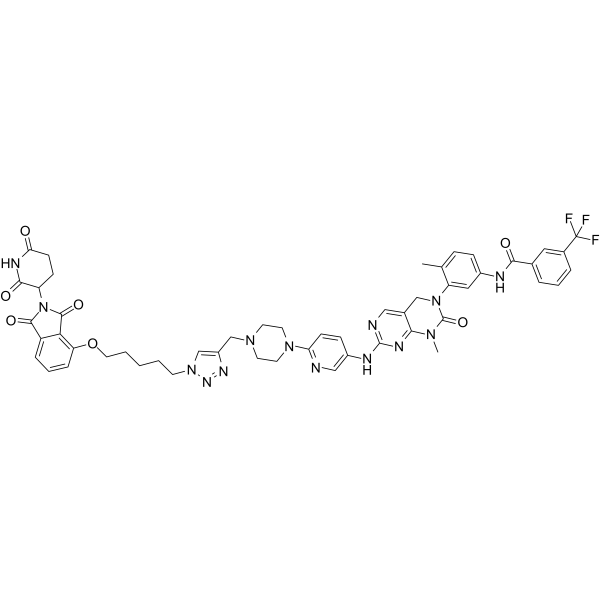
 0 ImagesCat. No.: HY-175547CAS No.: 3108744-13-1PROTAC HPK1 Degrader-5 is an orally effective and selective HPK1 PROTAC degrader with a DC50 of 5.0 nM. PROTAC HPK1 Degrader-5 recruits the CRBN E3 ligase to specifically induce the degradation of HPK1 via the ubiquitin-proteasome system, which in turn significantly inhibits SLP76 phosphorylation and enhances the activation of the ERK pathway, thereby stimulating the release of IL-2 and IFN-γ. PROTAC HPK1 Degrader-5 can be used in studies related to tumor immunity (e.g., colorectal cancer).
-
PROTAC BCL6 Degrader-2
 0 ImagesCat. No.: HY-178803Purity: 99.70%PROTAC BCL6 Degrader-2 is an orally active, selective BCL6 PROTAC degrader (DC50: 0.45 nM in HEK293T cells). PROTAC BCL6 Degrader-2 promotes ubiquitination and degradation of BCL6. It exhibits anticancer activity against BCL6-dependent diffuse large B-cell lymphoma. PROTAC BCL6 Degrader-2 can be used for the research of diffuse large B-cell lymphoma.
-
G9D-4
 0 ImagesCat. No.: HY-162749CAS No.: 3097803-96-5G9D-4 is a G9a PROTAC degrader. G9D-4 induces G9a degradation, reduces H3K9me2 levels, and prevents GLP interference via the CRBN ternary complex, proteasome and ubiquitin-like modification-dependent pathways. G9D-4 exerts antiproliferative activity and induces Apoptosis in pancreatic cancer cells. G9D-4 can be used for research on pancreatic cancer.
-
NU227326
 0 ImagesCat. No.: HY-173066CAS No.: 3048196-52-4NU227326 is a blood-brain barrier penetrant IDO1 PROTAC degrader, with a DC50 of 4.5 nM in HiBiT degradation assays. NU227326 degrades IDO1 in U87 and GBM43 cells, with DC50 values of 7.1 nM and 11.8 nM, respectively (WB assays). NU227326 is applicable to research related to glioblastoma, prostate cancer, triple-negative breast cancer, pancreatic cancer, and ovarian cancer.
-
PROTAC HDAC6 degrader 7
 0 ImagesCat. No.: HY-179421PROTAC HDAC6 degrader 7 is an orally active, highly efficient, and selective PROTAC degrader targeting histone deacetylase 6 (HDAC6) (IC50 = 118 nM). PROTAC HDAC6 degrader 7 can eliminate both the catalytic and zinc-finger ubiquitin-binding domain. PROTAC HDAC6 degrader 7 inhibits NLRP3 inflammasome assembly and activation, as well as blocks NF-κB signaling, thereby reducing the transcription and release of key inflammatory factors. PROTAC HDAC6 degrader 7 can reduce the mRNA levels of NLRP3, pro-IL-1β, TNF-α, and IL-6. PROTAC HDAC6 degrader 7 can be used for the study of inflammatory bowel disease (IBD).
-
YZ-836P
 0 ImagesCat. No.: HY-182820CAS No.: 3086041-35-9YZ-836P is a Protein arginine methyltransferase 5 (PRMT5) targeting agent. YZ-836P promotes ubiquitination and proteasomal degradation of PRMT5 in a cereblon (CRBN)-dependent manner, which in turn reduces levels of its downstream target KLF5. YZ-836P induces G1 phase cell cycle arrest in triple-negative breast cancer cells. YZ-836P induces Apoptosis in triple-negative breast cancer cells. YZ-836P exerts cytotoxic effects on triple-negative breast cancer cells. YZ-836P inhibits the growth of triple-negative breast cancer patient-derived organoids. YZ-836P inhibits the growth of triple-negative breast cancer xenografts in nude mice. YZ-836P can be used for the research of triple-negative breast cancer.
-
XY-06-007
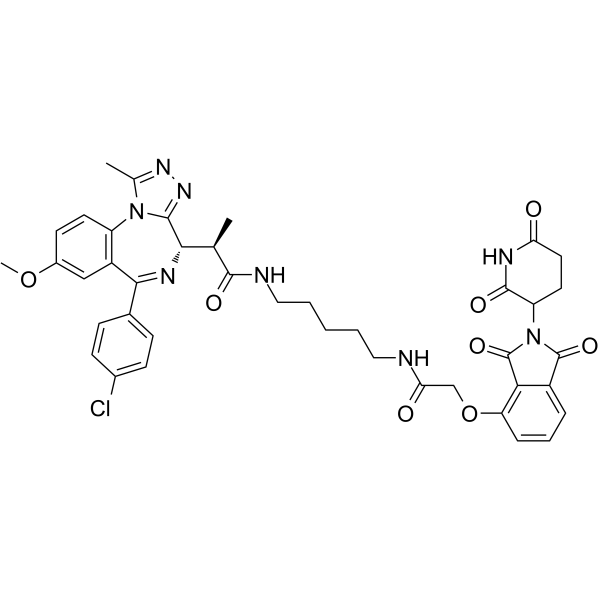 0 ImagesXY-06-007 is a mutation-selective PROTAC degrader targeting BRD4BD1L94V, with a DC50, 6 h of 10.2 nM in Flp293T cells. XY-06-007 recruits the E3 ligase CRL4CRBN to BRD4BD1L94V, triggering ubiquitination and proteasomal degradation. XY-06-007 can be combined with the dTAG strategy to achieve degrader-mediated synchronous depletion of the corresponding protein fusion in cells. XY-06-007 is applicable for cancer research.
-
ERK-CLIPTAC
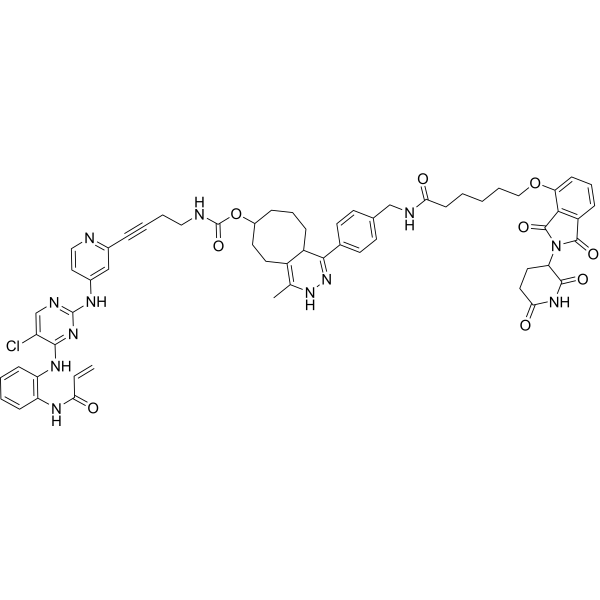 0 ImagesCat. No.: HY-153735CAS No.: 2087490-46-6ERK-CLIPTAC is a ERK CLIPTAC (click chemistry-synthesized proteolysis-targeting chimera) degrader. ERK-CLIPTAC forms intracellularly via click chemistry from ERK1/2-IN-14 (HY-175578) and Tz-thalidomide (HY-101460). The formed ERK-CLIPTAC recruits the E3 ubiquitin ligase CRBN to ERK1/2, thereby inducing ubiquitination and subsequent degradation of ERK1/2. Due to its lack of cell permeability, ERK-CLIPTAC cannot induce ERK1/2 degradation in cells. ERK-CLIPTAC can be used in research related to melanoma and colorectal cancer.
-
PTD10
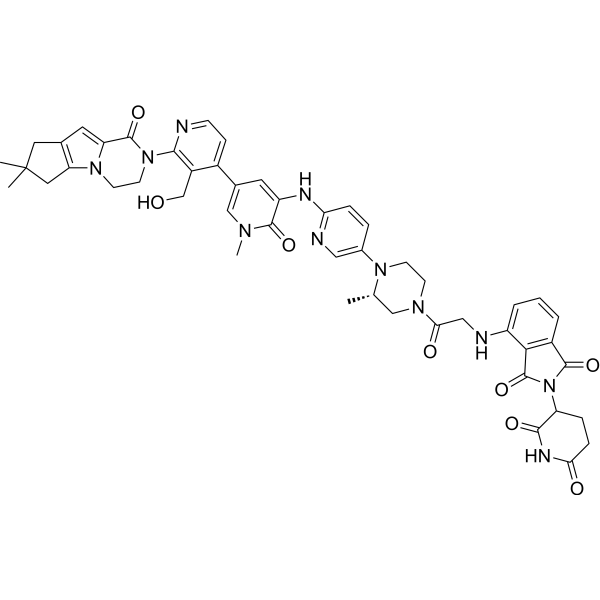 0 ImagesCat. No.: HY-154860CAS No.: 2642231-19-2PTD10 is a selective and potent BTK PROTAC degrader (DC50 = 0.5 nM, KD = 2.28 nM). PTD10 can recruit cereblon (CRBN) E3 ligase and form a ternary complex with BTK, thereby mediating the ubiquitination and proteasome-dependent degradation of BTK. PTD10 inhibits cancer cells proliferation, and induces cell apoptosis via activation of the caspase-dependent pathway and mitochondrial pathway. PTD10 potently inhibits the BCR, AKT and NF-κB signaling pathway. PTD10 can be used for researches of B-cell malignancies and autoimmune disease.
-
SIAIS164018
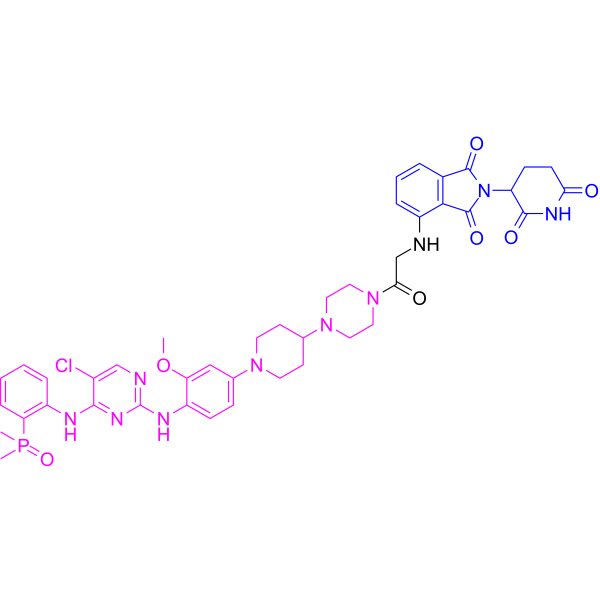 0 ImagesCat. No.: HY-147219CAS No.: 2353492-68-7SIAIS164018 is a multi-kinase (ALK, EGFR, FAK, PYK2, PTK6) PROTAC degrader, with IC50 values of 2.5 nM and 6.6 nM against ALK and ALK (G1202R), respectively. SIAIS164018 promotes the ubiquitination and degradation of ALK, EGFR, FAK, PYK2 and PTK6. SIAIS164018 induces cell cycle arrest at the G1 phase and triggers cell Apoptosis. SIAIS164018 exhibits preferential inhibitory activity against FER kinase. SIAIS164018 can be used in research related to non-small cell lung cancer, ovarian cancer and triple-negative breast cancer.
-
SJF620 hydrochloride
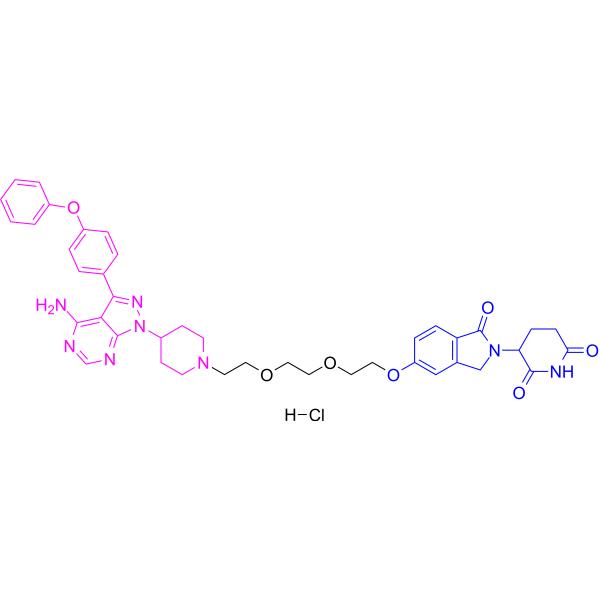 0 ImagesCat. No.: HY-133137ACAS No.: 2821938-05-8
-
SS47
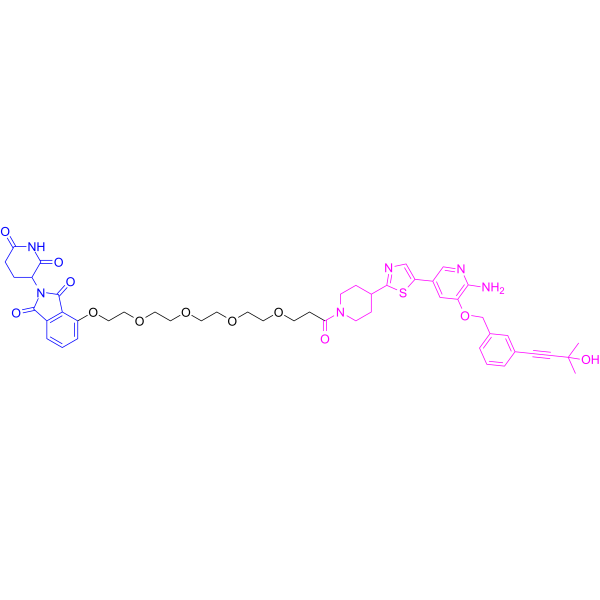 0 ImagesCat. No.: HY-146231CAS No.: 2636072-62-1SS47 is a hematopoietic progenitor kinase HPK1 PROTAC-class degrader and immune activator. SS47 promotes the proliferation of CD4+ and CD8+ T cells as well as IFN-γ secretion, and enhances the anti-tumor cytotoxicity and in vivo efficacy of BCMA CAR-T cells. SS47 also inhibits tumor growth in mouse models, and when combined with anti-PD-1 therapy, it improves the immune response of 4T1 tumor-bearing mice. SS47 can be used in breast cancer-related research.
-
MI1013
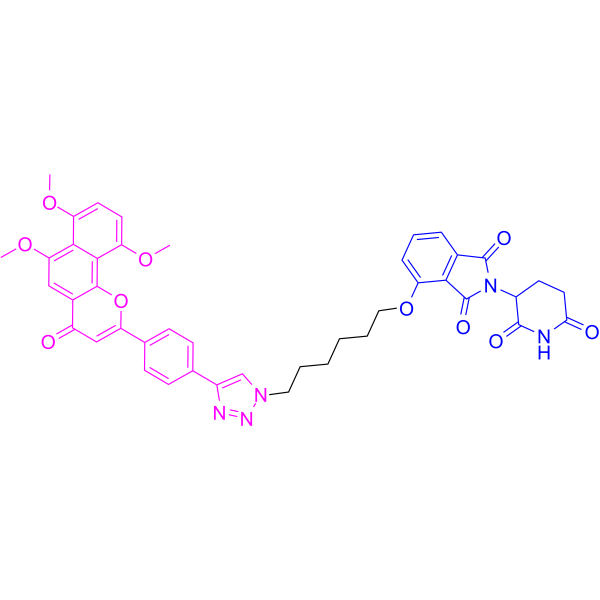
 0 ImagesCat. No.: HY-175266Purity: 99.10%MI1013 is a PROTAC PXR degrader (DC50 = 89 nM, Dmax = 82%). MI1013 degrades PXR in human hepatocellular carcinoma RG cells (HepaRG). MI1013 specifically and safely regulates CYP3A4 promoter activity through PXR degradation. MI1013 affects several key genes involved in sulfate conjugation (e.g., SULT1E1), bile acid synthesis (CYP7A1), gluconeogenesis (PCK1), ketone synthesis (HMGCS20), and hepatocyte proliferation (MKI67). (Pink: PXR ligand 3: HY-175267, Blue: Pomalidomide-propargyl ligand: HY-W410002, Pink + Black: PXR ligand-Linker Conjugate 1: HY-175268).
-
iVeliparib-AP6
 0 ImagesCat. No.: HY-130646CAS No.: 2472645-27-3iVeliparib-AP6 is a proteolysis-targeting chimera (PROTAC) molecule designed based on Veliparib (HY-10129), which targets PARP1/2. The DC50s of iVeliparib-AP6 for inducing the degradation of PARP1 and PARP2 are 36 nM and 63 nM, respectively, and its IC50s are 69 nM and 21 nM, respectively. iVeliparib-AP6 contains a Veliparib-based PARP inhibitor warhead linked to a CRBN E3 ligase binder; it uses Thalidomide (HY-14658) as a ligand to recruit CRBN E3 ubiquitin ligase and exerts the PARP2 degradation mechanism.



