



Toll-like Receptor (TLR) Activator
- 1
- 2
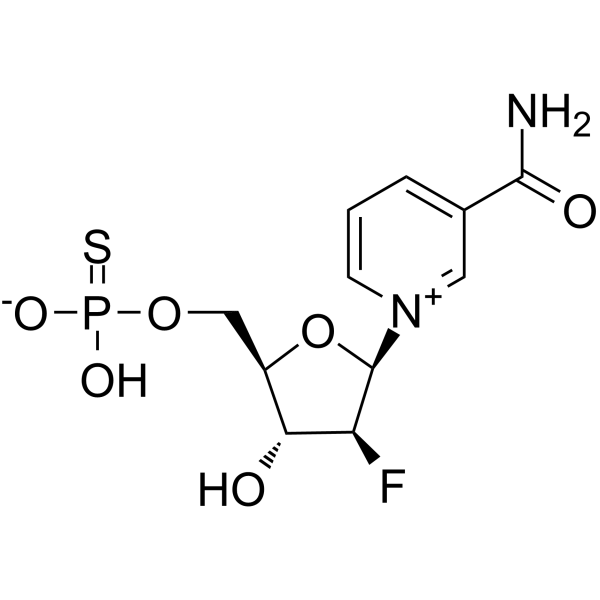
-
Lipopolysaccharides, from Klebsiella pneumoniae
 0 ImagesCat. No.: HY-D1056B3Synonyms: LPS, from bacterial (Klebsiella pneumoniae)
Lipopolysaccharides, from Klebsiella pneumoniae (LPS, from bacterial (Klebsiella pneumoniae)) are lipopolysaccharide endotoxins and TLR4 activators derived from Klebsiella pneumoniae, and are classified as S-type LPS. Lipopolysaccharides, from Klebsiella pneumoniae exhibit a typical three-part structure: O-antigen, core oligosaccharide, and lipid A. Lipopolysaccharides, from Klebsiella pneumoniae may participate in bacterial immune evasion by inhibiting complement-mediated killing and suppressing the host's secretion of antimicrobial peptides, thereby allowing the bacteria to escape immune defenses. Lipopolysaccharides, from Klebsiella pneumoniae possess high viscosity and resistance to serum-mediated killing, which may lead to sepsis. Lipopolysaccharides, from Klebsiella pneumoniae can be used to construct Acute Lung Injury Model.
It is recommended to prepare a solution with concentration ≥2 mg/mL. Vortex thoroughly for more than 10 minutes. Due to the adsorption characteristics of LPS, silanized container or low adsorption centrifuge tubes should be used for aliquoting and storage, and mix thoroughly before use.
-
Tris(2-chloroethyl) phosphate
 0 Images
Tris(2-chloroethyl) phosphate (TCEP) is a widely used organic phosphorus flame retardant, mainly used as a plasticizer. Tris(2-chloroethyl) phosphate has orally active hepatotoxicity, inducing an increase in reactive oxygen species (ROS) and calcium ions (Ca2+) influx, a decrease in mitochondrial membrane potential (△Ψm), and causing DNA damage and cell apoptosis. Tris(2-chloroethyl) phosphate directly binds to FXR, inducing obesity and the formation of fatty liver in mice. Chloroethyl) phosphate activates the TLR4/NF-κB pathway, triggering liver inflammation.
-
Lipopolysaccharides, from E. coli O26:B6
 0 ImagesCat. No.: HY-D1056A3Synonyms: LPS, from Escherichia coli (O26:B6)
Lipopolysaccharides, from E. coli (Escherichia coli) O26:B6 are lipopolysaccharide endotoxins and TLR-4 activators derived from E. coli, classified as S-type LPS, which can activate pathogen-associated molecular patterns (PAMP) of the immune system and induce cellular secretion of migrasomes. Lipopolysaccharides, from E. coli O26:B6 exhibit a typical three-part structure: O-antigen, core oligosaccharide, and lipid A, and can be recognized by the core-specific monoclonal antibody MAb J8-4C10. Lipopolysaccharides, from E. coli O26:B6 can promote an increase in pro-inflammatory cytokines in plasma, thereby triggering hypothalamic-pituitary-adrenal (HPA) activation and leading to adrenal oxidative damage. The pathogenic effects of Lipopolysaccharides, from E. coli O26:B6 can be used to construct various models, such as cellular inflammation models, sepsis, acute lung injury models, adrenal dysfunction models, and bladder infection models, etc.
It is recommended to prepare a solution with concentration ≥2 mg/mL. Vortex thoroughly for more than 10 minutes. Due to the adsorption characteristics of LPS, silanized container or low adsorption centrifuge tubes should be used for aliquoting and storage, and mix thoroughly before use.
-
Lipopolysaccharides, from E. coli O127:B8
 0 ImagesCat. No.: HY-D1056A2Synonyms: LPS, from Escherichia coli (O127:B8)
Lipopolysaccharides, from E. coli O127:B8 (LPS, from Escherichia coli (O127:B8)) are endotoxins and TLR4 activators extracted from Escherichia coli (E. coli O127:B8) and are classified as S (smooth) type LPS. Lipopolysaccharides, from E. coli O127:B8 possess the typical three-part structure: O-antigen, R3-type core oligosaccharide, and lipid A. Lipopolysaccharides, from E. coli O127:B8 activate TLR-4 in immune cells, can induce inflammatory responses and ileal contractility, and can be used to construct intestinal inflammation models.
It is recommended to prepare a solution with concentration ≥2 mg/mL. Vortex thoroughly for more than 10 minutes. Due to the adsorption characteristics of LPS, silanized container or low adsorption centrifuge tubes should be used for aliquoting and storage, and mix thoroughly before use.
-
Lipopolysaccharides, from E. coli O128:B12
 0 ImagesCat. No.: HY-D1056A4Synonyms: LPS, from Escherichia coli (O128:B12)
Lipopolysaccharides, from E. coli O128:B12 (LPS, from Escherichia coli (O128:B12)) are endotoxins and TLR4 activators extracted from Escherichia coli (E. coli O128:B12) and are classified as S (smooth) type LPS. Lipopolysaccharides, from E. coli O128:B12 possess the typical three-part structure: O-antigen, R3-type core oligosaccharide, and lipid A. Lipopolysaccharides, from E. coli O128:B12 activate TLR-4 in immune cells, can be used to construct animal models of neonatal brain inflammation, and may influence preterm birth in neonates.
It is recommended to prepare a solution with concentration ≥2 mg/mL. Vortex thoroughly for more than 10 minutes. Due to the adsorption characteristics of LPS, silanized container or low adsorption centrifuge tubes should be used for aliquoting and storage, and mix thoroughly before use.
-
Aluminum hydroxide adjuvant aluminum : 4~6 mg/mL
 0 ImagesCat. No.: HY-159747
Aluminum hydroxide adjuvant (aluminum : 4~6 mg/mL) is a micron level water-based aluminum hydroxide adjuvant. The aluminum content is 4 - 6 mg/ml. It has a strong adsorption capacity for negatively charged antigens, a significant sustained-release effect, no stress response, high safety, and can effectively induce immune responses in the body. It is suitable for various veterinary vaccines, including inactivated vaccines or gene-engineered subunit vaccines for bacterial and viral diseases of livestock and poultry.
-
Macrophage-activating lipopeptide 2 TFA
 0 ImagesCat. No.: HY-P10586APurity: 99.83%Synonyms: MALP-2 TFA
Macrophage-activating lipopeptide 2 TFA is an agonist of Toll like receptors TLR-2/TLR-6. Macrophage-activating lipopeptide-2 enhances endothelial nitric oxide synthase (eNOS) phosphorylation and endothelial cell release of NO, thereby improving vasodilation. Macrophage-activating lipopeptide-2 enhances endothelial adhesion of white blood cells and improve perfusion recovery and collateral growth in the hind limbs of hypercholesterolemic Apoe deficient mice undergoing experimental femoral artery ligation (FAL).
-
Lipopolysaccharides, from S. enterica serotype typhimurium
 0 ImagesCat. No.: HY-D1056C3Synonyms: LPS, from Salmonella enterica (Serotype typhimurium)
Lipopolysaccharides, from S. enterica (Salmonella enterica) serotype typhimurium are lipopolysaccharide endotoxins and TLR4 activators derived from serotype typhimurium of Salmonella enterica, and are classified as S-type LPS. Lipopolysaccharides, from S. enterica exhibit a typical three-part structure: O-antigen, core oligosaccharide, and lipid A. Lipopolysaccharides, from S. enterica serotype typhimurium can modulate the fate of bacteria in dendritic cells (DC), determining the uptake, degradation, and activation of immune functions by DC cells against the bacteria.
It is recommended to prepare a solution with concentration ≥2 mg/mL. Vortex thoroughly for more than 10 minutes. Due to the adsorption characteristics of LPS, silanized container or low adsorption centrifuge tubes should be used for aliquoting and storage, and mix thoroughly before use.
-
Lipopolysaccharides, from P. aeruginosa 10
 0 ImagesCat. No.: HY-D1056ESynonyms: LPS, from Pseudomonas aeruginosa (10)
Lipopolysaccharides from P. aeruginosa (Pseudomonas aeruginosa) 10 are lipopolysaccharide endotoxins and TLR4 activators derived from Pseudomonas aeruginosa 10, and are classified as S-type LPS. Lipopolysaccharides from P. aeruginosa 10 exhibit a typical three-part structure: O-antigen, core oligosaccharide, and lipid A. The lipopolysaccharides of P. aeruginosa 10 have a fatty acid composition distinct from common enterobacteria, an exceptionally high degree of phosphorylation (triphosphate residues have been detected), and a unique outer region of the core oligosaccharide. Additionally, their O-specific side chains are typically rich in novel aminosugars. Lipopolysaccharides from P. aeruginosa 10 demonstrate susceptibility to viruses, with the level of susceptibility determined by the content of high molecular weight polysaccharides in their composition. The absence of high molecular weight polysaccharides increases their sensitivity to bacteriophages.
It is recommended to prepare a solution with concentration ≥2 mg/mL. Vortex thoroughly for more than 10 minutes. Due to the adsorption characteristics of LPS, silanized container or low adsorption centrifuge tubes should be used for aliquoting and storage, and mix thoroughly before use.
-
Lipopolysaccharides, from S. marcescens
 0 ImagesCat. No.: HY-D1056HSynonyms: LPS, from Serratia marcescens
Lipopolysaccharides, from S. marcescens (Serratia marcescens) are lipopolysaccharide endotoxins and TLR-4 activators derived from Serratia marcescens, classified as S-type LPS, which can activate pathogen-associated molecular patterns (PAMP) of the immune system and induce cellular secretion of migrasomes. Lipopolysaccharides, from S. marcescens exhibit a typical three-part structure: O-antigen (O-antigen), core oligosaccharide (core oligosaccharide), and lipid A (Lipid A). Lipopolysaccharides, from S. marcescens induce NF-κB activation in mouse cells via Toll-like receptor (TLR4)/MD-2. The lipopolysaccharides of S. marcescens can induce apoptosis in host immune cells, thereby suppressing the host's innate immunity.
It is recommended to prepare a solution with concentration ≥2 mg/mL. Vortex thoroughly for more than 10 minutes. Due to the adsorption characteristics of LPS, silanized container or low adsorption centrifuge tubes should be used for aliquoting and storage, and mix thoroughly before use.
-
Lipopolysaccharides, from S. enterica serotype enteritidis
 0 ImagesCat. No.: HY-D1056C1Synonyms: LPS, from Salmonella enterica (Serotype enteritidis)
Lipopolysaccharides, from S. enterica (Salmonella enterica) serotype enteritidis are lipopolysaccharide endotoxins and TLR-4 activators derived from the enteritidis serotype of S. enterica, classified as S-type LPS, which can activate pathogen-associated molecular patterns (PAMP) of the immune system and induce cellular secretion of migrasomes. Lipopolysaccharides, from S. enterica serotype enteritidis exhibit a typical three-part structure: O-antigen, core oligosaccharide, and lipid A. Lipopolysaccharides, from S. enterica serotype enteritidis can induce systemic inflammatory responses, increasing levels of TNF-α, IFN-γ, IL-6, IL-10, and nitrate in plasma.
It is recommended to prepare a solution with concentration ≥2 mg/mL. Vortex thoroughly for more than 10 minutes. Due to the adsorption characteristics of LPS, silanized container or low adsorption centrifuge tubes should be used for aliquoting and storage, and mix thoroughly before use.
-
ssRNA42 sodium
 0 ImagesCat. No.: HY-160231Purity: 98.62%
ssRNA42 (sodium) is a 20-mer phosphothioate protected single-stranded RNA oligonucleotide. ssRNA42 (sodium) derives from ssRNA40 by replacement of all G nucleotides with adenosine. ssRNA42 activated human PBMCs to secrete IFN-α, TNF-a, IL- 12p40, and IL-6, but ssRNA42 failed to stimulated murine pDCs and PBMCs.
-
Benzyl alcohol (Standard)
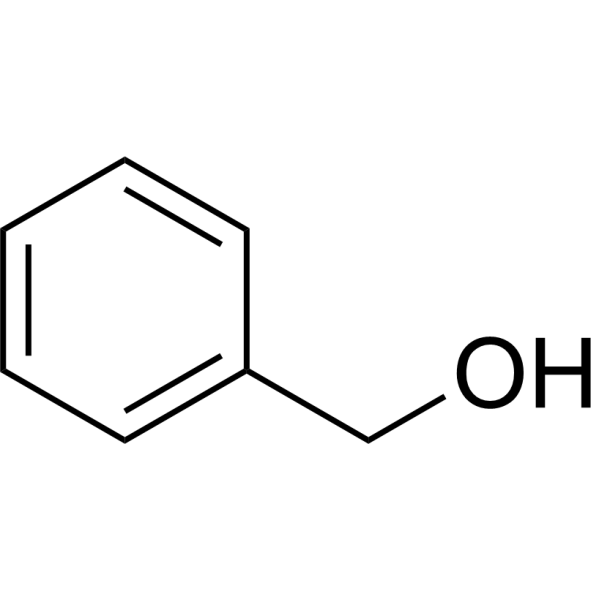 0 Images
Benzyl alcohol (Standard) is the analytical standard of Benzyl alcohol. This product is intended for research and analytical applications. Benzyl alcohol is an aromatic alcohol, a colorless liquid with a mild aromatic odor.
-
Tris(2-chloroethyl)phosphate-d12
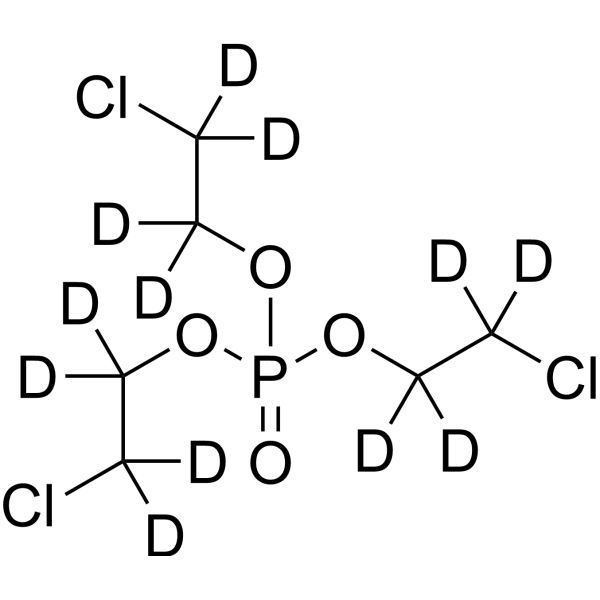 0 ImagesSynonyms: TCEP-d12
Tris(2-chloroethyl)phosphate-d12 is the deuterium labeled Tris(β-chloroethyl) phosphate. Tris(2-chloroethyl) phosphate is a widely used organic phosphorus flame retardant, mainly used as a plasticizer. Tris(2-chloroethyl) phosphate has orally active hepatotoxicity, inducing an increase in reactive oxygen species (ROS) and calcium ions (Ca²⁺) influx, a decrease in mitochondrial membrane potential (△Ψm), and causing DNA damage and cell apoptosis. Tris(2-chloroethyl) phosphate directly binds to FXR, inducing obesity and the formation of fatty liver in mice. Chloroethyl) phosphate activates the TLR4/NF-κB pathway, triggering liver inflammation.
-
Lipopolysaccharides, from Salmonella typhosa
 0 ImagesCat. No.: HY-D1056B4Synonyms: LPS, from bacterial (Salmonella typhosa)
Lipopolysaccharides, from Salmonella typhosa are lipopolysaccharide endotoxins and TLR-4 activators derived from Salmonella typhosa, classified as S-type LPS, which can activate pathogen-associated molecular patterns (PAMP) of the immune system and induce cellular secretion of migrasomes. Lipopolysaccharides, from Salmonella typhosa exhibit a typical three-part structure: O-antigen, core oligosaccharide, and lipid A. Lipopolysaccharides, from Salmonella typhosa can serve as vaccine adjuvants and demonstrate adjuvant activity targeting B cells in immune responses in vivo.
It is recommended to prepare a solution with concentration ≥2 mg/mL. Vortex thoroughly for more than 10 minutes. Due to the adsorption characteristics of LPS, silanized container or low adsorption centrifuge tubes should be used for aliquoting and storage, and mix thoroughly before use.
-
Pinus pinaster bark extract
 0 ImagesCat. No.: HY-N14039CAS No.: 90082-75-0
Pinus pinaster bark extract is extracted from the bark of pine bark with antioxidant, anti-inflammatory and neuroprotective effects. Pinus pinaster bark extract increases toll-like receptor (TLR) activity, inducing production of IL-10.
-
Lipopolysaccharides, from E. coli K-235
 0 ImagesCat. No.: HY-D1056A5Synonyms: LPS, from Escherichia coli (K-235)
Lipopolysaccharides, from E. coli (Escherichia coli) K-235 are lipopolysaccharide endotoxins and TLR-4 activators derived from E. coli, classified as S-type LPS, which can activate pathogen-associated molecular patterns (PAMP) of the immune system and induce cellular secretion of migrasomes. Lipopolysaccharides, from E. coli K-235 exhibit a typical three-part structure: O-antigen (O-antigen), core oligosaccharide (core oligosaccharide), and lipid A (Lipid A). Lipopolysaccharides, from E. coli K-235 have a mitogenic effect on C57BL/10ScN spleen cells. Additionally, LPS purified using butanol and deoxycholic acid methods stimulates spleen cells in C57BL/10ScCR and C3H/HeJ mice.
It is recommended to prepare a solution with concentration ≥2 mg/mL. Vortex thoroughly for more than 10 minutes. Due to the adsorption characteristics of LPS, silanized container or low adsorption centrifuge tubes should be used for aliquoting and storage, and mix thoroughly before use.
-
8-Mercaptoguanosine
 0 ImagesSynonyms: 8-Thioguanosine
8-Mercaptoguanosine is an immunoadjuvant that affects the in vivo antibody response to the T-cell-independent antigen TNP-Ficoll. 8-Mercaptoguanosine enhances IgG1, IgG2, and IgG3 antibody responses, but has no effect on IgM antibody responses. 8-Mercaptoguanosine also enhances antibody responses to very weak antigens such as pneumococcal polysaccharide and restores antibody responses in immunodeficient xid mice that are non-reactive to TNP-Ficoll.
-
Ergosta-7,22-dien-3-one
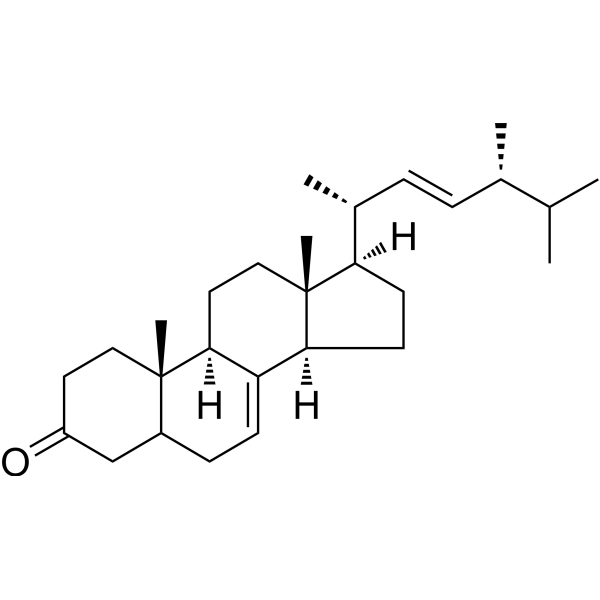 0 ImagesCat. No.: HY-N3844CAS No.: 32507-77-0
Ergosta-7,22-dien-3-on is a lanosterane isolated from the fruiting bodies of Ganoderma lucidum. ent-16-Kaurene-3b,15b,18-triol inhibits platelet aggregation. Ergosta-7,22-dien-3-on is able to stimulate nitric oxide production, induce the expression of genes, and induce the production of TLRs, cytokines, chemokines, and cellular adhesion molecules in vitro.
- 1
- 2



