Drug Derivative
Drug derivative
Drug derivatives are derived from parent compounds. They replace or add atoms and groups through chemical reactions to optimize the various properties of the parent compound and reduce side effects. The application of drug derivatives provides a diverse compound library for drug research and development and accelerates the discovery of new drugs. For example, urea derivatives Glibenclamide can prolong the blood sugar-lowering effect of anti-diabetic drugs.
References:
- [1]. Vardanyan RS, et al. Fentanyl-related compounds and derivatives: current status and future prospects for pharmaceutical applications. Future Med Chem. 2014 Mar;6(4):385-412.x
- [2]. Ghosh AK, et al. Urea Derivatives in Modern Drug Discovery and Medicinal Chemistry. J Med Chem. 2020 Mar 26;63(6):2751-2788.x
All Product Categories
-
Drug Derivative Inhibitors
(12)
View all products
-
Drug Derivative Agonist
(1)
View all products
-
Drug Derivative Activator
(1)
View all products
-
Drug Derivative Chemical
(1)
View all products
-
Drug Derivative Inducer
(1)
View all products
-
Drug Derivative Controls
(38)
View all products
-
Drug Derivative Substrate
(1)
View all products
-
Drug Derivative Related Products (3977)
Related Products (3977)

-
Exaluren
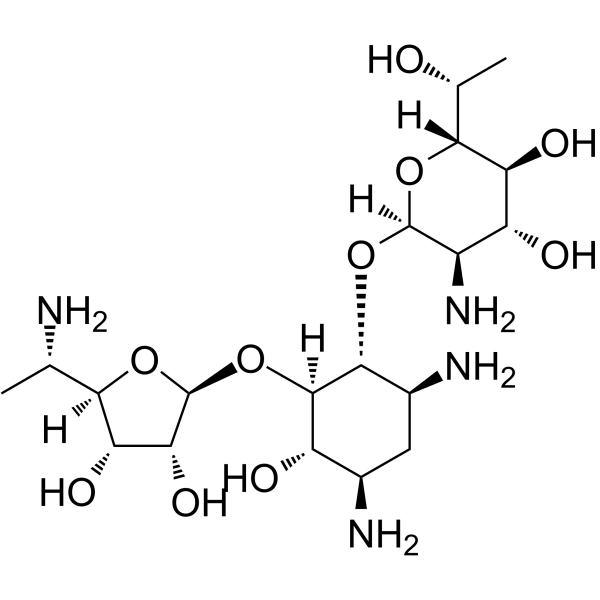 0 ImagesSynonyms: ELX-02; NB-124Exaluren (ELX-02; NB-124) is an synthetic eukaryotic ribosome-selective glycoside that induces read-through of nonsense mutations, resulting in normally localized full-length functional proteins. Exaluren is used for the research of cystic fibrosis caused by nonsense mutations.
-
(±)-H3RESCA-TFP
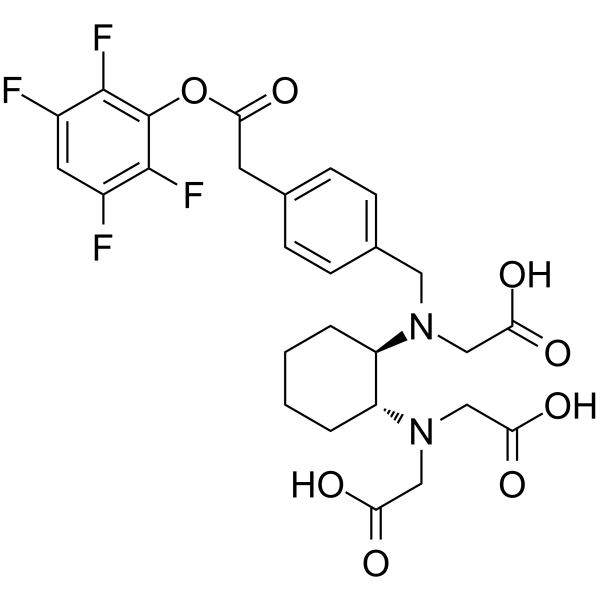 0 ImagesCat. No.: HY-133513CAS No.: 1919794-40-3Synonyms: (±)-H3L28(±)-H3RESCA-TFP ((±)-H3L28) is a tetrafluorophenyl ester derivative of restrained complexing agent (RESCA). (±)-H3RESCA-TFP can be used to conjugate the chelator with a biomolecule via amine coupling (e.g., N terminus and/or the ε-amino groups of lysine).
-
N-Methylnicotinamide-d4
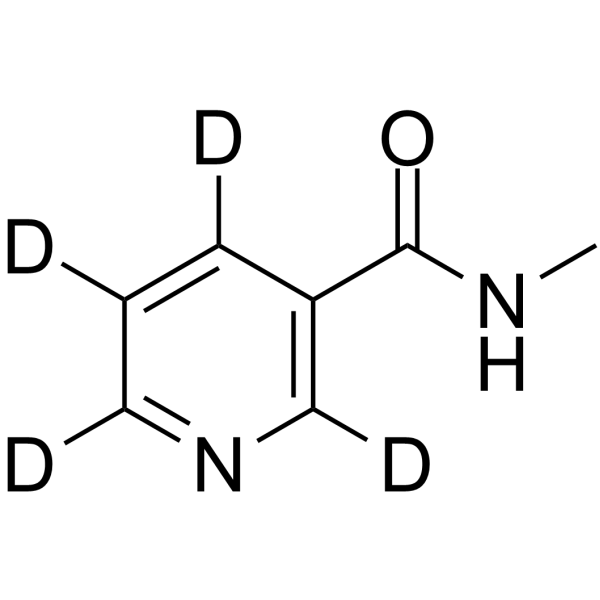 0 ImagesN-Methylnicotinamide-d4 is the deuterium labeled N-Methylnicotinamide (HY-124124). N-Methylnicotinamide is an endogenous metabolite with antithrombotic effect. N-Methylnicotinamide via production/release of prostacyclin inhibits arterial thrombosis development. N-Methylnicotinamide is also the N-methylation product from nicotinamide catalyzed by N-methyltransferase within nicotinate and nicotinamide metabolism pathway.
-
Fladrafinil
 0 ImagesSynonyms: CRL-40,941Fladrafinil (CRL-40,941) is a nootropic.
-
D-Glucuronic acid lactone
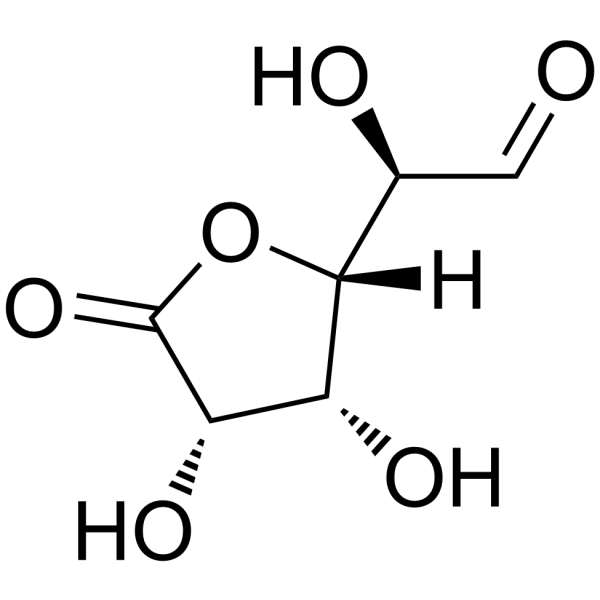 0 ImagesSynonyms: D-Glucurono-6,3-lactone; D-Glucurono-γ-lactone; D-Glucuronolactone; Dicurone; Glucoxy; Glucurolactone; GlucuroneD-Glucuronic acid lactone (D-Glucurono-6,3-lactone; D-Glucurono-γ-lactone; D-Glucuronolactone; Dicurone; Glucoxy; Glucurolactone; Glucurone) is an endogenous metabolite and a glucuronic acid derivative. D-Glucuronic acid lactone serves as a starting reagent for the synthesis of 2,3,4-tris (tert-butyldimethylsilyl) glucuronic acid trichloroethyl ester, which is used to prepare 1-O-acyl glucuronic acids for the anti-inflammatory agent mL-3000 (HY-B1452), synthesize optically active glucuronic acids, and produce long-chain alkyl glucuronides. D-Glucuronic acid lactone shows potential for use in studies of reversible cerebral vasoconstriction syndrome (RCVS).
-
Indole-3-acetyl glutamate
 0 ImagesSynonyms: IAGluIndole-3-acetyl glutamate (IAGlu) is a derivative of the plant hormone indole-3-acetic acid (IAA). As a conjugated form of IAA, Indole-3-acetyl glutamate involves in the transport, storage, and homeostatic regulation of IAA within the plant. Indole-3-acetyl glutamate can be used for research into the effects of plant hormones on the growth and development of plants.
-
1,16-Hexadecanediol
 0 ImagesCat. No.: HY-W105735CAS No.: 7735-42-4Synonyms: Hexadecamethylene glycol1,16-Hexadecanediol (Hexadecamethylene glycol) is an ester product.
-
Carbamoyl phosphate dilithium salt
 0 ImagesCat. No.: HY-160610ACAS No.: 1866-68-8Carbamoyl phosphate dilithium salt is an antisickling agent and plays a significant role in the urea cycle. Carbamoyl phosphate dilithium salt carbamylates the amino-terminal valine residues of hemoglobin S in erythrocytes, which interferes with the sickling phenomenon. Carbamoyl phosphate dilithium salt exhibits toxicity due to the lithium cation.
-
ML261
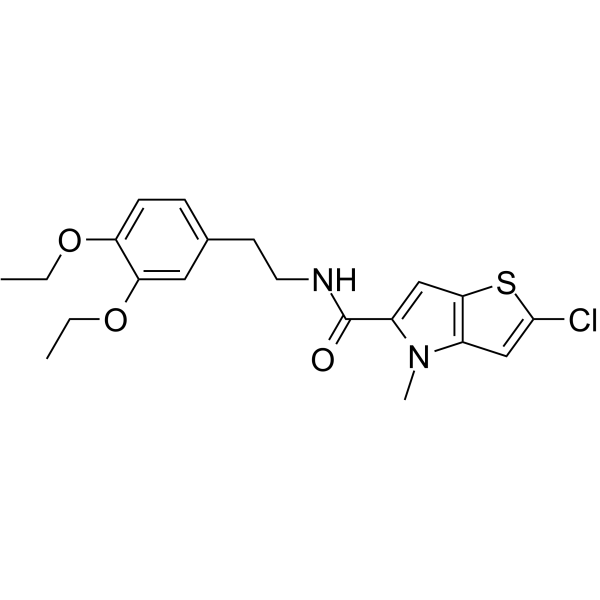 0 ImagesML261 is a hepatic lipid droplets formation inhibitor with an IC50 value of 69.7 nM. ML261 can be used for the research of non-alcoholic fatty liver disease (NAFLD) and inflammation.
-
Anticancer agent 265
 0 ImagesAnticancer agent 265 (compound 1) is an anticancer compound. Anticancer agent 265 exhibits in vitro anticancer activity against three human bone cancer lines, U2OS, Saos-2, and GC9811, with IC50 values of 13.1, 11.7, and 14.6 μM, respectively.
-
7-Ethylcamptothecin
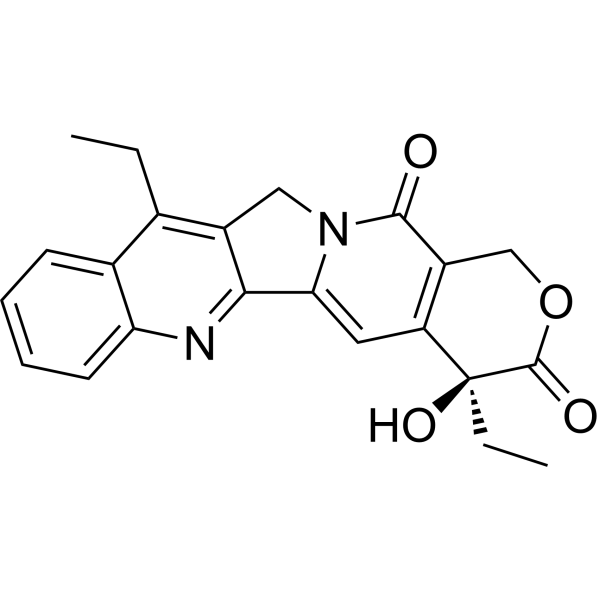 0 Images7-Ethylcamptothecin is a derivative of Camptothecin (HY-16560) and a DNA topoisomerase I inhibitor that exhibits significant antitumor activity against tumor cells. 7-Ethylcamptothecin serves as a key precursor for the synthesis of 20 (S)-O-substituted benzoyl-7-ethylcamptothecin compounds. 7-Ethylcamptothecin is widely used in various tumor-related scientific studies.
-
KL4-219A
 0 ImagesCat. No.: HY-172825Purity: 99.85%KL4‑219A is a more durable MYC degrader derived from structural optimization of KL2‑236, with its inactive diastereomer being KL4‑219B. KL4‑219A induces destabilization and degradation of MYC protein in a proteasome-dependent manner. KL4‑219A is applicable to the research of pancreatic cancer.
-
GBT1118
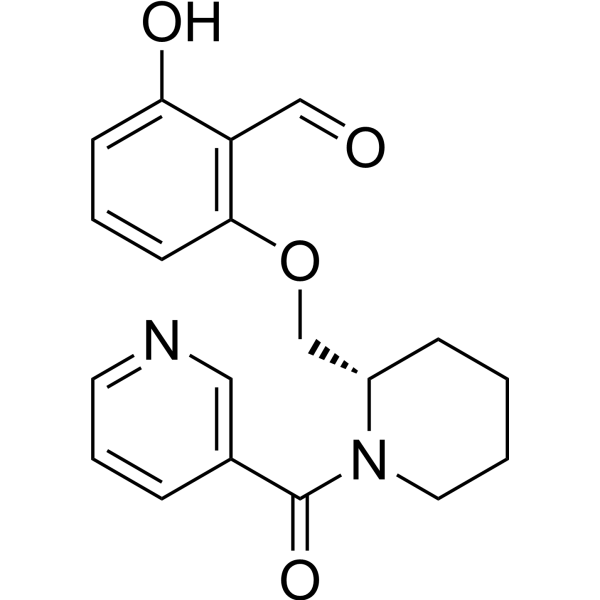 0 ImagesGBT1118 is a potent and orally active allosteric modifier of hemoglobin oxygen affinity. GBT1118 increases tolerance to severe hypoxia.
-
p-Toluenesulfonamide
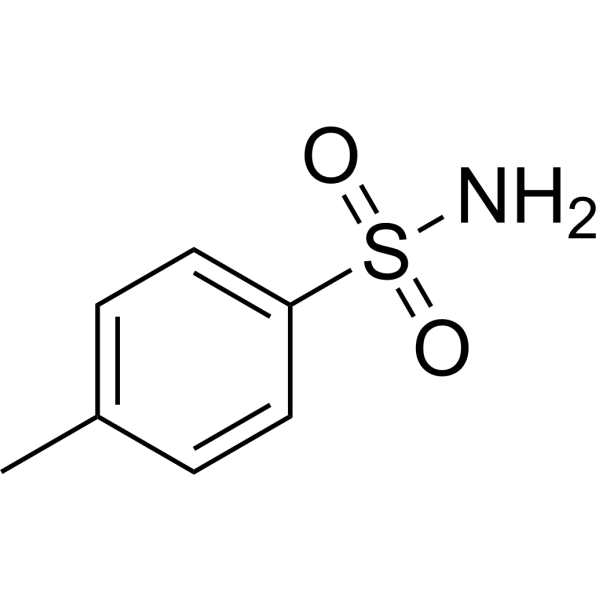 0 Imagesp-Toluenesulfonamide is a small-molecule anticancer agent and plasticizer. p-Toluenesulfonamide exerts antitumor activity by inducing lysosomal membrane permeabilization, cathepsin B release and lysosome-mediated cell death. p-Toluenesulfonamide modulates cholesterol distribution in lipid rafts of tumor cell membranes and the Akt/mTOR/p70S6K pathway. p-Toluenesulfonamide shows activity against various cancers including hepatocellular carcinoma, non-small cell lung cancer and tongue squamous cell carcinoma; intrapleural injection effectively reduces malignant pleural effusion without causing pleural adhesion. p-Toluenesulfonamide is also the main degradation product of the disinfectant Chloramine-T (HY-B0959) in water. p-Toluenesulfonamide facilitates the localization of fluorescent probes to the endoplasmic reticulum. p-Toluenesulfonamide can be used in cancer-related research.
-
DPPD-Q
 0 ImagesDPPD-Q is a quinone derivative of p-phenylenediamine antioxidants and an analog of DTPD-Q (HY-163650). DPPD-Q is identified as a major sewage treatment plant effluent.
-
Methyl heptadecanoate-d33
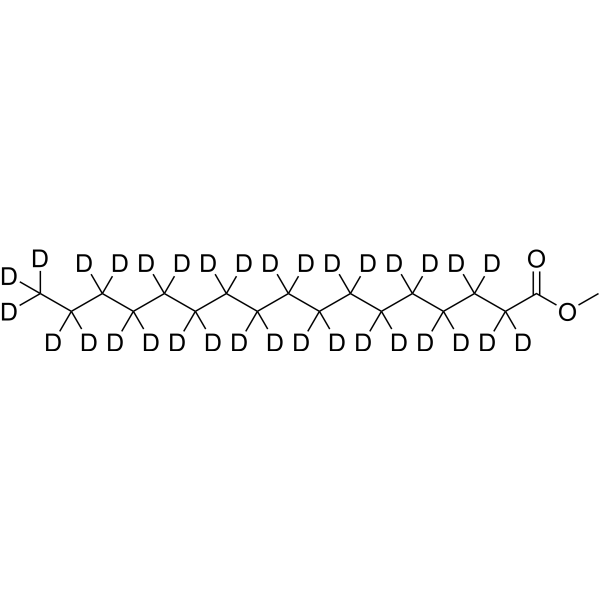 0 ImagesMethyl heptadecanoate-d33 is the deuterium labeled Methyl heptadecanoate (HY-W004290). Methyl heptadecanoate (C17:0 methyl ester) is the methyl ester derivative of heptadecanoic acid (HY-W004284). Methyl heptadecanoate is used as an internal standard for quantitative calibration of fatty acids in GC-MS analysis.
-
L-alpha-lysophosphatidylcholine, lauroyl
 0 ImagesSynonyms: 1-Lauroyl-2-hydroxy-sn-glycero-3-phosphatidylcholine; 12:0 Lyso PCL-alpha-lysophosphatidylcholine, lauroyl (1-Lauroyl-2-hydroxy-sn-glycero-3-phosphatidylcholine) is an ester product.