



Soluble epoxide hydrolase
Soluble epoxide hydrolase (sEH/EPHX2) converts lipid epoxides into diols and regulates EET-dependent vascular tone, nociception, angiogenesis, and inflammation[1]. Mechanistically, sEH hydrolyzes cytochrome P450-derived epoxyeicosatrienoic acids (EETs), reducing epoxide signaling in arachidonic-acid pathways[1][2]. In disease models, Ephx2 deletion lowers blood pressure and attenuates renal inflammation and glomerular injury in DOCA-salt hypertension[3][4]. Compared with EPHX1, EPHX2 preferentially hydrolyzes EETs in vitro, although EPHX1 also contributes to EET hydrolysis in vivo[5][6]. For experimental applications, sEH inhibitors increase lipid epoxides, including EETs, and support studies of cardiovascular, inflammatory, pain, central nervous system, and metabolic disease mechanisms[7][8].
References:
- [1]. Harris TR, et al. Soluble epoxide hydrolase: gene structure, expression and deletion. Gene. 2013 Sep 10;526(2):61-74. [Content Brief]
- [2]. Wagner K, et al. Epoxygenated fatty acids and soluble epoxide hydrolase inhibition: novel mediators of pain reduction. J Agric Food Chem. 2011 Apr 13;59(7):2816-24. [Content Brief]
- [3]. Sinal CJ, et al. Targeted disruption of soluble epoxide hydrolase reveals a role in blood pressure regulation. J Biol Chem. 2000 Dec 22;275(51):40504-10. [Content Brief]
- [4]. Manhiani M, et al. Soluble epoxide hydrolase gene deletion attenuates renal injury and inflammation with DOCA-salt hypertension. Am J Physiol Renal Physiol. 2009 Sep;297(3):F740-8. [Content Brief]
- [5]. Gautheron J, et al. The Multifaceted Role of Epoxide Hydrolases in Human Health and Disease. Int J Mol Sci. 2020 Dec 22;22(1):13. [Content Brief]
- [6]. Edin ML, et al. Epoxide hydrolase 1 (EPHX1) hydrolyzes epoxyeicosanoids and impairs cardiac recovery after ischemia. J Biol Chem. 2018 Mar 2;293(9):3281-3292. [Content Brief]
- [7]. Wagner KM, et al. Soluble epoxide hydrolase as a therapeutic target for pain, inflammatory and neurodegenerative diseases. Pharmacol Ther. 2017 Dec;180:62-76. [Content Brief]
- [8]. Sun CP, et al. Discovery of Soluble Epoxide Hydrolase Inhibitors from Chemical Synthesis and Natural Products. J Med Chem. 2021 Jan 14;64(1):184-215. [Content Brief]
-
Soluble epoxide hydrolase Related Products (10)
Related Products (10)

-
UC-1728
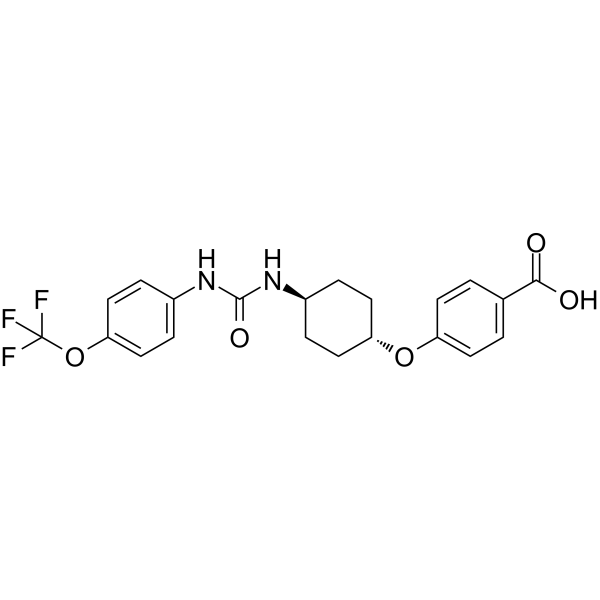 0 ImagesSynonyms: t-TUCBUC-1728 is a potent rabbit soluble epoxide hydrolase (sEH) inhibitor, with an IC50 of 2 nM on rabbit liver.
-
sEH inhibitor-7
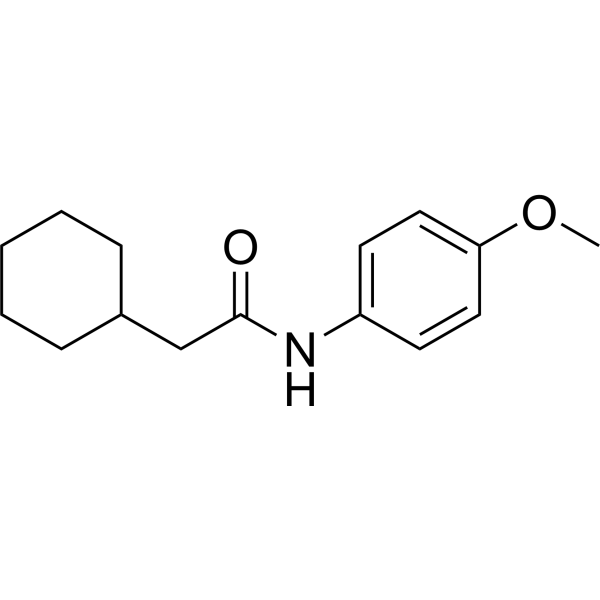 0 ImagessEH inhibitor-7 is an sEH inhibitor, with an IC50 of 0.15 μM against mouse sEH and an IC50 of 6.2 μM against h-sEH. sEH inhibitor-7 can be used in studies related to hypertension and inflammation.
-
PROTAC sEH degrader-3
 0 ImagesCat. No.: HY-175392CAS No.: 3093413-94-3PROTAC sEH-degrader-3 is an sEH PROTAC degrader with an IC50 value of 5.5 nM against mouse sEH. PROTAC sEH-degrader-3 selectively degrades sEH in the cytoplasm but not in peroxisomes. PROTAC sEH-degrader-3 alleviates endoplasmic reticulum stress and acts as a cytoprotective agent. PROTAC sEH-degrader-3 can serve as a chemical probe for investigating the biological functions of sEH.
-
sEH-IN-24
 0 ImagesCat. No.: HY-183545CAS No.: 3121405-85-1sEH-IN-24 is an orally active soluble epoxide hydrolase (sEH) inhibitor with an IC50 of 1.9 nM. sEH-IN-24 inhibits the pro-inflammatory cytokines TNF-α and IL-6. sEH-IN-24 exhibits anti-inflammatory effects and exerts analgesic activity in vivo. sEH-IN-24 prevents pancreatic edema, inflammation and parenchymal atrophy. sEH-IN-24 can be used for the research of acute pancreatitis.
-
SH-11037
 0 ImagesCat. No.: HY-182372CAS No.: 1638153-78-2SH-11037 is a potent inhibitor of soluble epoxide hydrolase (sEH) and docks to the substrate binding cleft in the sEH hydrolase domain. SH-11037 dose-dependently suppresses angiogenesis in the choroidal sprouting assay ex vivo and inhibited ocular developmental angiogenesis in zebrafish larvae. SH-11037 reduces choroidal neovascularisation lesion volume in the laser-induced CNV mouse model. SH-11037 synergises with anti-VEGF treatments in vitro and in vivo. SH-11037 induces G2/M phase blockade and retains retinal endothelial cell viability at active concentrations without overt toxicity. SH-11037 can be used for the research of retinal neovascularization and ocular neovascularization.

-
Moracin M 3'-O-β-D-glucopyranoside
 0 ImagesCat. No.: HY-N21974CAS No.: 152041-26-4Moracin M 3'-O-β-D-glucopyranoside is a natural product with multiple activities such as hypoglycemic and antitumor effects. Moracin M 3'-O-β-D-glucopyranoside acts as an inhibitor of mushroom tyrosinase with an IC50 of 127.5 μM, and also functions as an inhibitor of soluble epoxide hydrolase with an IC50 of 7.7 μM. Moracin M 3'-O-β-D-glucopyranoside can be used in studies related to hyperglycemia and skin tumors.
-
PROTAC sEH degrader-1
 0 ImagesCat. No.: HY-159494PROTAC sEH degrader-1 is a PROTAC degrader targeting soluble epoxide hydrolase (sEH) with a DC50 of 0.5 nM, and it also possesses sEH inhibitory activity. PROTAC sEH degrader-1 has an IC50 of 3.8 nM against human sEH and an IC50 of 210 nM against mouse sEH. PROTAC sEH degrader-1 relies on the ubiquitin-proteasome system to achieve target protein degradation, and it selectively degrades cytoplasmic sEH. PROTAC sEH degrader-1 rapidly reduces endoplasmic reticulum stress in cells, downregulates the phosphorylation levels of IRE1α, PERK and eIF2α, enhances cell viability, and alleviates Thapsigargin (HY-13433)-induced apoptosis. PROTAC sEH degrader-1 effectively degrades sEH in mouse liver and brown adipose tissue. PROTAC sEH degrader-1 can be used in studies related to metabolic disorders and inflammation.
-
sEH/AChE-IN-5
 0 ImagesCat. No.: HY-183341sEH/AChE-IN-5 is a selective, orally active and brain-penetrant acetylcholinesterase (AChE) and soluble epoxide hydrolase (sEH) dual inhibitor with IC50 values of 1.7 nM and 0.7 nM. sEH/AChE-IN-5 mediates neuroprotection and anti-inflammation via reduced TNF-α, IL-1β, IL-6, iNOS. sEH/AChE-IN-5 improves Scopolamine (HY-N0296)-induced learning and memory deficits mice. sEH/AChE-IN-5 can be used for the research of Alzheimer's disease.
-
sEH-IN-26
 0 ImagessEH-IN-26 is a urea structure-based soluble epoxide hydrolase (sEH) inhibitor with selectivity for mammalian cytosolic and peroxisomal sEH. sEH-IN-26 can be used for the research of inflammation and epoxide hydrolase-related diseases.



