



Fluorescent Dye
Fluorescence is a phenomenon of photoluminescence in luminescence. When an atom is irradiated by light, some electrons around the nucleus jump from their original orbitals to higher energy orbitals under the influence of light energy, i.e., from the ground state to the first or second excited single-line state, etc. Due to the instability of the first or second excited singlet state, the electron returns from the excited singlet state to the ground state accompanied by released energy, resulting in fluorescence.
Fluorescent dyes can be covalently bound or physically adsorbed in the structure of the substance. The fluorescence properties allow for the characterization, localization and quantitative analysis of the labeled object. Fluorescent dyes have shown great potential for the detection of proteins, nucleic acids, cells, and immunoassays, attributed to the advantages in non-radioactive contamination, simple experimental operation and easy observation.
Fluorescent dyes have penetrated many fields such as pharmacology, physiology, environmental science, and information science, as well as functional studies of proteins and drug screening.
All Product Categories
-
Productos relacionados con Fluorescent Dye (4894)
Productos relacionados con (4894)

-
Antibodies (4)
-
Fluo-3AM (solution)
 0 ImagesReferencia número: HY-DY1095No. CAS: 121714-22-5Synonyms: Fluo-3-pentaacetoxymethyl ester (solution)Fluo-3AM (solution) is a fluorecent Ca2+ chelator, with high affinity for calcium. Fluo-3 AM can specifically identify intracellular calcium ions, with high sensitivity, low cytotoxicity, increased AM acetylmethyl ester can enter the cell well, after being sheared by the intracellular esterase stay in the cell to bind to calcium ions, produce strong fluorescence.
Solvent and concentration: DMSO: 5 mM
-
SPB-AAD
 0 ImagesReferencia número: HY-160840No. CAS: 3027246-93-8SPB-AAD is a BFPX probe. SPB-AAD has covalent capture of in vitro assembled MEF2/DNA and NFAT1/DNA complexes.
-
4-Methylumbelliferyl-N-acetyl-α-D-glucosaminide
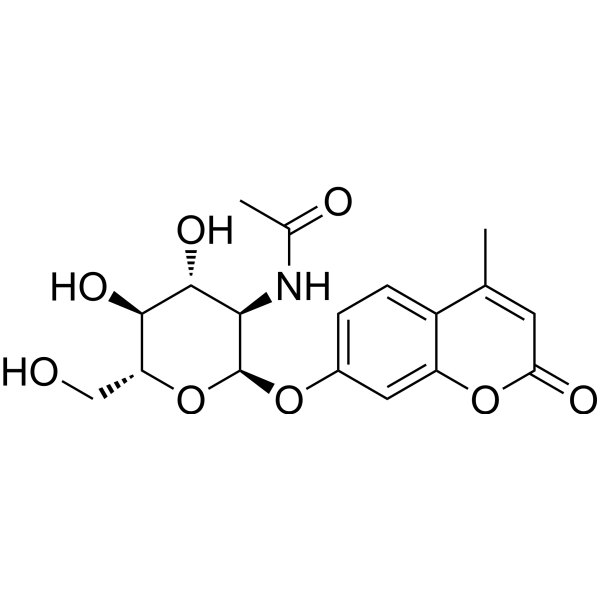 0 Images4-Methylumbelliferyl-N-acetyl-α-D-glucosaminide is a fluorogenic substrate for detecting α-N-acetylglucosaminidase.
-
AF488 NHS ester diTEA
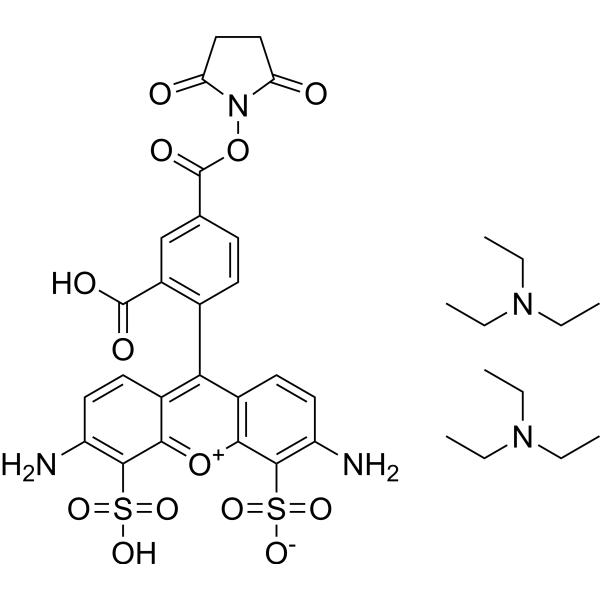 0 ImagesReferencia número: HY-D1223AF488 NHS ester diTEA is a multifunctional dye. Dyes are important tools in biological experiments. They can help researchers observe and analyze cell structures, track biomolecules, evaluate cell functions, distinguish cell types, detect biomolecules, study tissue pathology and monitor microorganisms. Their applications range from basic scientific research to clinical A wide range of diagnostics. Dyes are also widely used in traditional fields such as textile dyeing, as well as in emerging fields such as functional textile processing, food pigments and dye-sensitized solar cells. AF488 exhibits the λem and λex wavelength of 520 nm and 470 nm, respectively.
-
Firefly luciferase-IN-2
 0 ImagesReferencia número: HY-160869No. CAS: 796108-95-7Firefly luciferase-IN-2 (compound 5j) is an inhibitor of ATP-dependent luciferase (Firefly luciferase), the major light-emitting enzyme in fireflies and kowtow bugs. Firefly luciferase-IN-2 inhibits P. pyralis luciferase with an IC50 of 0.15 μM, while the inhibitory potency against R. reniformis is not significant.
-
HOE 32021
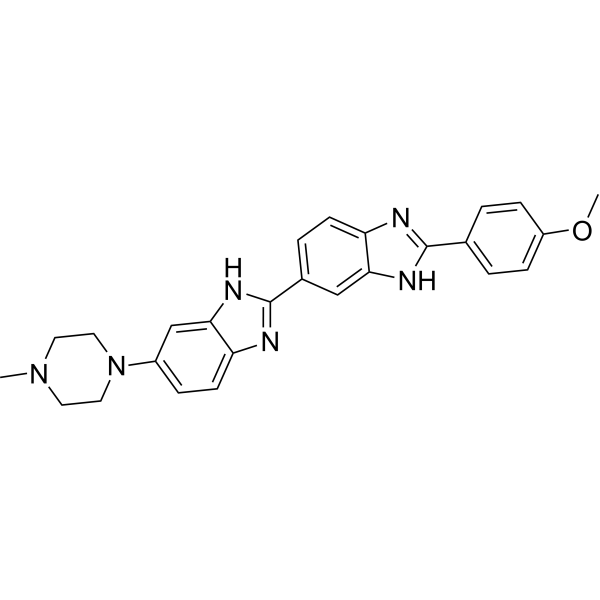 0 ImagesHOE 32021 is a marker dye in Hoechst series. Hoechst is A live nuclear marker dye. Hoechst binds to the grooves in the DNA double strand, which tends to be A/ T-rich DNA strand. Although it binds to all nucleic acids, the A/ T-rich double strand DNA significantly enhances fluorescence intensity Therefore,Hoechst dye can be used for living cell labeling. The fluorescence intensity of Hoechst dye increases with the increase of pH of solution.
-
MitoPeDPP
 0 ImagesReferencia número: HY-D2878No. CAS: 1187472-58-7MitoPeDPP is a mitochondrial-targeted fluorescent probe that is sensitive to LPO. MitoPeDPP is synthesized from diphenylpyrenephosphine. MitoPeDPP can be used to study the occurrence of mitochondrial LPO in RSL3-induced oligodendrocyte ferroptosis.
-
Basic Red 46
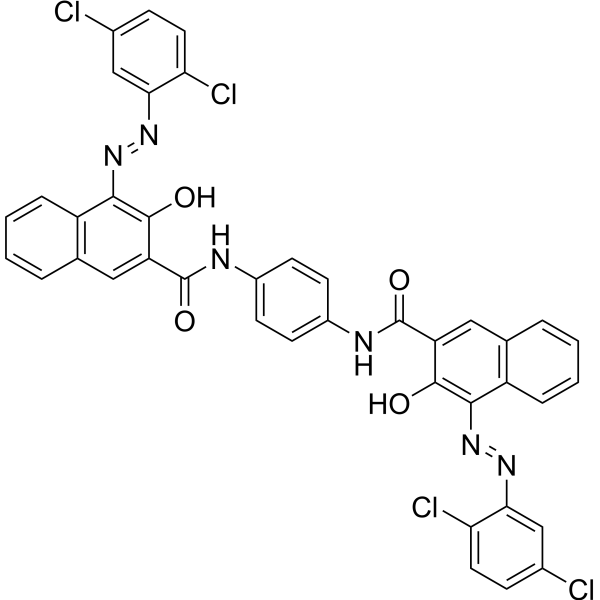
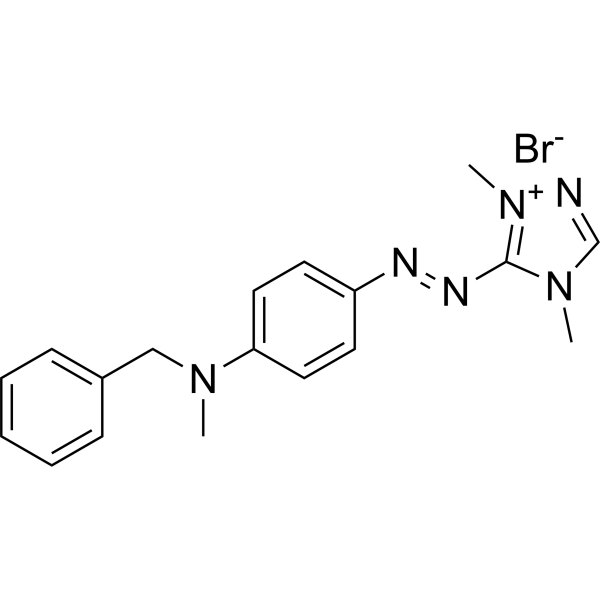 0 ImagesReferencia número: HY-D1214No. CAS: 12221-69-1Synonyms: Cationic Red X-GRLBasic Red 46 is an alkaline dye that can be removed from aqueous solutions in intermittent adsorption systems using tree ferns as biosorbents.
-
Cy5-Paclitaxel
 0 ImagesReferencia número: HY-D2422BCy5-Paclitaxel is a fluorescently labeled drug probe formed by conjugating the fluorescent dye Cy5 (Cyanine 5) with the chemotherapeutic agent Paclitaxel, which is used to track the cellular uptake, subcellular distribution and drug delivery process of Paclitaxel. The Cy5 (Cyanine 5) fluorophore is covalently linked to Paclitaxel, possessing both fluorescent tracing function and the biological activities of Paclitaxel (promoting tubulin polymerization and arresting the cell cycle at the G2/M phase); after entering cells, Cy5 emits far-red fluorescence, enabling real-time monitoring of drug localization and release.
-
Glucose-PEG2000-Cy3
 0 ImagesReferencia número: HY-D2433Glucose-PEG2000-Cy3 is a Cy3 (HY-D0822) labeled Glucose-PEG conjugate. The Cy3 fluorophore is commonly used in applications such as immunolabeling, nucleic acid labeling, fluorescence microscopy, and flow cytometry. Cy3 has an emission maximum around 562-570 nm. Glucose-PEG improves drug cellular uptake and reduces endosomal degradation, and can be used in drug delivery.
-
RGD-PEG-Cy3
 0 ImagesReferencia número: HY-D2439Pureza: 98.50%RGD-PEG-Cy3 is a fluorescent labeling reagent that combines Cy3 fluorescent dye, peptide (RGD) and polyethylene glycol (PEG). The Cy3 fluorophore is commonly used in applications such as immunolabeling, nucleic acid labeling, fluorescence microscopy, and flow cytometry. Cy3 has an emission maximum around 562-570 nm. RGD is a peptide sequence (CRGDKGPDCiRGD) that binds to αvβ3 and αvβ5 integrin receptors on tumor neovasculogenesis to achieve specific tumor tissue targeting.
-
DSPE-PEG600-FITC
 0 ImagesReferencia número: HY-W440914CDSPE-PEG600-FITC is an amphiphile PEG polymer which has unsaturated lipid tails. DSPE-PEG600-FITC can form micelles in an aqueous solution and can be used to prepare liposome/nano particles for drug nanocarriers (Ex/Em=488/525 nm).
-
ARP
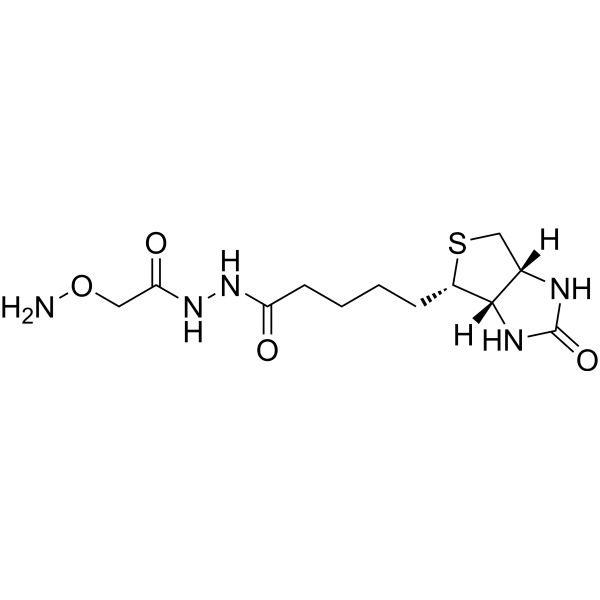 0 ImagesReferencia número: HY-157916No. CAS: 139585-03-8Synonyms: Aldehyde reactive probeARP (Aldehyde reactive probe) is an aldehyde-reactive probe. ARP specifically labels AP sites in DNA with biotin residues. ARP detects abasic sites induced by RNA oxidation. ARP is suitable for studies involving the quantification of AP sites, or the detection of other aldehyde-containing DNA damages and abasic sites induced by RNA oxidation.
-
Fluorene-d8
 0 ImagesReferencia número: HY-W026772S1No. CAS: 35782-21-9Fluorene-d8 is the deuterium labeled Fluorene (HY-W026772). Fluorene is an orally active polycyclic aromatic hydrocarbon (PAH) and a precursor to other fluorene-based compounds. Fluorene and its derivatives serve as dye precursors for fluorene synthesis. In A549 cells, Fluorene induces oxidative stress and inflammatory responses by increasing ROS and SOD generation, exacerbating lipid peroxidation, modulating antioxidant enzyme activity, and upregulating the expression of pro-inflammatory factors TNF-α and IL-6. In vivo, Fluorene exhibits anxiolytic activity. Fluorene holds potential for research in inflammation and neurological disorders.
-
Pantothenate-AMC
 0 ImagesPantothenate-AMC is a fluorogenic substrate used for detecting the enzymatic activity of vanin-1, an enzyme involved in the recycling of L-pantothenic acid. Upon enzymatic cleavage by vanin-1, 7-amino-7-methylcoumarin (AMC) is released, and its fluorescence can be used to quantify vanin-1 activity. The excitation/emission maxima of AMC are 340-360 nm and 440-460 nm, respectively.
-
FAM-hsa-miR-147b-5p mimic
 0 ImagesReferencia número: HY-R00293FFAM-hsa-miR-147b-5p mimic is a FAM-labeled hsa-miR-147b-5p mimic (HY-R00293). hsa-miR-147b-5p mimics are small, chemically synthesized double-stranded RNAs that mimic endogenous miRNAs and enable miRNA functional analysis by up-regulation of miRNA activity.
-
Cy5 HA (MW 100000)
 0 ImagesReferencia número: HY-D2645Cy5 HA (MW 100000) is a hyaluronic acid labeled with CY5 (HY-D0821). Cy5 HA (MW 100000) is widely used for cell imaging and in vivo imaging of shallow tissue (Ex/Em = 633/670 nm).
-
2-(2′-Hydroxyphenyl)benzimidazole
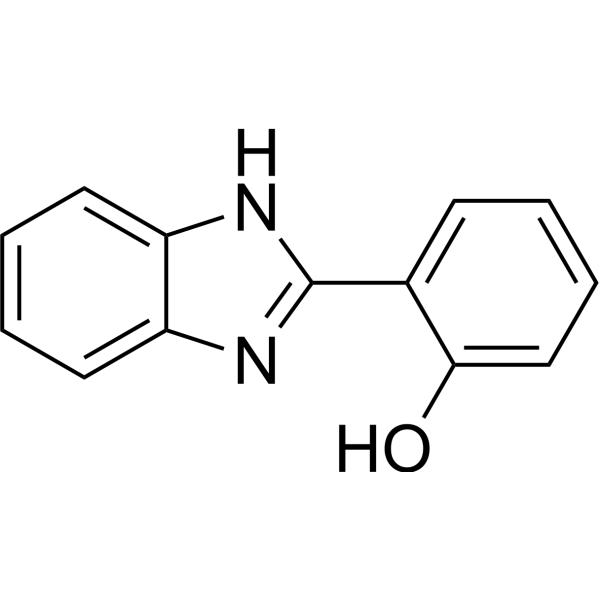 0 Images2-(2′-Hydroxyphenyl) benzimidazole is the most extensively studied excited-state intramolecular proton transfer (ESIPT) molecule, exhibiting normal and tautomer emissions. 2-(2′-Hydroxyphenyl) benzimidazole has been applied as a fluorescent probe in various systems.




