



Fluorescent Dye
Fluorescence is a phenomenon of photoluminescence in luminescence. When an atom is irradiated by light, some electrons around the nucleus jump from their original orbitals to higher energy orbitals under the influence of light energy, i.e., from the ground state to the first or second excited single-line state, etc. Due to the instability of the first or second excited singlet state, the electron returns from the excited singlet state to the ground state accompanied by released energy, resulting in fluorescence.
Fluorescent dyes can be covalently bound or physically adsorbed in the structure of the substance. The fluorescence properties allow for the characterization, localization and quantitative analysis of the labeled object. Fluorescent dyes have shown great potential for the detection of proteins, nucleic acids, cells, and immunoassays, attributed to the advantages in non-radioactive contamination, simple experimental operation and easy observation.
Fluorescent dyes have penetrated many fields such as pharmacology, physiology, environmental science, and information science, as well as functional studies of proteins and drug screening.
All Product Categories
-
Fluorescent Dye Related Products (4914)
Related Products (4914)

-
Antibodies (4)
-
FITC-D-Glucose
 0 ImagesCat. No.: HY-B0389F1FITC-D-Glucose is a fluorescently labeled glucose derivative and an orally effective bacterial metabolic activity detection probe. FITC-D-Glucose is applicable to the research of cholera.
-
Carboxy SNARF-1, acetoxymethyl ester (5/6-mixture)
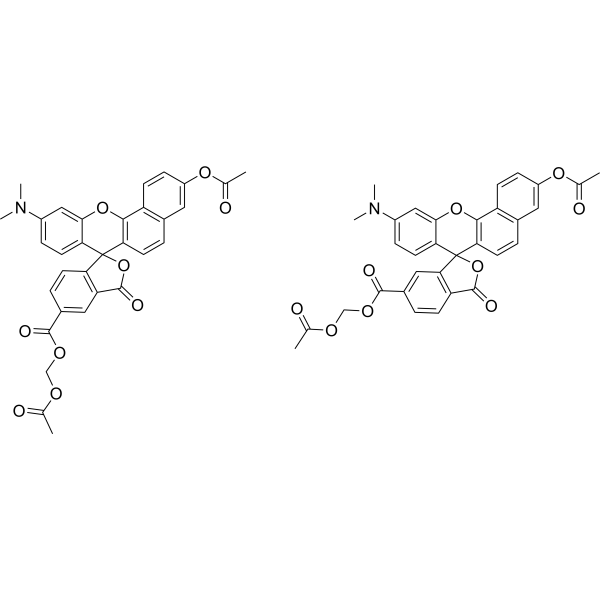 0 ImagesCat. No.: HY-D1093CAS No.: 126208-13-7Carboxy SNARF-1, acetoxymethyl ester (5/6-mixture) is a fluorescent probe used for intracellular pH measurement. The detection wavelengths of Carboxy SNARF, acetoxymethyl ester are Ex/Em = 540/590 nm and 540/650 nm, with an excitation wavelength of 540 nm. Emission signals at 590 nm and 650 nm are recorded simultaneously, and the ratio of these emission signals yields a linear measurement of intracellular pH.
-
Naphthoresorcinol
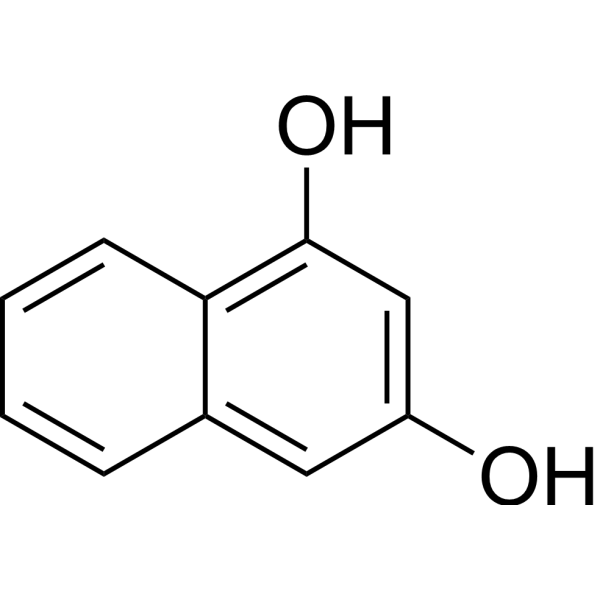 0 ImagesNaphthoresorcinol (1,3-Dihydroxynaphthalene) is a fluorescent dye (λex=330 nm, λem=380 nm) that can react with the NPPD (a tracer) and concentrated HCl and develop a red color. Naphthoresorcinol could be used as a background electrolyte (BGE) to determine the carbohydrates.
-
h-FTAA
 0 Imagesh-FTAA is a luminescent conjugated oligothiophene (LCO) probe. h-FTAA can selectively bind to amyloid protein aggregates (such as Aβ plaques) and distinguish different conformations of the protein aggregates through changes in fluorescence signals. h-FTAA significantly reduces the neurotoxicity of Aβ1-42 and the Arctic mutant Aβ (AβArc), thereby protecting SH-SY5Y neuroblastoma cells. h-FTAA can be used to dynamically track the formation and maturation process of Aβ plaques.
-
Lycopersicon esculentum (Tomato) Lectin (Biotin)
 0 ImagesCat. No.: HY-NP148Synonyms: LEL (Biotin)Lycopersicon esculentum (Tomato) Lectin Biotin is a plant lectin that can be used as a probe to specifically bind biomolecules (such as polysaccharides, peptides, etc.). Lycopersicon esculentum (Tomato) Lectin Biotin is a biological material or organic compound that can be used in life science research.
-
Mito-DK
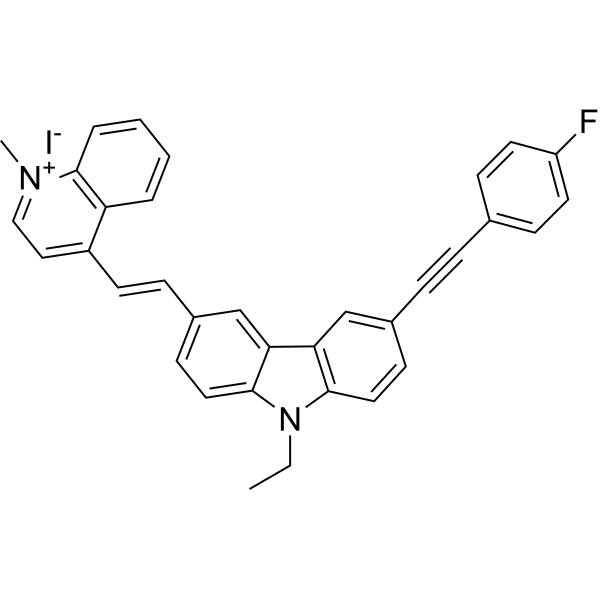 0 ImagesCat. No.: HY-162422Mito-DK is a small-molecule fluorescent dye with the capability of crosstalk-free response to polarity and mtDNA as well as mitochondrial morphology. Mito-DK has high photostability, low cytotoxicity, and good mitochondria-targeting properties. Mito-DK can be used for real-time tracking and multidimensional assessing of mitochondria-related pyroptosis in cancer cells.
-
Biotin-PEG20000-Biotin
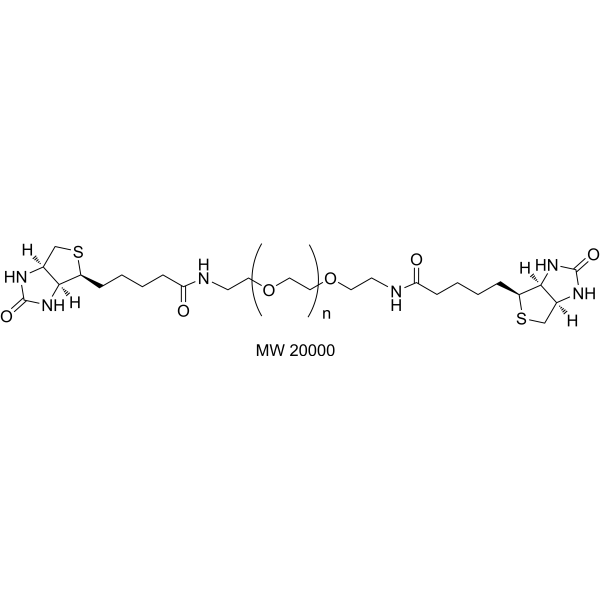 0 ImagesCat. No.: HY-140656FBiotin-PEG20000-Biotin is a biotin labeled PEG derivative. Biotin is an enzyme co-factor, can be used for labeling protein; PEG is a hydrophilic and water-soluble polymer with low toxicity.
-
(Arg)9,TAMRA-labeled
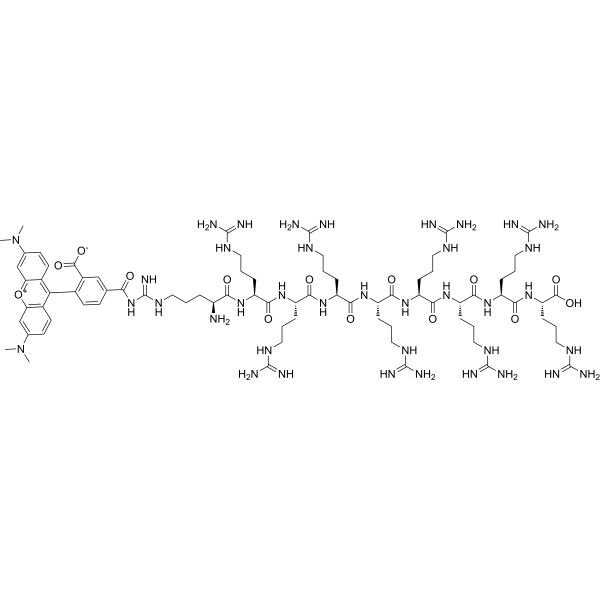 0 ImagesCat. No.: HY-P4083(Arg)9,TAMRA-labeled is a TAMRA-labeled cell permeable peptide. (Arg)9 is a cell-permeable peptide used for drug delivery.
-
FITC-Chitosan (MW 100000)
 0 ImagesCat. No.: HY-D2826FITC-Chitosan (MW 100000) is a chitosan (Chitosan) (HY-B2144A) labeled with FITC (HY-66019). FITC-Chitosan (MW 100000) combines the biological and physicochemical properties of chitosan (such as biocompatibility, positive charge, and nanoparticle-forming ability) with the fluorescent visibility of FITC (Ex/Em = ~485/535 nm).
-
Sulfo-cyanine3 azide potassium
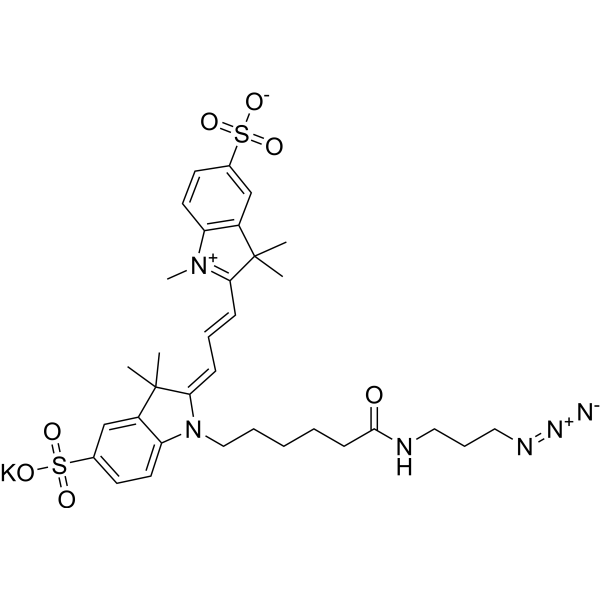 0 ImagesCat. No.: HY-D1274CSulfo-cyanine3 azide potassium is an azide cyanine dye and fluorescent probe (Ex/Em=548/563 nm). Sulfo-cyanine3 azide potassium can be used for synthesis of fused tricyclic heterocycles, producing immunostimulatory agents. It contains an azide group and can undergo copper-catalyzed azide-alkyne cycloaddition (CuAAc) with molecules containing alkyne groups. It can also undergo ring strain-promoted alkyne-azide cycloaddition (SPAAC) with molecules containing DBCO or BCN groups.
-
Pinacyanol iodide
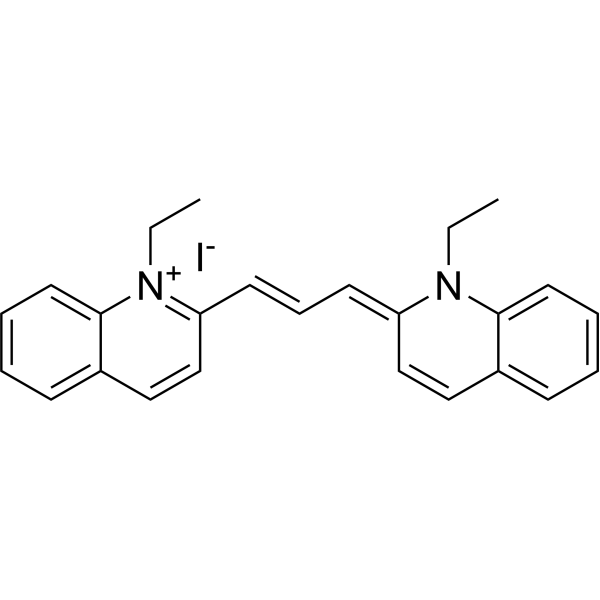 0 ImagesPinacyanol iodide is a fluorescent cyanine dye. Pinacyanol iodide exhibits ultrafast excited state isomerization.
-
Beryllon II
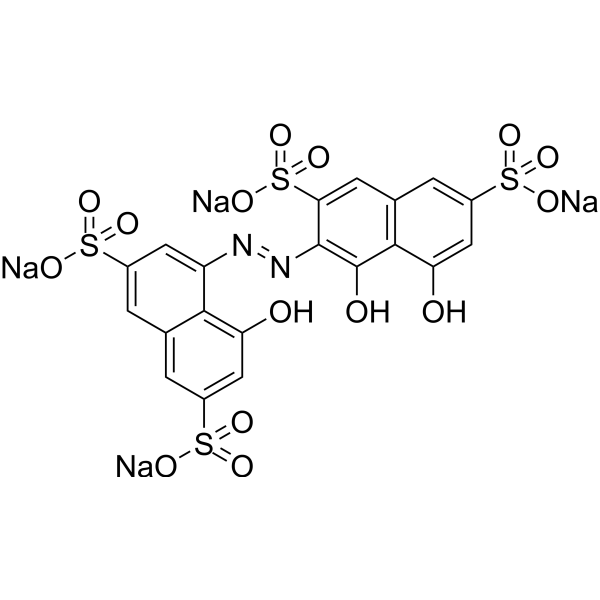 0 ImagesBeryllon II is a widely used chromogenic reagent that is used to determine many elements, such as Mo, Mg and Co, and also used for the determination of proteins.
-
5-FAM-Ahx-LL-37 TFA
 0 ImagesCat. No.: HY-P5057BPurity: 98.06%5-FAM-Ahx-LL-37 TFA is a 5-FAM (HY-66022) labeled LL-37, human (HY-P1222). The carboxyfluorescein group is attached via a 6-carbon spacer, 6-Aminohexanoic acid (Ahx, HY-B0236). LL-37, human is a 37-residue, amphipathic, cathelicidin-derived antimicrobial peptide, which exhibits a broad spectrum of antimicrobial activity.
-
Abz-Thr-Ile-Nle-p-nitro-Phe-Gln-Arg-NH2
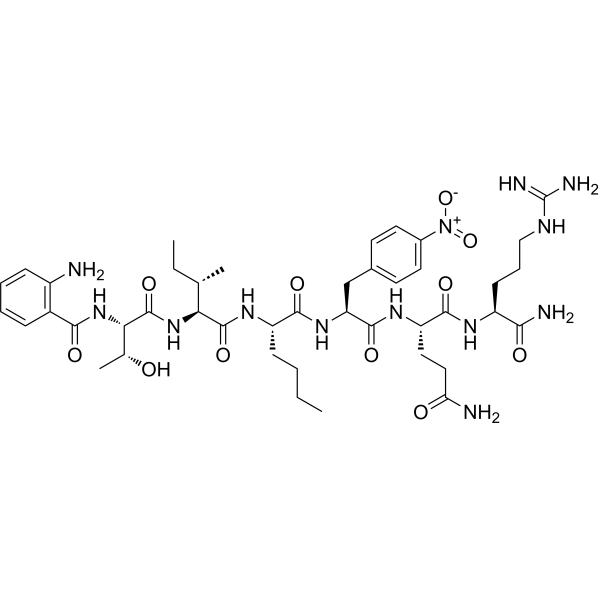 0 ImagesAbz-Thr-Ile-Nle-p-nitro-Phe-Gln-Arg-NH2 is a fluorogenic substrate, that can be used for the fluorescence screening assay.
-
Cy5-PEG5000-FA
 0 ImagesCat. No.: HY-D2551Cy5-PEG5000-FA is a fluorescently labeled biomolecule consisting of Cy5 (HY-D0821) fluorescent dye, polyethylene glycol (PEG), and Folic acid (FA) (HY-16637). Cy5 is commonly used in applications such as immunolabeling and nucleic acid labeling. The maximum emission wavelength of Cy5 is approximately 670 nm.
-
MSBN
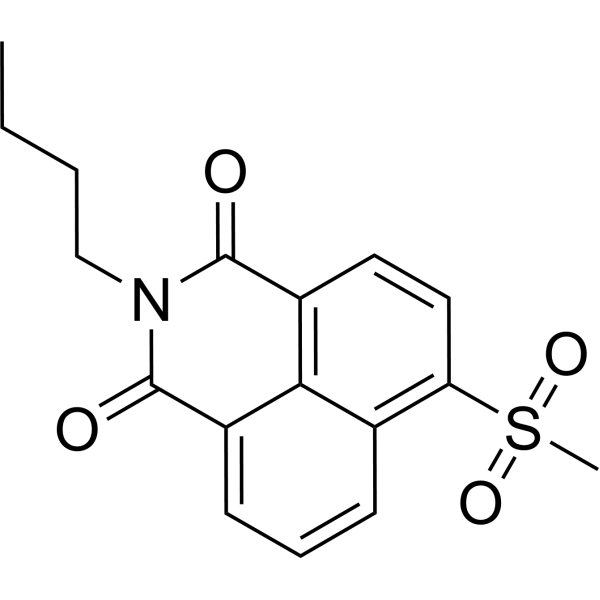 0 ImagesMSBN is a highly selective fluorogenic probe for thiols. MSBN can be used to image thiols in live cells selectively and specifically label protein thiols with a signal to determine various reversible protein thiol modifications.
-
Cy5-Paclitaxel bromide
 0 ImagesCat. No.: HY-D2422CCy5-Paclitaxel bromide is a fluorescently labeled drug probe formed by conjugating the fluorescent dye Cy5 (Cyanine 5) with the chemotherapeutic agent Paclitaxel, which is used to track the cellular uptake, subcellular distribution and drug delivery process of Paclitaxel. The Cy5 (Cyanine 5) fluorophore is covalently linked to Paclitaxel, possessing both fluorescent tracing function and the biological activities of Paclitaxel (promoting tubulin polymerization and arresting the cell cycle at the G2/M phase); after entering cells, Cy5 emits far-red fluorescence, enabling real-time monitoring of drug localization and release.
-
SNAP-549
 0 ImagesCat. No.: HY-D2949CAS No.: 2836233-28-2SNAP-549 is a DY-549P1-labeled SNAP tag fluorescent probe, specifically designed for single-molecule imaging and dynamic tracking of proteins in living cells. SNAP-549 only labels SNAP-tag fusion proteins, with low background signals and forming irreversible connections, making it suitable for long-term observation.
-
Soybean Agglutinin (Biotinylated)
 0 ImagesCat. No.: HY-NP0188Synonyms: SBA (Biotinylated)Soybean Agglutinin (SBA) Biotinylated is a plant lectin that can be used as a probe to specifically bind biomolecules (such as polysaccharides, peptides, etc.).Soybean Agglutinin (SBA) Biotinylated is a biological material or organic compound that can be used in life science research.




