



Naphthoresorcinol

Based on 1 Customer Validation
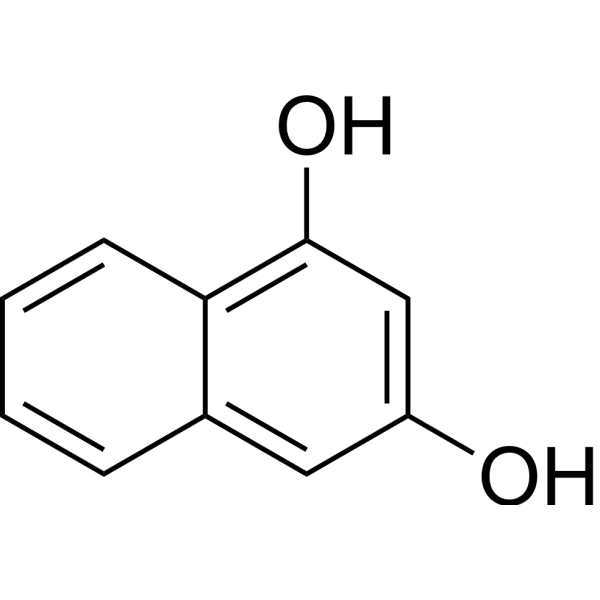
Naphthoresorcinol (1,3-Dihydroxynaphthalene) is a fluorescent dye (λex=330 nm, λem=380 nm) that can react with the NPPD (a tracer) and concentrated HCl and develop a red color. Naphthoresorcinol could be used as a background electrolyte (BGE) to determine the carbohydrates.
Nos produits utilisent uniquement pour la recherche. Nous ne vendons pas aux patients.
- Pureté : 99.49%
- CAS No.: 132-86-5
- Formule: C10H8O2
- Masse moléculaire:160.17
-
Stockage:
4°C, protect from light
* In solvent : -80°C, 6 months; -20°C, 1 month (protect from light)

To place orders, for customer services and technical support, please contact: MedChemExpress USA
Tel: 609-228-6898 E-mail: [email protected] [email protected]


-
 Activité biologique
-
Chemical Information
-
Solvant et solubilité
- Pureté et documentation
- Références
-
 Help & FAQs


-
HY-15924
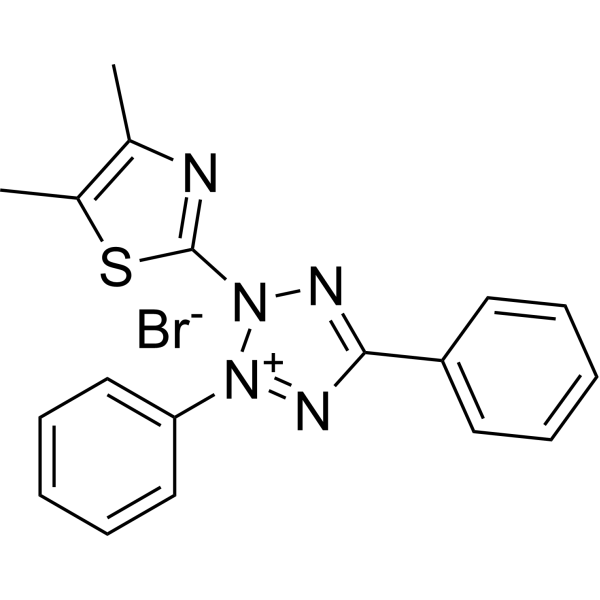
Thiazolyl BlueCytotoxicity Detection Reagent -

HY-D0896
ANSAntibacterial Agent -
HY-W005148
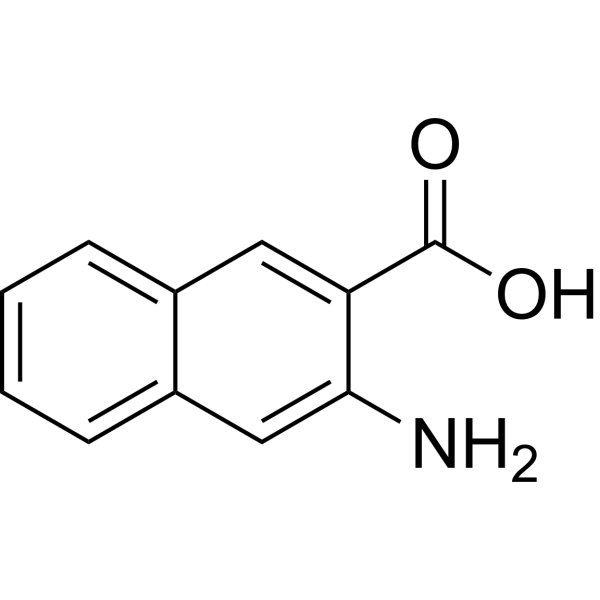
3-Amino-2-naphthoic acidBiochemical Reagent -
HY-D1168
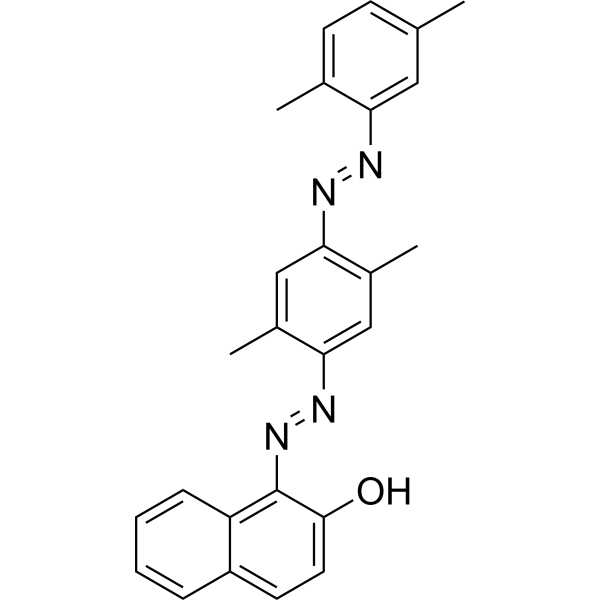
Oil Red ODiazol Dye -
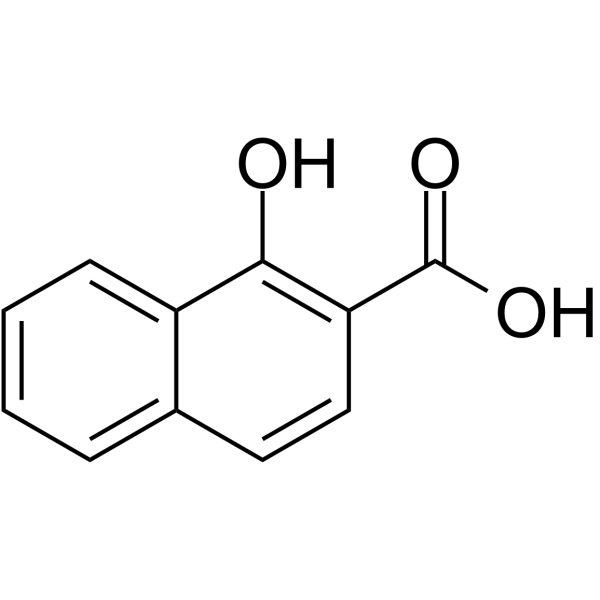
HY-W016103
1-Hydroxy-2-naphthoic acidBiochemical intermediate -
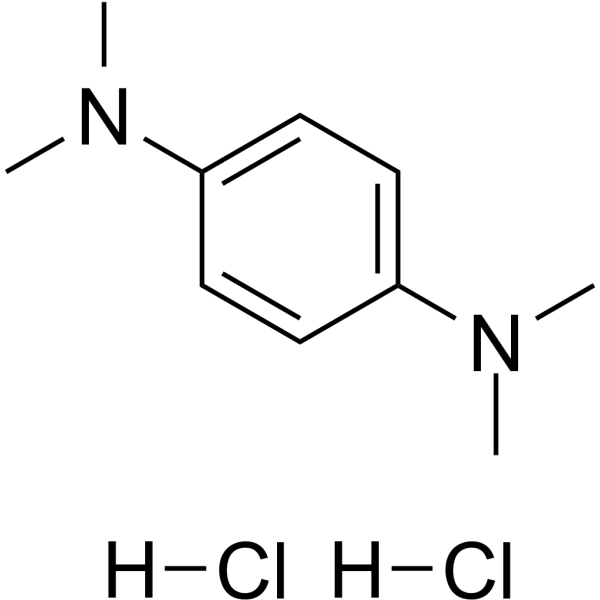
HY-W012145
TMPD dihydrochlorideRedox Active Substrate Molecule -

HY-Y0075
2-NaphthaldehydeBiochemical Assay Reagents -

HY-W016187
2-(Naphthalen-2-yl)acetic acidPlant Growth Regulator -
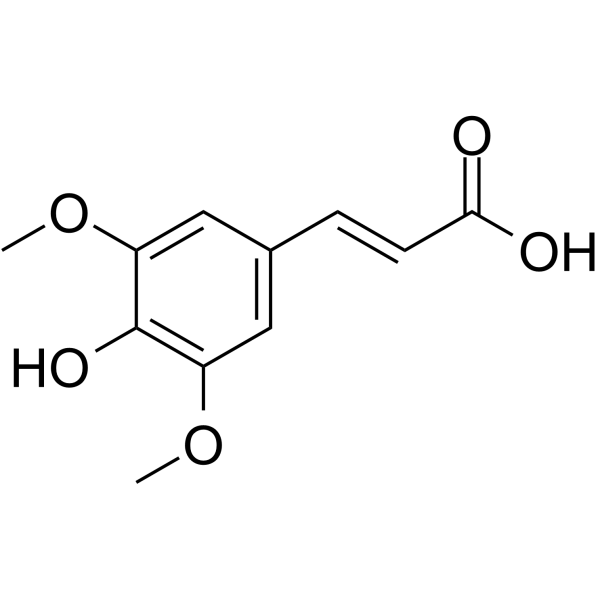
HY-W009732
Sinapinic acid -
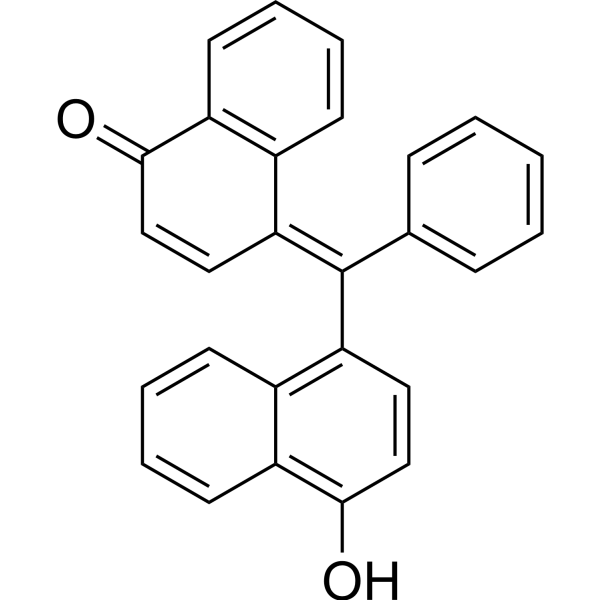
HY-125457
α-NaphtholbenzeinPH Indicator -

HY-I0259
8-Amino-2-naphtholFluorescent Probe -

HY-W009732R
Sinapinic acid (Standard)


Activité biologique
Description
Cellular Effect
|
Cell Line

|
Type | Value | Description | References |
|---|---|---|---|---|
| HFL1 | ED50 |
100 μM
Compound: 8a
|
Antiproliferative activity against human fibroblast HFL1 cells
Antiproliferative activity against human fibroblast HFL1 cells
|
[PMID: 16539380] |
| T-24 | ED50 |
70 μM
Compound: 8a
|
Antiproliferative activity against human bladder carcinoma T24 cells
Antiproliferative activity against human bladder carcinoma T24 cells
|
[PMID: 16539380] |
In Vitro
Guide (The following is our recommended protocol; this protocol serves merely as a guideline and should be modified according to your specific needs)[4].
1. Preparation of Naphthoresorcinol Working Solution:
1) Dissolve Naphthoresorcinol in a mixed solvent of Me2CO and 3 N H3PO4 (5:1, v/v) to obtain a 0.2% Naphthoresorcinol solution.
2. Specific Procedure:
1) Under an argon atmosphere, reflux Compound 2 (3 mg) with 2 N HCl (dissolved in MeOH, 1:4; 1 mL) at 90°C for 2 h.
2) Dilute the reaction mixture with water and extract with CHCl3 (10 mL). Neutralize the aqueous layer with Amberlite MB-3, then evaporate under reduced pressure to obtain the monosaccharide residue.
3) Extract the residue with MeOH. Analyze the extract via silica gel HPTLC, using a mobile phase of Me2CO and 2 mM NaOAc (17:3, v/v). Spray the plate with the 0.2% Naphthoresorcinol solution, then heat at 105°C for 5 minutes for detection.
4. Use D-Glucose (HY-B0389) as the standard.
MedChemExpress (MCE) has not independently confirmed the accuracy of these methods. They are for reference only.
Emission (Em)
380
Excitation (Ex)
330


Chemical Information
-
CAS No. 132-86-5
-
Appearance Solid
-
Masse moléculaire 160.17
-
Formule C10H8O2
-
SMILES
OC1=C2C=CC=CC2=CC(O)=C1
-
Synonyms
1,3-Dihydroxynaphthalene
-
Livraison
Room temperature in continental US; may vary elsewhere.
-
Stockage
4°C, protect from light
* In solvent : -80°C, 6 months; -20°C, 1 month (protect from light)


Solvant et solubilité
In Vitro:
DMSO : 100 mg/mL (624.34 mM; Need ultrasonic; Hygroscopic DMSO has a significant impact on the solubility of product, please use newly opened DMSO)
Please refer to the solubility information to select the appropriate solvent. Once prepared, please aliquot and store the solution to prevent product inactivation from repeated freeze-thaw cycles.
Storage method and period of stock solution: -80°C, 6 months; -20°C, 1 month (protect from light). When stored at -80°C, please use it within 6 months. When stored at -20°C, please use it within 1 month.
Please refer to the solubility information to select the appropriate solvent. Once prepared, please aliquot and store the solution to prevent product inactivation from repeated freeze-thaw cycles.
Storage method and period of stock solution: -80°C, 6 months; -20°C, 1 month (protect from light). When stored at -80°C, please use it within 6 months. When stored at -20°C, please use it within 1 month.
Concentration (start) × Volume (start) = Concentration (final) × Volume (final)


Pureté et documentation
-
Fiche technique (276 KB)
-
SDS (418 KB)
- English - EN (418 KB)
- Français - FR (418 KB)
- Deutsch - DE (418 KB)
- Norwegian - NO (418 KB)
- Español - ES (418 KB)
- Swedish - SV (418 KB)
- Italian - IT (418 KB)
- Korean - KR (418 KB)
- Portuguese - PT (418 KB)
-
Instruction de manipulation (2659 KB)
Références
[2]. Suzuki S, et, al. Development of a field kit for use by non-scientists for chemical tracking using 5-(4-nitrophenyl)-2,4-pentadien-1-al. Forensic Sci Int. 2013 May 10;228(1-3):e25-7. [Content Brief]
[3]. Lee YH, et, al. Determination of carbohydrates by high-performance capillary electrophoresis with indirect absorbance detection. J Chromatogr B Biomed Appl. 1996 May 31;681(1):87-97. [Content Brief]
[4]. Sinha S, et al. A new cytotoxic quinolone alkaloid and a pentacyclic steroidal glycoside from the stem bark of Crataeva nurvala: study of anti-proliferative and apoptosis inducing property. Eur J Med Chem. 2013 Feb;60:490-6. [Content Brief]


Complete Stock Solution Preparation Table
Please refer to the solubility information to select the appropriate solvent. Once prepared, please aliquot and store the solution to prevent product inactivation from repeated freeze-thaw cycles.
Storage method and period of stock solution: -80°C, 6 months; -20°C, 1 month (protect from light). When stored at -80°C, please use it within 6 months. When stored at -20°C, please use it within 1 month.
| Optional Solvent | Concentration Solvent Mass | 1 mg | 5 mg | 10 mg | 25 mg |
|---|---|---|---|---|---|
| DMSO | 1 mM | 6.2434 mL | 31.2168 mL | 62.4337 mL | 156.0842 mL |
| 5 mM | 1.2487 mL | 6.2434 mL | 12.4867 mL | 31.2168 mL | |
| 10 mM | 0.6243 mL | 3.1217 mL | 6.2434 mL | 15.6084 mL | |
| 15 mM | 0.4162 mL | 2.0811 mL | 4.1622 mL | 10.4056 mL | |
| 20 mM | 0.3122 mL | 1.5608 mL | 3.1217 mL | 7.8042 mL | |
| 25 mM | 0.2497 mL | 1.2487 mL | 2.4973 mL | 6.2434 mL | |
| 30 mM | 0.2081 mL | 1.0406 mL | 2.0811 mL | 5.2028 mL | |
| 40 mM | 0.1561 mL | 0.7804 mL | 1.5608 mL | 3.9021 mL | |
| 50 mM | 0.1249 mL | 0.6243 mL | 1.2487 mL | 3.1217 mL | |
| 60 mM | 0.1041 mL | 0.5203 mL | 1.0406 mL | 2.6014 mL | |
| 80 mM | 0.0780 mL | 0.3902 mL | 0.7804 mL | 1.9511 mL | |
| 100 mM | 0.0624 mL | 0.3122 mL | 0.6243 mL | 1.5608 mL |


Naphthoresorcinol Related Classifications
HY-D0165 Related Classifications
 Powered by Bioz