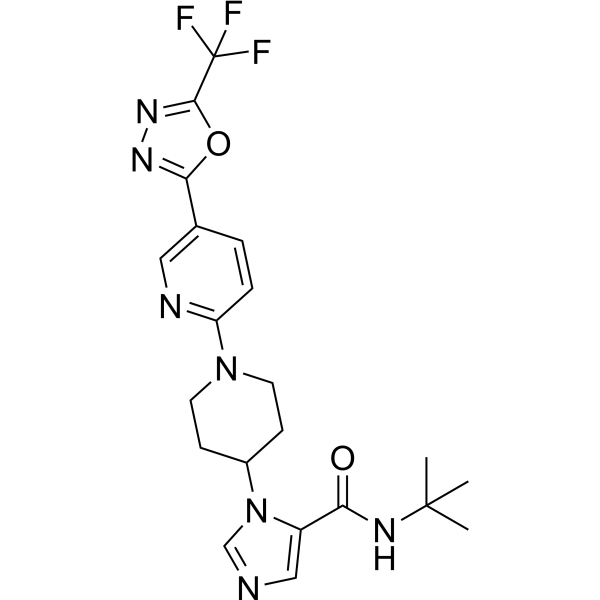
WNK3
WNK3 is a serine/threonine WNK kinase that coordinates intracellular Cl- handling by increasing NKCC1-mediated Cl- influx and suppressing KCC-mediated Cl- efflux[1]. Mechanistically, WNK signaling activates SPAK/OSR1, which phosphorylates cation-chloride cotransporters to stimulate Na+-driven Cl- importers and inhibit K+-driven Cl- exporters[2]. In ischemic stroke models, loss or inhibition of WNK3-SPAK/OSR1 signaling reduced infarct volume, cerebral edema, axonal demyelination, and improved neurological recovery[3]. Compared with related isoforms, WNK3 and WNK4 show opposite sensitivity to cell volume and intracellular chloride concentration, defining isoform-specific control of CCC regulation[4]. Human genetic evidence further links pathogenic WNK3 variants to X-linked intellectual disability, variable epilepsy, structural brain abnormalities, and impaired KCC2 phosphoregulation[5]. In neuronal models, WNK3 regulates mature neuronal GABAergic tone and excitability through KCC2-dependent chloride control[6][7]. For experimental applications, high-throughput screening identified WNK inhibitors, including quinoline compounds with greater potency toward WNK3 than WNK1, supporting isoform-focused tool development[8].
References:
- [1]. Kahle KT, et al. WNK3 modulates transport of Cl- in and out of cells: implications for control of cell volume and neuronal excitability. Proc Natl Acad Sci U S A. 2005 Nov 15;102(46):16783-8. [Content Brief]
- [2]. Alessi DR, et al. The WNK-SPAK/OSR1 pathway: master regulator of cation-chloride cotransporters. Sci Signal. 2014 Jul 15;7(334):re3. [Content Brief]
- [3]. Begum G, et al. Inhibition of WNK3 Kinase Signaling Reduces Brain Damage and Accelerates Neurological Recovery After Stroke. Stroke. 2015 Jul;46(7):1956-1965. [Content Brief]
- [4]. Pacheco-Alvarez D, et al. WNK3 and WNK4 exhibit opposite sensitivity with respect to cell volume and intracellular chloride concentration. Am J Physiol Cell Physiol. 2020 Aug 1;319(2):C371-C380. [Content Brief]
- [5]. Küry S, et al. Rare pathogenic variants in WNK3 cause X-linked intellectual disability. Genet Med. 2022 Sep;24(9):1941-1951. [Content Brief]
- [6]. Lim WM, et al. WNK3 Maintains the GABAergic Inhibitory Tone, Synaptic Excitation and Neuronal Excitability via Regulation of KCC2 Cotransporter in Mature Neurons. Front Mol Neurosci. 2021 Nov 10;14:762142. [Content Brief]
- [7]. Sinha AS, et al. WNK3 kinase maintains neuronal excitability by reducing inwardly rectifying K+ conductance in layer V pyramidal neurons of mouse medial prefrontal cortex. Front Mol Neurosci. 2022 Oct 13;15:856262. [Content Brief]
- [8]. Chlebowicz J, et al. Identification of a Class of WNK Isoform-Specific Inhibitors Through High-Throughput Screening. Drug Des Devel Ther. 2023 Jan 20;17:93-105. [Content Brief]
All Product Categories
-
WNK3 Related Products (1)
Related Products (1)