



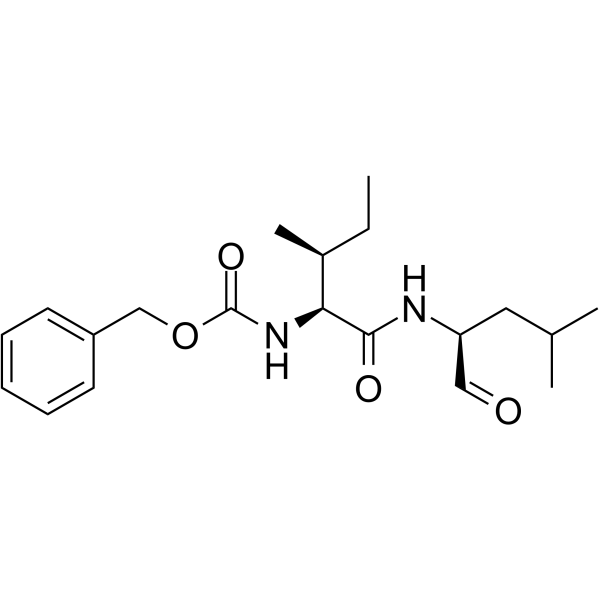
Z-Ile-Leu-aldehyde
Based on 2 publication(s) in Google Scholar
Z-Ile-Leu-aldehyde (Z-IL-CHO) is a potent and competitive peptide aldehyde inhibitor of γ-secretase and notch.
For research use only. We do not sell to patients.
- Purity : 97.0%
- CAS No.: 161710-10-7
- Formula: C20H30N2O4
- Molecular Weight:362.46
-
Storage:Powder -20°C, 3 years , 4°C, 2 years ; In solvent -80°C, 6 months , -20°C, 1 month

To place orders, for customer services and technical support, please contact: MedChemExpress USA
Tel: 609-228-6898 E-mail: [email protected] [email protected]


-
 Biological Activity
-
Chemical Information
-
Solvent & Solubility
- Protocols
- Purity & Documentation
- References
-
 Help & FAQs


-
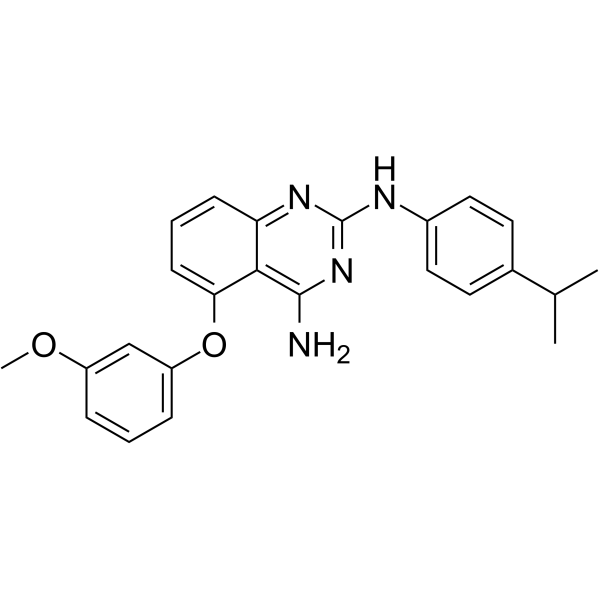
HY-120782
Yhhu-3792Notch Activator -
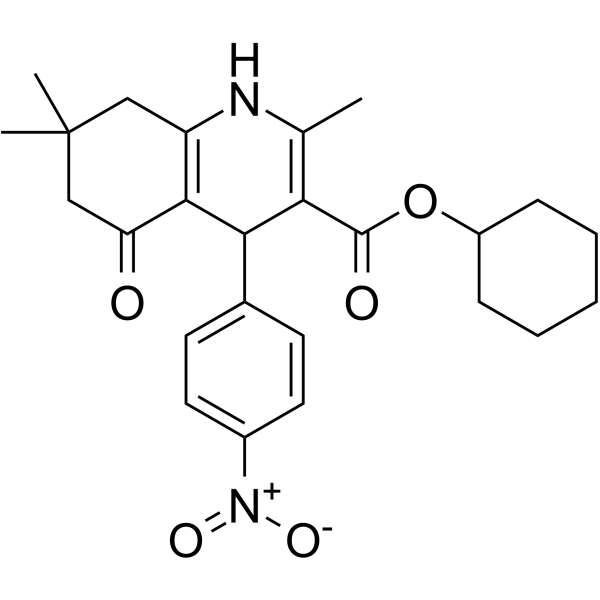
HY-15860
FLI-06Notch Inhibitor -
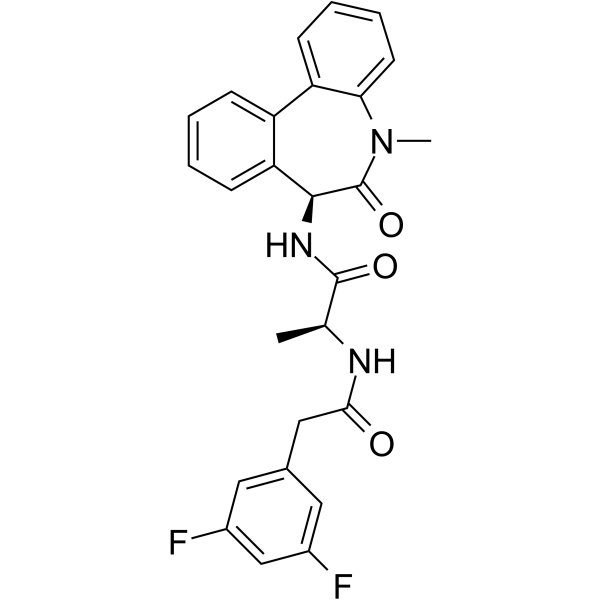
HY-13526
YO-01027γ-secretase Inhibitor -
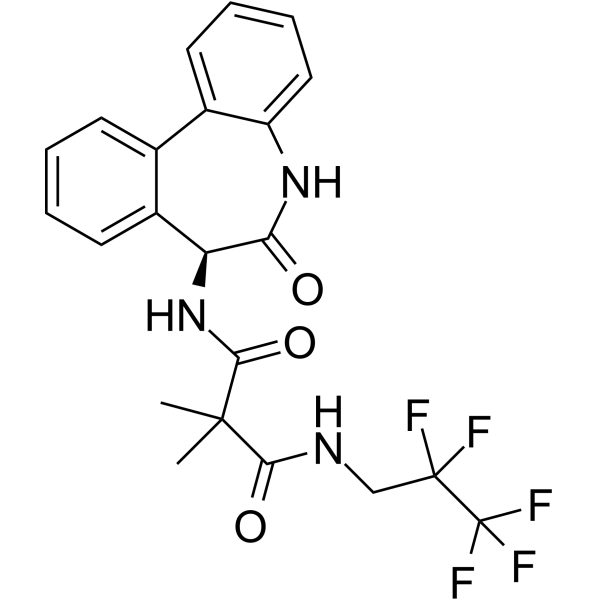
HY-11102
RO4929097γ-secretase Inhibitor -
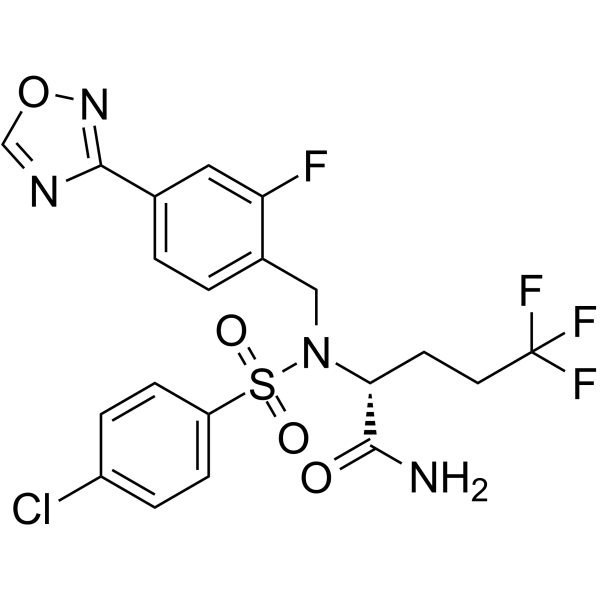
HY-50845
Avagacestatγ-secretase Inhibitor -
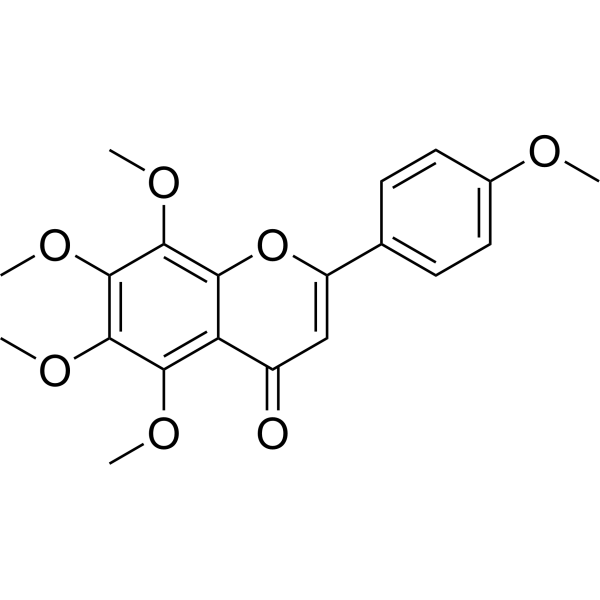
HY-N0133
TangeretinApoptosis Inducer -
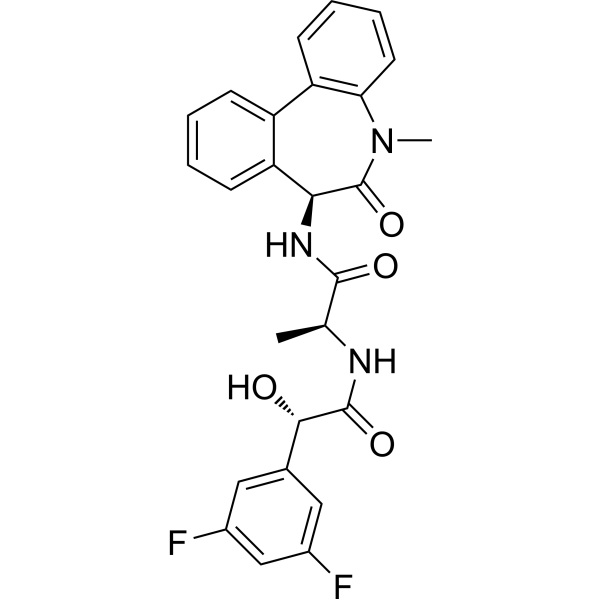
HY-50752
LY-411575γ-secretase Inhibitor -
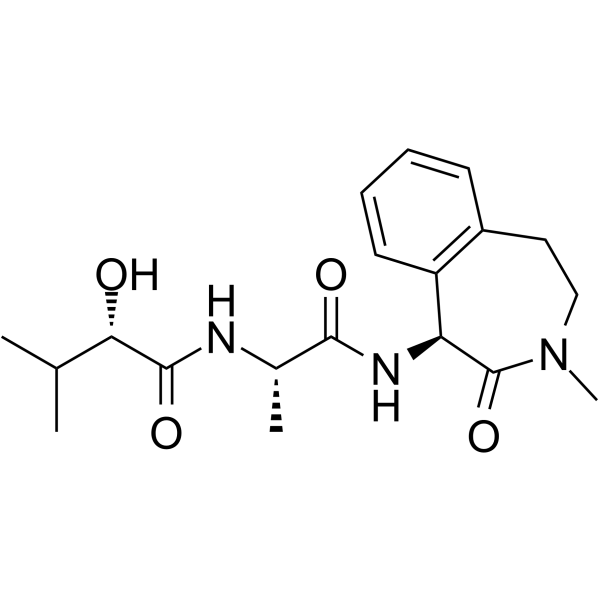
HY-10009
Semagacestatγ-secretase Inhibitor -
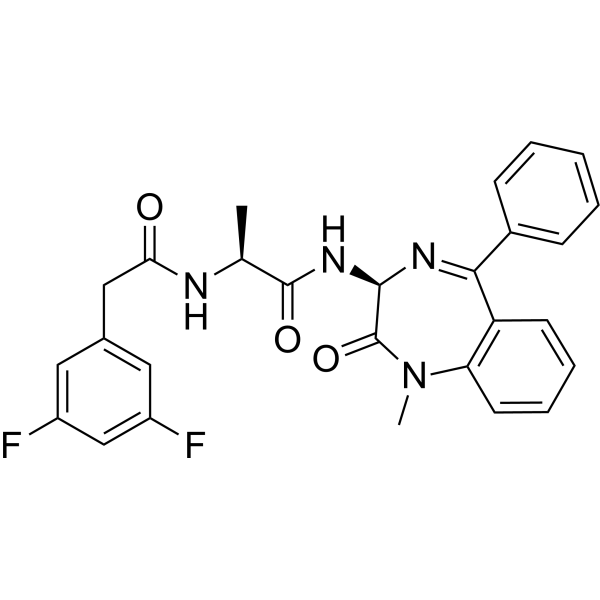
HY-14176
Compound Eγ-secretase Inhibitor -
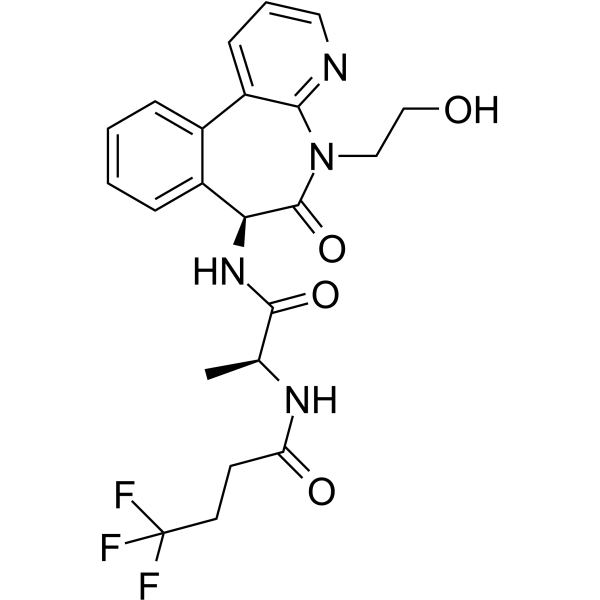
HY-12449
CrenigacestatNotch/γ-secretase Inhibitor -
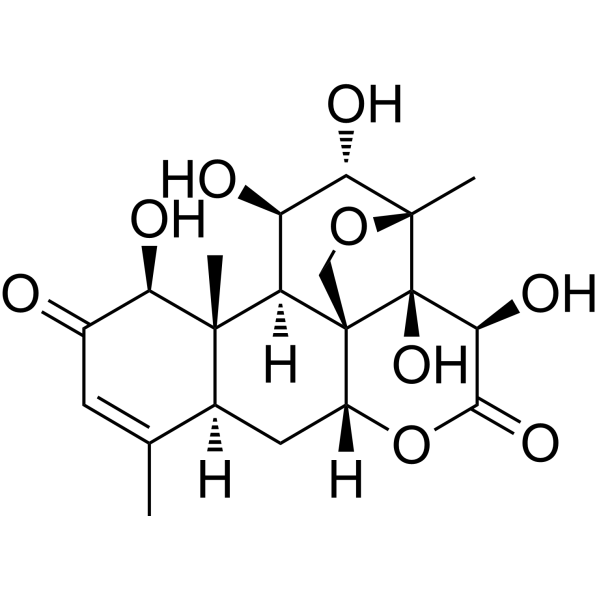
HY-N3014
Bruceine DApoptosis Inducer -
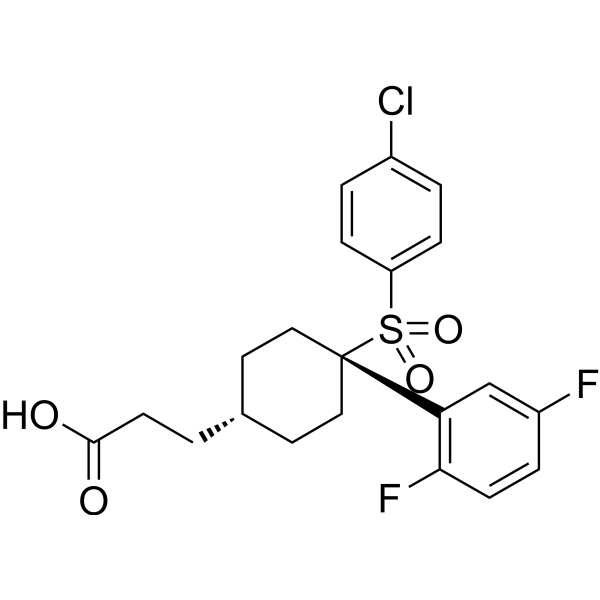
HY-10974
MK-0752
Publications Citing Use of MedChemExpress (MCE) Z-Ile-Leu-aldehyde
More

Biological Activity
Description
In Vitro
Z-Ile-Leu-aldehyde (ILCHO) significantly downregulates Th17-associated cytokine levels in murine Th17 in vitro polarization assays[1].
Z-Ile-Leu-aldehyde (GSI XII) induces apoptosis of murine MOPC315.BM myeloma cells with high Notch activity[2].
MedChemExpress (MCE) has not independently confirmed the accuracy of these methods. They are for reference only. Further protocols information, click here.
-
Cell Line:CD4+ T cells from C57BL/6 mice.
-
Concentration:25 μM.
-
Incubation Time:24, 48, 72 hours.
-
Result:DownregulateD RORt and IL-17 mRNA expression.
-
Cell Line:MOPC315.BM cells.
-
Concentration:0, 12, 15 μM.
-
Incubation Time:24-48 h hours.
-
Result:Reduced viability and induced apoptosis in MOPC315.BM cells
In Vivo
MedChemExpress (MCE) has not independently confirmed the accuracy of these methods. They are for reference only.
-
Animal Model:MOPC315.BM mouse model[2].
-
Dosage:10 mg/kg.
-
Administration:Intraperitoneally either for 14 days.
-
Result:Reduces myeloma-specific paraprotein levels in the MOPC315.BM model.
Diminished osteolytic lesions in the MOPC315.BM mice.


Chemical Information
-
CAS No. 161710-10-7
-
Appearance Solid
-
Molecular Weight 362.46
-
Formula C20H30N2O4
-
Color White to off-white
-
SMILES
O=C(OCC1=CC=CC=C1)N[C@H](C(N[C@H](C=O)CC(C)C)=O)[C@@H](C)CC
-
Synonyms
Z-IL-CHO; GSI-XII; γ-Secretase inhibitor XII
-
Shipping
Room temperature in continental US; may vary elsewhere.
-
Storage
Powder -20°C 3 years 4°C 2 years In solvent -80°C 6 months -20°C 1 month


Publications (2)
-
Journal Impact Factor
-
Most Recent
-
Biochem Pharmacol
Inhibition of γ-secretase/Notch pathway as a potential therapy for reversing cancer drug resistance. [Abstract]2024 Feb:220:115991. PMID: 38135129 -
Front Mol Biosci
Enzalutamide-Resistant Progression of Castration-Resistant Prostate Cancer Is Driven via the JAK2/STAT1-Dependent Pathway. [Abstract]2021 Oct 22;8:652443. PMID: 34746227


Solvent & Solubility
In Vitro:
DMSO : ≥ 41 mg/mL (113.12 mM; Hygroscopic DMSO has a significant impact on the solubility of product, please use newly opened DMSO)
* "≥" means soluble, but saturation unknown.
Please refer to the solubility information to select the appropriate solvent. Once prepared, please aliquot and store the solution to prevent product inactivation from repeated freeze-thaw cycles.
Storage method and period of stock solution: -80°C, 6 months; -20°C, 1 month. When stored at -80°C, please use it within 6 months. When stored at -20°C, please use it within 1 month.
Please refer to the solubility information to select the appropriate solvent. Once prepared, please aliquot and store the solution to prevent product inactivation from repeated freeze-thaw cycles.
Storage method and period of stock solution: -80°C, 6 months; -20°C, 1 month. When stored at -80°C, please use it within 6 months. When stored at -20°C, please use it within 1 month.
Concentration (start) × Volume (start) = Concentration (final) × Volume (final)

Protocols
-
Notch Pathway Solutions
The Notch pathway is a contact-dependent signaling pathway that controls cell-fate decisions, differentiation, proliferation, and tissue patterning through interactions between membrane-bound Notch receptors and membrane-bound ligands on neighboring cells. Canonical Notch signaling is activated when ligand engagement triggers proteolytic release of the Notch intracellular domain, which enters the nucleus and regulates transcription together with DNA-binding transcriptional complexes. In the canonical mechanism, ligand-dependent Notch activation leads to release of the intracellular Notch domain, and presenilin-dependent γ-secretase activity is required for production of the active intracellular signaling fragment. The released intracellular domain functions as a nuclear signal that converts Notch receptor activation at the membrane into transcriptional regulation of target programs such as HES/HEY-family genes and other context-dependent downstream targets. The literature links Notch p


Purity & Documentation
-
Data Sheet (280 KB)
-
SDS (252 KB)
- English - EN (252 KB)
- Français - FR (252 KB)
- Deutsch - DE (252 KB)
- Norwegian - NO (252 KB)
- Español - ES (252 KB)
- Swedish - SV (252 KB)
- Italian - IT (252 KB)
- Korean - KR (252 KB)
- Portuguese - PT (252 KB)
-
Handling Instructions (2659 KB)
References


Complete Stock Solution Preparation Table
Please refer to the solubility information to select the appropriate solvent. Once prepared, please aliquot and store the solution to prevent product inactivation from repeated freeze-thaw cycles.
Storage method and period of stock solution: -80°C, 6 months; -20°C, 1 month. When stored at -80°C, please use it within 6 months. When stored at -20°C, please use it within 1 month.
| Optional Solvent | Concentration Solvent Mass | 1 mg | 5 mg | 10 mg | 25 mg |
|---|---|---|---|---|---|
| DMSO | 1 mM | 2.7589 mL | 13.7946 mL | 27.5893 mL | 68.9731 mL |
| 5 mM | 0.5518 mL | 2.7589 mL | 5.5179 mL | 13.7946 mL | |
| 10 mM | 0.2759 mL | 1.3795 mL | 2.7589 mL | 6.8973 mL | |
| 15 mM | 0.1839 mL | 0.9196 mL | 1.8393 mL | 4.5982 mL | |
| 20 mM | 0.1379 mL | 0.6897 mL | 1.3795 mL | 3.4487 mL | |
| 25 mM | 0.1104 mL | 0.5518 mL | 1.1036 mL | 2.7589 mL | |
| 30 mM | 0.0920 mL | 0.4598 mL | 0.9196 mL | 2.2991 mL | |
| 40 mM | 0.0690 mL | 0.3449 mL | 0.6897 mL | 1.7243 mL | |
| 50 mM | 0.0552 mL | 0.2759 mL | 0.5518 mL | 1.3795 mL | |
| 60 mM | 0.0460 mL | 0.2299 mL | 0.4598 mL | 1.1496 mL | |
| 80 mM | 0.0345 mL | 0.1724 mL | 0.3449 mL | 0.8622 mL | |
| 100 mM | 0.0276 mL | 0.1379 mL | 0.2759 mL | 0.6897 mL |


Z-Ile-Leu-aldehyde Related Classifications
HY-12465 Related Classifications
 Powered by Bioz