



Zofenopril calcium
Based on 1 publication(s) in Google Scholar
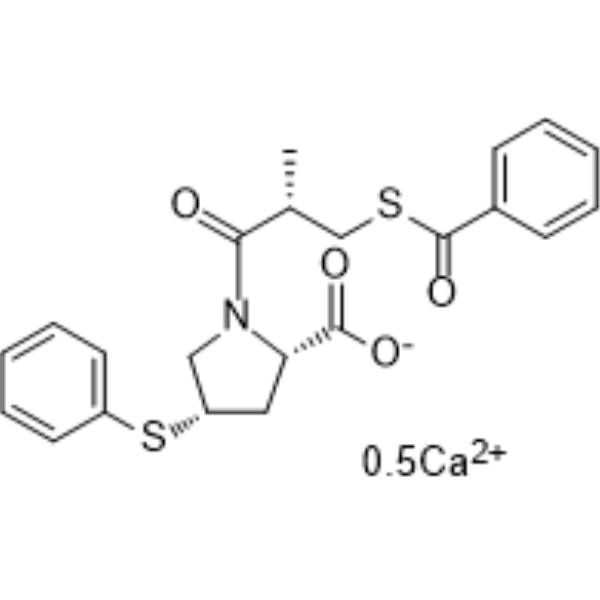
Zofenopril Calcium (SQ26991) is an orally active angiotensin-converting enzyme (ACE) inhibitor with antioxidant activity and cardioprotective effects. Zofenopril Calcium reduces ROS production and GSH consumption and helps inhibit foam cell formation, thus slowing the progression of atherosclerosis. Zofenopril Calcium prevents cardiac damage caused by chronic Doxorubicin (HY-15142A).
For research use only. We do not sell to patients.
- Purity : 99.76%
- CAS No.: 81938-43-4
- Formula: C22H22Ca0.5NO4S2
- Molecular Weight:448.58
-
Storage:
4°C, sealed storage, away from moisture
* In solvent : -80°C, 6 months; -20°C, 1 month (sealed storage, away from moisture)

To place orders, for customer services and technical support, please contact: MedChemExpress USA
Tel: 609-228-6898 E-mail: [email protected] [email protected]


-
 Biological Activity
-
Chemical Information
-
Solvent & Solubility
- Protocols
- Purity & Documentation
- References
-
 Help & FAQs


-
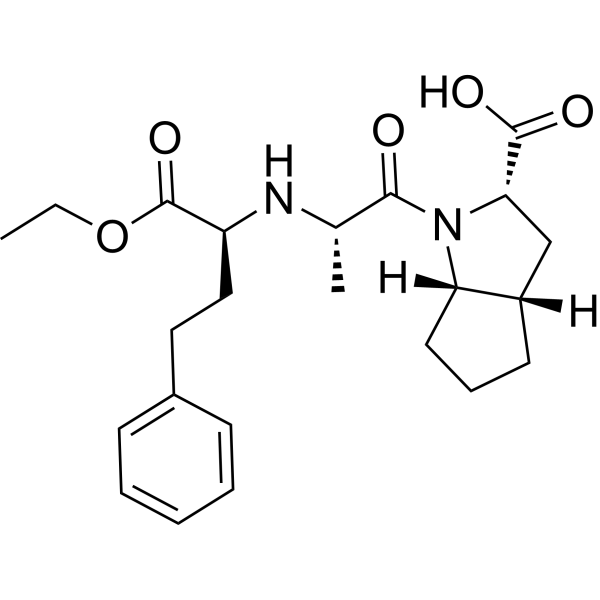
HY-B0279
RamiprilApoptosis Inducer -
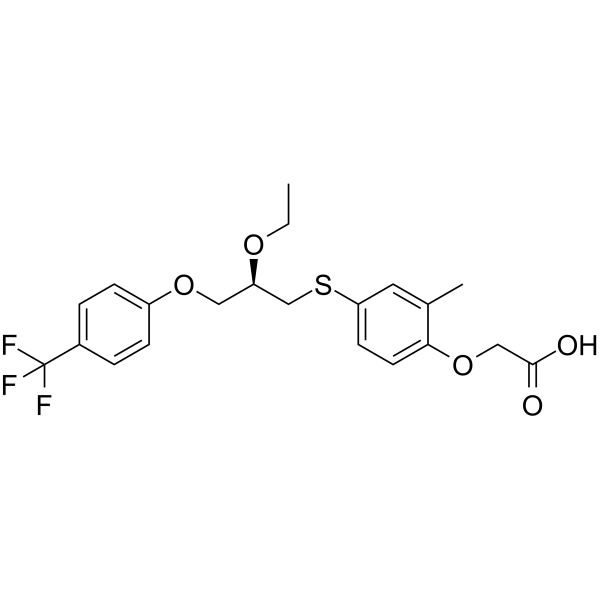
HY-19522
SeladelparPPAR-δ Agonist -
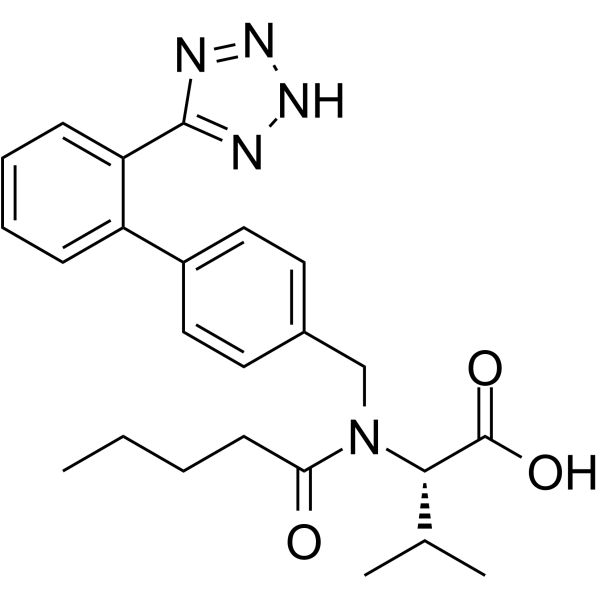
HY-18204
ValsartanAngiotensin II Receptor Antagonist -
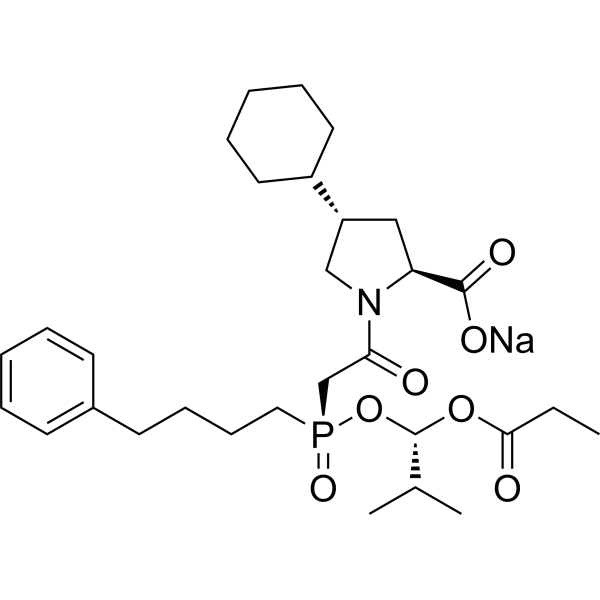
HY-B0382
Fosinopril sodiumACE Inhibitor -
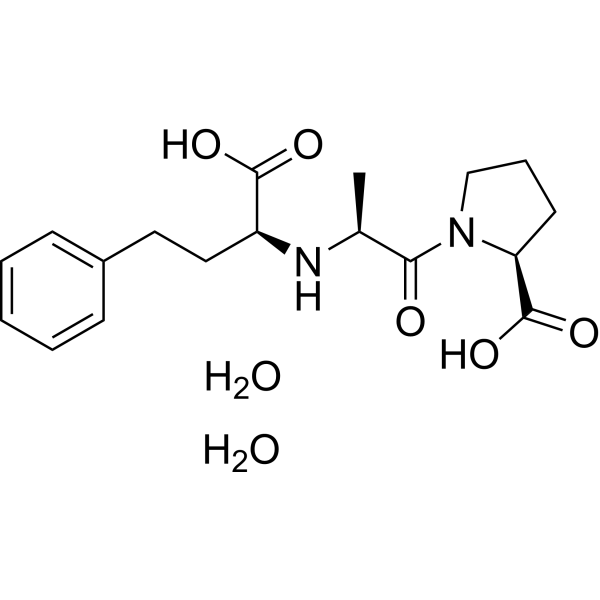
HY-B0231
Enalaprilat dihydrateACE Inhibitor -
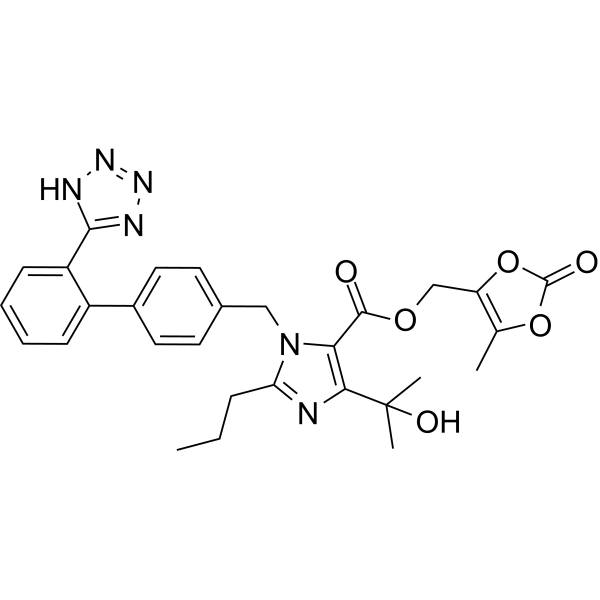
HY-17005
Olmesartan medoxomil -
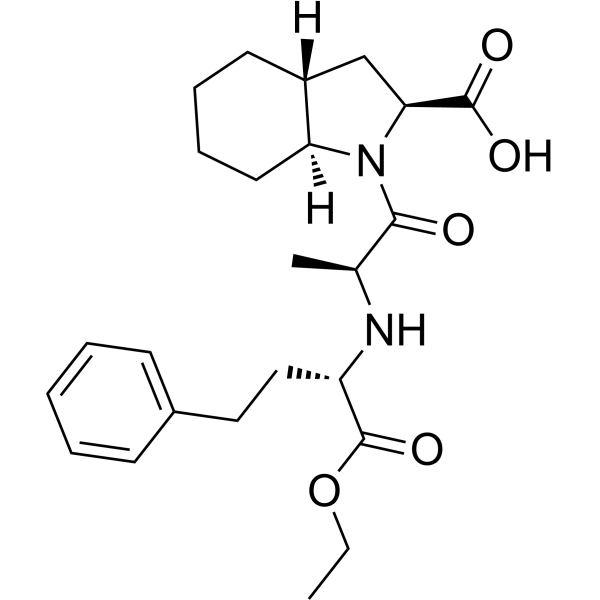
HY-B0592
TrandolaprilACE Inhibitor -
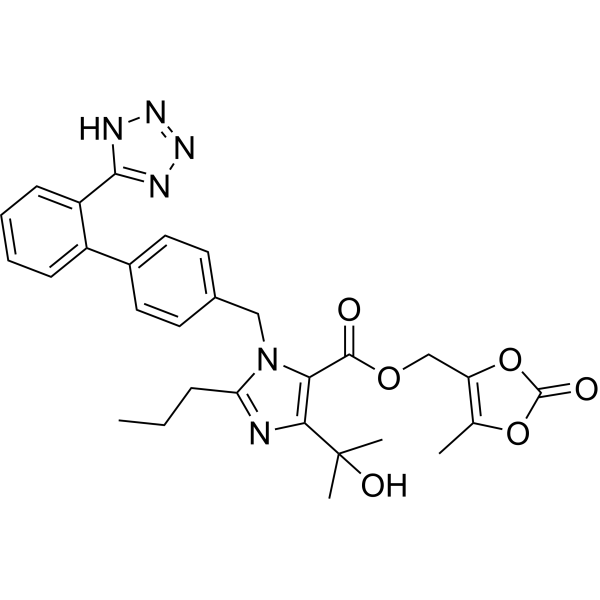
HY-17005R
Olmesartan medoxomil (Standard) -
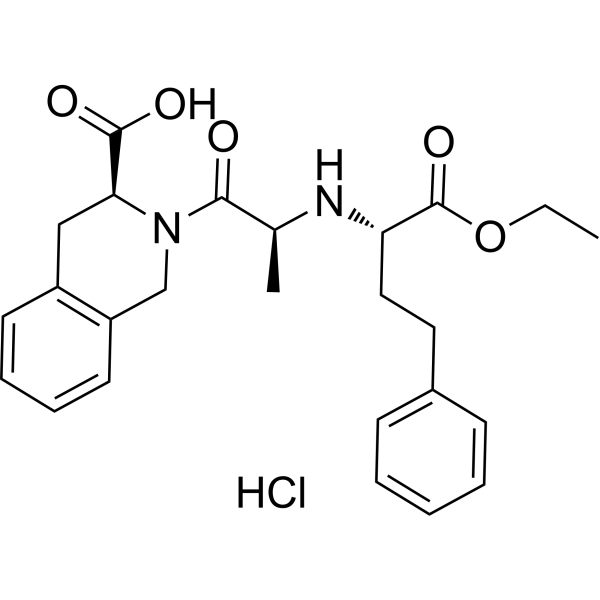
HY-B0477
Quinapril hydrochlorideACE Inhibitor -
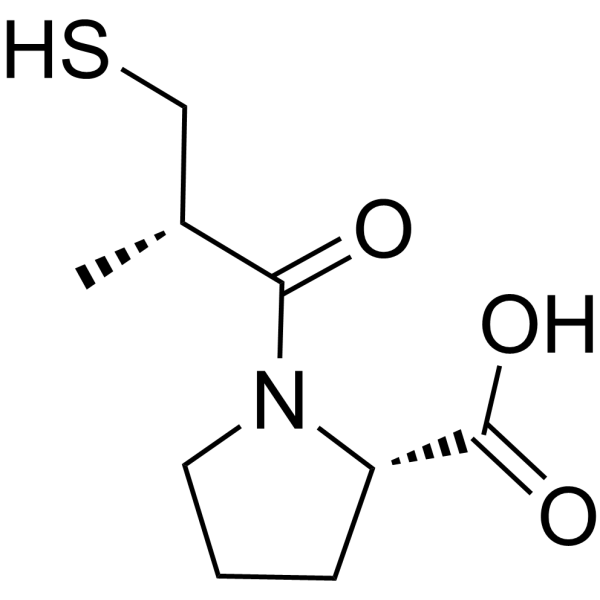
HY-B0368
CaptoprilACE Inhibitor -

HY-B0279R
Ramipril (Standard)Apoptosis Inducer -
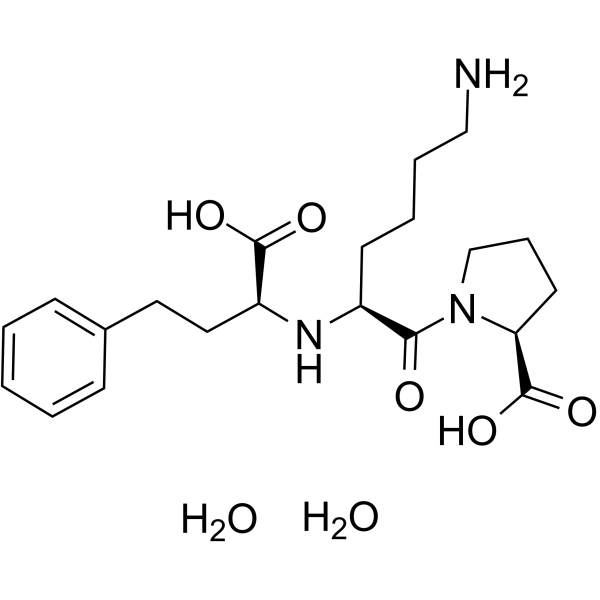
HY-18206A
Lisinopril dihydrateACE Inhibitor
Publications Citing Use of MedChemExpress (MCE) Zofenopril calcium
More

Biological Activity
Description
In Vitro
Zofenopril calcium (30-60 μM; 30 min) decreases oxLDL-induced E-selectin, ICAM-1, and VCAM-1 expressiom in human umbilical vein endothelial (HUVEC) monolayers[1].
Zofenopril calcium (30-60 μM; 30 min) inhibits oxLDL-induced ROS and superoxide formation in HUVECs[1].
MedChemExpress (MCE) has not independently confirmed the accuracy of these methods. They are for reference only. Further protocols information, click here.
In Vivo
Zofenopril calcium shows no significant antitumor effect in rat A2780 xenograft model[2].
MedChemExpress (MCE) has not independently confirmed the accuracy of these methods. They are for reference only.
Clinical Trial
| NCT Number | Sponsor | Condition | Start Date |
Phase

|
|---|---|---|---|---|
| NCT01329991 | Plexxikon| | 2011-05 | PHASE1 |


Chemical Information
-
CAS No. 81938-43-4
-
Appearance Solid
-
Molecular Weight 448.58
-
Formula C22H22Ca0.5NO4S2
-
Color White to off-white
-
SMILES
O=C(N(C[C@@H](SC1=CC=CC=C1)C2)[C@@H]2C([O-])=O)[C@H](C)CSC(C3=CC=CC=C3)=O.[0.5Ca2+]
-
Synonyms
SQ26991
-
Shipping
Room temperature in continental US; may vary elsewhere.
-
Storage
4°C, sealed storage, away from moisture
* In solvent : -80°C, 6 months; -20°C, 1 month (sealed storage, away from moisture)


Publications (1)
-
Journal Impact Factor
-
Most Recent


Solvent & Solubility
In Vitro:
DMSO : 2 mg/mL (4.46 mM; Need ultrasonic; Hygroscopic DMSO has a significant impact on the solubility of product, please use newly opened DMSO)
Please refer to the solubility information to select the appropriate solvent. Once prepared, please aliquot and store the solution to prevent product inactivation from repeated freeze-thaw cycles.
Storage method and period of stock solution: -80°C, 6 months; -20°C, 1 month (sealed storage, away from moisture). When stored at -80°C, please use it within 6 months. When stored at -20°C, please use it within 1 month.
Please refer to the solubility information to select the appropriate solvent. Once prepared, please aliquot and store the solution to prevent product inactivation from repeated freeze-thaw cycles.
Storage method and period of stock solution: -80°C, 6 months; -20°C, 1 month (sealed storage, away from moisture). When stored at -80°C, please use it within 6 months. When stored at -20°C, please use it within 1 month.
Concentration (start) × Volume (start) = Concentration (final) × Volume (final)

Protocols
-
ROS/oxidative-stress fluorescent staining
ROS/oxidative-stress fluorescent staining uses cell-permeant fluorogenic probes that become fluorescent after oxidation inside cells or tissues; commonly used examples include DCFH-DA/DCFDA for broad cellular oxidant detection, DHE for superoxide-related signal detection, MitoSOX for mitochondrial superoxide-related signal detection, and CellROX probes for oxidative-stress-associated fluorescence readouts. The assay detects probe oxidation rather than a single ROS species unless the probe and analysis method have been chemically validated for that species. DCFH-DA enters cells, is deacetylated by intracellular esterases to DCFH, and produces fluorescent DCF after oxidation, so the readout is used as an operational measure of total cellular oxidative stress rather than a species-specific ROS measurement. DHE and MitoSOX can report superoxide-related oxidation, but red fluorescence alone can include non-specific ethidium-like oxidation products; HPLC or optimized spectral approaches are
-
Research Protocol for Cardiovascular Diseases
Cardiovascular disease can be modeled as maladaptive cardiac remodeling, where ischemic injury or pressure overload activates inflammatory signaling, fibroblast activation, extracellular-matrix deposition, cardiomyocyte hypertrophy, vascular remodeling, and progressive ventricular dysfunction. The TGF-β/SMAD axis is a central profibrotic pathway after myocardial injury and pressure overload, while innate immune and cytokine pathways regulate leukocyte recruitment, scar formation, and adverse remodeling. Key unresolved questions include which inflammatory signals are reparative versus harmful, when fibrosis is protective versus maladaptive, and whether pathway inhibition improves function without weakening necessary infarct healing or compensatory remodeling.


Purity & Documentation
-
Data Sheet (276 KB)
-
SDS (622 KB)
- English - EN (622 KB)
- Français - FR (622 KB)
- Deutsch - DE (622 KB)
- Norwegian - NO (622 KB)
- Español - ES (622 KB)
- Swedish - SV (622 KB)
- Italian - IT (622 KB)
- Korean - KR (622 KB)
- Portuguese - PT (622 KB)
-
Handling Instructions (2659 KB)
References
[1]. Cominacini L, et al. Zofenopril inhibits the expression of adhesion molecules on endothelial cells by reducing reactive oxygen species. Am J Hypertens. 2002 Oct;15(10 Pt 1):891-5. [Content Brief]
[2]. Sacco G, et al. Cardioprotective effects of zofenopril, a new angiotensin-converting enzyme inhibitor, on doxorubicin-induced cardiotoxicity in the rat. Eur J Pharmacol. 2001 Feb 23;414(1):71-8. [Content Brief]


Complete Stock Solution Preparation Table
Please refer to the solubility information to select the appropriate solvent. Once prepared, please aliquot and store the solution to prevent product inactivation from repeated freeze-thaw cycles.
Storage method and period of stock solution: -80°C, 6 months; -20°C, 1 month (sealed storage, away from moisture). When stored at -80°C, please use it within 6 months. When stored at -20°C, please use it within 1 month.
| Optional Solvent | Concentration Solvent Mass | 1 mg | 5 mg | 10 mg | 25 mg |
|---|---|---|---|---|---|
| DMSO | 1 mM | 2.2293 mL | 11.1463 mL | 22.2926 mL | 55.7314 mL |


Zofenopril calcium Related Classifications
HY-B0655 Related Classifications
 Powered by Bioz