



(±)-Carnitine chloride
Based on 2 publication(s) in Google Scholar
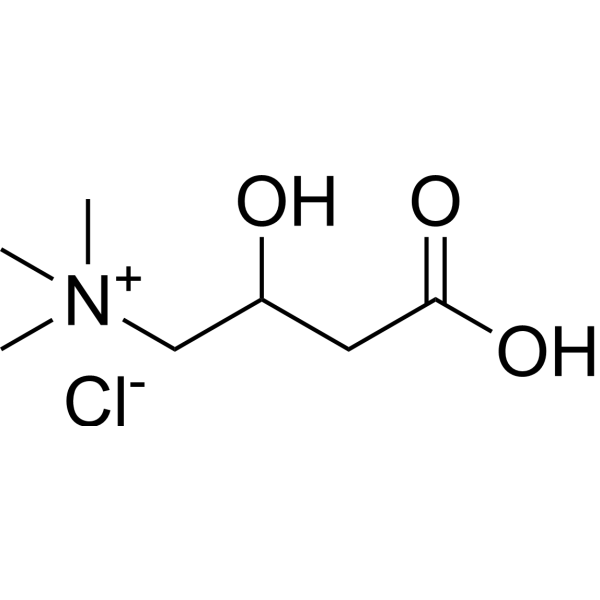
(±)-Carnitine chloride exists in two isomers, known as D and L. L-carnitine plays an essential role in the β-oxidation of fatty acids and also shows antioxidant, and anti-inflammatory activities.
For research use only. We do not sell to patients.
- Purity : 98.0%
- CAS No.: 461-05-2
- Formula: C7H16ClNO3
- Molecular Weight:197.66
-
Storage:
4°C, sealed storage, away from moisture
* In solvent : -80°C, 6 months; -20°C, 1 month (sealed storage, away from moisture)

To place orders, for customer services and technical support, please contact: MedChemExpress USA
Tel: 609-228-6898 E-mail: [email protected] [email protected]


-
 Biological Activity
-
Chemical Information
-
Solvent & Solubility
- Protocols
- Purity & Documentation
- References
-
 Help & FAQs


-
HY-B0399
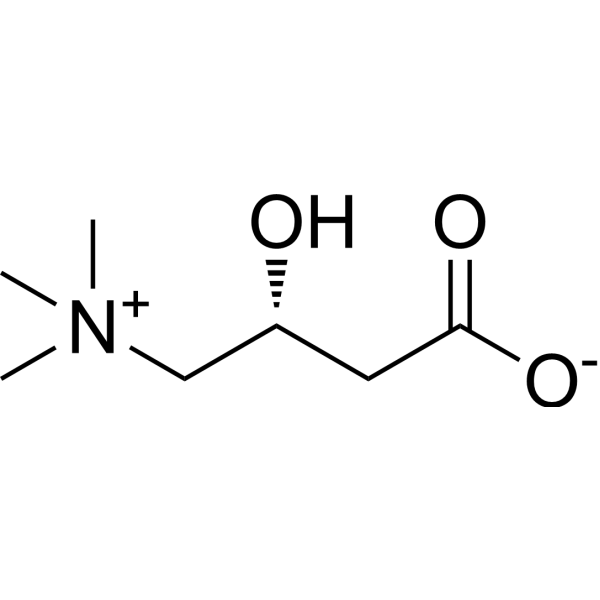
L-CarnitineCo-factor for β-oxidation -
HY-113221
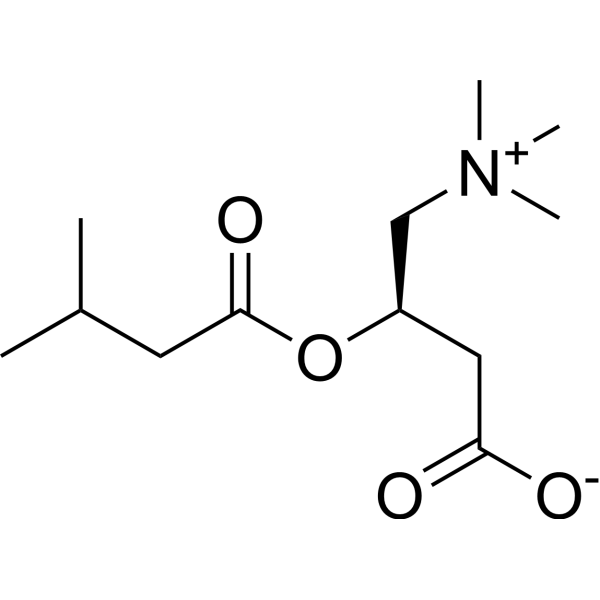
IsovalerylcarnitineCalpain Activator -
HY-B1453S1
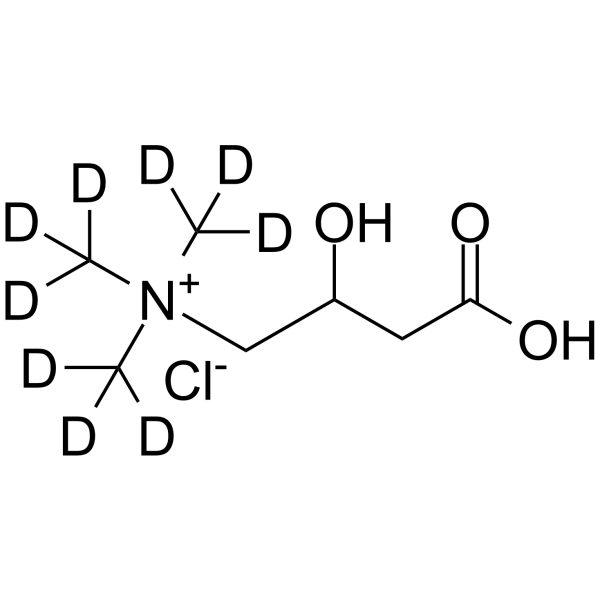
(±)-Carnitine-d9 chlorideStable Isotope -

HY-B0399R
L-Carnitine (Standard)Co-factor for β-oxidation -

HY-B1453R
(±)-Carnitine chloride (Standard)Reactive Oxygen Species Inhibitor -
HY-B0329
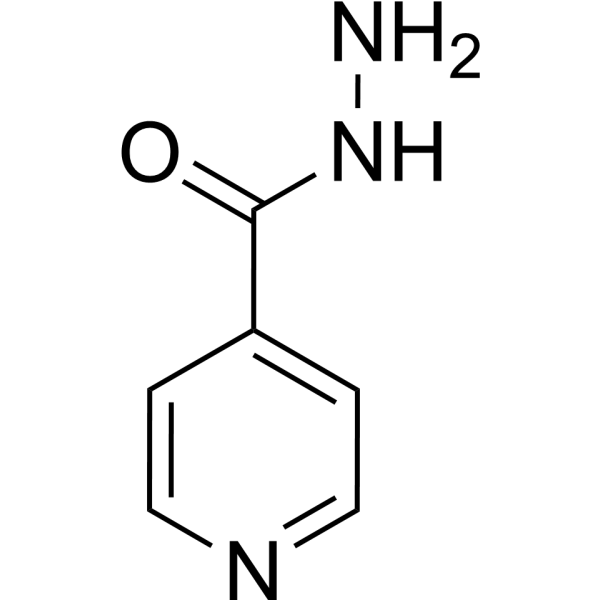
IsoniazidBacterial Inhibitor -
HY-W105518
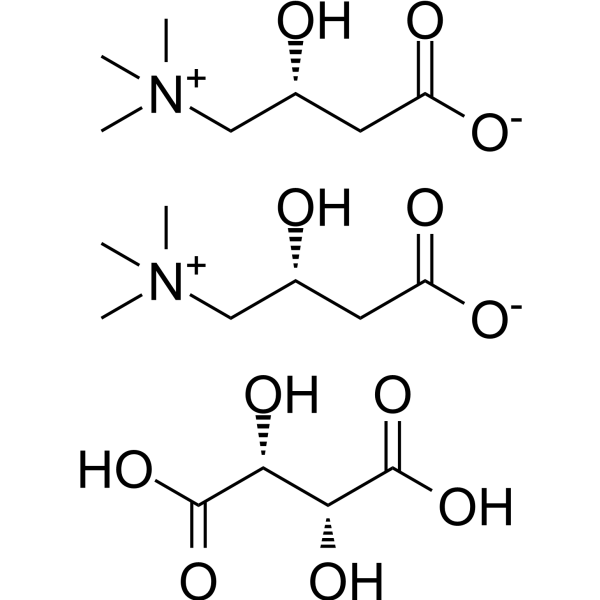
L-Carnitine tartrateβ-Oxidation Cofactor -

HY-B0329R
Isoniazid (Standard)Bacterial Inhibitor -

HY-B0399G
L-Carnitine (GMP)Endogenous Metabolite -

HY-W105518R
L-Carnitine tartrate (Standard)β-oxidation Cofactor
Publications Citing Use of MedChemExpress (MCE) (±)-Carnitine chloride
More

Biological Activity
Description
In Vitro
The main role of L-carnitine is to shuttle long-chain fatty acids across the inner mitochondrial membrane. After L-carnitine and acyl-CoA become acyl-carnitine by activation of carnitine palmitoyl transferase (CPT)-I, the transported acyl-carnitine is changed into acyl-CoA by CPT-II in the mitochondria matrix. Palmitoyl-CoA-induced mitochondrial respiration is increased by L-carnitine treatment, and then is accelerated by the presence of ADP. This acceleration is induced by treatment with L-carnitine in a concentration-dependent manner, and is saturated at 5 mM L-carnitine[1]. Pretreatment with L-carnitine augments Nrf2 nuclear translocation, DNA binding activity and heme oxygenase-1 (HO-1) expression in H2O2-treated HL7702 cells. L-carnitine protects HL7702 cells against H2O2-induced cell damage through Akt-mediated activation of Nrf2 signaling pathway[2].
MedChemExpress (MCE) has not independently confirmed the accuracy of these methods. They are for reference only. Further protocols information, click here.
In Vivo
MedChemExpress (MCE) has not independently confirmed the accuracy of these methods. They are for reference only.


Chemical Information
-
CAS No. 461-05-2
-
Appearance Solid
-
Molecular Weight 197.66
-
Formula C7H16ClNO3
-
Color White to off-white
-
SMILES
C[N+](C)(C)CC(O)CC(O)=O.[Cl-]
-
Synonyms
DL-Carnitine chloride; DL-Levocarnitine chloride
-
Structure Classification
-
Initial Source
Human muscle
-
Shipping
Room temperature in continental US; may vary elsewhere.
-
Storage
4°C, sealed storage, away from moisture
* In solvent : -80°C, 6 months; -20°C, 1 month (sealed storage, away from moisture)


Publications (2)
-
Journal Impact Factor
-
Most Recent
-
Mol Med Rep
Causal association between metabolites and upper gastrointestinal tumors: A Mendelian randomization study. [Abstract]2024 Dec;30(6):212. PMID: 39370813 -
Toxicol Appl Pharmacol
The inhibitory effect of antiretroviral drugs on the L-carnitine uptake in human placenta. [Abstract]2019 Apr 1:368:18-25. PMID: 30735677


Solvent & Solubility
In Vitro:
H2O : ≥ 100 mg/mL (505.92 mM)
DMSO : 25 mg/mL (126.48 mM; Need ultrasonic; Hygroscopic DMSO has a significant impact on the solubility of product, please use newly opened DMSO)
* "≥" means soluble, but saturation unknown.
Please refer to the solubility information to select the appropriate solvent. Once prepared, please aliquot and store the solution to prevent product inactivation from repeated freeze-thaw cycles.
Storage method and period of stock solution: -80°C, 6 months; -20°C, 1 month (sealed storage, away from moisture). When stored at -80°C, please use it within 6 months. When stored at -20°C, please use it within 1 month.
* Note: If you choose water as the stock solution, please dilute it to the working solution, then filter and sterilize it with a 0.22 μm filter before use.
Please refer to the solubility information to select the appropriate solvent. Once prepared, please aliquot and store the solution to prevent product inactivation from repeated freeze-thaw cycles.
Storage method and period of stock solution: -80°C, 6 months; -20°C, 1 month (sealed storage, away from moisture). When stored at -80°C, please use it within 6 months. When stored at -20°C, please use it within 1 month.
* Note: If you choose water as the stock solution, please dilute it to the working solution, then filter and sterilize it with a 0.22 μm filter before use.
Concentration (start) × Volume (start) = Concentration (final) × Volume (final)
In Vivo:
Select the appropriate dissolution method based on your experimental animal and administration route.
- For the following dissolution methods, please ensure to first prepare a clear stock solution using an In Vitro approach and then sequentially add co-solvents:
- To ensure reliable experimental results, the clarified stock solution can be appropriately stored based on storage conditions. As for the working solution for In Vivo experiments, it is recommended to prepare freshly and use it on the same day.
- The percentages shown for the solvents indicate their volumetric ratio in the final prepared solution. If precipitation or phase separation occurs during preparation, heat and/or sonication can be used to aid dissolution.
Add each solvent one by one: 10% DMSO 40% PEG300 5% Tween-80 45% Saline
Solubility: ≥ 2.5 mg/mL (12.65 mM); Clear solution
This protocol yields a clear solution of ≥ 2.5 mg/mL (saturation unknown).
Taking 1 mL working solution as an example, add 100 μL DMSO stock solution (25.0 mg/mL) to 400 μL PEG300, and mix evenly; then add 50 μL Tween-80 and mix evenly; then add 450 μL Saline to adjust the volume to 1 mL.
Preparation of Saline: Dissolve 0.9 g sodium chloride in ddH₂O and dilute to 100 mL to obtain a clear Saline solution.
Add each solvent one by one: 10% DMSO 90% (20% SBE-β-CD in Saline)
Solubility: ≥ 2.5 mg/mL (12.65 mM); Clear solution
This protocol yields a clear solution of ≥ 2.5 mg/mL (saturation unknown).
Taking 1 mL working solution as an example, add 100 μL DMSO stock solution (25.0 mg/mL) to 900 μL 20% SBE-β-CD in Saline, and mix evenly.
Preparation of 20% SBE-β-CD in Saline (4°C, storage for one week): 2 g SBE-β-CD powder is dissolved in 10 mL Saline, completely dissolve until clear.
For the following dissolution methods, please prepare the working solution directly:
It is recommended to prepare fresh solutions and use them promptly within a short period of time.
The percentages shown for the solvents indicate their volumetric ratio in the final prepared solution. If precipitation or phase separation occurs during preparation, heat and/or sonication can be used to aid dissolution.
Add each solvent one by one: PBS
Solubility: 150 mg/mL (758.88 mM); Clear solution; Need ultrasonic
In Vivo Dissolution Calculator
Please enter the basic information of animal experiments:
-
-
-
-
Recommended: Prepare an additional quantity of animals to account for potential losses during experiments.
Working solution concentration: 0.22 mg/mL
This product has good water solubility, please refer to the measured solubility data in water/PBS/Saline for details.

Protocols
-
Research Protocol for Inflammation-related Diseases
The NLRP3 inflammasome is a cytosolic innate immune signaling platform that integrates priming signals and danger-signal activation to promote caspase-1 activation, maturation of IL-1β and IL-18, and gasdermin D-mediated pyroptotic cell death. The core experimental logic is to determine whether inflammatory disease phenotypes are driven by increased NLRP3 expression, ASC-containing inflammasome assembly, caspase-1 cleavage, GSDMD cleavage, and extracellular release of IL-1β/IL-18 rather than by nonspecific cell injury alone. The pathway is strongly linked to inflammation-related disease phenotypes because monosodium urate crystals activate NALP3/NLRP3 inflammasome signaling in gout-like crystal inflammation, cholesterol crystals activate NLRP3 inflammasomes in atherogenesis models, and DSS-induced intestinal inflammation has been reported to involve NLRP3 inflammasome activity. However, experimental colitis studies also show context-dependent protective effects of NLRP3 inflammasome co


Purity & Documentation
-
Data Sheet (278 KB)
-
SDS (393 KB)
- English - EN (393 KB)
- Français - FR (393 KB)
- Deutsch - DE (393 KB)
- Norwegian - NO (393 KB)
- Español - ES (393 KB)
- Swedish - SV (393 KB)
- Italian - IT (393 KB)
- Korean - KR (393 KB)
- Portuguese - PT (393 KB)
-
Handling Instructions (2659 KB)
References
[1]. Oyanagi E, et al. Protective action of L-carnitine on cardiac mitochondrial function and structure against fatty acidstress. Biochem Biophys Res Commun. 2011 Aug 19;412(1):61-7. [Content Brief]
[2]. Li J, et al. l-carnitine protects human hepatocytes from oxidative stress-induced toxicity through Akt-mediated activation of Nrf2 signaling pathway. Can J Physiol Pharmacol. 2016 May;94(5):517-25. [Content Brief]
[3]. Jang J, et al. l-Carnitine supplement reduces skeletal muscle atrophy induced by prolonged hindlimb suspension in rats. Appl Physiol Nutr Metab. 2016 Dec;41(12):1240-1247. [Content Brief]
[4]. Zambrano S, et al. L-carnitine attenuates the development of kidney fibrosis in hypertensive rats by upregulating PPAR-γ. Am J Hypertens. 2014 Mar;27(3):460-70. [Content Brief]


Complete Stock Solution Preparation Table
Please refer to the solubility information to select the appropriate solvent. Once prepared, please aliquot and store the solution to prevent product inactivation from repeated freeze-thaw cycles.
Storage method and period of stock solution: -80°C, 6 months; -20°C, 1 month (sealed storage, away from moisture). When stored at -80°C, please use it within 6 months. When stored at -20°C, please use it within 1 month.
| Optional Solvent | Concentration Solvent Mass | 1 mg | 5 mg | 10 mg | 25 mg |
|---|---|---|---|---|---|
| DMSO / H2O | 1 mM | 5.0592 mL | 25.2960 mL | 50.5919 mL | 126.4798 mL |
| 5 mM | 1.0118 mL | 5.0592 mL | 10.1184 mL | 25.2960 mL | |
| 10 mM | 0.5059 mL | 2.5296 mL | 5.0592 mL | 12.6480 mL | |
| 15 mM | 0.3373 mL | 1.6864 mL | 3.3728 mL | 8.4320 mL | |
| 20 mM | 0.2530 mL | 1.2648 mL | 2.5296 mL | 6.3240 mL | |
| 25 mM | 0.2024 mL | 1.0118 mL | 2.0237 mL | 5.0592 mL | |
| 30 mM | 0.1686 mL | 0.8432 mL | 1.6864 mL | 4.2160 mL | |
| 40 mM | 0.1265 mL | 0.6324 mL | 1.2648 mL | 3.1620 mL | |
| 50 mM | 0.1012 mL | 0.5059 mL | 1.0118 mL | 2.5296 mL | |
| 60 mM | 0.0843 mL | 0.4216 mL | 0.8432 mL | 2.1080 mL | |
| 80 mM | 0.0632 mL | 0.3162 mL | 0.6324 mL | 1.5810 mL | |
| 100 mM | 0.0506 mL | 0.2530 mL | 0.5059 mL | 1.2648 mL |
* Note: If you choose water as the stock solution, please dilute it to the working solution, then filter and sterilize it with a 0.22 μm filter before use.


(±)-Carnitine chloride Related Classifications
HY-B1453 Related Classifications
 Powered by Bioz