



LY2112688

Based on 1 Customer Validation
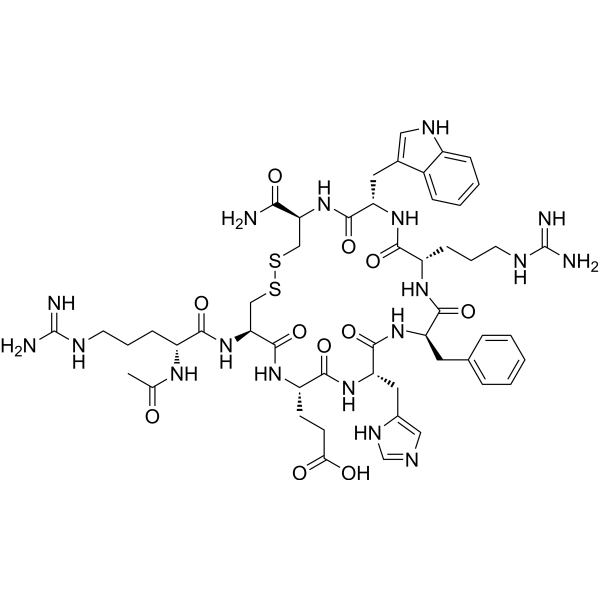
LY2112688 (Ac-(d-Arg)-CEH-(d-Phe)-RWC-NH2) is a synthetic peptide selective melanocortin 4 receptor (MC4R) agonist with a Ki of 0.13 nM for human MC4R and Ki values of 165, 74, and 1713 nM for human MC1R, MC3R, and MC5R, respectively. LY2112688 activates MC4R-mediated cAMP signaling and promotes PYY and GLP-1 release by activating peripheral MC4R in enteroendocrine L cells; Kir7.1 signaling in MC4R neurons is involved in its sustained suppression of food intake. LY2112688 inhibits food intake in vivo and can elevate heart rate and blood pressure. LY2112688 is useful for research on obesity, energy homeostasis, and MC4R signaling.
For research use only. We do not sell to patients.
- Purity : 99.96%
- CAS No.: 819048-44-7
- Formula: C51H70N18O11S2
- Molecular Weight:1175.35
-
Storage:
Sealed storage, away from moisture and light.
Powder -80°C, 2 years , -20°C, 1 year* In solvent : -80°C, 6 months; -20°C, 1 month (sealed storage, away from moisture and light)

To place orders, for customer services and technical support, please contact: MedChemExpress USA
Tel: 609-228-6898 E-mail: [email protected] [email protected]


-
 Biological Activity
-
Chemical Information
-
Solvent & Solubility
- Protocols
- Purity & Documentation
- References
-
 Help & FAQs


-
HY-19870
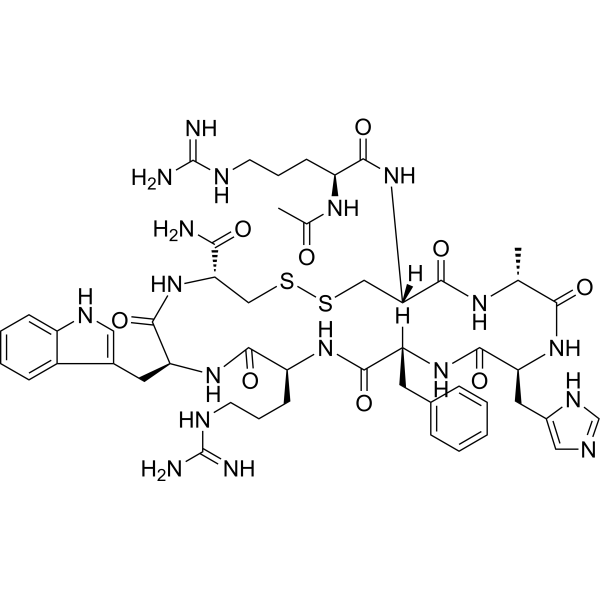
SetmelanotideMC4R Agonist -
HY-P0227
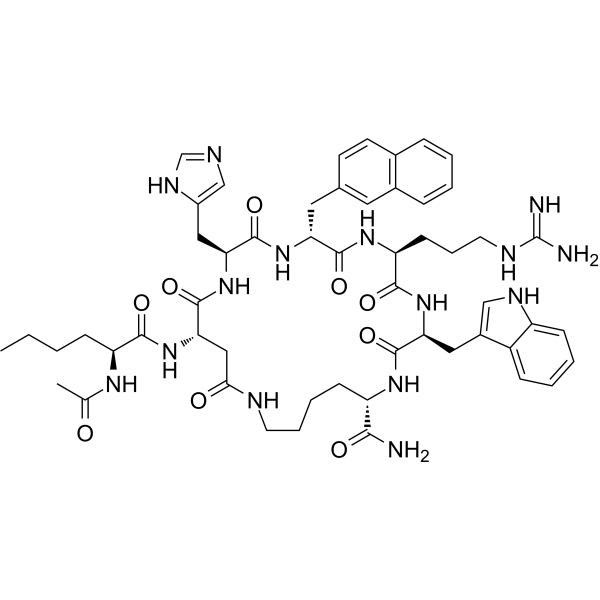
SHU 9119MC3/4R Antagonist -
HY-18678
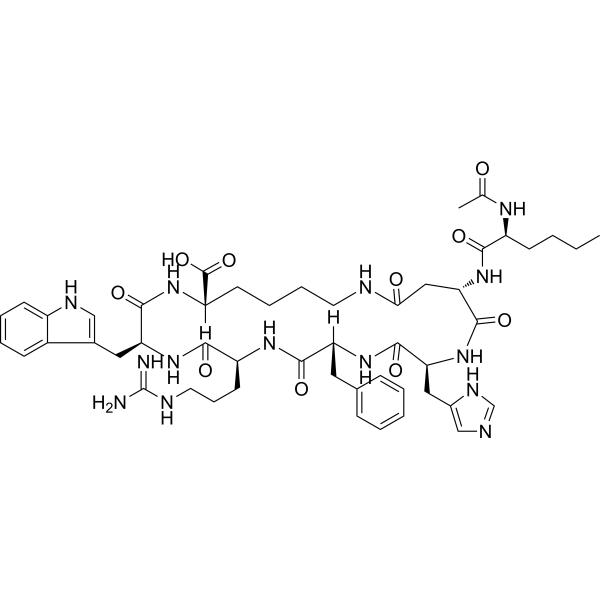
BremelanotideMelanocortin Receptor Agonist -
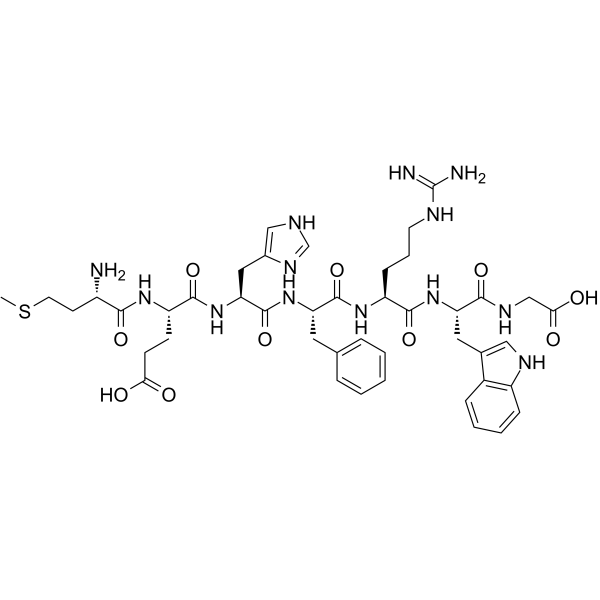
HY-P1478
Adrenocorticotropic Hormone (ACTH) (4-10), humanMelanocortin Receptor Agonist -
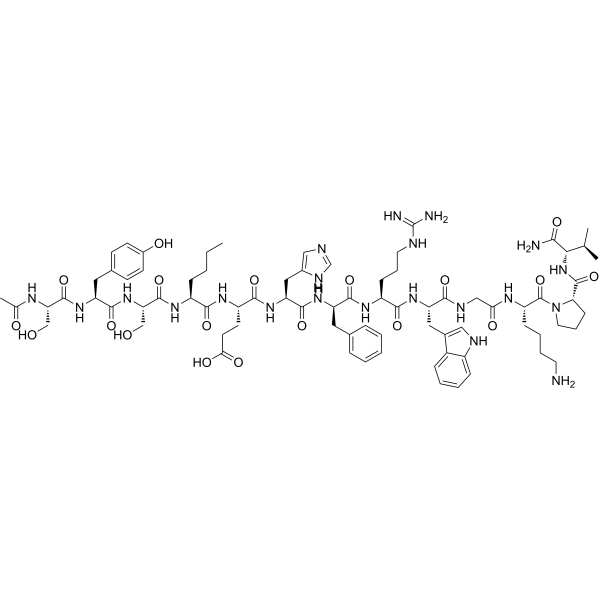
HY-N2466
Melanotan IMelanocortin Receptor Activator -
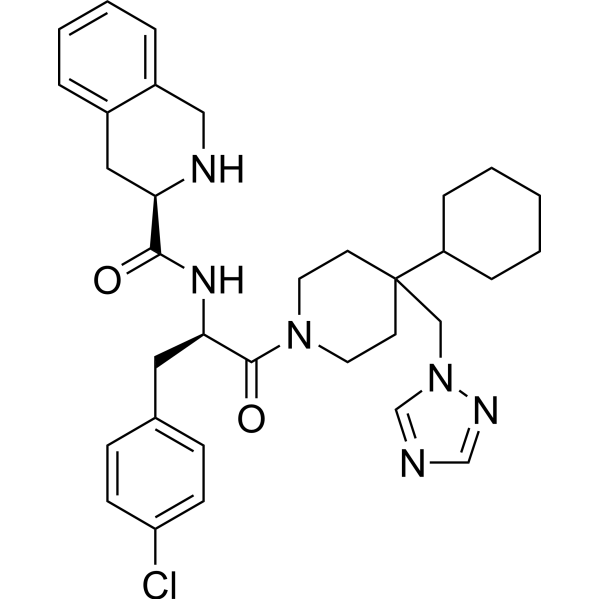
HY-10624
THIQMC4R Agonist -
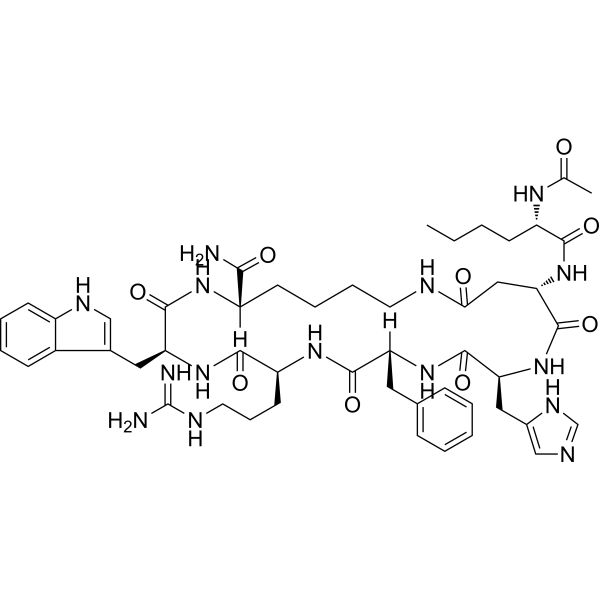
HY-P0267
Melanotan (MT)-IIMelanotropin Receptor Agonist -
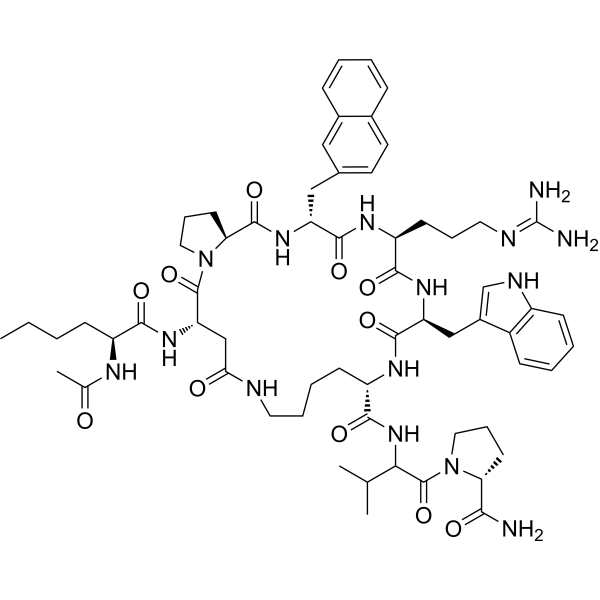
HY-P5971
TCMCB07MC4R Antagonist -
HY-P2242A
RO27-3225 TFAMelanocortin 4 Receptor Agonist -
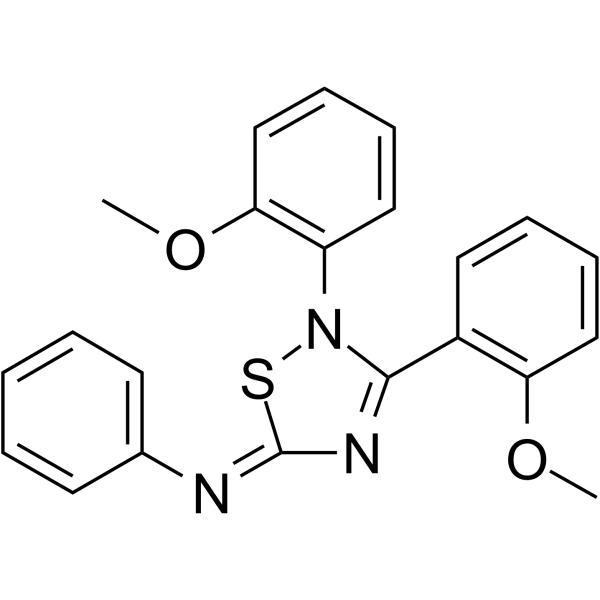
HY-107139
JNJ-10229570Melanocortin Receptor Antagonist -
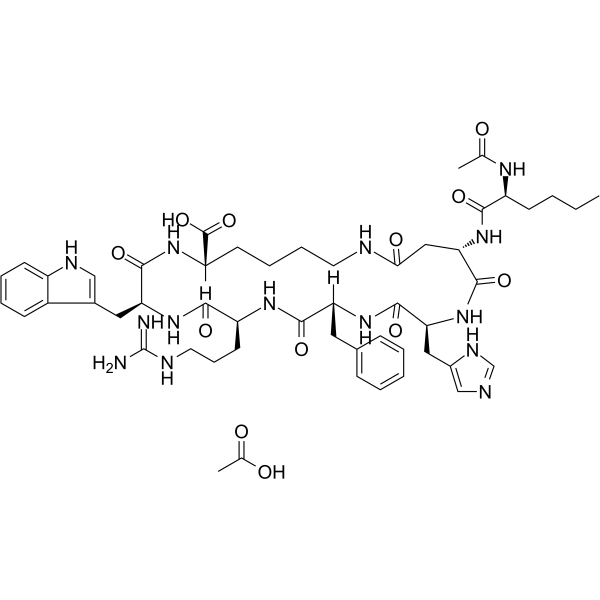
HY-18678A
Bremelanotide AcetateMelanocortin Receptor Agonist -
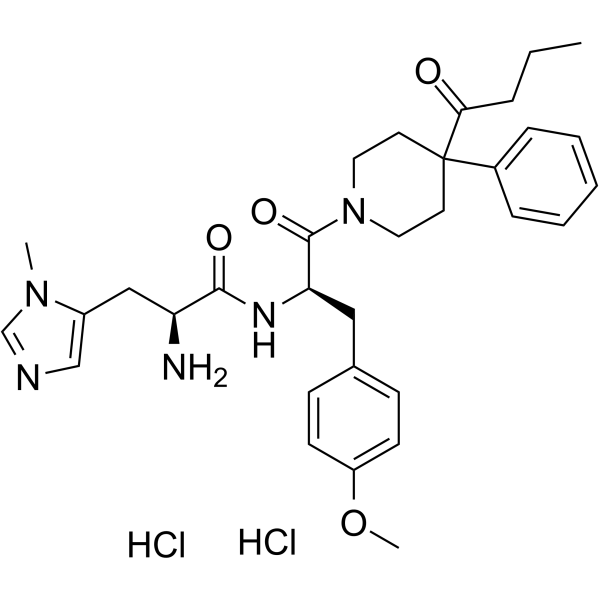
HY-115644
BMS-470539 dihydrochlorideMC-1 Receptor Agonist


Biological Activity
Description
|
MC1R 165 nM (Ki, Human) |
MC3R 74 nM (Ki, Human) |
MC4R 0.13 nM (Ki, Human) |
MC5R 1713 nM (Ki, Human) |
Mouse MC1R 820 nM (IC50) |
Mouse MC3R 27 nM (IC50) |
Mouse MC4R 0.1 nM (IC50) |
Mouse MC5R 1239 nM (IC50) |
In Vitro
LY2112688 (Ac-(d-Arg)-CEH-(d-Phe)-RWC-NH2) (1 pM-10 μM) exhibits Ki values of 165, 74, 0.13, and 1713 nM for human MC1R, MC3R, MC4R, and MC5R, respectively, in competitive binding assays using membranes from recombinant BHK570 cells expressing these receptors, demonstrating high binding affinity and selectivity for human MC4R[2].
LY2112688 (100 nM-10 μM; 3 h; ±10 μM Propranolol (HY-B0573B)) promotes NEFA release from human subcutaneous white adipose tissue explants; Propranolol does not significantly reduce LY2112688-induced NEFA release, but shows a decreasing trend[2].
LY2112688 does not promote GLP-1 release from mouse colonic crypt preparations[4].
LY2112688 promotes GLP-1 release from mouse distal small intestine perfusion preparations[4].
LY2112688 produces a concentration-dependent antisecretory response in wild-type mouse distal colonic mucosa when administered basolaterally, with an EC50 of 23.9 nM[4].
The antisecretory response of LY2112688 in the colonic mucosa of C57BL/6J mice is Y1 receptor-dependent and is antagonized by the MC4R antagonist HS014, supporting the involvement of MC4R-PYY-Y1 signaling in this effect[4].
LY2112688 inhibits fecal pellet transport in isolated C57BL/6J mouse colon, manifesting as slowed colonic motility[4].
LY2112688 (100 nM) induces a maximal MC4R-cAMP response in N2AHA-MC4R-GFP cells, comparable to that of α-MSH and MTII used to produce maximal responses[6].
LY2112688 (100 nM; washed out after approximately 10 min; restimulated with 500 nM α-MSH (HY-P0252)) induces cAMP signaling in N2AHA-MC4R-GFP cells that rapidly disappears after removal of LY2112688, and upon restimulation with α-MSH, the cAMP response recovers to a level comparable to that of the initial stimulation[6].
LY2112688 (100 nM) induces MC4R internalization in N2AHA-MC4R-GFP cells, with a receptor internalization rate comparable to that of other MC4R agonists in that study[6].
LY2112688 (500 nM; 4 h) promotes intracellular accumulation of MC4R in N2AHA-MC4R-GFP cells, with the extent of intracellular retention comparable to the level induced by α-MSH[6].
LY2112688 (500 nM; 4 h; re-stimulation with the same agonist for 15 min) induces MC4R desensitization in N2AHA-MC4R-GFP cells, reducing the intracellular cAMP response upon re-agonist stimulation by approximately 40% compared with acute stimulation[6].
LY2112688 (1 pM-10 μM) exhibits IC50 values of 820, 27, 0.10, and 1239 nM in competitive binding assays for mouse MC1R, MC3R, MC4R, and MC5R, respectively, demonstrating high binding affinity and selectivity for mouse MC4R[7].
LY2112688 (1 pM-10 μM; 30 min) does not elevate cAMP levels in differentiated 3T3-L1 adipocytes[7].
LY2112688 (300 nM; 1-15 min) promotes ERK1/2 phosphorylation in differentiated 3T3-L1 adipocytes, with the strongest effect at 5 min, followed by a decrease thereafter; under these conditions, LY2112688 does not increase PKB phosphorylation[7].
LY2112688 (0.1 nM-10 μM) concentration-dependently promotes ERK1/2 phosphorylation in differentiated 3T3-L1 adipocytes and reaches a relatively high level at approximately 1 μM[7].
Treatment with LY2112688 does not increase AMPK or JNK phosphorylation levels in undifferentiated 3T3-L1 adipocytes[7].
LY2112688 (100 nM-10 μM; 3 h) promotes lipolysis in human subcutaneous white adipose tissue explants derived from non-obese women, increasing NEFA release by 46% over vehicle at 100 nM and promoting glycerol release, with a maximal lipolytic response lower than that of isoproterenol[2].
LY2112688 (1 pM-10 μM; 2 h) does not promote NEFA release from human subcutaneous differentiated adipocytes derived from obese men, and the same negative result is obtained in human visceral adipocytes[2].
LY2112688 (1 pM-10 μM; 3 h) promotes NEFA release from differentiated 3T3-L1 adipocytes with an EC50 of 5270 nM, and the Emax is below 400 μM NEFA, with no clear plateau Emax obtained due to its weak effect[7].
LY2112688 (1 pM-10 nM; 3 h) does not promote NEFA release from primary adipocytes isolated from mouse epididymal adipose tissue[7].
MedChemExpress (MCE) has not independently confirmed the accuracy of these methods. They are for reference only. Further protocols information, click here.
-
Cell Line:N2A_HA-MC4R-GFP
-
Concentration:500 nM
-
Incubation Time:4 hours
-
Result:Increased intracellular accumulation of HA-MC4R-GFP.
Produced intracellular receptor retention comparable with α-MSH.
-
Cell Line:Differentiated 3T3-L1 adipocytes
-
Concentration:300 nM
-
Incubation Time:1, 5, 15 min
-
Result:Increased ERK1/2 phosphorylation.
Produced the highest pERK1/2 response at 5 min followed by a decrease at 15 min.
Did not increase PKB phosphorylation.
In Vivo
LY2112688 (10 mg/kg; i.p.; single dose) inhibits refeeding in fasted control mice; in male and female mice with specific deletion of Kir7.1 in MC4R neurons, the duration of LY2112688-induced feeding inhibition is significantly shortened, with Kir7.1-deficient animals typically losing responsiveness after approximately 12 h, whereas the response in control mice persists for 24-40 h[3].
LY2112688 (5 mg/kg; i.p.; single dose) promotes plasma PYY release in Kcnj13ΔMC4RCre and control mice, and the loss of Kir7.1 in MC4R cells does not attenuate this response, indicating that this PYY release process is independent of Kir7.1[3].
LY2112688 (3 mg/kg; i.p.; single dose) increases plasma PYY approximately 3-fold at 10 min in adult male MC4R+/+ mice, remains elevated at 25 min, and shows a weaker elevation at 60 min; this response is attenuated in MC4R+/- and MC4R-/- mice[4].
LY2112688 (0.15 mg/kg; i.p.; single dose; 3 mg/kg SHU9119 (HY-P0227))-induced elevation of plasma PYY is inhibited by the MC4R antagonist SHU9119, supporting that this response is MC4R-dependent[4].
LY2112688 (3 mg/kg; i.p.; single dose; 10 nmol SHU9119 i.c.v.)-induced elevation of plasma PYY is not blocked by central administration of SHU9119, supporting a peripheral MC4R-mediated effect of LY2112688 on PYY release[4].
MedChemExpress (MCE) has not independently confirmed the accuracy of these methods. They are for reference only.
-
Animal Model:Rhesus macaques (Macaca mulatta) (mature adult males, age 9-11 years, body weight 9-19 kg, high-fat diet for approximately 1.5 years)[1]
-
Dosage:0.17, 0.5 mg/kg/day
-
Administration:s.c.; each for 1 week
-
Result:Reduced average daily food intake.
Produced a smaller reduction in food intake than BIM-22493 at the matched 0.5 mg/kg/day dose.
-
Animal Model:C57BL/6NJ (Kcnj13 MC4RCre, Kcnj13fl/fl, Kcnj13+/+;MC4RCre, and Kcnj13+/+;MC4R+/+ genotypes; male and female; 35-45 weeks of age)[3]
-
Dosage:10.0 mg/kg
-
Administration:i.p.; single administration at beginning of dark cycle after 16-24 h fast
-
Result:Blunted the fasting-induced refeeding response in control genotype groups.
Showed a significantly reduced anorectic response in Kcnj13 MC4RCre male mice from three hours post refeeding to twelve hours later compared to Kcnj13fl/fl controls.
Showed a significantly reduced anorectic response in Kcnj13 MC4RCre female mice from four hours post refeeding to twelve hours later compared to Kcnj13fl/fl or Kcnj13+/+;MC4RCre control groups.
Showed no significant difference in feeding suppression between saline and LY2112688 at 13 and 24 hours in Kcnj13 MC4RCre males, while feeding in control Kcnj13fl/fl animals remained suppressed.
Lost responsiveness typically by 12 hours in animals lacking Kir7.1 in MC4R cells, while control strains sustained responsiveness for 24-40 hrs.
-
Animal Model:C57BL/6 (male Kcnj13 shRNA or scramble shRNA lentiviral knockdown mice)[3]
-
Dosage:10.0 mg/kg
-
Administration:i.p.; single administration at beginning of dark cycle after 16-24 h fast
-
Result:Was no longer effective at reducing food intake compared to saline in Kir7.1 knockdown animals from 12 hours post refeeding through 40 hours.
Significantly reduced chow consumption in mice with intact Kir7.1 for the duration of the study.
-
Animal Model:C57BL/6J (Kcnj13 MC4RCre and Kcnj13fl/fl control mice; male and female; 25-27 weeks of age)[3]
-
Dosage:5 mg/kg
-
Administration:i.p.; single administration in 100-200 µL
-
Result:Increased plasma PYY.
Maintained the PYY response after Kir7.1 deletion from MC4R-expressing cells.
-
Animal Model:C57BL/6J (adult male, 12-20 weeks old, fasted)[4]
-
Dosage:3 mg/kg
-
Administration:i.p.; single injection
-
Result:Induced a 3-fold rise in fasting plasma PYY at 10 min postinjection at 3 mg/kg compared to vehicle controls.
Induced a greater than 2-fold elevation in fasting plasma PYY at 10 min postinjection at 3 mg/kg in unacclimated mice.
Induced a 1.4-fold increase in GLP-1 at 5 min posttreatment compared to saline-treated mice.
Induced a dose-response relationship in the rise of plasma PYY, with a robust rise at 10 min postinjection at a dose as low as 0.3 mg/kg.
No increase in GIP or ghrelin was detected at 10 min postinjection.


Chemical Information
-
CAS No. 819048-44-7
-
Appearance Solid
-
Molecular Weight 1175.35
-
Formula C51H70N18O11S2
-
Color White to off-white
-
Synonyms
Ac-(d-Arg)-CEH-(d-Phe)-RWC-NH2
-
Sequence
Ac-{d-Arg}-Cys-Glu-His-{d-Phe}-Arg-Trp-Cys-NH2 (Disulfide bridge: Cys2-Cys8)
-
Sequence Shortening
Ac-{d-Arg}-CEH-{d-Phe}-RWC-NH2 (Disulfide bridge: Cys2-Cys8)
-
Shipping
Room temperature in continental US; may vary elsewhere.
-
Storage
Sealed storage, away from moisture and light
Powder -80°C 2 years -20°C 1 year * In solvent : -80°C, 6 months; -20°C, 1 month (sealed storage, away from moisture and light)


Solvent & Solubility
In Vitro:
H2O : 50 mg/mL (42.54 mM; Need ultrasonic)
Please refer to the solubility information to select the appropriate solvent. Once prepared, please aliquot and store the solution to prevent product inactivation from repeated freeze-thaw cycles.
Storage method and period of stock solution: -80°C, 6 months; -20°C, 1 month (sealed storage, away from moisture and light). When stored at -80°C, please use it within 6 months. When stored at -20°C, please use it within 1 month.
* Note: If you choose water as the stock solution, please dilute it to the working solution, then filter and sterilize it with a 0.22 μm filter before use.
Please refer to the solubility information to select the appropriate solvent. Once prepared, please aliquot and store the solution to prevent product inactivation from repeated freeze-thaw cycles.
Storage method and period of stock solution: -80°C, 6 months; -20°C, 1 month (sealed storage, away from moisture and light). When stored at -80°C, please use it within 6 months. When stored at -20°C, please use it within 1 month.
* Note: If you choose water as the stock solution, please dilute it to the working solution, then filter and sterilize it with a 0.22 μm filter before use.
Concentration (start) × Volume (start) = Concentration (final) × Volume (final)

Protocols
-
Research Protocol for Metabolic Diseases
AMP-activated protein kinase, AMPK, is a conserved cellular energy sensor that responds to reduced cellular energy status and coordinates metabolism by increasing ATP-generating catabolic pathways while suppressing ATP-consuming anabolic processes. In metabolic disease research, the AMPK pathway is experimentally relevant because it regulates hepatic lipid synthesis, fatty acid oxidation, glucose production, skeletal-muscle glucose disposal, mTORC1-linked biosynthesis, autophagy, mitochondrial homeostasis, and whole-body energy balance. The central pathway logic is that energy stress, metformin, exercise-like stimulation, or direct AMPK activators increase AMPKα Thr172 phosphorylation and downstream substrate phosphorylation, including ACC and RAPTOR. Phosphorylation of ACC suppresses lipogenesis and supports fatty acid oxidation, whereas phosphorylation of RAPTOR suppresses mTORC1 signaling and links cellular energy status to growth and protein synthesis control. The pathway is linked


Purity & Documentation
-
Data Sheet (309 KB)
-
SDS (254 KB)
- English - EN (254 KB)
- Français - FR (254 KB)
- Deutsch - DE (254 KB)
- Norwegian - NO (254 KB)
- Español - ES (254 KB)
- Swedish - SV (254 KB)
- Italian - IT (254 KB)
- Korean - KR (254 KB)
- Portuguese - PT (254 KB)
-
Handling Instructions (2659 KB)
References


Complete Stock Solution Preparation Table
Please refer to the solubility information to select the appropriate solvent. Once prepared, please aliquot and store the solution to prevent product inactivation from repeated freeze-thaw cycles.
Storage method and period of stock solution: -80°C, 6 months; -20°C, 1 month (sealed storage, away from moisture and light). When stored at -80°C, please use it within 6 months. When stored at -20°C, please use it within 1 month.
| Optional Solvent | Concentration Solvent Mass | 1 mg | 5 mg | 10 mg | 25 mg |
|---|---|---|---|---|---|
| H2O | 1 mM | 0.8508 mL | 4.2541 mL | 8.5081 mL | 21.2703 mL |
| 5 mM | 0.1702 mL | 0.8508 mL | 1.7016 mL | 4.2541 mL | |
| 10 mM | 0.0851 mL | 0.4254 mL | 0.8508 mL | 2.1270 mL | |
| 15 mM | 0.0567 mL | 0.2836 mL | 0.5672 mL | 1.4180 mL | |
| 20 mM | 0.0425 mL | 0.2127 mL | 0.4254 mL | 1.0635 mL | |
| 25 mM | 0.0340 mL | 0.1702 mL | 0.3403 mL | 0.8508 mL | |
| 30 mM | 0.0284 mL | 0.1418 mL | 0.2836 mL | 0.7090 mL | |
| 40 mM | 0.0213 mL | 0.1064 mL | 0.2127 mL | 0.5318 mL |
* Note: If you choose water as the stock solution, please dilute it to the working solution, then filter and sterilize it with a 0.22 μm filter before use.


LY2112688 Related Classifications
HY-P4764 Related Classifications
 Powered by Bioz
Keywords
- LY2112688
- 819048-44-7
- Ac-(d-Arg)-CEH-(d-Phe)-RWC-NH2
- LY 2112688
- LY-2112688
- Melanocortin Receptor
- GLP Receptor
- cAMP signaling
- 3T3-L1 adipocytes
- intestinal mucosa
- N2A_HA-MC4R-GFP cells
- Kir7.1
- melanocortin-4 receptor (MC4R)
- human white adipose tissue explants
- diet-induced obese rhesus macaques
- ERK 1/2 phosphorylation
- enteroendocrine L cells
- Inhibitor
- inhibitor
- inhibit