



Ambroxol hydrochloride
Based on 3 publication(s) in Google Scholar
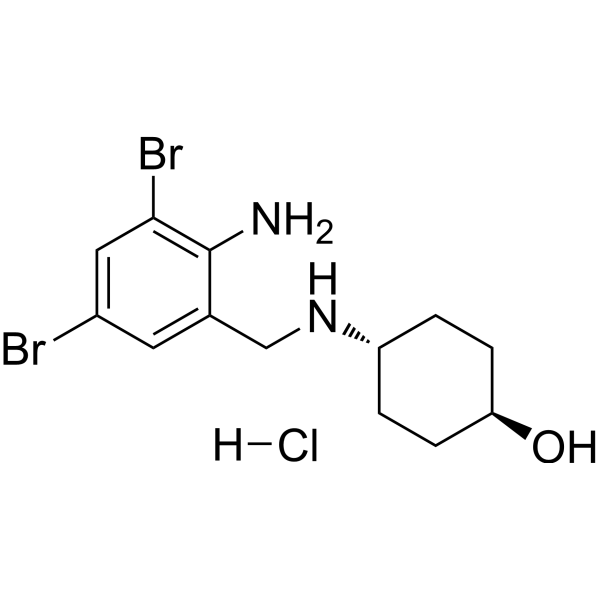
Ambroxol hydrochloride (NA-872 hydrochloride), an active metabolite of the proagent Bromhexine, has potent expectorant effects. Ambroxol hydrochloride is a glucocerebrosidase (GCase) chaperone and increases glucocerebrosidase activity. Ambroxol hydrochloride induces lung autophagy and has the potential for Parkinson disease and neuronopathic Gaucher disease research.
For research use only. We do not sell to patients.
- Purity : 99.96%
- CAS No.: 23828-92-4
- Formula: C13H19Br2ClN2O
- Molecular Weight:414.56
-
Storage:
4°C, sealed storage, away from moisture
* In solvent : -80°C, 6 months; -20°C, 1 month (sealed storage, away from moisture)

To place orders, for customer services and technical support, please contact: MedChemExpress USA
Tel: 609-228-6898 E-mail: [email protected] [email protected]


-
 Biological Activity
-
Chemical Information
-
Solvent & Solubility
- Protocols
- Purity & Documentation
- References
-
 Help & FAQs


-
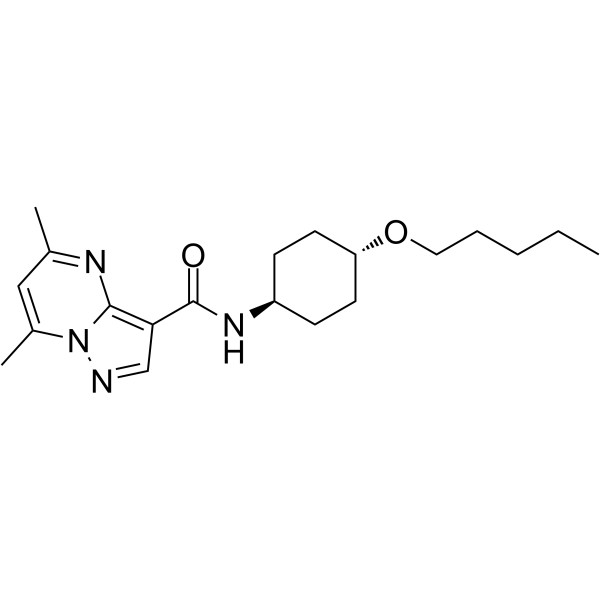
HY-104038
PariceractGCase Activator -
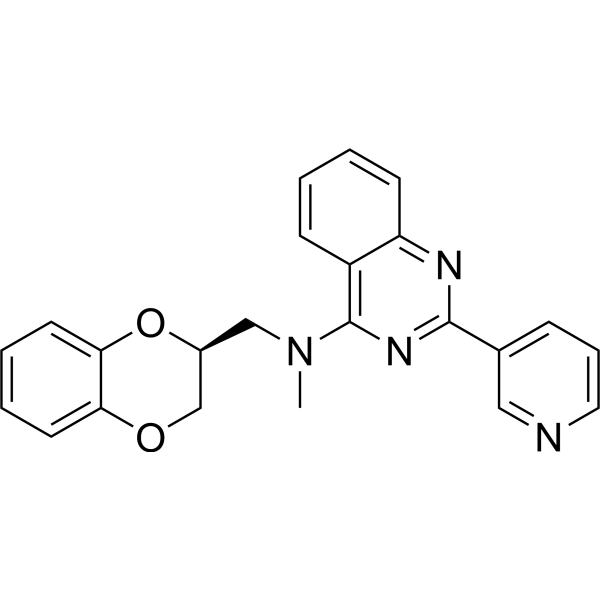
HY-160426
Gcase activator 3GCase Activator -
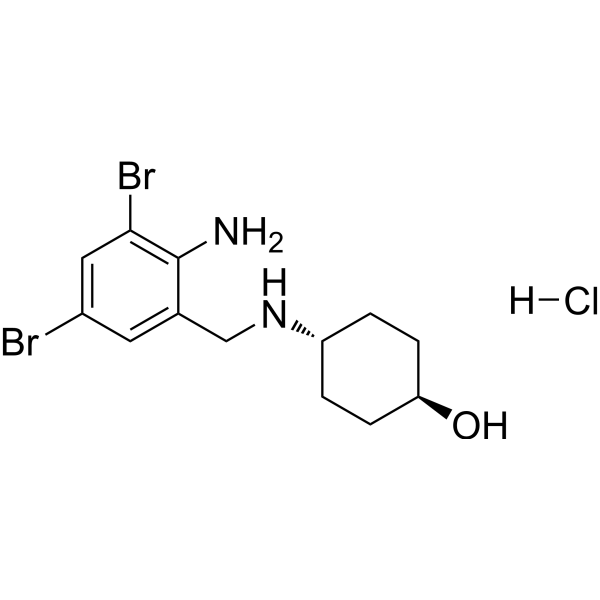
HY-B1039AR
Ambroxol hydrochloride (Standard)Autophagy Inducer -
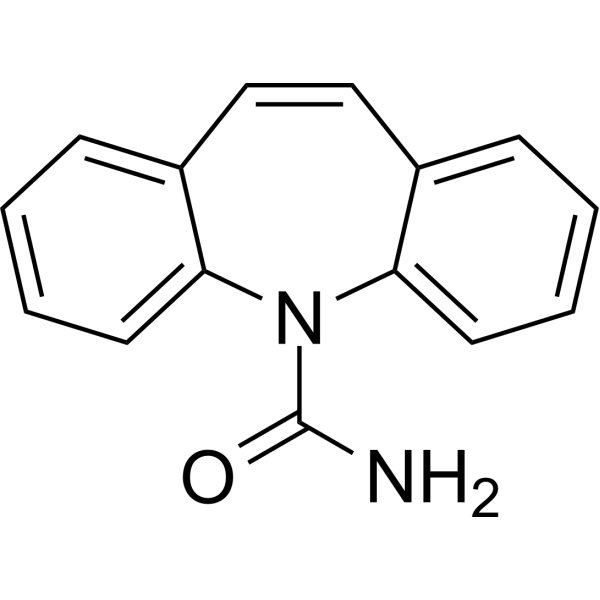
HY-B0246
CarbamazepineAnticonvulsant -
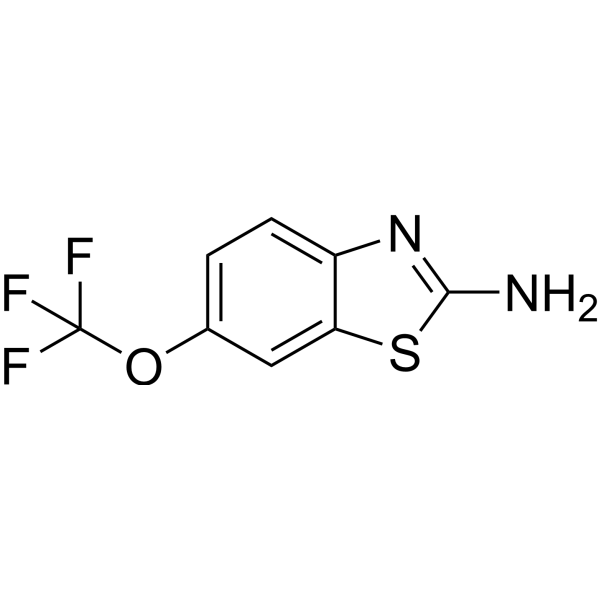
HY-B0211
RiluzoleAnticonvulsant Agent -
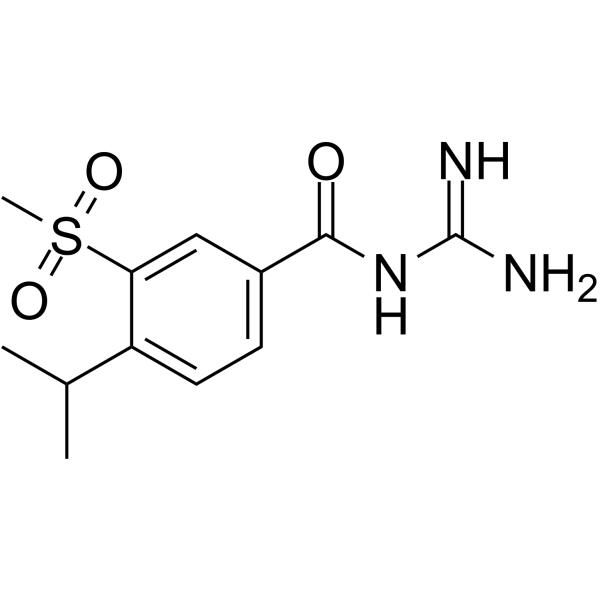
HY-19693
CariporideNa+/H+ Exchange Inhibitor -
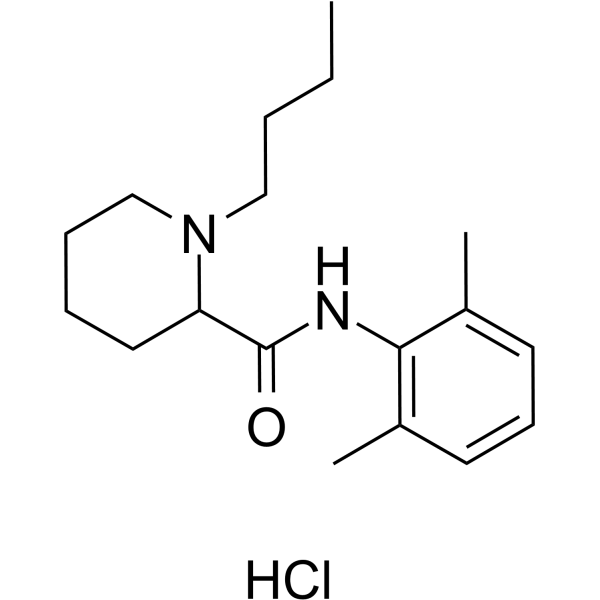
HY-B0405A
Bupivacaine hydrochlorideNMDA Receptor Inhibitor -
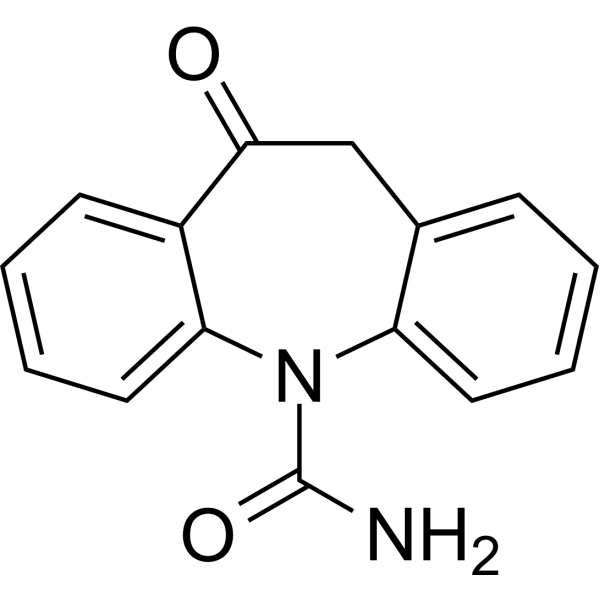
HY-B0114
OxcarbazepineAnti-Epileptic Agent -
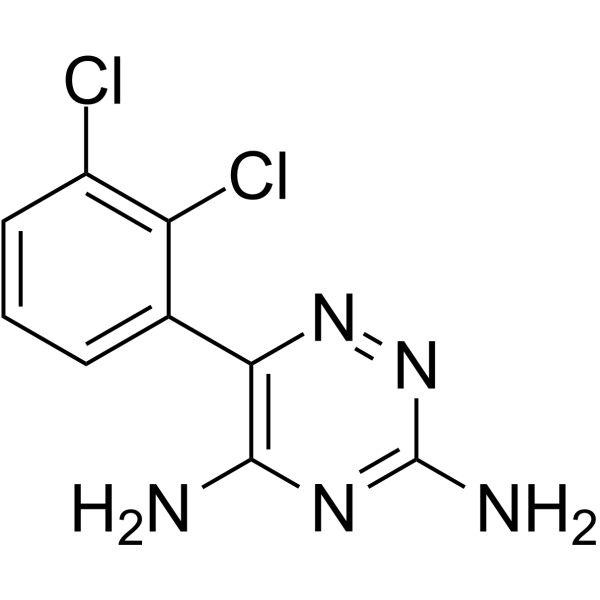
HY-B0495
LamotrigineAnticonvulsant Agent -

HY-B0246R
Carbamazepine (Standard)Anticonvulsant -
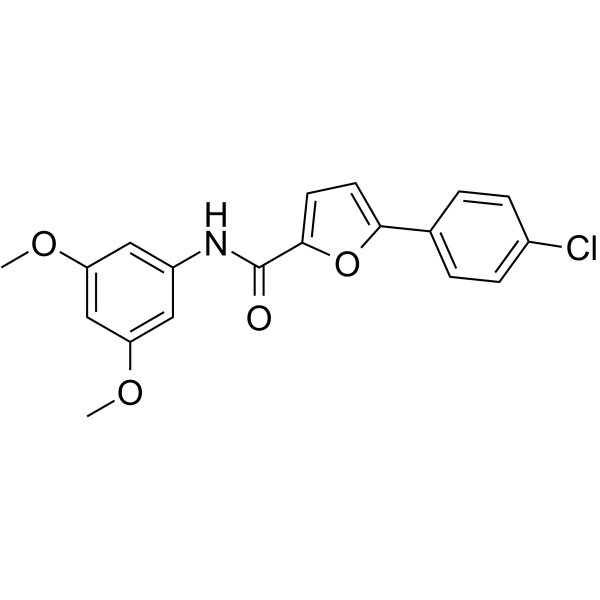
HY-11079
A-803467Nav1.8 Sodium Channel Blocker -
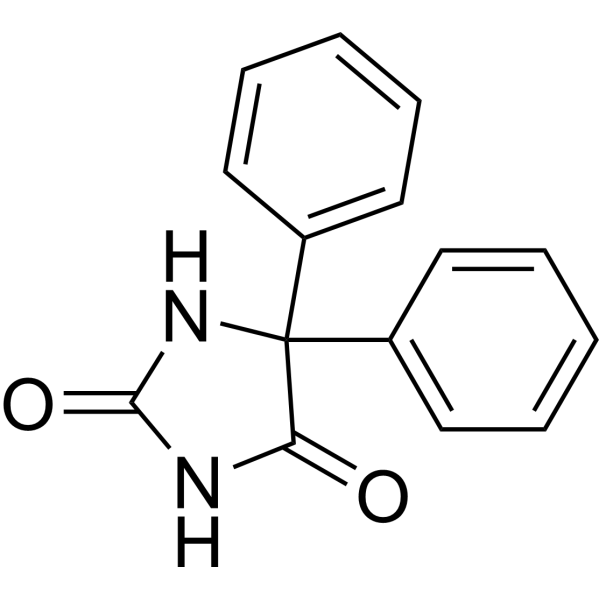
HY-B0448
PhenytoinVirus Protease Inhibitor
Publications Citing Use of MedChemExpress (MCE) Ambroxol hydrochloride
More

Biological Activity
Description
In Vivo
MedChemExpress (MCE) has not independently confirmed the accuracy of these methods. They are for reference only.


Chemical Information
-
CAS No. 23828-92-4
-
Appearance Solid
-
Molecular Weight 414.56
-
Formula C13H19Br2ClN2O
-
Color White to off-white
-
SMILES
O[C@H]1CC[C@H](NCC2=CC(Br)=CC(Br)=C2N)CC1.[H]Cl
-
Synonyms
NA-872 hydrochloride
-
Shipping
Room temperature in continental US; may vary elsewhere.
-
Storage
4°C, sealed storage, away from moisture
* In solvent : -80°C, 6 months; -20°C, 1 month (sealed storage, away from moisture)


Publications (3)
-
Journal Impact Factor
-
Most Recent
-
Cell Rep
TRESK channel contributes to depolarization-induced shunting inhibition and modulates epileptic seizures. [Abstract]2021 Jul 20;36(3):109404. PMID: 34289346 -
-
Evid Based Complement Alternat Med
Reineckia carnea Alleviates the Production of Inflammatory Cytokines and MUC5AC in Rats with Chronic Obstructive Pulmonary Disease. [Abstract]2022 Jun 16:2022:2135487. PMID: 35754687


Solvent & Solubility
In Vitro:
H2O : 7 mg/mL (16.89 mM; ultrasonic and warming and heat to 60°C)
Please refer to the solubility information to select the appropriate solvent. Once prepared, please aliquot and store the solution to prevent product inactivation from repeated freeze-thaw cycles.
Storage method and period of stock solution: -80°C, 6 months; -20°C, 1 month (sealed storage, away from moisture). When stored at -80°C, please use it within 6 months. When stored at -20°C, please use it within 1 month.
* Note: If you choose water as the stock solution, please dilute it to the working solution, then filter and sterilize it with a 0.22 μm filter before use.
Please refer to the solubility information to select the appropriate solvent. Once prepared, please aliquot and store the solution to prevent product inactivation from repeated freeze-thaw cycles.
Storage method and period of stock solution: -80°C, 6 months; -20°C, 1 month (sealed storage, away from moisture). When stored at -80°C, please use it within 6 months. When stored at -20°C, please use it within 1 month.
* Note: If you choose water as the stock solution, please dilute it to the working solution, then filter and sterilize it with a 0.22 μm filter before use.
Concentration (start) × Volume (start) = Concentration (final) × Volume (final)

Protocols
-
Autophagy
Autophagy is a process in which eukaryotic cells use lysosomes to degrade their own cytoplasmic proteins and damaged organelles under the regulation of autophagy related gene (Atg). Microtubule-associated proteins light chain 3 (LC3) is recognized as autophagy marker, which transfers from cytoplasmic LC3 (LC3-I) to membrane type (LC3-II). LC3-II/I ratio could be detected by Western Blot and fluorescence microscopy.
-
Lysosome and acidic-vesicle live-cell staining
Lysosome and acidic-vesicle live-cell staining detects acidic intracellular compartments by using membrane-permeant acidotropic probes that accumulate in low-pH vesicles, including lysosomes, late endosomes, autolysosomes, and acidic phagosomes. LysoTracker staining is commonly used as an intensity-based readout of acidic lysosomal compartment abundance or enlargement, while acridine orange produces green fluorescence in less concentrated compartments and red fluorescence after concentration-dependent accumulation in acidic vesicular organelles. Loss or reduction of acridine-orange red signal can be used as a readout of lysosomal membrane permeabilization or reduced acidic-vesicle integrity. This protocol is designed for live cultured cells and can be adapted for fluorescence microscopy, high-content imaging, plate-reader readout, or flow cytometry when the selected literature supports the readout. Because these dyes report acidotropic accumulation rather than lysosome identity alone,
-
Macroautophagy Solutions
Macroautophagy is a conserved lysosome-dependent degradation pathway in which cytoplasmic material is sequestered into double-membrane autophagosomes and delivered to lysosomes for degradation and recycling. The pathway supports cellular homeostasis during nutrient limitation, organelle stress, protein-aggregate accumulation, infection, differentiation, and tissue remodeling by coupling cargo sequestration, autophagosome maturation, lysosomal fusion, and degradation of cargo-derived macromolecules. The core molecular sequence includes initiation by nutrient- and stress-regulated autophagy machinery, autophagosome nucleation, LC3/ATG8-family conjugation to autophagosomal membranes, cargo selection through receptors such as SQSTM1/p62, autophagosome-lysosome fusion, and lysosomal degradation. LC3 was identified as a mammalian homolog of yeast Atg8 that localizes to autophagosomal membranes after processing, and p62/SQSTM1 was shown to connect ubiquitinated cargo with autophagic degradati


Purity & Documentation
-
Data Sheet (272 KB)
-
SDS (393 KB)
- English - EN (393 KB)
- Français - FR (393 KB)
- Deutsch - DE (393 KB)
- Norwegian - NO (393 KB)
- Español - ES (393 KB)
- Swedish - SV (393 KB)
- Italian - IT (393 KB)
- Korean - KR (393 KB)
- Portuguese - PT (393 KB)
-
Handling Instructions (2659 KB)
References
[1]. Vojo Deretic, et al. Enhancement of lung levels of antibiotics by ambroxol and bromhexine. Expert Opin Drug Metab Toxicol. 2019 Mar;15(3):213-218. [Content Brief]
[2]. Anna Migdalska-Richards, et al. Ambroxol effects in glucocerebrosidase and α-synuclein transgenic mice. Ann Neurol. 2016 Nov;80(5):766-775. [Content Brief]


Complete Stock Solution Preparation Table
Please refer to the solubility information to select the appropriate solvent. Once prepared, please aliquot and store the solution to prevent product inactivation from repeated freeze-thaw cycles.
Storage method and period of stock solution: -80°C, 6 months; -20°C, 1 month (sealed storage, away from moisture). When stored at -80°C, please use it within 6 months. When stored at -20°C, please use it within 1 month.
| Optional Solvent | Concentration Solvent Mass | 1 mg | 5 mg | 10 mg | 25 mg |
|---|---|---|---|---|---|
| H2O | 1 mM | 2.4122 mL | 12.0610 mL | 24.1220 mL | 60.3049 mL |
| 5 mM | 0.4824 mL | 2.4122 mL | 4.8244 mL | 12.0610 mL | |
| 10 mM | 0.2412 mL | 1.2061 mL | 2.4122 mL | 6.0305 mL | |
| 15 mM | 0.1608 mL | 0.8041 mL | 1.6081 mL | 4.0203 mL |
* Note: If you choose water as the stock solution, please dilute it to the working solution, then filter and sterilize it with a 0.22 μm filter before use.


Ambroxol hydrochloride Related Classifications
HY-B1039A Related Classifications
 Powered by Bioz