



Amphos

Based on 1 Customer Validation
Amphos is a monophosphazene hypolipidemic agent and yeast growth inducer. Amphos reduces intracellular lipid levels and promotes the growth of yeast cells. Amphos exhibits no antibacterial activity against bacterial and yeast cells.
For research use only. We do not sell to patients.
- Purity : 95.0%
- CAS No.: 932710-63-9
- Formula: C16H28NP
- Molecular Weight:265.38
-
Storage:
4°C, protect from light, stored under nitrogen
* In solvent : -80°C, 6 months; -20°C, 1 month (protect from light, stored under nitrogen)


To place orders, for customer services and technical support, please contact: MedChemExpress USA
Tel: 609-228-6898 E-mail: [email protected] [email protected]


-
 Biological Activity
-
Chemical Information
-
Solvent & Solubility
- Protocols
- Purity & Documentation
- References
-
 Help & FAQs


-

HY-Y0006
XPhosBiochemical Reagent -
HY-W007323
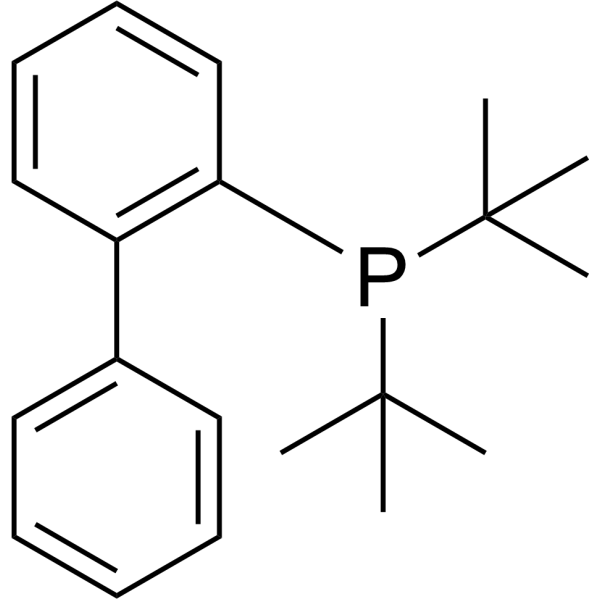
JohnPhosBiochemical Reagent -
HY-W002925
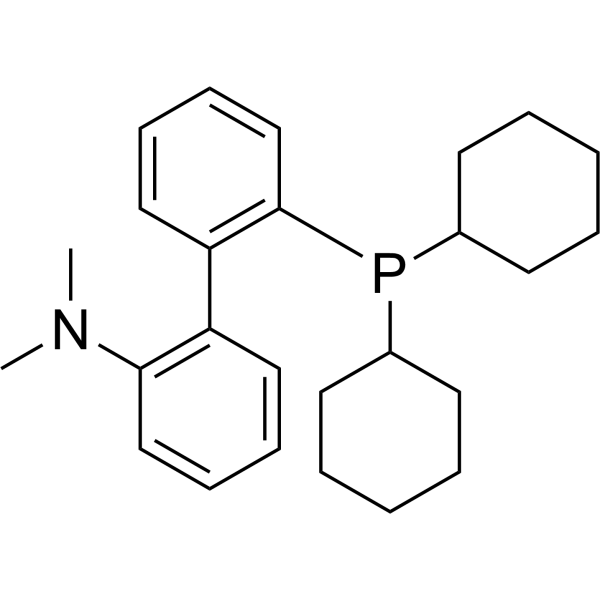
DavePhosBiochemical Assay Reagents -

HY-Y0091
XantphosBiochemical Reagent -
HY-70026
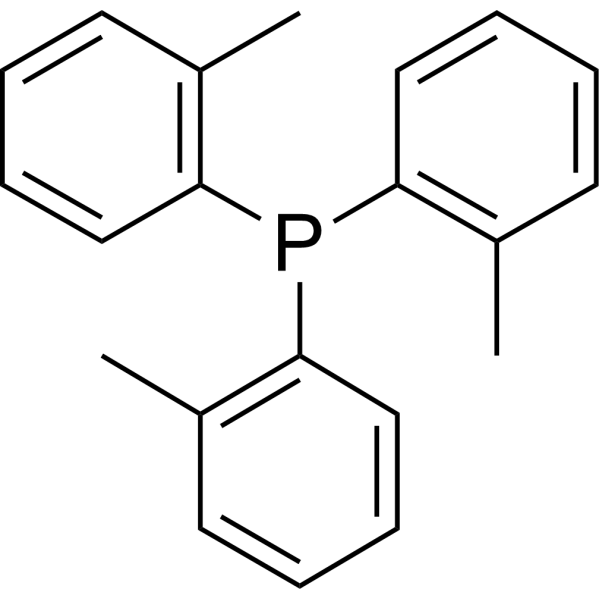
Tri(2-methylphenyl)phosphineTertiary Phosphine Ligand -
HY-59270
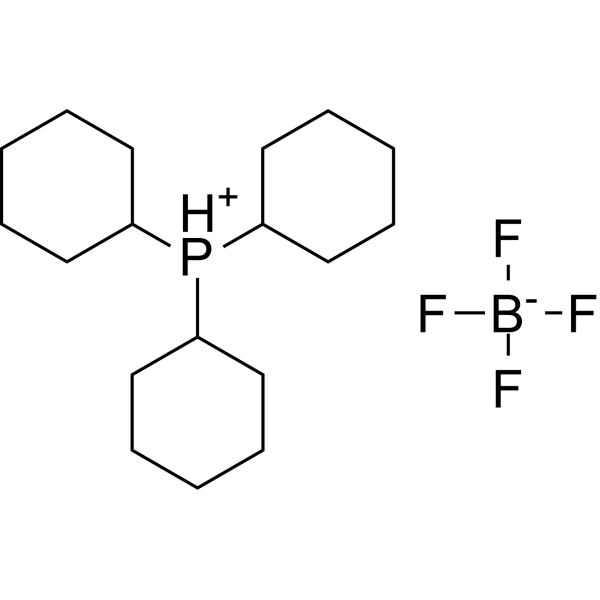
Tricyclohexylphosphonium tetrafluoroborateBiochemical Reagent -
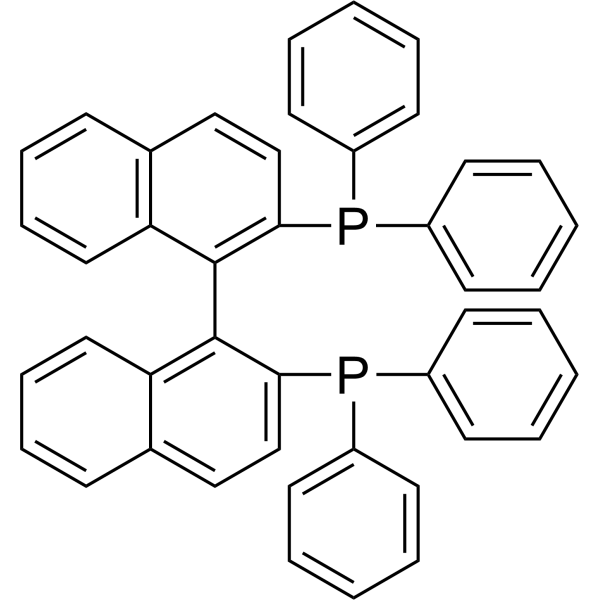
HY-Y0003
(Rac)-BINAPIsomer -

HY-34614
TricyclohexylphosphineAnticancer Intermediate -
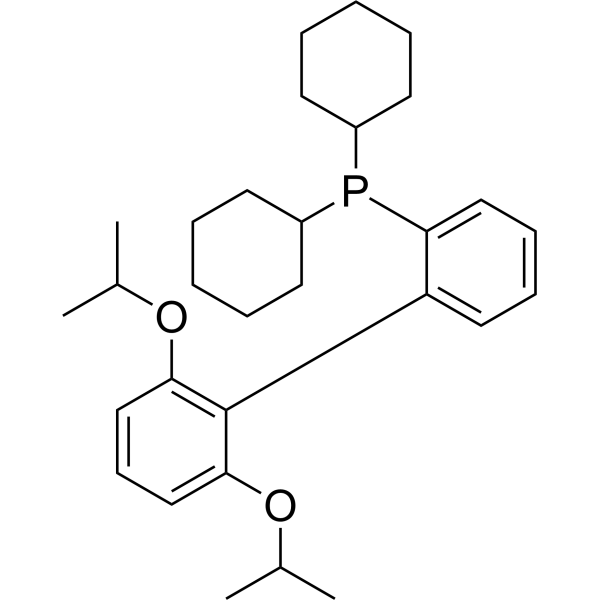
HY-W007432
RuPhosBuchwald Ligand -
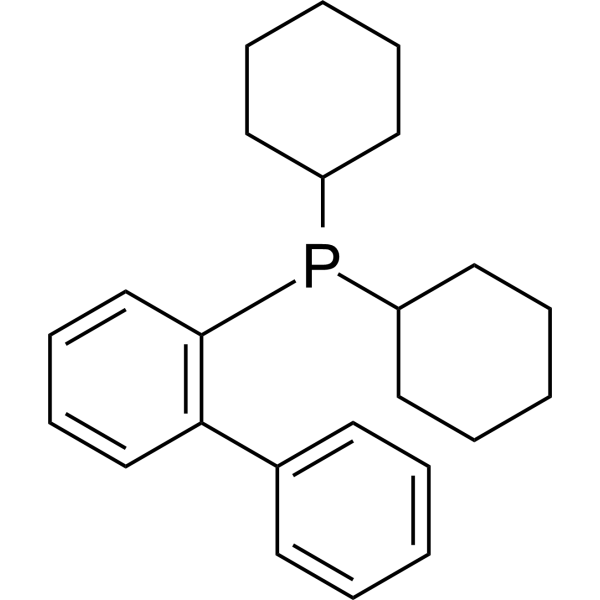
HY-W002849
CyjohnphosOrganophosphine Ligand -
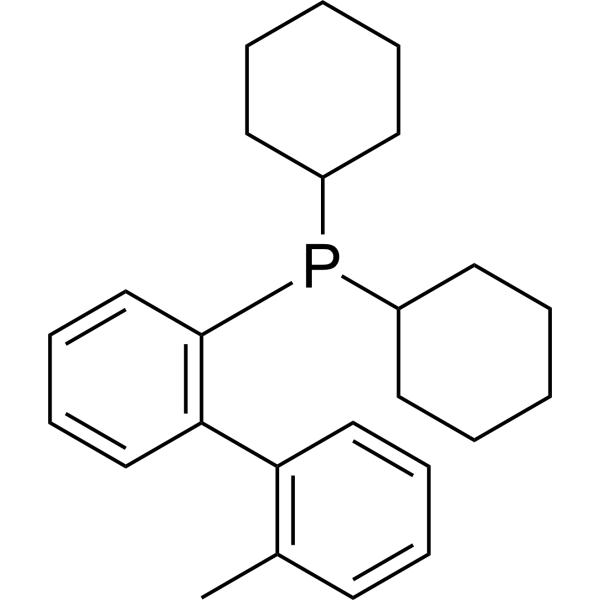
HY-W009062
MePhoso-BPP Ligand -

HY-34451
Tri-tert-butylphosphine tetrafluoroborateBiochemical Reagent


Biological Activity
Description
In Vitro
Amphos (100-300 μg) does not exhibit antimicrobial activity against unspecified bacterial strains, or against unspecified yeast strains at any tested concentration[1].
Amphos (1000 μg) causes a statistically significant (p < 0.001) reduction in lipid levels of Saccharomyces cerevisiae cells, representing the greatest decrease among all tested compounds[1].
Amphos (300 μg) causes a statistically significant (p < 0.01) reduction in lipid levels of Candida albicans cells[1].
MedChemExpress (MCE) has not independently confirmed the accuracy of these methods. They are for reference only. Further protocols information, click here.


Chemical Information
-
CAS No. 932710-63-9
-
Appearance Solid
-
Molecular Weight 265.38
-
Formula C16H28NP
-
Color Colorless to off-white
-
SMILES
CN(C)C1=CC=C(P(C(C)(C)C)C(C)(C)C)C=C1
-
Shipping
Room temperature in continental US; may vary elsewhere.
-
Storage
4°C, protect from light, stored under nitrogen
* In solvent : -80°C, 6 months; -20°C, 1 month (protect from light, stored under nitrogen)


Solvent & Solubility
In Vitro:
DMSO : 25 mg/mL (94.20 mM; ultrasonic and warming and heat to 60°C; Hygroscopic DMSO has a significant impact on the solubility of product, please use newly opened DMSO)
Please refer to the solubility information to select the appropriate solvent. Once prepared, please aliquot and store the solution to prevent product inactivation from repeated freeze-thaw cycles.
Storage method and period of stock solution: -80°C, 6 months; -20°C, 1 month (protect from light, stored under nitrogen). When stored at -80°C, please use it within 6 months. When stored at -20°C, please use it within 1 month.
Please refer to the solubility information to select the appropriate solvent. Once prepared, please aliquot and store the solution to prevent product inactivation from repeated freeze-thaw cycles.
Storage method and period of stock solution: -80°C, 6 months; -20°C, 1 month (protect from light, stored under nitrogen). When stored at -80°C, please use it within 6 months. When stored at -20°C, please use it within 1 month.
Concentration (start) × Volume (start) = Concentration (final) × Volume (final)
In Vivo:
Select the appropriate dissolution method based on your experimental animal and administration route.
- For the following dissolution methods, please ensure to first prepare a clear stock solution using an In Vitro approach and then sequentially add co-solvents:
- To ensure reliable experimental results, the clarified stock solution can be appropriately stored based on storage conditions. As for the working solution for In Vivo experiments, it is recommended to prepare freshly and use it on the same day.
- The percentages shown for the solvents indicate their volumetric ratio in the final prepared solution. If precipitation or phase separation occurs during preparation, heat and/or sonication can be used to aid dissolution.
Add each solvent one by one: 10% DMSO 40% PEG300 5% Tween-80 45% Saline
Solubility: ≥ 2.5 mg/mL (9.42 mM); Clear solution
This protocol yields a clear solution of ≥ 2.5 mg/mL (saturation unknown).
Taking 1 mL working solution as an example, add 100 μL DMSO stock solution (25.0 mg/mL) to 400 μL PEG300, and mix evenly; then add 50 μL Tween-80 and mix evenly; then add 450 μL Saline to adjust the volume to 1 mL.
Preparation of Saline: Dissolve 0.9 g sodium chloride in ddH₂O and dilute to 100 mL to obtain a clear Saline solution.
Add each solvent one by one: 10% DMSO 90% (20% SBE-β-CD in Saline)
Solubility: ≥ 2.5 mg/mL (9.42 mM); Clear solution
This protocol yields a clear solution of ≥ 2.5 mg/mL (saturation unknown).
Taking 1 mL working solution as an example, add 100 μL DMSO stock solution (25.0 mg/mL) to 900 μL 20% SBE-β-CD in Saline, and mix evenly.
Preparation of 20% SBE-β-CD in Saline (4°C, storage for one week): 2 g SBE-β-CD powder is dissolved in 10 mL Saline, completely dissolve until clear.
In Vivo Dissolution Calculator
Please enter the basic information of animal experiments:
-
-
-
-
Recommended: Prepare an additional quantity of animals to account for potential losses during experiments.
Please enter your animal formula composition:
-
%DMSO +
Recommended: Keep the proportion of DMSO in working solution below 2% if your animal is weak.
-
%+
-
+%Tween-80 + +
-
%Saline +
The co-solvents required include: DMSO, . All of co-solvents are available by MedChemExpress (MCE). , Tween 80. All of co-solvents are available by MedChemExpress (MCE).
Working solution concentration: 0.22 mg/mL
Method for preparing stock solution: mg drug dissolved in μL DMSO. Stock solution concentration: mg/mL. * In solvent : -80°C, 6 months; -20°C, 1 month (protect from light, stored under nitrogen)
1. Take μL DMSO stock solution;
2. Add μL .
μL , mix evenly;
3. Then add μL Tween 80, mix evenly;
4. Then add μL
Please ensure that the stock solution in the first step is dissolved to a clear state, and add co-solvents in sequence. You can use ultrasonic heating (ultrasonic cleaner, recommended frequency 20-40 kHz), vortexing, etc. to assist dissolution.

Protocols
-
Research Protocol for Infectious Diseases
Infectious-disease experiments test how pathogens interact with host barriers, innate immune receptors, inflammatory signaling, pathogen replication, and tissue injury; pattern-recognition receptors such as TLRs, RIG-I-like receptors, NOD-like receptors, and inflammasomes detect microbial molecules and activate NF-κB, interferon, and cytokine responses. The central hypothesis is that infection severity reflects the balance between pathogen burden and host response: protective inflammation restricts pathogen growth, whereas excessive or mislocalized inflammation contributes to tissue damage and disease phenotype. Unresolved questions include which host pathways are protective versus pathogenic, why some infection models fail to translate to human disease, and which combined readouts best predict clinically relevant infection outcomes.
-
Yeast Planktonic Culture
The protocol is based on established methods for cultivating Saccharomyces cerevisiae in planktonic (free-floating) culture, focusing on growth kinetics, high-throughput phenotyping, and quantitative assessment of cellular responses. Key principles include the use of defined media for controlled growth conditions, monitoring of optical density (OD) over time to assess exponential growth phases, and application of microplate reader-based assays for sensitive and scalable measurements of yeast growth and chemical sensitivity.
-
Bacterial live/dead nucleic-acid viability staining
The LIVE/DEAD bacterial viability staining method is based on differential permeability of nucleic-acid-binding fluorescent dyes, most commonly SYTO 9 and propidium iodide (PI), which enables discrimination of bacterial populations with intact versus compromised cytoplasmic membranes. SYTO 9 penetrates both intact and damaged bacterial membranes and binds nucleic acids to produce green fluorescence, whereas propidium iodide penetrates only cells with compromised membranes and fluoresces red while also reducing SYTO 9 signal through competitive binding and fluorescence interactions. The resulting fluorescence pattern is interpreted as a proxy for membrane integrity, which is widely used as an indicator of bacterial viability in microscopy, flow cytometry, and spectroscopic platforms. However, mechanistic studies show that SYTO 9 and PI interactions involve displacement and fluorescence resonance energy transfer effects, which can influence signal interpretation depending on dye ratios a


Purity & Documentation
-
Data Sheet (280 KB)
-
SDS (476 KB)
- English - EN (476 KB)
- Français - FR (476 KB)
- Deutsch - DE (476 KB)
- Norwegian - NO (476 KB)
- Español - ES (476 KB)
- Swedish - SV (476 KB)
- Italian - IT (476 KB)
- Korean - KR (476 KB)
- Portuguese - PT (476 KB)
-
Handling Instructions (2659 KB)
References


Complete Stock Solution Preparation Table
Please refer to the solubility information to select the appropriate solvent. Once prepared, please aliquot and store the solution to prevent product inactivation from repeated freeze-thaw cycles.
Storage method and period of stock solution: -80°C, 6 months; -20°C, 1 month (protect from light, stored under nitrogen). When stored at -80°C, please use it within 6 months. When stored at -20°C, please use it within 1 month.
| Optional Solvent | Concentration Solvent Mass | 1 mg | 5 mg | 10 mg | 25 mg |
|---|---|---|---|---|---|
| DMSO | 1 mM | 3.7682 mL | 18.8409 mL | 37.6818 mL | 94.2045 mL |
| 5 mM | 0.7536 mL | 3.7682 mL | 7.5364 mL | 18.8409 mL | |
| 10 mM | 0.3768 mL | 1.8841 mL | 3.7682 mL | 9.4205 mL | |
| 15 mM | 0.2512 mL | 1.2561 mL | 2.5121 mL | 6.2803 mL | |
| 20 mM | 0.1884 mL | 0.9420 mL | 1.8841 mL | 4.7102 mL | |
| 25 mM | 0.1507 mL | 0.7536 mL | 1.5073 mL | 3.7682 mL | |
| 30 mM | 0.1256 mL | 0.6280 mL | 1.2561 mL | 3.1402 mL | |
| 40 mM | 0.0942 mL | 0.4710 mL | 0.9420 mL | 2.3551 mL | |
| 50 mM | 0.0754 mL | 0.3768 mL | 0.7536 mL | 1.8841 mL | |
| 60 mM | 0.0628 mL | 0.3140 mL | 0.6280 mL | 1.5701 mL | |
| 80 mM | 0.0471 mL | 0.2355 mL | 0.4710 mL | 1.1776 mL |


Amphos Related Classifications
HY-W009410 Related Classifications
 Powered by Bioz